





Asian Skunk Cabbage (Lysichiton camtschatcensis)
| Size | 1 Ltr, 1Ltr Pack of 3, 3 Ltr |
|---|---|
| Plant Type | Marginal |
| Sun / Shade | Full Sun to Part Shade |
| Flower Colour | White |
| Growth Rate | Slow |
| Native to UK | No |
Asian Skunk Cabbage is a plant to choose for the sequence of its growth. White arum-like spathes appear early in spring, followed by much larger green leaves. The planting therefore changes character as the season develops, moving from a relatively low flower display to a broad mass of foliage.
Price range: £14.00 through £34.50 (inc VAT)
Asian Skunk Cabbage (Lysichiton camtschatcensis)
White spring spathes followed by large green leaves
Asian Skunk Cabbage is a plant to choose for the sequence of its growth. White arum-like spathes appear early in spring, followed by much larger green leaves. The planting therefore changes character as the season develops, moving from a relatively low flower display to a broad mass of foliage.
The white spathe surrounds the central flower-bearing spike. Its pale colour stands out against a muddy margin and the fresh growth of other wetland plants. This is an early-season feature, so it is sensible to combine it with later plants rather than expect the white display to last all summer.
The broad leaves can become considerably larger than the flowers suggest, reaching around 90 cm long in established growth. Leave space around a young plant so expanding foliage does not cover smaller neighbours or make pond equipment difficult to reach.
Choose fertile, humus-rich ground at a wet pool margin. Sun or partial shade can suit it, but the moisture must be dependable. A nearby pond does not automatically make the adjacent soil wet enough, especially where paving, a raised bed or free-draining fill separates the roots from the water.
This is the white-flowered Asian species, Lysichiton camtschatcensis. Use the full name to distinguish it from yellow-flowered skunk cabbages. It is a hardy deciduous perennial, so the large leaves are a seasonal feature rather than permanent screening. The plant is harmful if eaten and can irritate skin and eyes; wear gloves for planting and maintenance.
UK-grown plant. Grown at a dedicated aquatic plant nursery in the South of England.

What you receive
Choose one plant in a 1 litre container, three plants in 1 litre containers or one plant in a 3 litre container.
These are starting container sizes, not measurements of mature leaves. Keep the rootballs moist and plant into a suitable wet position promptly after arrival.
How it changes through the year
Early white spathes are followed by increasingly large green leaves, so the planting changes markedly through spring and summer. Leaves die back seasonally. A dormant or early-season delivery may show little of the eventual foliage size; it is not supplied as a permanent screen.
Choosing a place for it
- For early interest: The white spring spathes appear before the largest leaves develop.
- For a wet margin: Choose humus-rich, dependably wet ground in sun or partial shade.
- For a spacious planting: Allow room for individual leaves that can reach around 90 cm long and keep access clear.
Planting and getting it established
Choose a wet pool margin with fertile, humus-rich soil in sun or partial shade. Prepare enough space for the roots and the broad mature leaves, rather than fitting the young plant into a small gap that it will quickly cover. Keep its crown at the original growing level when settling the rootball into the soil.
Dependable moisture is more important than simply being beside the pond. A raised bed, a dry bank or free-draining fill can remain too dry even when water is close by. Check the intended root area and choose a genuinely wet margin before planting.
Use the water-position instructions on the supplied label for the particular plant. A basket is a way of supplying and supporting the roots; its presence alone does not set a permissible water depth. Keep the young growth clear of inappropriate submergence and retain access to the base for inspection and seasonal tidying.
Looking after it
- Moisture: Keep the root area wet, especially while establishing and during prolonged dry weather. Check the ground itself if leaves struggle rather than assuming the nearby pond is keeping it moist.
- Room for leaves: Allow the broad leaves to expand without covering smaller plants or preventing access to equipment. The spring flower display is much smaller than the foliage that follows it.
- Seasonal tidying: Remove dead or deteriorating leaves once they have finished. Keep sound leaves in place during their growing season; cutting them down solely to reduce the size of the clump removes its main summer feature.
- Nutrition: Choose fertile humus-rich soil from the start. If a container-grown plant needs further nutrition, use a product suitable for its actual position and follow the labelled rate rather than fertilising the surrounding pond indiscriminately.
- Winter: The plant is hardy and deciduous. Keep the root area appropriately wet while the top growth is dormant, and avoid mistaking winter leaf loss for a need to replace the plant.
- Handling: Wear gloves and protect eyes during planting and tidying. It is harmful if eaten, so keep foliage and removed pieces away from children, pets and food use.
Plant details
- Botanical name
- Lysichiton camtschatcensis
- Flowers
- White spring spathes
- Mature height
- About 50–100 cm
- Leaves
- Broad green leaves can reach about 90 cm long
- Light
- Sun or partial shade
- Root position
- Wet pool margin; fertile humus-rich soil
- Winter
- Hardy deciduous perennial; RHS H7
- Safety
- Harmful if eaten; skin and eye irritant
- RHS information
- RHS plant profile: Lysichiton camtschatcensis
Delivery and basket information
We do not deliver live plants to Northern Ireland.
Orders received by 11am Monday to Wednesday are normally dispatched on the following working day using a next working day courier service. During busy periods, dispatch may occasionally take an extra day.
To avoid plants being held in depots over a weekend, we do not usually dispatch on Fridays. Highlands and Islands orders using a two day service are not normally dispatched on Thursdays.
Please read our delivery information for delivery arrangements and contact us if you need to check the timing of a particular order.
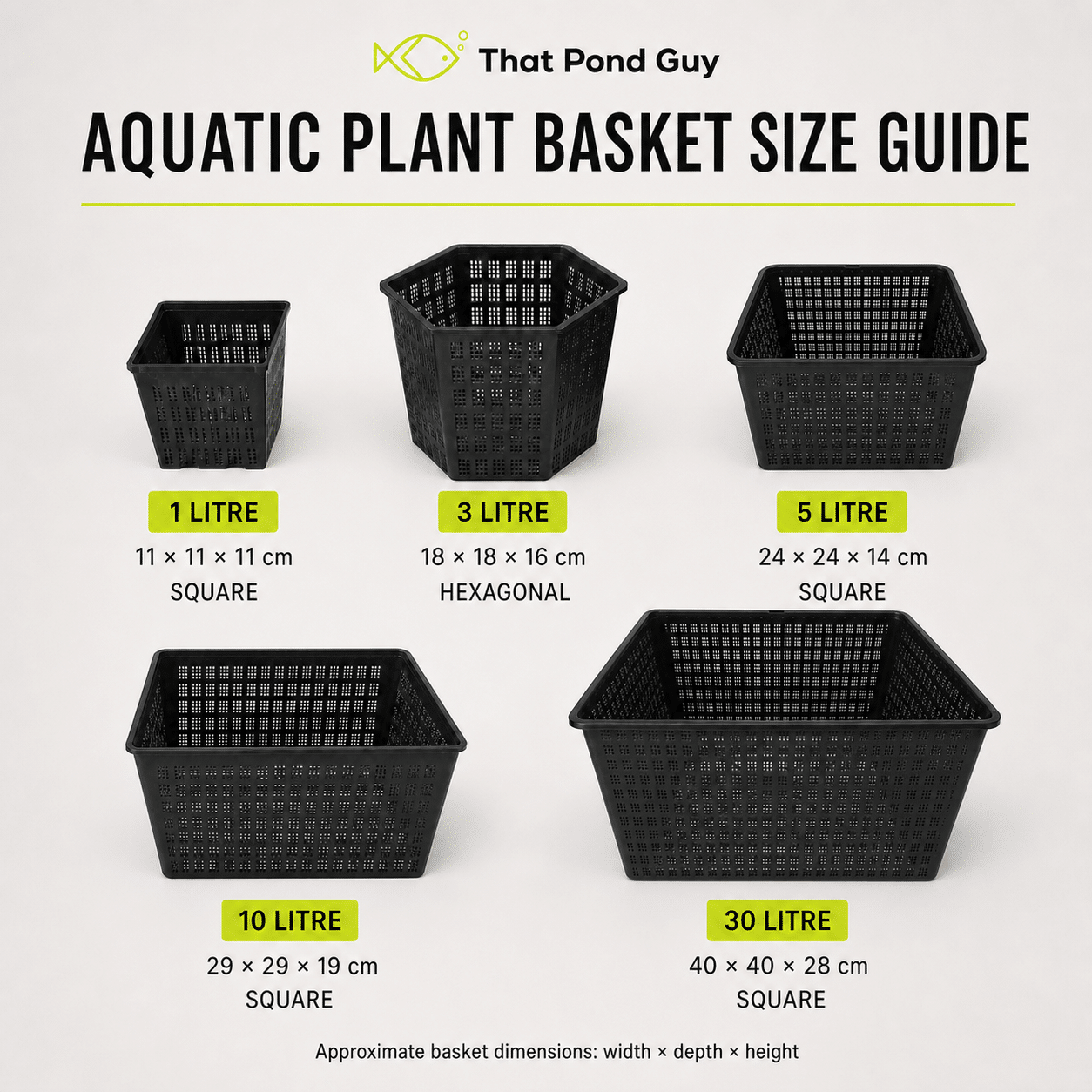
Finofil baskets are made from 100% recycled polypropylene co-polymer. They are not suitable for ordinary kerbside recycling; reuse them where possible and check local specialist recycling options. Their fine mesh helps retain aquatic soil while allowing water to reach the roots.
Basket measurements for the offered sizes:
- 1 Litre Basket – usually 11 × 11 × 11cm square; some varieties may be supplied in a 14cm diameter × 10cm round basket
- 3 Litre Hexagonal Basket – 18 × 18 × 16cm
Other plants to compare
Crowborough Arum Lily — Its white spathes and arrow-shaped leaves give a different outline, with a later main display and its own shallow-water guidance.
Bog Arum — Compare a lower, heart-leaved plant for a wet margin where there is less room for very large leaves.
Choosing plants and planting supplies
Marginal pond plants — Compare pond-edge plants by their eventual size, light and water-depth needs before filling a shelf.
Pond plant baskets and planting supplies — Choose a suitable container and growing medium for the position described above.





Reviews
There are no reviews yet.