





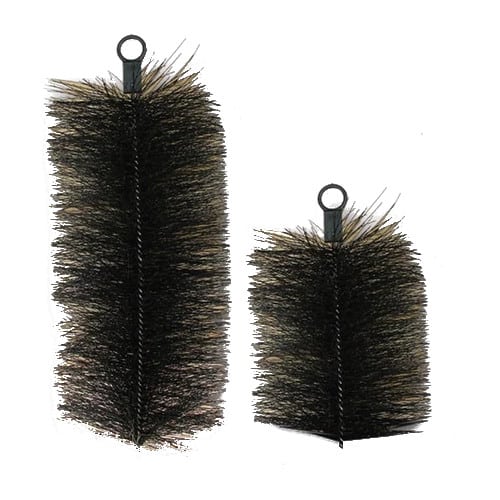
Black Knight Filter Brush 16 x 8 Inches
| Brand | |
|---|---|
| Length | 16 inches |
| Diameter | 8 inches |
| Filament material | Hydrotek polypropylene |
| Core | Stainless steel wire |
| Quantity | 1 brush |
This Black Knight filter brush measures 16 inches long by 8 inches in diameter. Its polypropylene filaments are carried on stainless steel wire, providing a reusable surface that traps suspended waste as water passes through a suitably arranged brush chamber.
£5.99 (inc VAT)
Black Knight Filter Brush 16 x 8 Inches
A wide-diameter brush for a pond filter chamber
This Black Knight filter brush measures 16 inches long by 8 inches in diameter. Its polypropylene filaments are carried on stainless steel wire, providing a reusable surface that traps suspended waste as water passes through a suitably arranged brush chamber.
Product details
| Brand | Black Knight |
|---|---|
| Length | 16 inches |
| Diameter | 8 inches |
| Filament material | Hydrotek polypropylene |
| Core | Stainless steel wire |
| Quantity | 1 brush |
| Supplier code | FM244 |
Choosing the 16-inch length
This version combines a 16-inch length with an 8-inch diameter. Converted directly from the nominal imperial size, that is approximately 406mm long and 203mm across. Check the available working depth inside the chamber as well as the space above it: a brush that fits under the lid still needs a practical route out when it is time to clean it.
Measure inside the filter, taking account of any shelf, support bar, pipe or sloping base. External box dimensions can overstate the space actually available. If your chamber needs the same diameter in a shorter length, our 10 x 8-inch Black Knight brush is a separate option. A shorter brush is not automatically a suitable substitute where it would leave a gap beneath the working media.
Made for repeated filter maintenance
Black Knight brushes are manufactured by Speedy Brush in Maidstone, Kent. Their Hydrotek polypropylene filaments are twisted onto two stainless steel wires, creating a cylindrical filter medium that can be lifted out and cleaned. The filament surface intercepts suspended debris and can also support a bacterial film once the filter has matured.
The two jobs are different. Mechanical filtration collects physical waste; biological filtration depends on an established bacterial community. A new brush does not arrive as a mature biological filter, and visibly trapped dirt still needs to be removed from the system. Reusability makes regular cleaning part of ownership rather than a reason to discard the brush whenever it becomes dirty.
Plan an overlapping rectangular layout
Black Knight identifies its 8-inch diameter as a practical choice for larger rectangular chambers. In its double-interlocked arrangement, successive rows are staggered so that neighbouring brushes occupy the gaps between one another. This reduces open routes through the chamber that would allow water to pass around the working filaments.
The manufacturer’s worked example uses 20 brushes to fill a 35 x 28-inch rectangular chamber. That is a layout example for this diameter, not a universal quantity for every pond. Use your internal chamber measurements and the intended arrangement to establish the number required. This listing supplies one brush, so order the quantity needed for your particular layout.
For circular chambers, Black Knight recommends smaller 4- or 6-inch brushes because 8-inch brushes can leave inefficient gaps around the curved boundary. Choosing the widest brush is therefore not always the best way to fill a filter. Read the manufacturer’s 8-inch rectangular-chamber guide before committing to this diameter.
Match the layout to the filter’s job
A single-interlocked brush arrangement is described by Black Knight as a useful mechanical pre-filter ahead of a biological chamber. Its double-interlocked vertical-flow design combines particle collection with biological surface area and can be used in linked chambers. Decide which function the brush bay is providing before positioning its supports and outlets.
The manufacturer’s layout drawings also distinguish outlets feeding a chamber at the same level from outlets returning water by gravity to a lower level. This matters when adapting an existing filter: adding brushes does not remove the need for the chamber’s water level and flow path to work correctly.
Keep incoming water controlled
Black Knight advises a gentle entry into the brush chamber. A concentrated fast jet can stir up settled material and dislodge waste already caught on the filaments. Look at where water arrives and where it leaves, rather than considering the brush count alone. The aim is useful contact through the media, with provision for the collected solids to be removed.
Cleaning a working brush chamber
Where the filter has a bottom drain, Black Knight’s routine is to stop incoming pond water, drain the chamber and flush the brushes and chamber with buckets of pond water. Close the drain before restarting filtration. Pond-water cleaning helps retain established bacteria while removing the waste they should not be left surrounded by.
Check your own filter’s isolation and restart procedure first. Plan where the dirty water will go and keep the clean brushes from being put straight back into accumulated sludge. Inspect accessible supports and the brush core while the chamber is open; addressing a damaged fitting during cleaning is easier than discovering it after refilling.
Assess results with water tests
Water clarity alone cannot show whether biological filtration is coping. Black Knight recommends regular ammonia and nitrite testing. Our Colombo Pond Test Lab Professional provides those checks alongside other pond-water measurements. Keep the results with your maintenance notes so that changing water conditions can be assessed alongside cleaning, feeding and stocking changes.






Reviews
There are no reviews yet.