







Koi Food Buying Guide: Choosing Food for Your Pond
Choosing koi food: ingredients, seasons, pellet sizes and value
Buying koi food ought to be straightforward. Then you find a shelf full of growth foods, wheatgerm, colour boosters and probiotic pellets, all promising something slightly different. Which differences matter for your pond, and which ones are you actually paying for?
We sell koi food, but we also keep koi ourselves. When someone asks which food to buy, we want to know what fish they have, how warm the pond is and what they already feed. That usually tells us more than the biggest protein figure on a bag. Get those basics right, choose pellets the fish can manage and buy an amount you can use while it is fresh.
This guide will help you compare foods before you buy. For more on daily portions and feeding problems, use our koi feeding guide alongside it.
What I feed my own koi
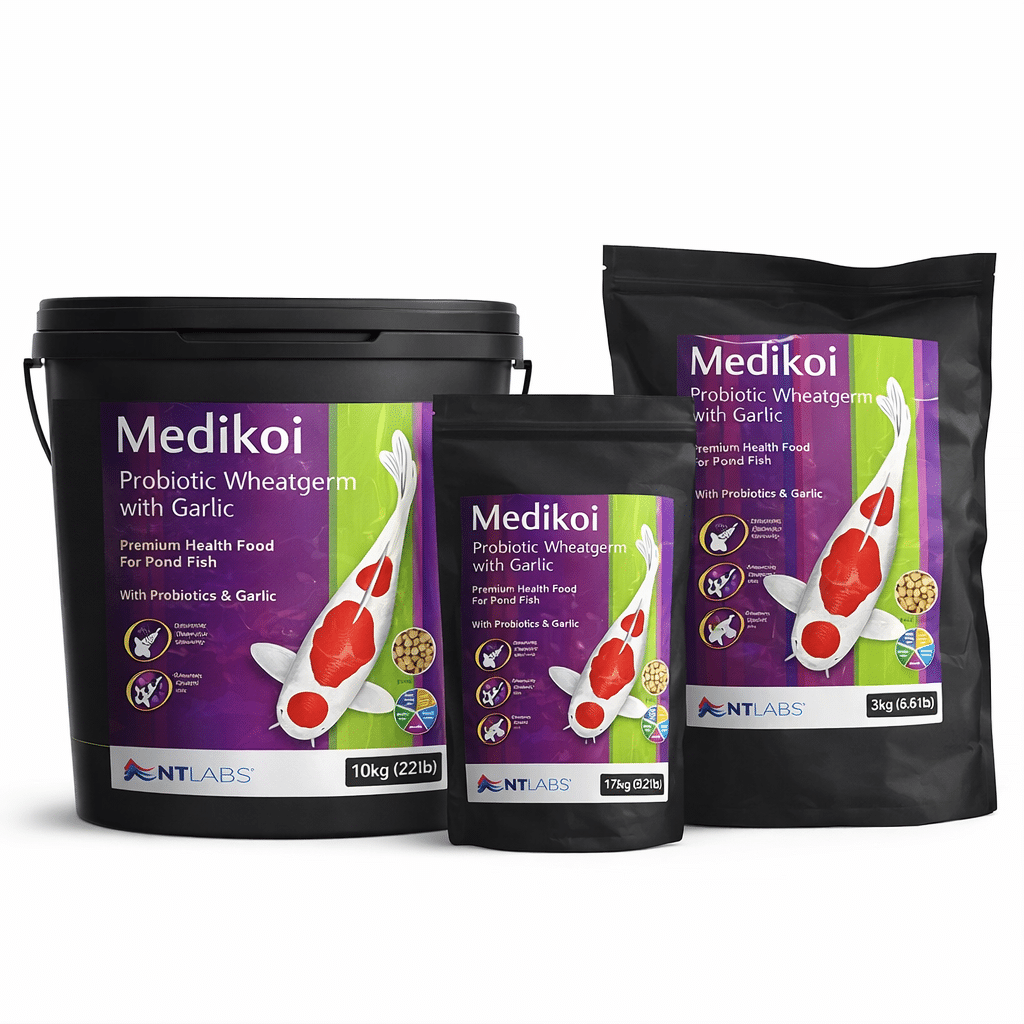
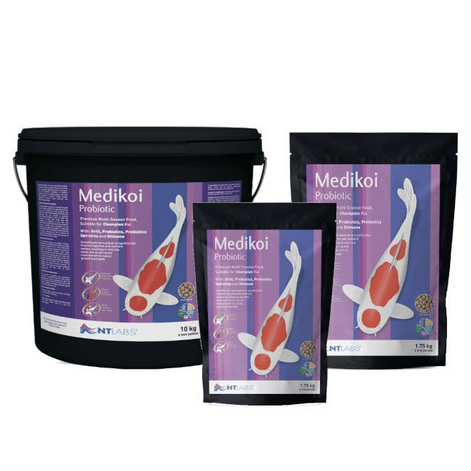
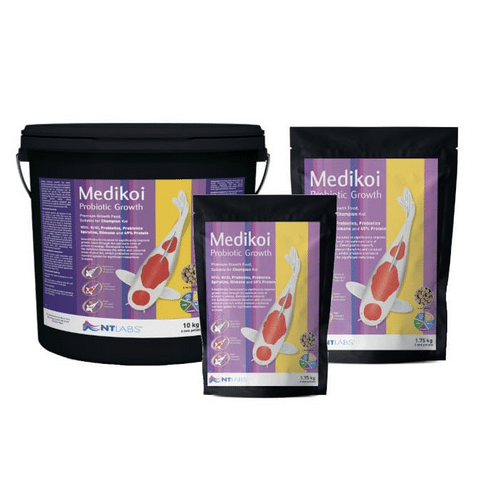
“I’ve fed my fish NT Labs food for years. I use Probiotic Wheatgerm with Garlic in winter, Probiotic Multi-Season in spring and autumn, and Probiotic Growth in summer.
“I’m not saying it’s the best food, or that there aren’t better foods out there. It’s the range I chose a number of years ago and have stuck with. That’s my own feeding routine, rather than a claim that everyone needs to buy the same thing.”
Matt, That Pond Guy
The season is a handy way to describe that routine, but your pond thermometer still matters. A heated pond and an unheated pond can need different choices on the same day. Winter food also isn’t an instruction to feed dormant fish.
What is the best koi food for your pond?
The food we would suggest for a mixed garden pond may be quite different from one chosen to grow young koi in warm, heavily filtered water. You do not have to buy the most expensive bag to feed your fish well.
Start by deciding what you want the food to do. If your fish are in good condition and you want a reliable daily diet, look at complete staple or all-season foods. If you’re deliberately working on growth, compare suitable growth formulas. If the water is cooling, check the lower-temperature choices and their actual feeding instructions.
| Your priority | Start with | Check before buying |
|---|---|---|
| Everyday feeding | staple & complete koi food | Complete feed, suitable temperature and a pellet your fish can take. |
| One food across much of the year | all season koi food | The named formula’s temperature range; “all season” doesn’t mean every temperature. |
| Cooler water | wheatgerm koi food | Manufacturer’s limits and whether your fish are still feeding. |
| Supporting growth | growth koi food | Warm-enough water and a feeding load your pond can handle. |
| Colour-focused feeding | colour enhancing koi food | Whether it is a complete diet and how the maker recommends using it. |
| Considering probiotic formulas | health & probiotic koi food | The exact ingredients and additives, rather than the category name alone. |
A shortlist of two or three suitable products is more useful than a league table of twenty brands. Put the bags side by side, compare like with like and ask what the extra cost buys you. You may decide to stay with the food your fish already take well.
How the foods compare
Here are some of the foods we stock, with the figures given by their manufacturers. They do different jobs, so use the table to find suitable options for your pond rather than reading it as a best-to-worst list.
| Food | Protein / fat | Temperature guidance | Worth knowing |
|---|---|---|---|
| NT Labs Probiotic Wheatgerm with Garlic | 28% / 6% | Cooler-season use; do not feed dormant fish in very cold weather. | Different recipe from standard NT Labs Wheatgerm. |
| NT Labs Probiotic Multi-Season | 38% / 8% | 5–26°C stated range. | Contains both probiotic and prebiotic components. |
| NT Labs Probiotic Growth | 49% / 8% | 14°C or above. | A growth formula, not the default cooler-water choice. |
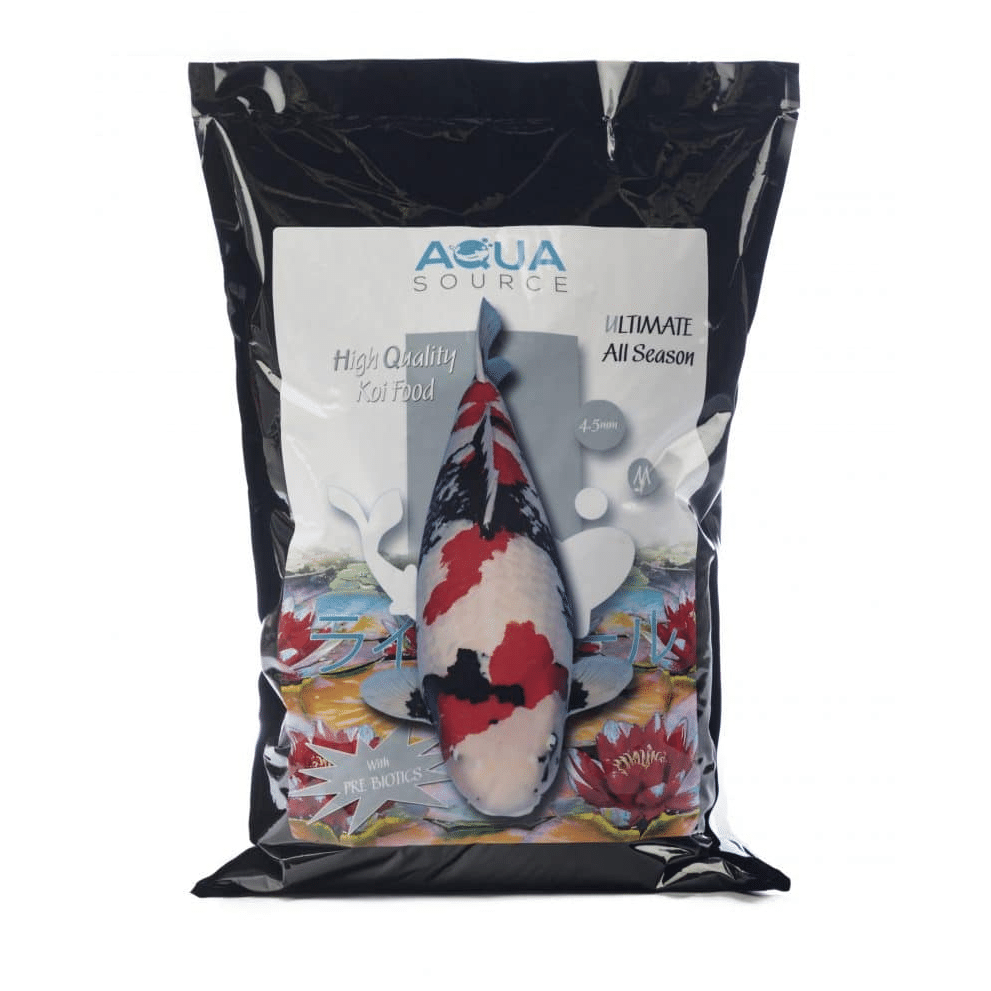
| Aqua Source Ultimate All Season | 35% / 7% | From 8°C. | Floating 4–5mm pellets. |
| Burtons Growth | 40% / 7% | Above 18°C for best results. | Floating 6mm; Growth Sinking is a separate option. |
| Burtons Health | 37% / 6% | Above 10°C for best results. | Floating 6mm pellets. |
| Evolution Aqua Premier | 37% / 7% | Only above 18°C. | Contains a yeast-derived prebiotic. |
| Evolution Aqua Growth Plus | 46% / 11.3% | Only above 18°C. | Fishmeal declared at 47% of the recipe. |
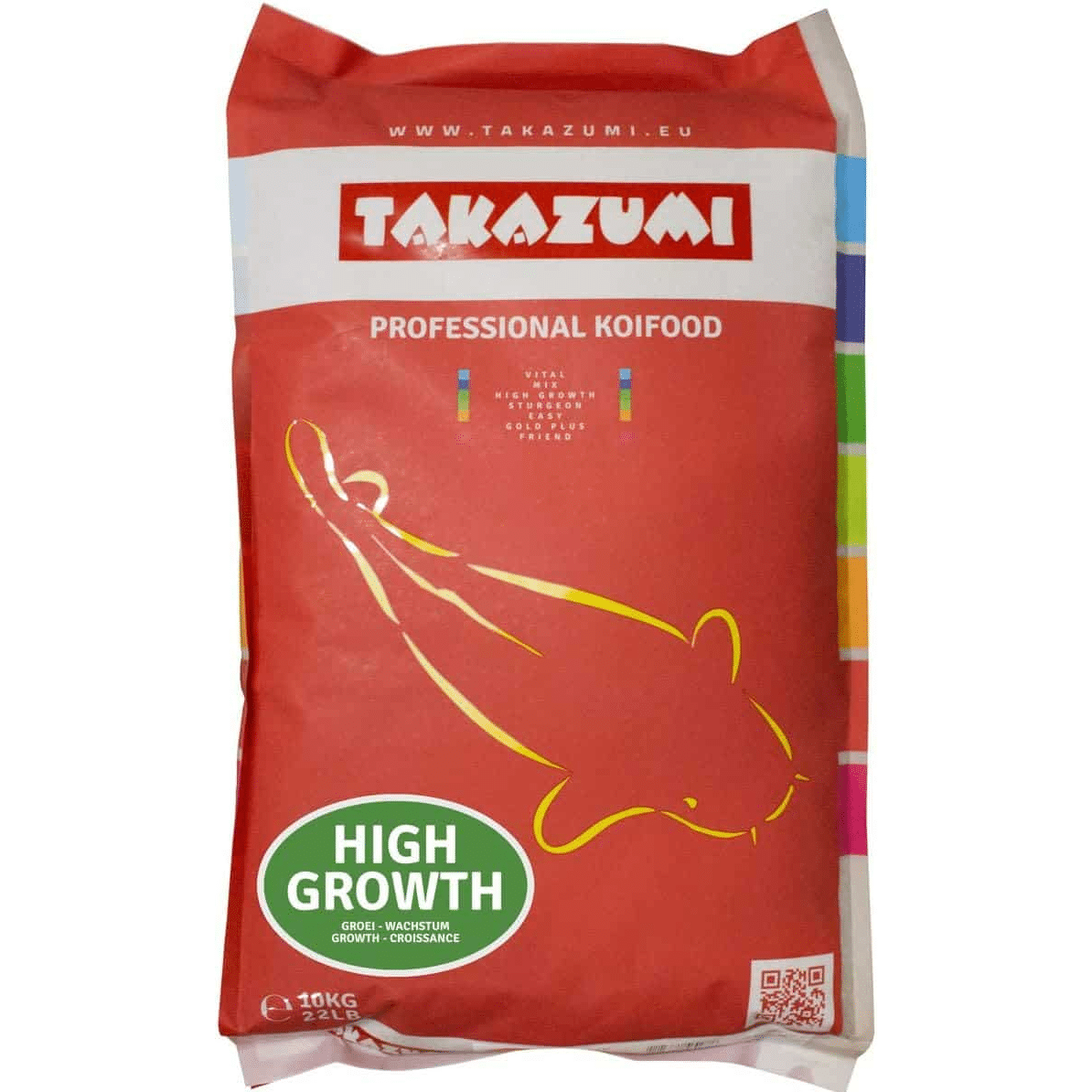
| Takazumi High Growth | Minimum 45% / minimum 12% | From 15°C. | The maker gives minimum protein and fat figures. |
Sources: NT Labs Wheatgerm, Multi-Season, Growth, Aqua Source Takazumi, Burtons Growth, Burtons Health, Premier and Growth Plus. Check the label on the supplied pack if a recipe or instruction changes.
JPD, Burtons, Evolution Aqua and the other ranges we stock
Matt’s NT Labs routine is one option. We also stock JPD, Burtons, Evolution Aqua, Hikari, Takazumi, Aqua Source and other ranges, with quite different recipes and pellet choices. Here is where we would start when comparing them.
JPD: Shogun, Shori, Fujizakura and Medicarp
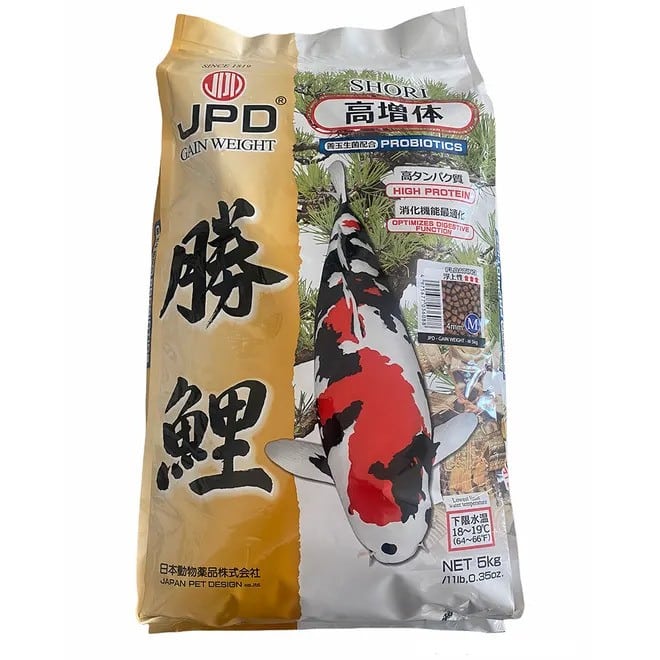
JPD’s range gives you several choices within the same brand. Shogun All Season is an option for everyday feeding, while Shori High Growth is the one to compare when growth is your priority. Those are different jobs; buying Shori simply because it has a higher protein figure may not suit a cooler pond.
You will also find Fujizakura Health, Medicarp and Medicarp Colour. Compare what you want from the food before paying for a specialist recipe. A health-labelled food is still food: it does not replace a diagnosis or treatment if a koi is unwell. Yamato Nishiki is another option to compare for regular feeding.
JPD publishes its ingredient and product information in Japanese. For our UK products, use the pack’s own analysis, pellet size and temperature directions. Formulas and pack options sold in other countries are not always the same.
Burtons: floating and sinking choices
Burtons is worth a look if you want to compare floating and sinking foods within one range. We stock Burtons Growth and Growth Sinking, along with Health, Wheatgerm and Winter Sinking.
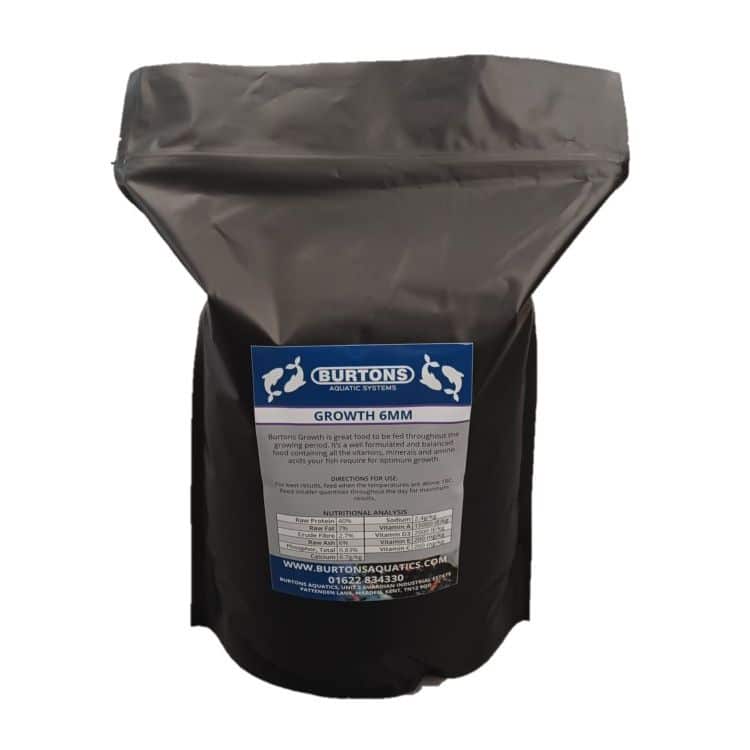
The maker lists 40% protein and 7% fat for its Growth foods and recommends water above 18°C for best results. Health has a different analysis, at 37% protein and 6% fat, with best-results guidance above 10°C. That makes it worth comparing the individual foods, rather than treating the whole Burtons range as one recipe.
If you prefer to watch every pellet being taken, start with a floating option. If you use sinking food, make sure you can see where it lands and whether the fish finish it. The links to Growth and Growth Sinking give Burtons’ own directions.
Evolution Aqua: Premier and Growth Plus
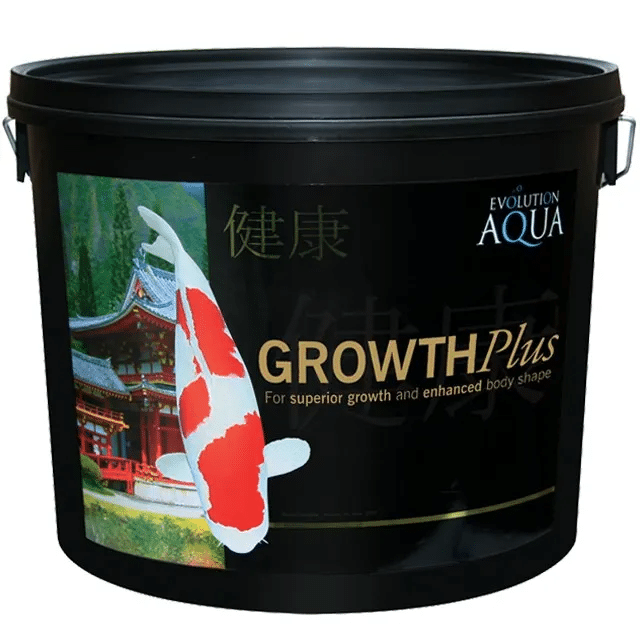
Evolution Aqua Premier is the regular-feeding option to compare with Growth Plus. Premier declares 37% protein and 7% fat; Growth Plus declares 46% protein and 11.3% fat, with fishmeal listed at 47% of the recipe. Both contain a yeast-derived prebiotic. A prebiotic is different from adding live probiotic microorganisms.
The detail to notice is temperature: Evolution Aqua currently says to feed both Premier and Growth Plus only above 18°C. That is useful information when choosing between foods for spring or autumn. Read the maker’s Premier and Growth Plus instructions alongside our product pages.
We also carry Evolution Aqua Wheatgerm and dried treats such as freshwater shrimp. Treats are an addition to the main diet; include them when thinking about how much you feed overall. For Wheatgerm, check the supplied pack’s temperature directions before choosing it for cold water.
Hikari, Takazumi, Aqua Source, KiGen and FishScience
These ranges are worth comparing too. Hikari has everyday, wheatgerm and Saki-Hikari foods; Takazumi and Aqua Source offer alternatives for different feeding seasons. KiGen has foods aimed at different stages of koi growth, and FishScience is an option if insect ingredients interest you.
For any of them, compare the food you need, the pellet size your fish can take and the price for the pack you will actually use. The table below points out a few differences that are easy to miss.
| Range and examples | What to compare | Manufacturer information |
|---|---|---|
| Saki Hikari Balance and Hikari Wheatgerm | Saki-Hikari Balance Floating is fed from 11°C according to the UK instructions. Hikari Wheatgerm is a different recipe with its own lower-temperature guidance. | UK Balance Floating instructions |
| KiGen Tosai and KiGen Miori | Tosai is a 3mm floating growth food; Miori is a different 6mm floating formula. Check ingredients too: KiGen describes Miori as containing both fishmeal and poultry meal. | Tosai and Miori |
| Takazumi High Growth | A floating growth food for water from 15°C. Takazumi gives minimum protein and fat figures on its declaration. | Takazumi High Growth details |
| Aqua Source Ultimate All Season | Compare the 4–5mm floating pellet and 8°C lower feeding limit with other all-season choices. | Aqua Source’s declaration |
| FishScience Everyday Pond Food | An option if you are interested in insect ingredients. Read the full recipe too; insect meal may be used alongside other proteins. | FishScience on insect meal |
What to look for on the bag
Turn the bag over as well as reading the front. “Composition” is the ingredient list. “Analytical constituents” gives the protein, fat, fibre and ash figures. Then read the feeding directions, particularly the water temperature and pellet size.
Is more protein always better?
No. The protein percentage is useful, but it does not tell you how much the fish can digest or whether the food gives them the right balance of amino acids. A 45% food is not automatically a better buy than a 35% food for the fish and conditions you have.
The FAO’s explanation of feed composition and protein sets out that distinction. Its fish nutrition manual also explains that digestibility depends on ingredients, processing and the animal being fed. They explain why ingredients and digestibility matter alongside the percentage.
Fat, fibre and ash: what do they tell you?
Fat supplies energy as well as fatty acids. Ash is the mineral residue measured during analysis; it doesn’t mean someone has added fireplace ash to the pellets. Fibre is another part of the declaration, but a lower or higher figure on its own cannot tell you whether the whole food is suitable.
Use the figures to understand differences between comparable recipes. Don’t add them up and assume the missing percentage must all be one ingredient. Moisture and other components also matter. The FAO’s feed-formulation guidance describes why a balanced recipe involves more than hitting a protein target.
Fishmeal, wheat, soya, poultry and insect ingredients
The ingredient list is the place to start if you want to avoid poultry or prefer a fishmeal-based food. It will not usually tell you the amount of every ingredient, though, so be careful about judging the whole food from one item on the list.
For example, NT Labs currently lists poultry meal and hydrolysed feather protein meal in Probiotic Wheatgerm with Garlic. It would be wrong to call that food poultry-free because it is sold as wheatgerm. Equally, “insect-based” doesn’t automatically mean fishmeal-free. FishScience explains its use of insect meal, but you still need the declaration for the individual pond food you are buying.
If there is an ingredient you particularly want to avoid, ask us about the food before ordering. We would rather check the current label than recommend something that does not meet your needs.
Poultry-free koi food: what should you look for?
If you want a koi food without poultry meal, turn the pack over and check the full composition. The name on the front won’t settle it. Wheatgerm, growth and probiotic describe different features of a food; none of those words tells you whether poultry ingredients are present.
Recipes differ within a brand, so check the food you are actually buying.
Is poultry meal the same as feather meal?
They are different ingredients. Poultry meal comes from processed poultry material; hydrolysed feather meal comes from feathers that have been processed to make the protein more accessible. A label may list both. The research organisations behind Feedipedia explain poultry by-product meal and feather meal separately.
That distinction matters when reading online advice. It is too simple to call every poultry ingredient “feather filler”, just as it is too simple to judge a food by its protein percentage. Processing, the amount included and the balance of the finished recipe matter.
Does poultry-free mean fishmeal-only?
No. A recipe can omit poultry and still contain wheat, soya, sunflower or other plant ingredients. “Poultry-free”, “fishmeal-based” and “fishmeal-free” are three different claims.
For example, NT Labs’ current Medikoi Staple composition lists wheat, soya ingredients, sunflower meal and algae, with no fishmeal or poultry ingredient named. That is different from a fishmeal-only recipe. You can compare Medikoi Staple with Colour Enhancer with the fishmeal-based formulas, using the current pack for the full declaration.
| Example food | What the maker lists | What that means when choosing |
|---|---|---|
| NT Labs Probiotic Wheatgerm with Garlic | Poultry meal and hydrolysed feather protein meal. | Doesn’t meet a no-poultry preference. |
| NT Labs Probiotic Multi-Season | Fishmeal, krill and other ingredients; no poultry ingredient named. | A formula to investigate if that preference matters; read the current full declaration. |
| Aqua Source Ultimate All Season | White fishmeal and krill among its ingredients; no poultry ingredient named. | Compare the exact current recipe and its feeding temperature. |
Based on the linked NT Labs Wheatgerm, Multi-Season and Aqua Source declarations. Check the supplied pack for the current recipe.
Does it matter where the food is made?
If you want to know which factory makes a food, ask the brand. Packaging and online discussions do not always give you a dependable answer, and we would not guess.
For a 10kg purchase, check both the recipe and the actual pack options. Two 5kg bags may give you the quantity you want, but compare their delivered price and keep each bag sealed until needed.
How to use a protein-source filter
Use it to narrow a shortlist, then read the full composition on the product page. A pellet can contain fishmeal, krill, poultry and plant proteins together. A food showing up under fish ingredients may still contain poultry as well.
If avoiding an ingredient is important to you, check the current pack or ask us before ordering. A blank filter entry does not mean an ingredient is absent. The koi food range is the place to compare the available formulas and pack options.
What do probiotic and prebiotic mean?
These terms are easy to muddle. A probiotic supplies microorganisms; a prebiotic is a substance used to support beneficial microorganisms. NT Labs describes both in its Probiotic range. That doesn’t make every food labelled “health” a probiotic food.
Look for a clear explanation of what the product contains and what the manufacturer intends it to do. These foods still belong alongside proper water testing and fish care. A garlic or “health” pellet is not a treatment for a fish that is unwell.
Colour food: what are you paying for?
You will often see spirulina or astaxanthin mentioned on colour foods. If improving colour is your reason for changing food, compare the maker’s feeding advice as well as the ingredients. JPD Medicarp Colour and Hikari’s colour foods are examples to look at alongside the everyday and growth ranges.
A coloured pellet isn’t enough evidence of how a fish’s colour will change. We’d avoid promises about how quickly a koi will look different, and we wouldn’t recommend increasing the ration simply to try to intensify colour. Browse colour-enhancing foods with the same checks you would apply to an everyday diet: suitability, temperature and clear instructions.
Choosing food for spring, summer, autumn and winter
Go by the pond thermometer rather than the month. A warm week in March and a cold week in May can make a calendar-based feeding routine quite unhelpful. Spring and autumn are when it is especially useful to keep an eye on the water temperature.
It helps to keep a simple note of temperature, the food being used and whether the fish finish their normal portion. That makes a change in appetite easier to spot. It also stops you changing formulas just because a new month has started.
Does all-season koi food work in winter?
It depends on the food and how cold your pond gets. For example, NT Labs gives a 5°C lower limit for Probiotic Multi-Season, while Aqua Source Ultimate All Season starts at 8°C. Read that part of the bag before assuming an all-season food will suit your winter pond.
At the cold end, appetite and pond conditions matter as well as the label. General OATA pond-fish guidance advises caution with cold-weather feeding. If fish are dormant, don’t keep offering food just because you bought a winter bag. Our winter koi-feeding guide covers that decision in more detail.
Is wheatgerm only for winter?
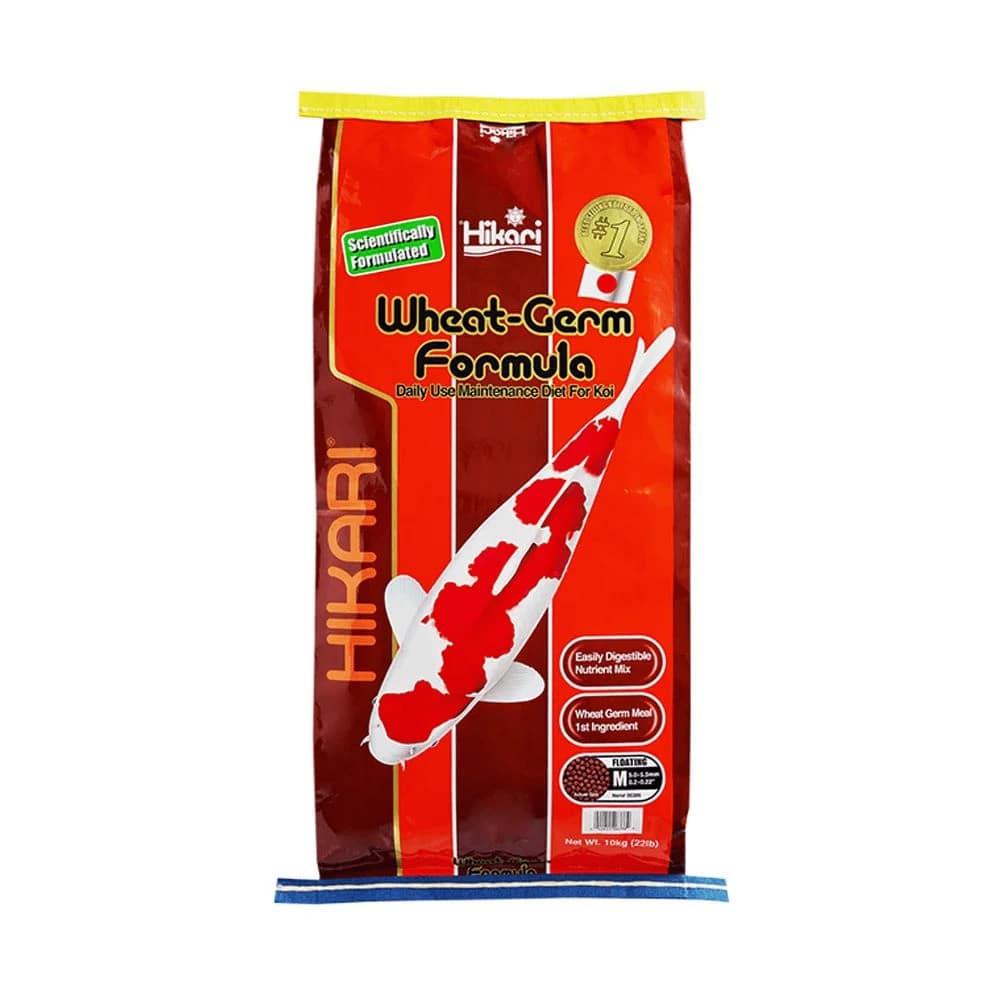
No. Hikari’s UK guidance for Wheat-Germ Floating allows year-round use within its instructions and says not to feed below 5°C. That’s one product’s guidance, not a rule for everything with wheatgerm on the label.
A cooler-water food can also be a useful option during the transition into or out of winter. You don’t have to switch straight from no feeding to a growth diet. Change when the water and the fish are ready.
Does a heated koi pond need a different food?
Heating changes the water temperature you are buying for. It doesn’t remove the need to check the food’s instructions or watch how the fish respond. A summer growth food may be suitable in a heated pond during winter if its conditions are met; that doesn’t mean every heated pond should be run as a growth project.
Decide what temperature you intend to maintain and choose accordingly. If you’re still considering heating, our pond heating guide explains the equipment and running-cost questions.
Pellet size, floating food and sinking food
Choose a pellet the smallest fish you intend to feed can manage. Buying larger pellets simply because some koi are big can leave the smaller fish struggling. Check the size in millimetres: “small”, “medium” and “large” aren’t a consistent measuring system across every brand.
If you are moving to another food, a modest first pack is sensible. You can see how the fish take it before committing to a large quantity. Watch the quieter fish as well as the ones that reach the food first.
Should you buy floating or sinking pellets?
Floating pellets make it easier to see the feeding response and spot leftovers at the surface. Sinking pellets offer another way of presenting food, but you need to be able to judge whether it is being eaten rather than disappearing into an unseen corner.
Sinking describes where the pellet goes, rather than how nutritious it is. Some ranges have different recipes for their floating and sinking foods, so compare the right bags. Our sinking-food range is a starting point if that presentation suits your fish and pond.
Can koi and goldfish share the same food?
A food explicitly intended for both can simplify feeding a mixed pond. Pellet size is still important. A bag that suits large koi may be awkward for smaller goldfish, even where the recipe is suitable for both.
Check the intended species on the food and make sure each fish can reach it. If you choose sticks instead, compare the weight rather than assuming a large-looking tub contains more food. You can browse pond sticks alongside pellets, but judge the complete diet and feeding directions rather than the shape alone.
Feeding sturgeon in a mixed pond
Sturgeon need food intended for them, delivered where they can reach it. OATA distinguishes their need for suitable sinking, higher-protein and oil-rich food, and their year-round feeding needs. Make sure food actually reaches them.
Choose food intended for sturgeon or sterlet and check the pellet size. This is particularly important in a pond where koi quickly intercept anything you put in. A mixed pond may need more than one food even when everyone lives in the same water.
Automatic koi feeders: how often should you feed?
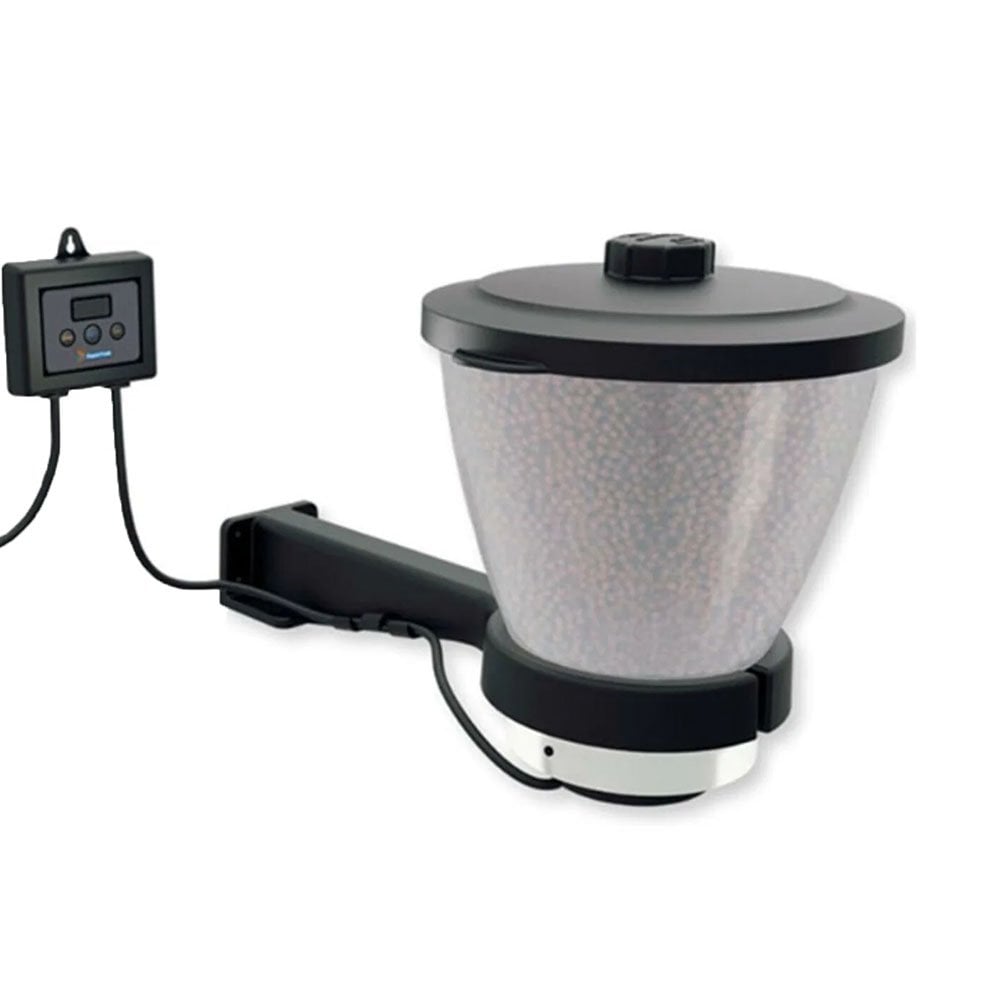
An automatic feeder makes it easier to spread food through the day. The important setting is how much food goes into the pond in total. Six small portions can add up to less food than two generous handfuls.
Water temperature, fish size, their feeding response and the pond’s ability to handle waste all matter. Start with the food maker’s guidance and a routine your pond is already coping with. Several small feeds can suit an established warm-water koi pond, but you don’t need to copy someone else’s timer settings to feed your own fish well.
For example, NT Labs’ Multi-Season instructions specify twice-daily feeding. Spreading an existing ration across more small feeds is a different decision from increasing the ration. Check the total before changing either setting.
How Matt uses his automatic feeder
“My pond is highly filtered, with plenty of biological media to handle the fish waste. My automatic feeder gives six feeds a day, every three hours, and I also go out and feed them myself a couple of times.
“The important thing is the amount. I only put in what they will eat within five minutes. If food is still there, I’ve put in too much. It’s wasted food and wasted money.”
Matt, That Pond Guy
That amount of feeding suits Matt’s setup. A colder pond or a smaller filter may need much less. Count the extra food you give by hand as well; it is easy to forget those handfuls when setting the timer.
Some food labels give a different consumption window. Hikari’s Wheat-Germ Floating instructions use five minutes; follow the exact food’s directions too. We use the five-minute check as a practical way to spot an oversized portion. You still need to check that the filter is coping, even when every pellet is eaten.
Set up the portions before increasing the frequency
We would begin by dividing the amount you already feed between the planned sessions. That lets you introduce the timer without immediately increasing the total food. Watch the fish and check water quality before deciding whether the daily amount should change.
- Check pellet compatibility. Use the feeder’s instructions for pellet size and shape. A food your fish like may still be unsuitable for the dispenser.
- Measure a test portion. Safely collect and weigh a feed using the maker’s test or manual-feed procedure. Keep hands clear of moving parts.
- Repeat it. Several test portions give a better idea of normal output than one run. Record the food, setting and approximate grams delivered.
- Watch it feed the pond. Check where the pellets land, whether they drift into the skimmer and whether smaller fish can reach them.
- Include hand feeding. Keep track of the extra portions you offer yourself.
Recheck the output when you change food or pellet size. A timer setting is usually a measure of how long the motor runs, not a promise of an identical weight for every type of pellet.
Say you already feed 60g a day. Split that into six 10g portions and you are still feeding 60g. Add two more 10g feeds by hand and it becomes 80g — a third more. The amount is only an example, but it shows how quickly the extras add up.
Changing food without losing track of the portions
Check that the replacement food suits the current water temperature and pellet size before changing over. Follow any changeover advice from its manufacturer. If you mix old and new foods during the change, both still need to be suitable for the conditions.
Keep the daily amount under control and observe the fish while you make the change. Do not change the food, double the feeder output and add treats at the same time: you will have little idea which change affected their appetite or the pond. If fish suddenly stop eating or begin hiding, our guide to koi behaviour and hiding explains the checks to make.
Does good filtration mean I can feed as much as I like?
Good filtration supports the routine, but fish eating quickly doesn’t prove that more food is safe. Water can look clear while ammonia or nitrite is building up. Biological media needs an established bacterial population as well as suitable conditions; new media takes time to mature before it can process more waste.
Our ammonia and nitrite guide explains what to check when the pond is not coping with its feeding load. The pH and KH guide covers the buffering that biological filtration also uses.
OATA advises gradual increases and regular water testing. If tests show a problem, deal with that before increasing food. Review the timer as water cools, appetite changes or the system is disturbed. Don’t leave peak summer settings running automatically into autumn.
What should you check when buying a feeder?
Look at the allowed pellet sizes, how portions are adjusted, the available feed times, power supply, mounting and how the hopper keeps food dry. The maximum number of daily feeds is a feature, not a target for every pond.
For example, the Evolution Aqua evoFeed supports up to six feeds and 3–10mm pellets, with flakes and sticks excluded. Aquadistri’s Koi Pro catalogue lists 1–24 feeds and 2–9mm pellets for the SuperFish Koi Pro feeder. Choose the controls and pellet compatibility you need rather than assuming more settings produce better feeding.
Browse our automatic fish feeders once you’ve chosen your food. Start a new setup while you are at home to observe it, rather than fitting it just before a holiday.
Which koi food offers the best value?
Start with cost per kilogram, then bring freshness and suitability back into the decision. Comparing the price of a small bag with a much larger tub without checking their weights is misleading. Volume in litres is also not a substitute for weight: pellets and sticks can fill a container very differently.
For example, a 2kg bag at £30 works out at £15/kg; a 5kg bag at £60 works out at £12/kg. These are example prices, but the calculation is useful when comparing pack sizes. Only buy the larger bag if you will use it while it is fresh.
Delivery charges can change a small order’s total too. Compare the delivered cost for the amount you actually need, rather than buying an unsuitable quantity to reach a threshold.
How long will a bag last?
A 3kg bag contains 3,000g, so if you use 50g a day it will last about 60 days. Use your own daily amount for that calculation; 50g is just an example.
Your usage can fall as the water cools. If autumn is approaching, don’t calculate a winter purchase from peak summer consumption. A smaller fresh pack can be the better buy even if its price per kilogram is higher.
Is premium koi food worth the extra money?
It can be worth paying for a formula that fits a particular goal, a useful pellet size, clearly declared ingredients or a feeding programme you want to follow. It isn’t sensible to assume every price increase will produce a visible improvement.
Before upgrading, decide what you are trying to change. If the real problem is uneaten food, unsuitable pellet size or a pond struggling with its existing feeding load, a premium label won’t answer that on its own. Keep notes when you change food so you can judge the routine rather than just remembering the promise on the bag.
Keeping fish food fresh after opening
Keep food dry and properly sealed between feeds. Follow the manufacturer’s instructions, keep the original label and close the pack properly after use. NT Labs advises cool, dry storage away from direct sunlight in the original sealed packaging.
A dry scoop is a small but useful precaution. Don’t reach into the bag with wet hands straight after working in the pond. Keep food away from damp equipment and put it somewhere you can close it properly rather than leaving the bag open beside the feeder.
Keep the batch details and best-before date, even if you use an outer storage box. Don’t top up an old container endlessly and lose track of which food is at the bottom. Buying less at a time also makes it easier to keep track.
More questions to ask before choosing a food
Do I need three different foods?
No. Matt’s three-food routine is one approach. A suitable complete food used within its temperature range may cover much of your year. Add another formula because it serves a purpose in your pond, not because you feel you ought to collect the whole range.
Should I mix several brands together?
First decide what the mixture would achieve. Mixing makes it harder to follow a particular formula’s instructions and to tell which food is being accepted. If you do combine foods, each needs to suit the conditions. A cold-water pellet doesn’t make an unsuitable growth pellet suitable for winter.
Are dried insects and silkworms a complete diet?
Don’t assume so. Read whether the product is a complete or complementary feed and follow its preparation and temperature instructions. Treats belong in a considered feeding routine; the word “natural” doesn’t tell you that one ingredient supplies a balanced diet. Browse koi treats separately from your main food.
Can the same brand’s junior food have a different recipe?
Yes, so don’t assume “junior” only means a smaller pellet. Compare the exact product information, including its analysis and intended species. If you’re ordering for small fish, both the physical size and the correct formula matter.
What if the fish stop eating the new food?
Don’t immediately buy another bag and keep adding more. Check temperature and water quality, watch the fish and investigate a persistent change in behaviour. Our feeding guide explains the next checks. A food comparison can’t diagnose why a fish has lost its appetite.
Still deciding what to buy?
For a straightforward choice, write down your water temperature, the smallest fish you need to feed, whether you want floating or sinking pellets, and roughly how much food you use. Then choose between suitable complete formulas.
That is how we’d approach the range rather than starting with the biggest protein number or the most expensive bag. Browse our koi and pond fish food and use the product information to narrow the options. If you’re unsure between two foods, tell us what fish you keep and what you’re trying to achieve so we can help you compare them.
