






KiGen Tosai 3mm Floating Koi Food
| Brand | |
|---|---|
| Pellet Size | 3mm |
| Food Type | Growth, Staple / Complete |
| Feeding Season | Seasonal Feeding |
| Pellet Behaviour | Floating |
| Weight | 1.2kg, 5kg |
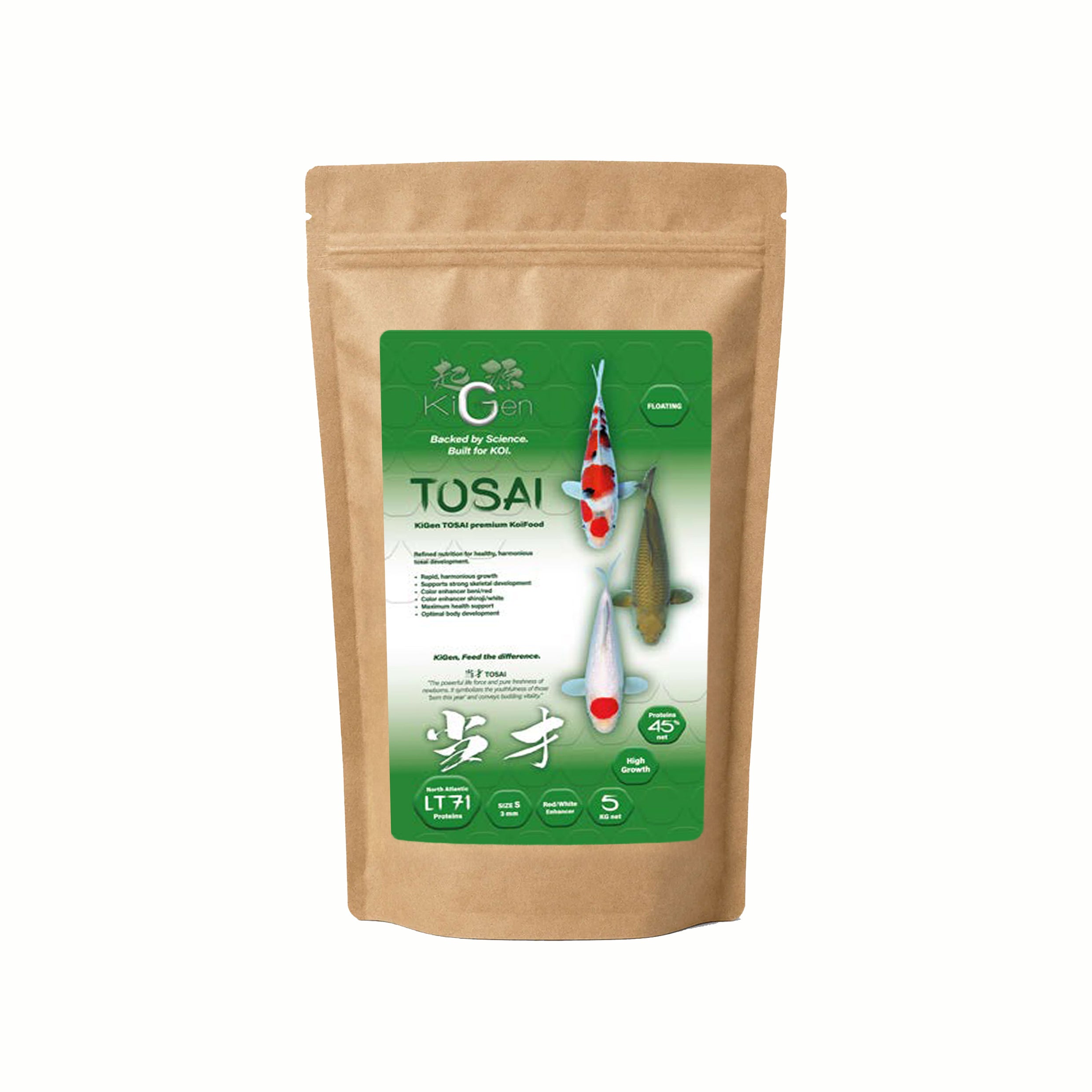
A 45% protein, 3 mm floating food for growing young koi. Made with LT71 fishmeal, shrimp meal and sorghum, with spirulina and declared vitamins and minerals. Choose 1.2 kg or 5 kg.
Price range: £27.50 through £95.00 (inc VAT)
Out of stock
KiGen Tosai 3mm Floating Koi Food
High-protein nutrition for young koi, balanced growth and colour development
KiGen Tosai is a 3 mm floating koi food developed for the controlled rearing of young koi from approximately 12 cm. Its 45% protein recipe is intended to support growth alongside a balanced body shape, skeletal development and skin quality. It suits keepers raising young fish in a well-managed pond or grow-on system where feeding, temperature and water quality can be monitored closely.
The smaller pellet gives young koi a manageable food size, while the floating format lets you see which fish are eating and how confidently they feed. That makes daily feeding a useful opportunity to watch their development as well as provide their ration.
Why choose KiGen Tosai?
- 45% protein to meet the demands of growing young koi.
- 3 mm floating pellets, designed for young fish from around 12 cm.
- LT71 fishmeal with shrimp meal as the main animal protein ingredients.
- Spirulina and declared canthaxanthin in a recipe developed with colour and skin quality in mind.
- Declared vitamins, minerals and amino-acid additives alongside the main ingredients.
- A choice of 1.2 kg and 5 kg bags.
A recipe built around young-koi development
LT71 fishmeal and shrimp meal
Protein supplies the amino acids used to build and maintain body tissues. Tosai uses a high proportion of LT71 fishmeal, supported by shrimp meal, to provide these nutrients in a palatable feed. LT means low-temperature processing: the fishmeal is dried gently to help preserve protein quality. The LT71 ingredient name is separate from the finished food’s 45% protein content.
This emphasis on protein quality matters in a growth diet. The aim is to provide usable nutrition as the fish develop, with feeding rates that the pond can support. Even a highly digestible food adds to the biological load, so filtration capacity remains a limit on how much can be fed.
Sorghum, minerals and colour-supporting ingredients
Sorghum supplies starch for energy and helps form the extruded pellet. The recipe also includes a vitamin and mineral premix, antioxidants, active clay and herbal oils. Spirulina and the declared colour additive canthaxanthin are included in Tosai’s formulation, with attention to beni, the red areas, and shiroji, the white skin.
The published label also declares vitamins A, D3, E and C, trace minerals and amino-acid additives. This gives keepers more useful detail than the protein percentage alone when considering a diet for developing young koi. Diet supports a koi’s natural potential; genetics, water quality and the wider keeping conditions still influence its eventual shape and appearance.
Tosai nutritional and pellet details
| Detail | Tosai |
|---|---|
| Crude protein | 45% |
| Crude fat | 8.1% |
| Crude fibre | 1.3% |
| Crude ash | 13% |
| Pellet | 3 mm floating |
| Bag sizes on this page | 1.2 kg and 5 kg |
These figures and the composition below follow the label artwork published in KiGen’s own product galleries, checked on 7 September 2026. The labels name sorghum, whereas the January brochure uses millet. We use the label wording here and omit ingredient inclusion percentages that it does not declare. Check the bag supplied for the declaration and instructions applicable to that pack.
Declared composition
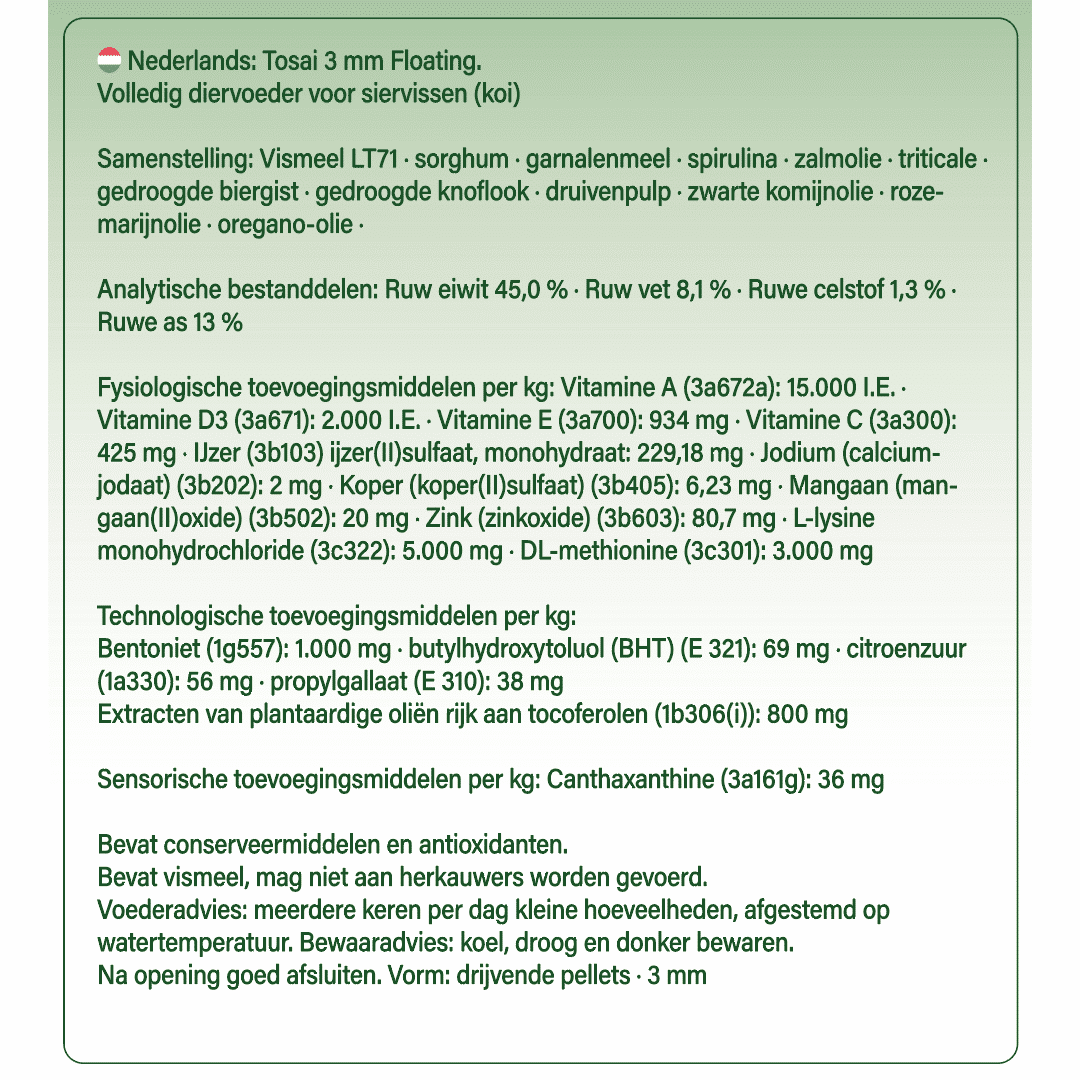
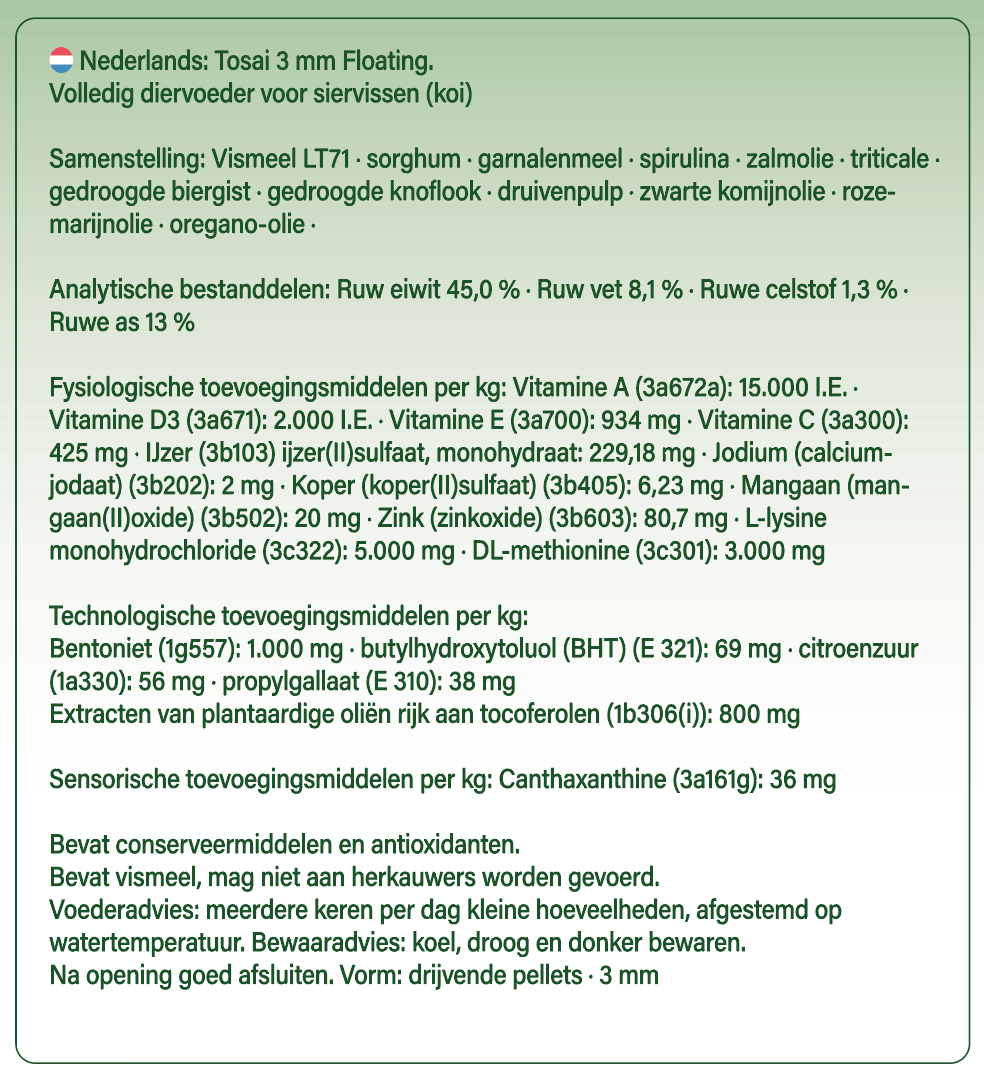
Tosai: LT71 fishmeal; sorghum; shrimp meal; spirulina; salmon oil; triticale; dried brewer’s yeast; dried garlic; grape pulp; black cumin oil; rosemary oil; oregano oil.
The complete food contains cereal ingredients, including triticale or wheat ingredients; it should not be described as gluten-free. Ingredient names and fishmeal grades are separate from the finished food’s analytical percentages.
Vitamins, minerals and other declared additives
| Declared additive | Tosai |
|---|---|
| Vitamin A (3a672a) | 15,000 IU/kg |
| Vitamin D3 (3a671) | 2,000 IU/kg |
| Vitamin E (3a700) | 934 mg/kg |
| Vitamin C (3a300) | 425 mg/kg |
| Iron(II) sulphate, monohydrate (3b103) | 229.18 mg/kg |
| Iodine, calcium iodate (3b202) | 2 mg/kg |
| Copper(II) sulphate (3b405) | 6.23 mg/kg |
| Manganese(II) oxide (3b502) | 20 mg/kg |
| Zinc oxide (3b603) | 80.7 mg/kg |
| L-lysine monohydrochloride (3c322) | 5,000 mg/kg |
| DL-methionine (3c301) | 3,000 mg/kg |
These are the label’s additive declarations, not a separate analysis of the total naturally occurring nutrients in the food.
Tosai — technological additives per kg: bentonite (1g557), 1,000 mg; butylhydroxytoluene/BHT (E321), 69 mg; citric acid (1a330), 56 mg; propyl gallate (E310), 38 mg; extracts of vegetable oils rich in tocopherols (1b306(i)), 800 mg. Sensory additive: canthaxanthin (3a161g), 36 mg/kg.
Contains preservatives and antioxidants. Contains fishmeal and must not be fed to ruminants. This is complete feed for ornamental fish (koi).
Read the manufacturer’s label: Tosai label. Label images are also available in the product gallery.
Feeding young koi through the growth season
Use measured water temperature and the fish’s response to set the ration. KiGen’s Tosai guide is deliberately cautious below 18°C, then allows higher feeding levels as young fish make better use of food in warmer water. These figures are a total daily allowance based on fish body weight, not a quantity for each feed.
| Water temperature | Total food per day (% of fish body weight) |
|---|---|
| Below 8°C | Do not feed |
| 8–10°C | 0.05–0.10% |
| 10–12°C | 0.10–0.15% |
| 12–14°C | 0.15–0.20% |
| 14–16°C | 0.20–0.25% |
| 16–18°C | 0.25–0.30% |
| 18–20°C | 0.30–0.60% |
| 20–22°C | 0.60–1.00% |
| 22–24°C | 1.00–1.40% |
| 24–26°C | 1.40–1.80% |
| 26–28°C | 1.10–1.40% |
| Above 28°C | Less than 1.00% |
For example, 1% of a combined 2 kg fish weight is 20 g of food over the whole day. Divide the chosen daily amount into small feeds and only offer what the koi clear comfortably within a few minutes. Do not multiply the daily ration by the number of feeding sessions.
The higher table values require strong oxygen availability, effective filtration and stable water quality. Reduce feeding immediately if ammonia or nitrite rises, if food remains uneaten or if the fish become less interested. KiGen advises no feeding below 8°C and reduced feeding in very warm water above 28°C. Use the table as a guide, with the current bag instructions taking priority.
Adjusting as your koi grow
Reassess both pellet size and the proportion of body weight fed as the fish mature. An intensive young-koi feeding regime should not simply continue unchanged as the collection becomes larger and older. KiGen notes that age, body mass and variety affect growth efficiency, so progress is better judged by balanced development and condition than by appetite alone.
Choosing a bag and keeping it fresh
The 1.2 kg bag is useful for a smaller group of young fish or when introducing Tosai. The 5 kg size suits established feeding routines with enough regular use to keep the food fresh. Both options contain the same 3 mm floating format; choose the bag size above to see its current availability.
Introduce a different diet progressively while watching appetite and waste. Reseal the bag after feeding and store it somewhere cool and dry, away from direct sunlight. Use a dry scoop, keep pond water out of the bag and follow the pack’s best-before and storage instructions.
Choosing between the KiGen foods
Use our KiGen koi food comparison guide to compare all six foods by pellet size, protein level, feeding purpose and floating or sinking format.
- KiGen Tosai RG-92 — the 3 mm young-koi option with added RG-92 algae extract.
- KiGen Miori — an accessible 6 mm floating food for balanced everyday feeding.
- KiGen Manju — a 6 mm floating maintenance diet for condition and cooler active periods.
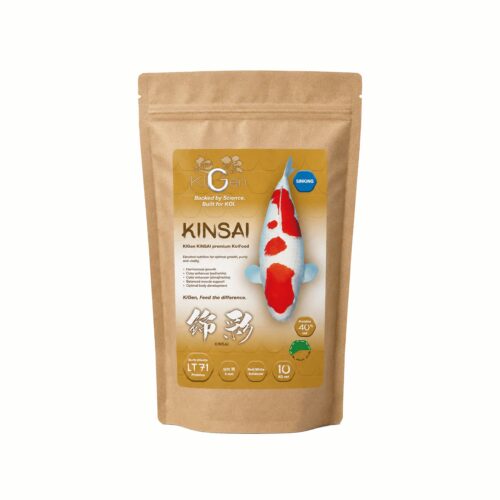
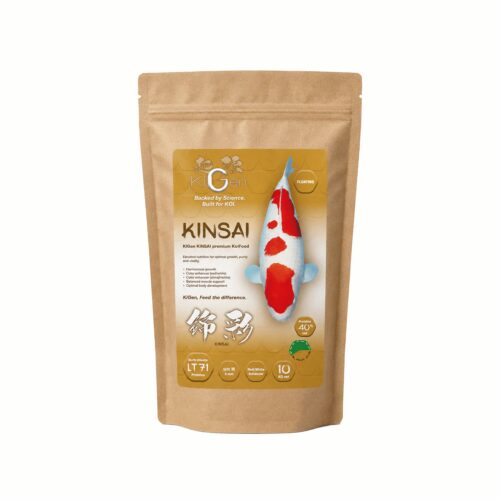
- KiGen Kinsai — premium 6 mm floating or sinking food for growth, body shape and colour.
- KiGen RG-92 Special — the 6 mm premium option with RG-92, in floating and sinking pellets.
Explore our complete koi food range to compare other diets and pellet sizes.


Reviews
There are no reviews yet.