






Feeding Koi in Winter: When to Feed, What to Choose and When to Stop
Check the pond, rather than feeding by the calendar
Winter feeding starts with a thermometer and a look at the fish. A mild day in January does not necessarily mean the pond has warmed enough for a meal. Equally, koi in a properly heated pond may remain active when fish in an unheated pond have slowed right down.
We would check the water temperature, the food’s current directions, appetite and water quality together. There is no single instruction to stop feeding every koi at 10°C that fits every food and every pond. There is also no reason to keep offering food to dormant fish simply because the packet says winter.
Do not feed dormant or uninterested koi. If a small offering is ignored, remove it and stop rather than adding a larger handful. Check the water and equipment if appetite has changed unexpectedly. Distressed fish need investigation, not a different flavour of food.
When should you stop feeding koi in winter?
Start with the label of the exact food you are using. Manufacturers give different directions for different formulations. Their temperature guidance is not an instruction to feed fish that are inactive, unwell or in poor water conditions.
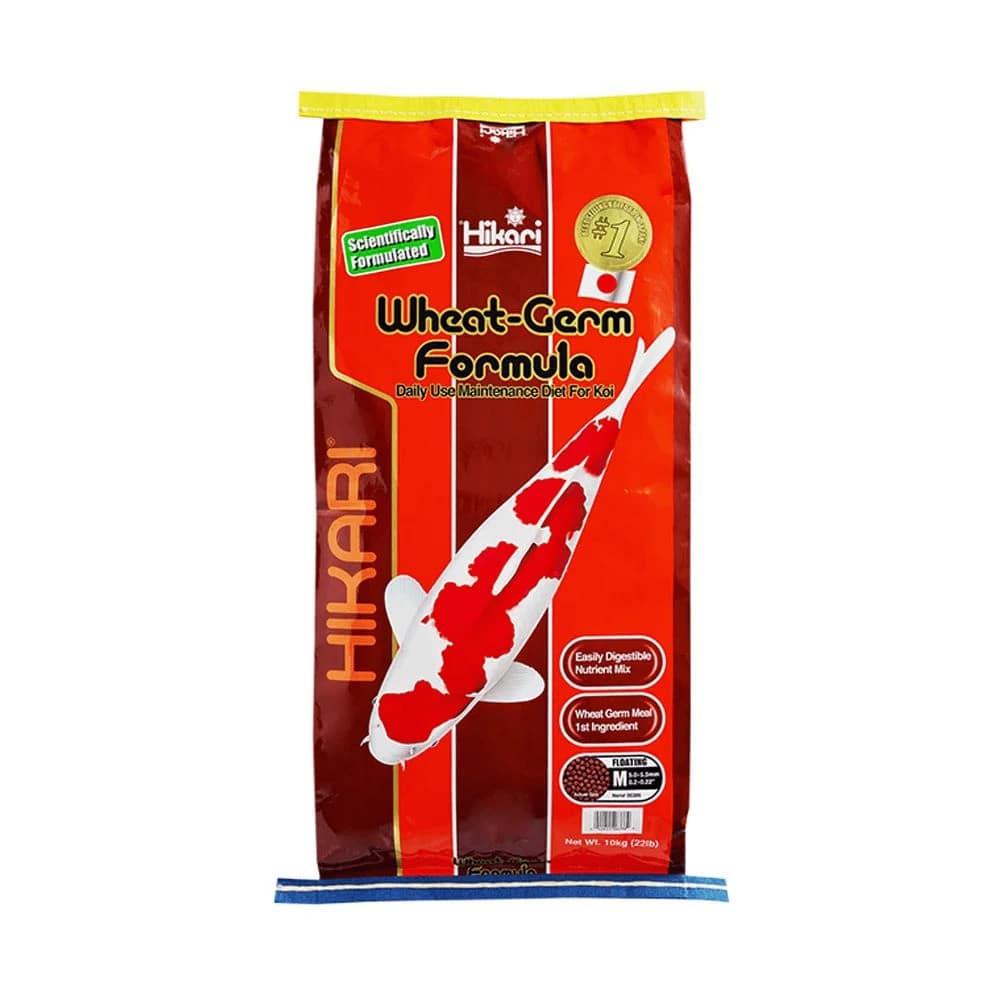
For example, Hikari Wheat-Germ Formula gives a 5–18°C cool-water feeding band and says not to feed below 5°C. It also says to adjust for activity, water condition, and the number and size of fish. Those directions belong to that product, not every koi pellet.
NT Labs Probiotic Wheatgerm with Garlic says not to feed when fish are dormant in very cold weather. General OATA pond-fish guidance is more cautious, saying it may be better not to feed below 8°C. That difference is a reason to read the actual directions and assess the pond, rather than copying one chart across every brand.
If you are uncertain in cold conditions, hold off and ask for advice with the water temperature, fish behaviour and food name. A temperature boundary on a packet is not a target to feed down to.
| What the pond is doing | What to check | A sensible response |
|---|---|---|
| Fish are resting and not seeking food | Water temperature and normal seasonal behaviour. | Do not feed dormant fish. Remove any uneaten offering. |
| Fish are active in cool water | Exact food label, stable conditions, appetite and water tests. | Only a small suitable meal if all the checks support it. |
| A heated pond remains consistently warm | Actual water temperature, oxygen and biological-filter performance. | Follow a routine suited to that water and food, not the month. |
| Ammonia or nitrite is rising | Feeding load, water source, filter operation and recent changes. | Reduce or stop feeding while investigating and correcting the cause. |
| Appetite drops suddenly | Water tests, temperature change, equipment and signs of illness. | Investigate; do not assume the fish need more palatable food. |
What sort of food should you choose?
A food intended for cooler water is a useful place to start when the koi remain active and conditions support feeding. Wheatgerm foods are one familiar option, but wheatgerm on the front of a bag does not tell you the complete recipe or its feeding instructions.
Check the whole ingredient list, analytical constituents, pellet size and whether it floats or sinks. A summer growth diet and a cool-water recipe can have quite different uses. Avoid treating protein percentage on its own as a complete measure of suitability, and do not assume every wheatgerm food is poultry-free or fishmeal-free.
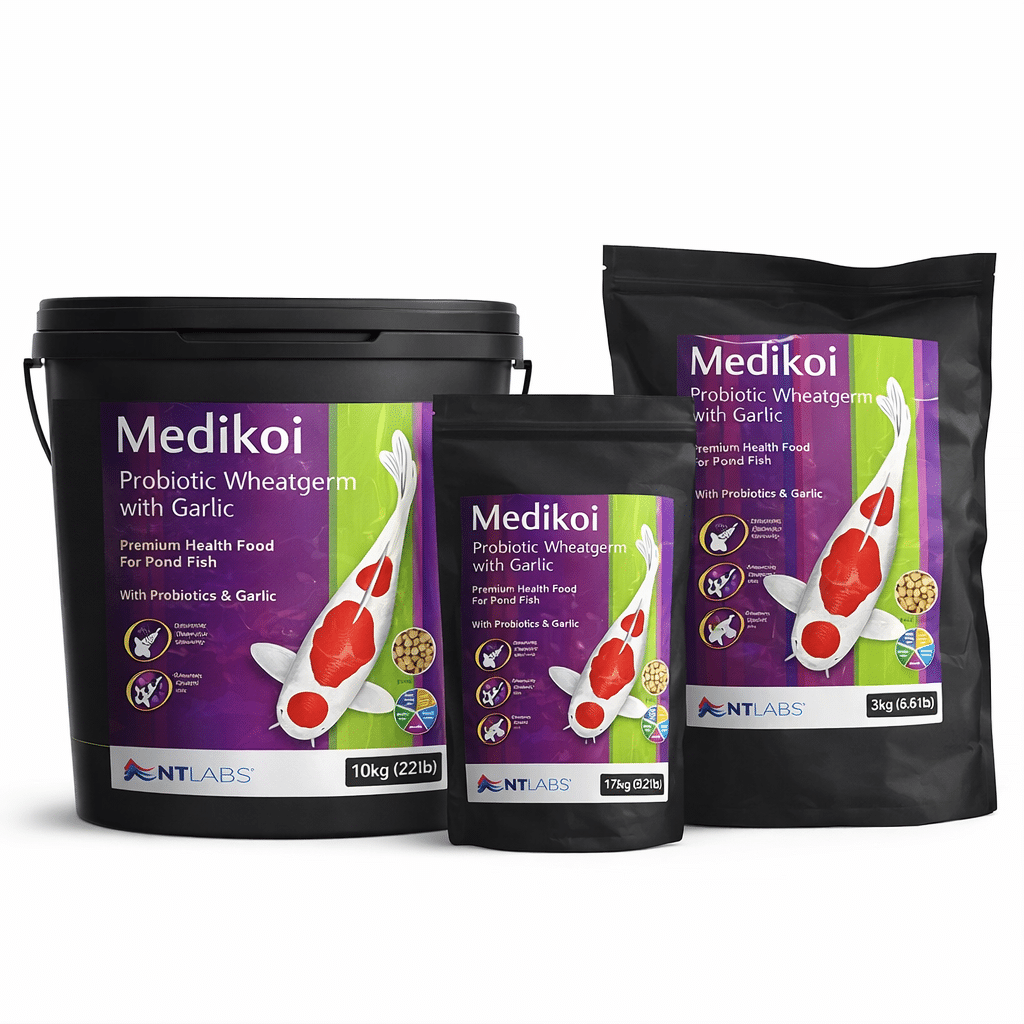
The current NT Labs recipe includes poultry meal, hydrolysed feather protein meal and fish meal, alongside its other ingredients. If protein sources matter to you, read the current composition rather than relying on the food’s seasonal name. Our koi food buying guide compares food types, brands, ingredients and value in more detail.
Choose a pack size you can use sensibly while it stays fresh. Keep it sealed, dry and stored as directed. Buying a large bag for a winter with very little feeding can be poor value if much of it remains open for too long.
What Matt feeds his own koi
Matt has used NT Labs food for his own fish for years: Probiotic Wheatgerm with Garlic in winter, Probiotic through spring and autumn, and Probiotic Growth in summer.
That is the range he chose and has stayed with. It is personal experience, not a claim that it is the best food or that another range could not suit your pond. Feeding still depends on the fish and conditions; the winter choice is not an instruction to feed through dormancy.
How much and how often should you feed?
Begin with a small offering that you can watch. In cooler water, a busy summer routine is unlikely to be an appropriate starting point. Follow the food’s directions and adjust down to what the fish actually want and the pond can process.
Matt’s practical check is to offer only enough for everything to be eaten within about five minutes. If food remains, too much has gone in: remove it and reduce the next offering. That is a check on portion size, not permission to keep adding pellets for five minutes or to feed when the fish are dormant.
Some manufacturer directions allow a different feeding period. For example, the current NT Labs Wheatgerm page mentions ten minutes, while Hikari Wheat-Germ uses five. Keep the distinction clear: we favour small observed portions, and uneaten food is a reason to stop, not a reason to wait for the longest possible time.
Watch whether all the fish can take an appropriate pellet. Competition can make one keen fish look like the whole pond is hungry. A few active koi near the surface do not necessarily mean the resting fish need a full meal too.
What about an automatic feeder?
Review its programme as temperatures fall. Check the actual portion delivered into a dry container, using the food and pellet size that will be in the hopper. A number on the controller is not a measured daily ration.
Reduce or stop the programme when conditions call for it, and do not leave it running unobserved through a cold spell. Keep the hopper dry and check for sticking food. Hand feeding still counts towards the day’s total.
Matt’s frequent automatic feeding routine belongs to his own well-filtered pond when conditions support it. It is not a winter schedule for every koi pond. The general koi feeding guide explains how to manage the total amount.
A sunny afternoon is not the whole picture
Measure the water, not the air temperature reported by a weather app. Check whether the pond is reasonably stable or just showing a brief surface change. Consider the colder period that follows, especially if the fish have only just begun showing interest.
If the food’s directions and pond conditions support feeding, offer a modest amount while you can observe it. Do not try to make up for missed meals. Healthy koi resting through cold weather do not need a backlog of food delivered on the first brighter day.
Water quality still matters when feeding slows down
Keep testing and checking the equipment. Less feeding does not mean no waste or no need for circulation and biological filtration. Fish continue to produce waste, and accumulated leaves or uneaten pellets add material the pond must deal with.
If ammonia or nitrite appears, feeding less is one part of the response. Check the filter, air supply, source water and recent cleaning too. Follow our ammonia and nitrite advice rather than changing food and assuming the problem is solved.
Maintain appropriate aeration. An ordinary water test kit does not necessarily measure dissolved oxygen; that needs the correct test or meter. Our aeration guide covers winter positioning, air for the biological filter and backup planning.
Heated ponds and the return to spring feeding
A heated koi pond can have a different feeding season from an unheated one. Use its measured water temperature and the selected diet’s directions. Keep the food load within what the filter and oxygen supply can support; a heater does not increase biological capacity on its own.
For heating options, covers and running costs, see the pond heating guide. When an unheated pond warms in spring, bring feeding back gradually while watching appetite and water tests. A few mild days do not mean it is ready for the full summer ration.
What if the pond also contains sturgeon?
Do not apply the koi’s winter routine to every species in a mixed pond. Sturgeon have their own food and oxygen requirements; OATA specifically distinguishes their feeding through colder weather. Make sure they receive a suitable sinking diet without using extra food as a way of encouraging dormant koi to eat.
If you would like help choosing a food, tell us the species, water temperature, whether the pond is heated, the current food and what the fish are doing. Browse wheatgerm foods alongside the full buying guide, or ask us about your pond.
