





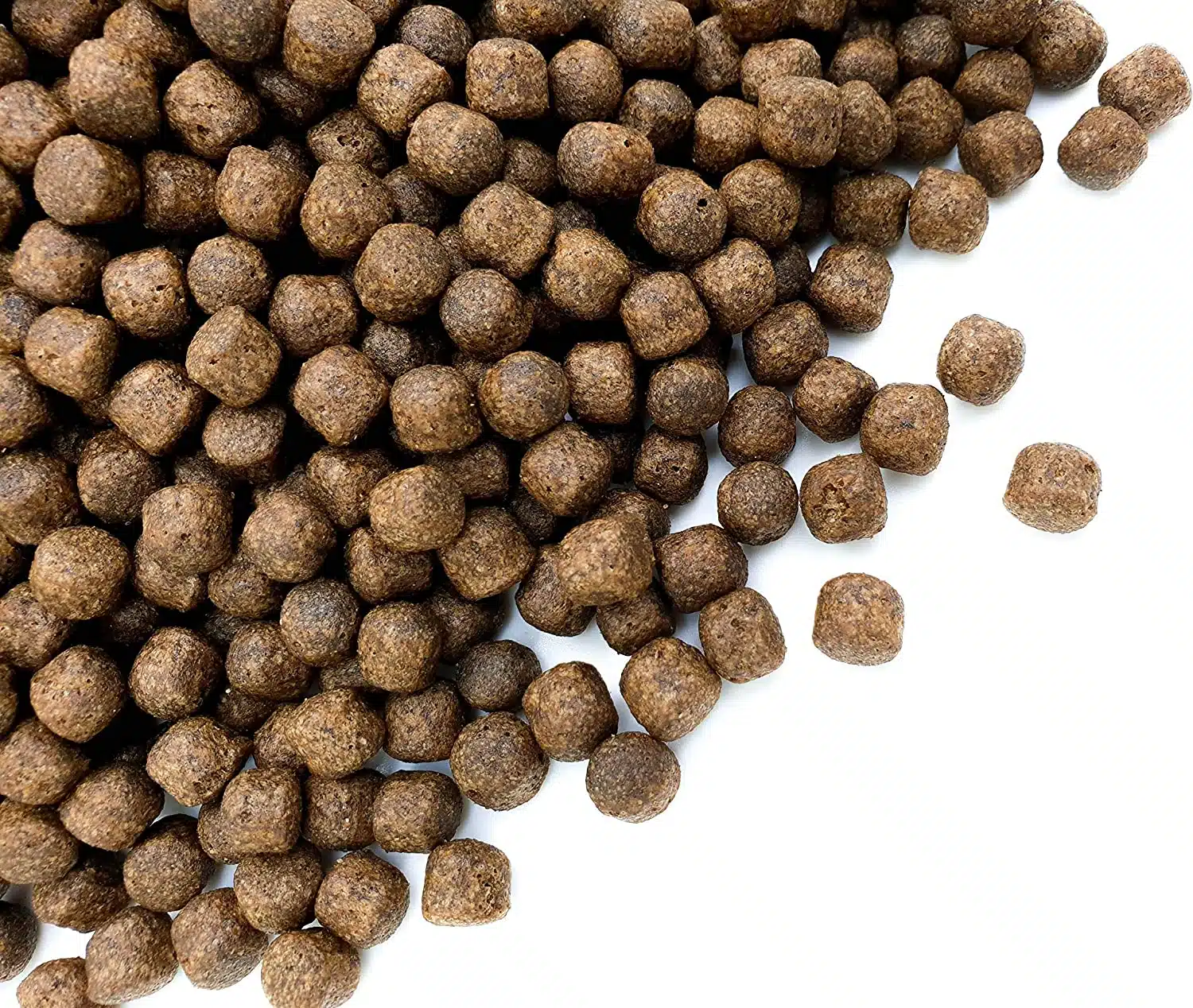
Koi Feeding Guide: Food, Amounts and Seasonal Care
Feeding koi well is not about giving the largest possible amount. It is about choosing a digestible food for the current water temperature and purpose, offering a quantity the fish and filter can handle, and using feeding time as a daily health check. This practical UK guide explains food type, pellet size, seasonal changes and the warning signs that mean you should stop.
What makes a good koi food?
A useful diet supplies digestible protein for tissue maintenance and growth, fats for energy, carbohydrates, vitamins and minerals. Pigment sources may support colour when that is the aim. The quality and digestibility of the ingredients matter more than an exaggerated protein percentage. Protein that is poorly used simply increases waste and filter load.
Choose an established manufacturer that states the food’s purpose, temperature guidance, pellet size and composition. Store it sealed, cool and dry, and buy a pack the pond will use while fresh. Rancid oils, moisture and mould turn bargain bulk food into a false economy.
Our koi food range can be filtered by brand, food type, feeding season and pellet size, which is more useful than one long product list.
Feed to water temperature, not the calendar
Koi metabolism and biological-filter activity change with water temperature. A warm March and cold May do not follow marketing seasons. Use a thermometer and watch the fish. Sudden cold fronts can reduce appetite quickly even if the packet is described as “summer food”.
Cold water
When koi remain active in cool water, a digestible wheatgerm or cool-water formulation is often appropriate. Offer very small amounts and stop if fish do not clear them. Our guide to feeding koi in winter explains when food is useful and when it becomes unnecessary load.
Spring and autumn
Increase or reduce feeding gradually. A quality all-season or wheatgerm-based diet supports fish without pushing growth while the filter adjusts. Test ammonia and nitrite more frequently as feeding rises in spring.
Warm, stable summer water
Healthy koi with excellent water and oxygen can take several small feeds. Growth or colour-support food may suit a defined goal. Warm water holds less oxygen, so heavy feeding must be matched by filtration and aeration. Read our hot-weather koi guide.
How much should you feed?
There is no reliable “handful per pond” rule. Fish biomass, pellet size, temperature, food energy, filter capacity and frequency all alter the answer. Start conservatively and observe.
- Offer a small measured portion over a wide area.
- Watch every fish and allow the group to clear it.
- Add another small portion only while interest remains strong.
- Stop before interest fades and remove persistent leftovers.
- Record the daily total when managing growth or water quality.
For heavily stocked systems, estimate total fish weight and use the manufacturer’s percentage guidance as a maximum starting point, then adjust for temperature, body condition and test results. The filter must process the waste generated by the ration.
One large feed or several small feeds?
Several small feeds in warm, stable conditions are usually easier for koi to digest and give timid fish a chance. They also spread oxygen and ammonia demand across the day. One large feed creates a sharper load and lets dominant koi take most of it.
Automatic feeders give consistency, but must be calibrated. Catch the output in a container, weigh it and confirm the daily total. Protect the hopper from rain and check for bridging. Someone still needs to observe the koi every day.
Choosing pellet size and buoyancy
A pellet should be easy for the smallest intended fish to take without repeated spitting. Mixed groups may need a blend of sizes or crushed larger pellets. Small pellets provide more individual pieces and can reduce competition; very fine food can disappear into skimmers.
Floating food makes appetite, body condition and injuries easy to observe. Sinking food can help cautious koi and bottom-feeding species, but leftovers are harder to see. Do not use sinking food merely to avoid investigating fish that no longer approach the surface.
Staple, growth, colour and specialist diets
Staple and complete food
A balanced complete food is the everyday foundation. It should provide required nutrients when fed as directed and is normally the best choice for a mixed pond without a specialist goal.
Growth food
Growth diets suit warm water, active fish and strong filtration. Genetics, space, oxygen, water quality and consistent care govern growth as much as protein. Never force a high-feeding regime on an immature filter.
Colour-enhancing food
Spirulina, astaxanthin, krill and similar ingredients may support pigmentation. They cannot repair poor genetics or unhealthy skin, and should not replace a balanced diet.
Probiotic or health-support food
Some diets include selected microorganisms, fibres or immune-support ingredients. They may complement good husbandry but do not treat parasites, bacterial disease or poor water. Disease symptoms require the diagnosis-first koi health process.
Treats
Shrimp, silkworm pupae and other treats encourage interaction but should remain a small part of the ration. Bread and kitchen scraps are not balanced koi food and quickly pollute water.
Feeding and water quality are inseparable
Food becomes fish tissue, energy and waste. More food means more ammonia, faeces, carbon dioxide and oxygen demand. Test ammonia and nitrite weekly and more often after increasing food, adding fish or changing the filter. Both should remain at zero.
If either is detectable, reduce or stop feeding, increase aeration and investigate. Our ammonia and nitrite guide explains the response; the ideal water guide covers pH, KH, nitrate and temperature.
Use feeding time as a health inspection
Healthy koi develop a recognisable feeding response. Learn which fish arrive first, which hang back and how quickly the group clears a normal portion. A change in one fish may indicate injury or illness; a group-wide change more strongly suggests temperature, water or oxygen.
Look for rapid breathing, clamped fins, isolation, flashing, ulcers, cloudy eyes, swelling or inability to compete. Do not keep feeding to “tempt” distressed fish before testing. Read how to keep koi healthy and our koi behaviour guide.
Feeding new or quarantined koi
New koi may not feed immediately after transport. Prioritise stable temperature, oxygen and water. Offer a small familiar food once they settle and remove it if ignored. Quarantine needs mature filtration because a small volume can develop ammonia quickly.
Do not use appetite alone to clear quarantine. Observe, test and follow a responsible biosecurity period. The guide to choosing healthy koi starts the process before purchase.
When should you stop feeding?
- Ammonia or nitrite is detectable.
- Fish are gasping, unusually lethargic or ignoring food.
- The pump, filter or aeration has failed.
- A treatment label instructs fasting.
- Temperature has fallen and koi are no longer active.
- Food remains after a few minutes.
A healthy adult koi tolerates a short fast far better than polluted, oxygen-poor water. Never ask a holiday carer to compensate for missed food with larger portions.
Food storage and freshness
Keep food in its original inner packaging or a clean airtight food-safe container, away from sunlight, heat, damp and rodents. Note the opening date and do not pour fresh pellets onto old dusty residue. Discard food that smells rancid, shows mould, feels damp or has insect contamination.
Refrigerating or freezing opened food can introduce condensation unless managed carefully. Follow the manufacturer’s storage guidance and buy smaller packs if a large bag will remain open for a year.
A practical annual feeding plan
Early spring: test first, begin with small cool-water portions and let the filter catch up. Late spring: increase gradually. Summer: use measured meals, excellent oxygen and a diet matched to the goal. Autumn: reduce quantity before appetite collapses and move to a digestible seasonal food. Winter: feed only when fish and temperature justify it.
See our seasonal pond care guide and koi maintenance schedule.
Common feeding mistakes
- Using the same amount every day regardless of temperature.
- Buying food by protein percentage alone.
- Adding more because the largest koi still begs.
- Ignoring pellets pulled into a skimmer.
- Increasing food before confirming filter capacity.
- Letting an automatic feeder replace daily observation.
- Using treats as the main diet.
- Keeping a large opened bag for several seasons.
Frequently asked questions
How many times a day should I feed koi?
In warm stable conditions, several small feeds may be appropriate. In cool water, one small feed or none may be correct. Temperature, fish response and tests decide.
How long should koi take to eat?
Offer only what is actively cleared within a few minutes. Persistent leftovers mean the portion was too large or something is wrong.
Can all-season food be used all year?
The label does not override metabolism. Feed only while koi are active and within the manufacturer’s temperature guidance.
Is high-protein food better?
No. Protein must be digestible and suited to temperature, growth goals and filtration. Excess becomes expensive waste.
What pellet size is best?
Choose one the smallest fish can take comfortably. Mixed sizes help mixed groups and spread feeding opportunities.
Why do koi spit pellets out?
The pellet may be too large or hard, the fish may be sampling it, or mouth or gill discomfort may exist. Persistent group-wide spitting warrants water and health checks.
Can koi eat bread?
It is not a balanced diet and can foul the pond. Use formulated complete food and purpose-made treats sparingly.
Should pellets be soaked?
Most quality pellets do not require soaking. It may soften food for a particular fish, but wet food spoils quickly and should not be stored.
Can koi be overfed?
Yes. Water deterioration, excessive waste and unhealthy body condition can result. Measure portions and monitor the pond.
What should a holiday feeder do?
Use pre-measured portions or a calibrated feeder and state clearly that extra food must not be added.
Why have all koi stopped eating?
Check temperature, ammonia, nitrite, pH, oxygen and equipment. A group-wide change is a warning, not merely fussiness.
Do colour foods make white areas pink?
Overuse of pigment-rich diets can influence appearance, but water quality, genetics and health also matter. Use them as part of a balanced ration.
Can sturgeon eat koi food?
Sturgeon have different feeding behaviour and dietary needs and often require a dedicated sinking food. Ensure they receive food directly and are not starved by koi.
Should I feed after filter cleaning?
Light feeding may be fine after normal mechanical cleaning, but if biological media was disturbed or water tests are abnormal, wait and monitor.
Our practical recommendation
Start with a reputable complete food, suitable pellet size and measured seasonal routine. Change one variable at a time and let test results guide what the pond can support. That Pond Guy stocks established koi-food brands and can help compare formulas without pretending one bag is universally best. Contact us with temperature, fish sizes and the current feeding plan.
How to change koi foods
Introduce a new diet over several feeds instead of mixing a large bag blindly. Watch acceptance, faeces and water. A food that produces excessive fine waste, oil or persistent rejection may not suit the pond. Keep the old label and batch information if an unexpected problem develops.
How much food should I buy?
Choose a quantity the pond will use fresh within the manufacturer’s storage period. The lowest price per kilogram is not good value if the final third becomes stale.
