






Greater Pond Sedge (Carex riparia)
| Size | 1 Ltr, 3 Ltr, 9cm – Pack of 3 |
|---|---|
| Plant Type | Marginal |
| Sun / Shade | Full Sun to Part Shade |
| Flower Colour | Brown |
| Growth Rate | Fast |
| Native to UK | Yes |
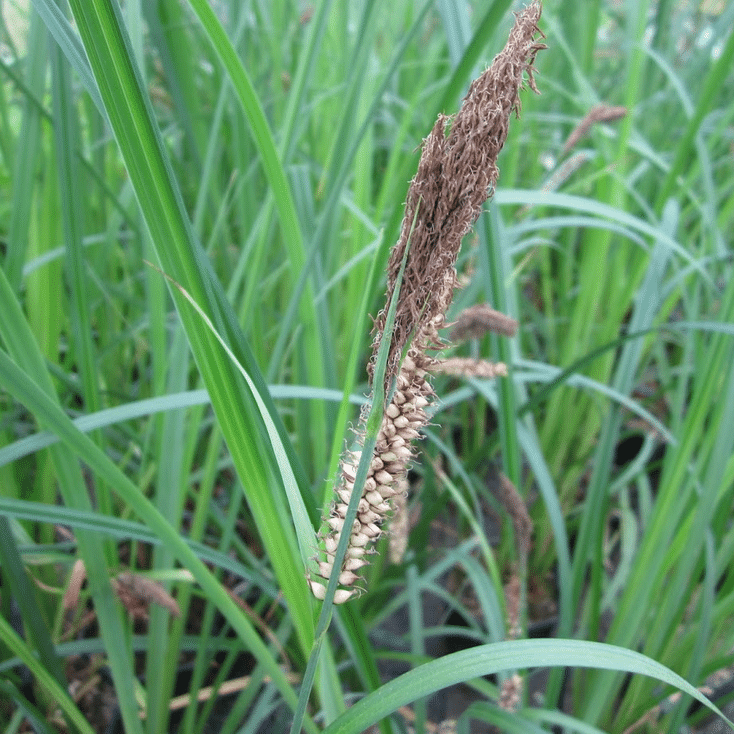
Greater Pond Sedge, Carex riparia, is a tall UK native marginal plant with broad green foliage and dark brown summer spikelets. Ideal for larger wildlife ponds, natural margins and wetland planting, it adds strong structure, dense cover and a natural architectural look around pond edges.
Price range: £10.00 through £16.50 (inc VAT)
Greater Pond Sedge (Carex riparia)
A tall UK native marginal sedge with broad green foliage and dark brown summer spikelets, ideal for larger ponds, wildlife margins and natural architectural planting.
A bold native marginal plant for structure, wildlife cover and natural pond edges
Greater Pond Sedge, botanically known as Carex riparia, is a strong growing UK native marginal plant that brings height, texture and architectural structure to pond edges, wetland planting schemes and wildlife gardens. It is one of the larger sedges, producing broad, glaucous green leaves and upright stems topped with dark brown flowering spikelets in early summer.
This is a grass like marginal plant, although it is technically a sedge rather than a true grass. It is especially useful where a pond edge needs a bolder, more natural appearance. The tall foliage helps soften hard pond margins, disguise liner edges and create a strong vertical backdrop for lower growing marginal plants. It is popular in larger wildlife ponds, natural ponds, lake edges, wetland planting areas and landscaping schemes where a native architectural plant is needed.
Carex riparia is vigorous and spreads by rhizomes. This makes it excellent for naturalising in larger damp areas, but it does mean it can become too dominant in smaller ponds if left unmanaged. For garden ponds, it is often best grown in a strong aquatic basket or planted where its spread can be controlled. In larger wildlife ponds and natural margins, its spreading habit can be an advantage, helping establish dense cover and stabilise damp pond edges.
The foliage is deciduous, dying back naturally in autumn and winter before returning with fresh growth in spring. In early summer, it produces upright brown flower spikes that add seasonal texture and a wild, natural look. Although the flowers are not showy in the way that Iris or Lobelia flowers are, they are attractive in a subtle, native wetland style and are useful for adding movement and structure.
Greater Pond Sedge grows well in full sun or partial shade and prefers fertile, moist or wet soil. It is suitable for poorly drained ground, clay soil, loam and shallow pond margins. The recommended planting depth is 0 cm to 20 cm, measured from the top of the basket to the water surface.
This plant is best suited to customers who want strong native pond edge planting, wildlife cover and a naturalistic look rather than a small ornamental marginal. It pairs well with Marsh Marigold, Purple Loosestrife, Water Mint, Water Forget Me Not, native rushes, Iris and other wildlife friendly pond plants.
🇬🇧 UK-grown aquatic plant: Grown at a dedicated aquatic plant nursery in the South of England and carefully prepared for delivery across the UK.
Key Benefits
- UK native marginal sedge
- Tall architectural foliage for pond edges
- Broad green leaves with a bold natural appearance
- Dark brown flower spikelets in early summer
- Excellent for wildlife ponds and natural margins
- Provides dense cover for pond wildlife
- Suitable for shallow water and wet soil
- Good for larger ponds, lakes and wetland style planting
- Helps soften pond edges and hide liner lines
- Strong growing and reliable once established
- Suitable for full sun or partial shade
- Low maintenance in the right position
Reasons to Buy Greater Pond Sedge
- Greater Pond Sedge is a brilliant choice if you want a strong native marginal plant for a natural pond edge. It creates height, structure and dense foliage, making it ideal for wildlife ponds and larger water garden schemes.
- It is especially useful where a pond margin looks bare or exposed. The tall leaves quickly help create a more established, natural feel and can provide cover for frogs, newts, insects and other wildlife around the waterline.
- This plant is also a good choice for landscaping and larger native planting schemes. Its size and spreading habit make it more suitable for larger spaces than small decorative ponds.
- For smaller garden ponds, plant in an aquatic basket and manage the spread regularly. For larger wildlife ponds, it can be allowed to form a more natural stand where dense cover is wanted.
Care Instructions
- Plant Greater Pond Sedge in full sun or partial shade. It grows best in fertile, moist or wet soil and is well suited to pond margins, bog gardens, wet borders and poorly drained ground.
- For pond planting, place the basket at a depth of 0 cm to 20 cm. Planting depth is measured from the top of the basket to the water surface.
- Avoid planting small or newly supplied plants too deep straight away. Start them shallower while they establish, then move them deeper within the recommended range if needed.
- Greater Pond Sedge spreads by rhizomes, so manage growth if it begins to move beyond the intended area. In smaller ponds, using an aquatic basket will help limit its spread.
- Cut back old foliage after it has died back in autumn or winter. Trim just above the water surface or close to the base of the plant to keep the pond edge tidy.
- Mature clumps can be divided from mid spring to early summer if they become too large or congested. Replant the strongest sections into suitable wet soil or aquatic baskets.
- Carex riparia is generally disease free, although aphids may occasionally appear.
Flowering Period
Greater Pond Sedge usually flowers in early summer.
The flowers are dark brown spikelets held on tall upright stems above the foliage. They are not brightly coloured, but they add natural texture and a wild native look to pond margins and wetland planting.
The plant is mainly grown for its strong foliage, height and wildlife cover rather than for showy flowers.
Size, Spread and Growing Conditions
Botanical name: Carex riparia
Common name: Greater Pond Sedge
Plant type: Native marginal pond plant and wetland sedge
Plant height: Approximately 90 cm to 150 cm depending on conditions
Potential spread: Approximately 100 cm to 150 cm
Growth rate: Fast once established
Flower colour: Dark brown spikelets
Flowering period: Early summer
Position: Full sun or partial shade
Soil: Clay, loam, aquatic soil, wet soil or poorly drained ground
Soil pH: Acid, neutral or alkaline
Recommended planting depth: 0 cm to 20 cm
Foliage: Broad, linear, glaucous green leaves
Foliage type: Deciduous
Habit: Tufted and rhizomatous, spreading over time
Hardiness: Hardy in most UK areas
Native status: Native to GB and Ireland
Best suited for: Larger ponds, wildlife ponds, natural pond margins, wetland planting, bog gardens, lake edges and native planting schemes
Wildlife value: Provides dense cover around pond edges for frogs, newts, insects and other pond wildlife
How Many Plants Will I Need?
For a full planted look on a marginal shelf, allow approximately:
- 5 x 1 litre plants per linear metre
- 3 x 3 litre plants per linear metre
Greater Pond Sedge is a vigorous spreading plant, so allow plenty of space and avoid placing it too close to smaller, slower growing marginals. In small ponds, plant in a basket and thin as required.
Your Plant on Arrival
Your Greater Pond Sedge will arrive potted, depending on the size selected.
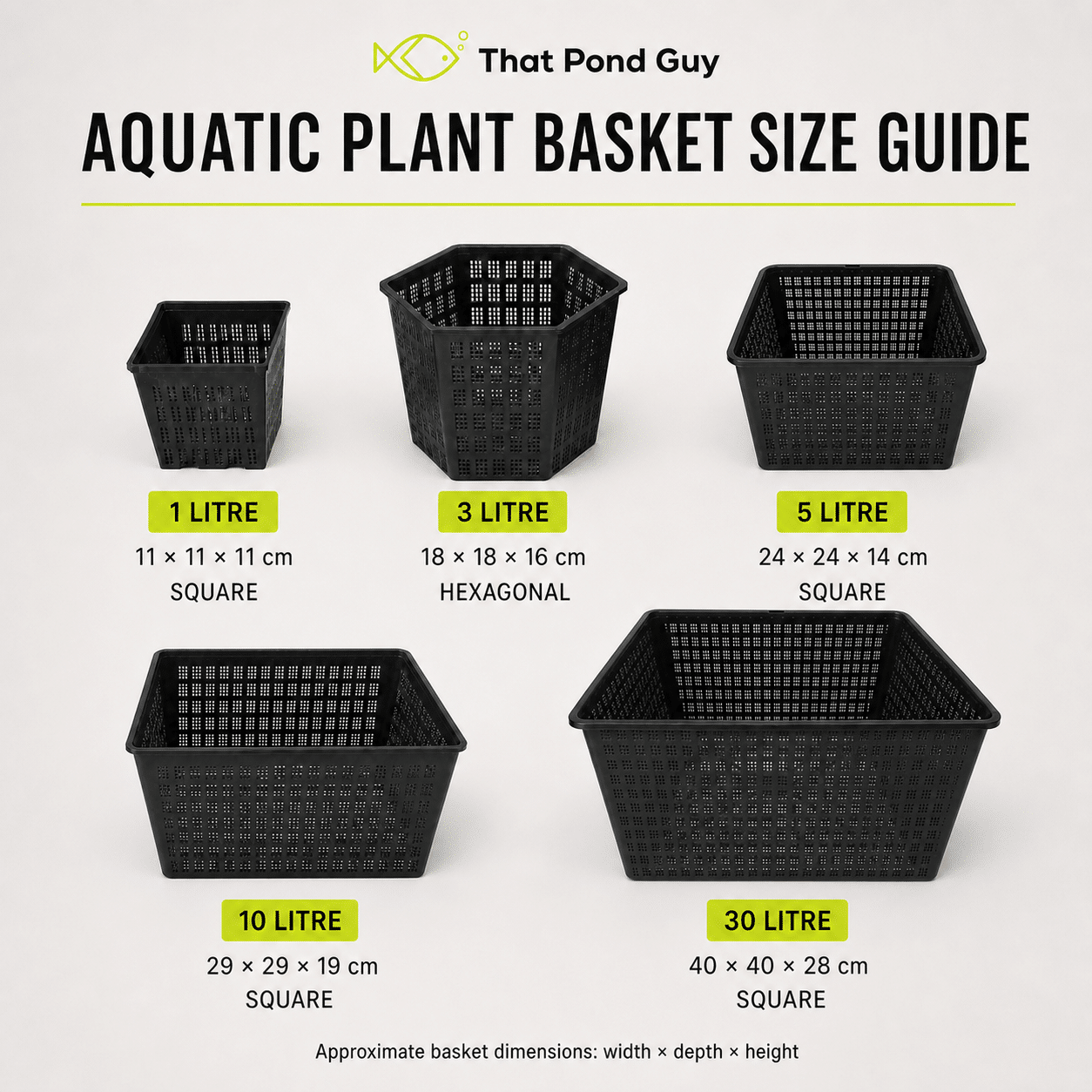
1 litre, 3 litre and 5 litre marginal plants arrive pre planted in Finofil aquatic baskets using aquatic soil and slow release fertiliser. These can normally be placed straight onto a pond shelf at the recommended depth.
9 cm plants arrive in solid nursery pots and will need repotting into aquatic baskets before being placed into the pond.
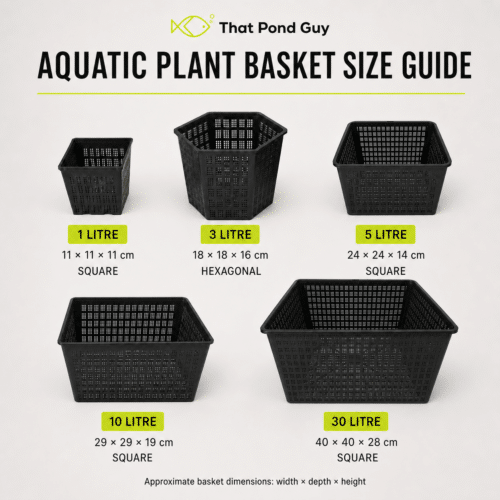
Aquatic basket measurements:
- 1 litre basket: 11 cm wide x 11 cm high
- 3 litre basket: 18 cm wide x 16 cm high
- 5 litre basket: 24 cm wide x 14 cm high
Finofil aquatic baskets are made from 100% recycled plastic and are designed with a fine mesh that helps retain aquatic soil while allowing water to move around the roots. A hessian liner is optional and is not normally required.
Dispatching Your Pond Plants
Pond plants are carefully selected, watered and packed before dispatch. As living plants, the amount of visible growth, foliage height and seasonal condition will naturally vary throughout the year.
Early season plants may arrive with less top growth and will develop once settled into suitable conditions. Later in the season, foliage may be taller and more mature. In autumn and winter, the plant may be cut back or naturally dormant.
Unpack your plant promptly when it arrives and check that the aquatic basket or pot is moist. Place it into the pond, container pond, bog garden or damp planting area as soon as practical.
Do not allow the basket, pot or rootball to dry out. If you cannot plant immediately, keep the plant in a sheltered position and ensure the compost remains moist.



Reviews
There are no reviews yet.