






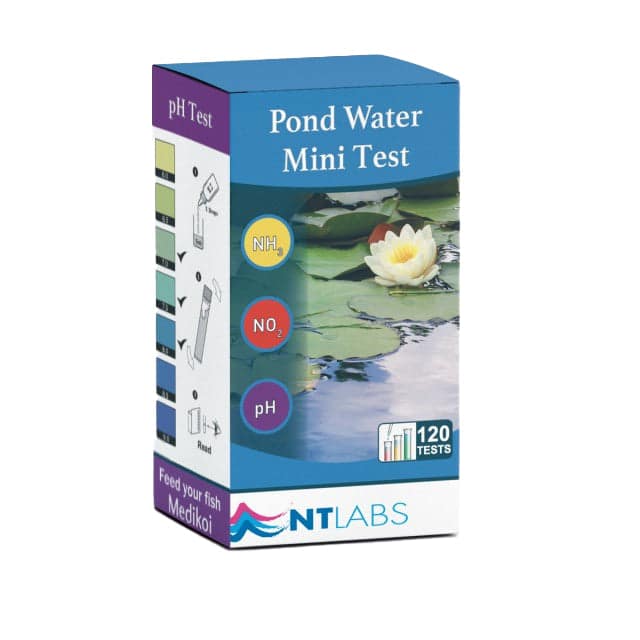
NT Labs Pond Lab Mini Test Kit
| Brand | |
|---|---|
| Tests included | pH, ammonia and nitrite |
| Format | Liquid test kit |
The NT Labs Pond Lab Mini Test Kit measures pH, ammonia and nitrite. It brings these three tests together for checking pond water and keeping a record of readings as the pond and filter change through the season.
£14.99 (inc VAT)
NT Labs Pond Lab Mini Test Kit
Liquid tests for pH, ammonia and nitrite in your pond
The NT Labs Pond Lab Mini Test Kit brings three important pond-water checks together: pH, ammonia and nitrite. It is a practical choice when you want to monitor these readings without buying the larger six-parameter Pond Lab kit. Testing gives you information that water clarity alone cannot provide, particularly when checking how the biological filter is coping with fish waste.
The tests use reagents and a colour comparison. Illustrated directions on the packaging and an included leaflet explain the individual procedures and help you interpret the results. Keep the box with the kit: its colour guides are part of the testing system, rather than packaging to discard after opening.
What this Mini kit covers
| Brand and range | NT Labs Pond Lab Mini Test |
|---|---|
| Parameters | pH, ammonia and nitrite |
| Method | Liquid reagents with a visual colour comparison |
| Instructions | Illustrated packaging directions and an enclosed leaflet |
| Nitrogen reporting | Ammonia as NH3-N; nitrite as NO2-N |
| Supplier reference | TK901 |
Ammonia: checking the first stage of fish-waste processing
Fish release ammonia as a waste product, while decomposing food and plant material can also contribute to it. You cannot establish whether ammonia is present simply by looking into the pond. NT Labs recommends a zero reading, so this test is especially useful when the pond looks clear but you need to check water quality.
Beneficial filter bacteria process ammonia into nitrite. An ammonia result therefore tells you something different from a pH result and should be recorded separately. If a reading is detected, confirm the procedure and result, then use the manufacturer’s guidance to investigate the water and filter. Avoid treating a single number as a diagnosis of the entire pond.
Nitrite: a separate check on biological filtration
Nitrite is produced during the breakdown of ammonia and is subsequently processed into nitrate. It can harm fish and, like ammonia, is invisible in the water. Testing both matters because a low ammonia result does not establish that nitrite is also low. NT Labs specifies a zero nitrite target.
Timing matters with this colour test. NT Labs’ current nitrite instructions specify reading after two minutes and disregarding colour that develops later. Use the directions supplied with your kit, and set a timer rather than leaving a prepared tube on the side until you remember it. Write down the result when you read it, before moving on to the next sample.
pH: measuring acidity and alkalinity
pH describes where the water sits on the acid-to-alkaline scale; a reading of seven is neutral. It is a different measurement from the concentration of nitrogen compounds. Record it alongside ammonia and nitrite so that your log shows all three, rather than reducing the results to a single “water quality” judgement.
If you prefer a numerical display for regular pH checks, the ETI pH PAL Plus digital tester is a separate option. It requires its own calibration and care, and it does not replace the ammonia or nitrite tests in this kit. Choose between methods according to the readings you need and the maintenance routine you are comfortable following.
Getting a dependable colour comparison
Prepare a clean working area and read the complete test sequence before adding reagents. Measure the sample volume instructed, identify the correct bottles and count the drops carefully. Cap and mix the sample as directed. Keep track of which tube contains which test, particularly if more than one person is helping.
Compare the sample against its matching printed scale at the specified time. An old photograph of another kit’s chart is a poor substitute for the supplied guide. When a result is difficult to distinguish, record that uncertainty and repeat the test with a fresh sample before drawing conclusions from a precise number.
NT Labs has revised its ammonia formulation from three reagents to two. Follow the instructions that belong to the kit in your hand; do not combine a procedure from older packaging with different bottles. For this reason, identifying the reagents and reading the supplied leaflet should come before following a remembered testing routine.
Keeping useful records and choosing additional tests
A simple log can include the date, time, three readings and any recent changes such as filter cleaning, increased feeding or a water change. Record the units as well as the number. This kit reports ammonia and nitrite on a nitrogen basis, so check the reporting basis before comparing the figures with another brand’s scale or an online table.
The Mini kit does not cover nitrate, general hardness or carbonate hardness. NT Labs’ larger Pond Lab Multi-Test covers all six parameters, making it a different choice when you want those additional checks in one kit. Neither a clear-looking pond nor three satisfactory results establishes that every other water parameter is suitable.
Keep reagents with their own instructions, observe expiry and storage directions, and replace caps after use. For the latest product information, see the NT Labs Mini Test guide. If you need help interpreting a result, have your recorded readings and kit details available so the advice can address the actual water test.



Reviews
There are no reviews yet.