





NT Labs Pond Hardness Test Kit
| Brand |
|---|
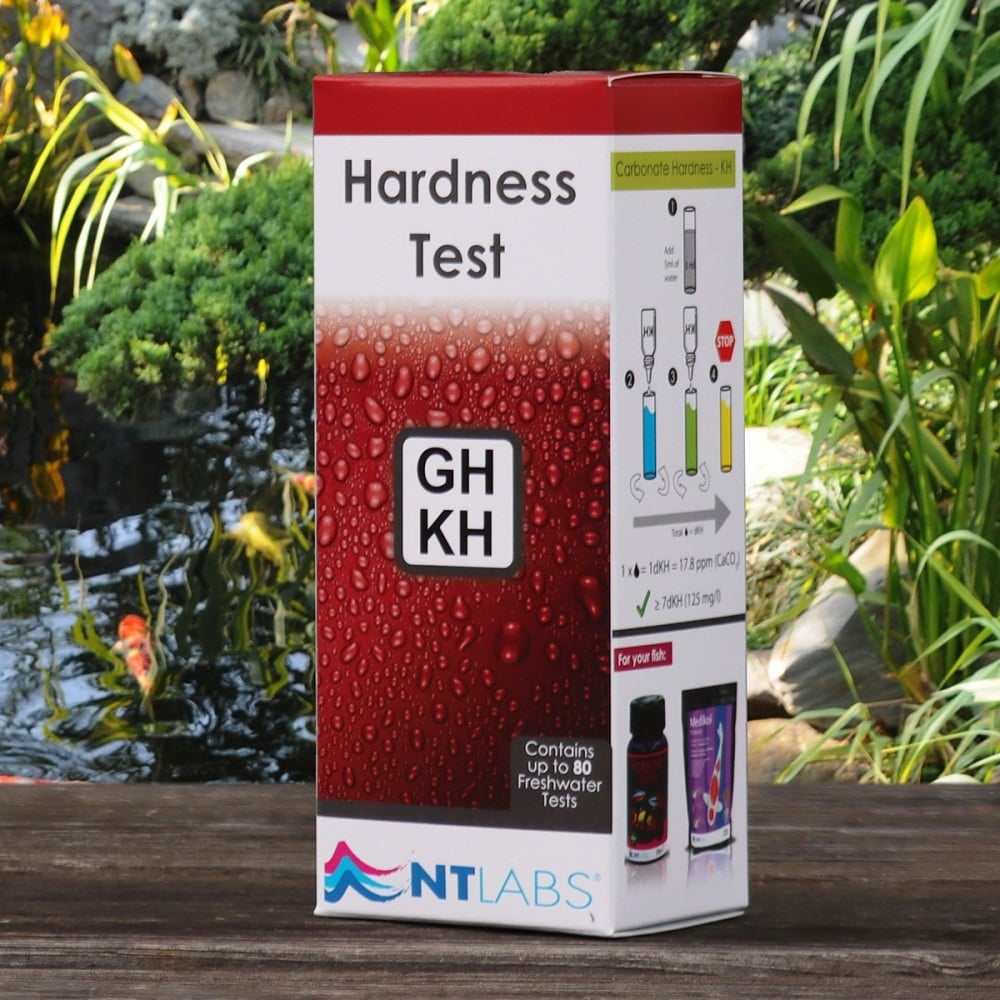
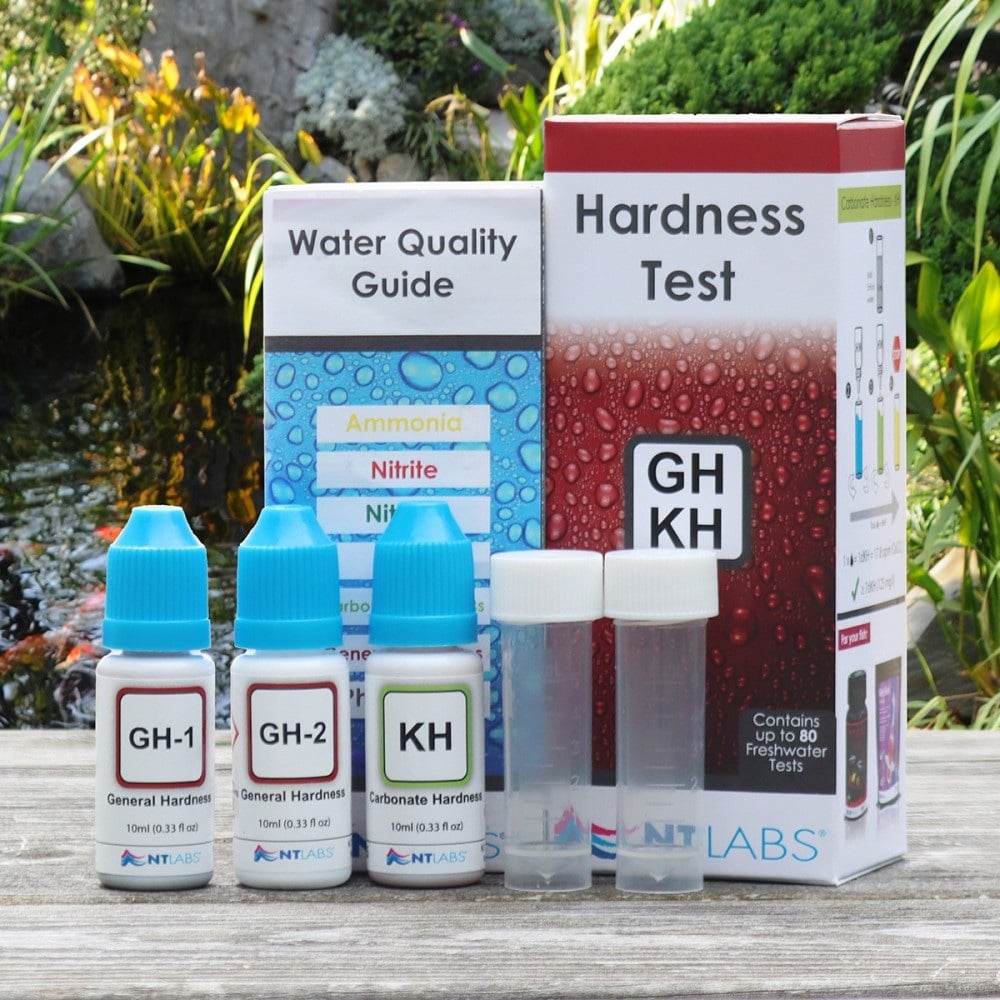
NT Labs freshwater hardness kit for separate KH and GH checks. Provides up to 80 tests using drop-count colour endpoints.
£7.20 (inc VAT)
NT Labs Pond Hardness Test Kit
Measure KH and GH separately to understand your pond water
The NT Labs Pond Hardness Test Kit checks both carbonate hardness, or KH, and general hardness, or GH. These are different measurements, and the kit includes separate reagents for each. It is useful when investigating pH stability, comparing pond water with your replacement supply or reviewing the mineral conditions for the fish you keep.
The pack provides up to 80 tests. The number of drops used depends on the water being tested, so this should not be read as 80 KH tests plus another 80 GH tests. Results come from counting reagent drops to a colour-change endpoint. You do not need an electronic reader, but accurate sample measurement and careful counting are important.
What the two measurements mean
| Measurement | What it helps you assess | Reported unit |
|---|---|---|
| KH | Carbonate buffering capacity and resistance to pH change | dKH |
| GH | General water hardness | dGH |
These values are not interchangeable. A pH result describes acidity or alkalinity at the time of measurement, while a KH check gives information about buffering. GH is another part of the water chemistry picture. Record all three separately if you are investigating a problem instead of writing a single “hardness” number without identifying what was measured.
How the KH test works
Use a clean tube with a 5ml sample. Add KH reagent one drop at a time and mix between drops, counting until the sample changes from blue to yellow. The count, including the first drop, gives the result in dKH. If the first drop makes it yellow, NT Labs identifies the reading as below 1 dKH. Follow the enclosed instructions for your kit.
How the GH test works
Take a separate clean 5ml sample and add two drops of GH 1. After mixing, add GH 2 one drop at a time, mixing and counting until the colour changes from pink to blue. The GH 2 count gives the result in dGH. A first-drop endpoint indicates below 1 dGH. The two initial GH 1 drops are not part of the GH 2 count.
Set out the bottles in the order you will use them and keep the test labels visible. If you lose count or are interrupted, a fresh sample is preferable to guessing. Finish and record one measurement before starting the next. This is particularly helpful when you are testing both the pond and a second water source during the same session.
Compare your pond with the water you add
Testing replacement water gives context to a pond reading. Your normal supply may differ from the pond, and the result helps you understand what a water change can and cannot achieve. Label samples clearly so that the pond’s KH is not accidentally recorded as the supply’s GH. Keep the values together in your notes for future comparison.
If you use different sources at different times, identify the source with each result. Do not assume that a reading from one supply describes every future top-up. A record of what was added, when it was added and what you measured afterwards is useful when reviewing the pond with someone who was not present at the time.
Use hardness results with a pH check
KH is particularly relevant when pH has become unstable. The hardness kit complements a separate pH test rather than replacing one. Before making an adjustment, consider the fish’s requirements and the other water parameters. A surprising reading should be checked carefully, and a water-quality problem should be understood before selecting a corrective product.
For information on raising KH where appropriate, see NT Labs KH – Buffer Up. Use its directions and your measured pond volume when deciding whether it is suitable. Do not add a buffer merely because the pond is described as soft water, or use the same quantity for every pond without testing.
Build a complete testing routine
Hardness checks do not tell you whether ammonia or nitrite is present. If you are assembling a set of routine tests, compare the NT Labs Pond Lab Mini Test Kit for companion parameters. You can also compare the Oase AquaActiv QuickSticks 6-in-1, paying attention to its method and scale.
Keep the actual KH and GH values, the date and any recent maintenance in a simple log. If you change the maintenance routine, take follow-up measurements to see the effect. A sequence of clearly labelled results is more useful than describing the water only as hard or soft. It also gives you a better starting point when asking for advice.
Care for the kit between tests
Keep bottle caps with their correct bottles and follow the label for storage, cleaning and expiry checks. Use the supplied sample measurements and endpoint instructions each time. Different methods can report hardness in different units, so check units before comparing a value from another kit or a water-supplier report. Avoid guessing a direct match from the number alone.
This product is a testing kit and does not itself add minerals or change the pond’s pH. Reagents are used in the sample tube, not dosed into the pond. Keep tested samples separate from pond water and follow the product instructions for disposal. If fish are distressed or results are difficult to interpret, seek appropriate advice with your recorded measurements to hand.



Reviews
There are no reviews yet.