





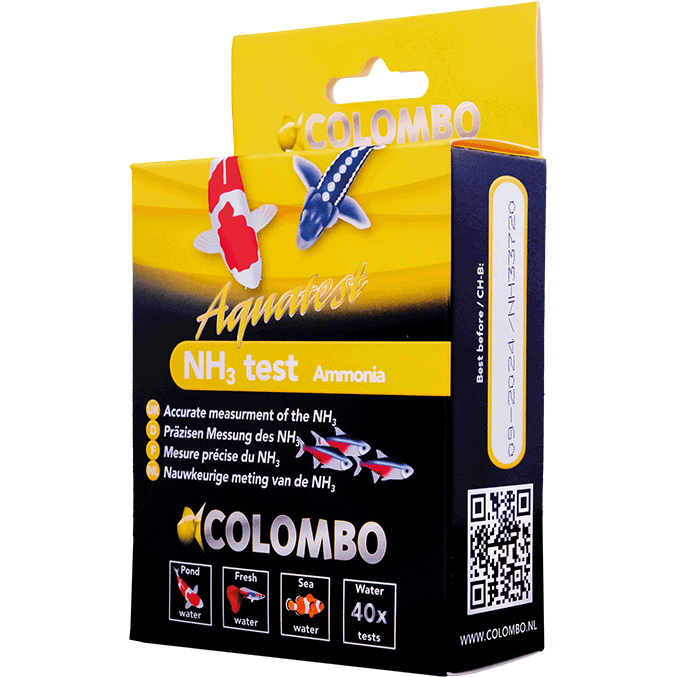
Colombo NH3 Ammonia Pond Water Test Kit
| Brand | |
|---|---|
| Parameter | Ammonia |
| Test method | Liquid drop test |
| Manufacturer part number | 05020291 |
Check ammonia in your pond water with this Colombo liquid test kit. It provides a dedicated test for this parameter and can be bought separately when you need to replace a used test or build a selection around the readings you monitor.
£13.50 (inc VAT)
Colombo NH3 Ammonia Pond Water Test Kit
A liquid drop test for ammonia
Check ammonia in your pond water with this Colombo liquid test kit. It provides a dedicated test for this parameter and can be bought separately when you need to replace a used test or build a selection around the readings you monitor.
Product details
| Brand | Colombo |
|---|---|
| Parameter | Ammonia |
| Test method | Liquid drop test |
| Manufacturer part number | 05020291 |
| Supplier code | TK9546 |
Why ammonia deserves its own test
Ammonia is a waste product released by fish. In a functioning biological filter, bacteria process ammonia through nitrite towards nitrate. A newly installed filter needs time to develop this capacity, which is why an ammonia reading is particularly useful while a pond or replacement filter is establishing. Colombo identifies zero ammonia as the desired result in its instructions.
This individual test is manufacturer reference 05020291. Colombo’s leaflet calls it Aquatest Ammonia NH3/NH4, and the bottle sequence uses the NH3 marking. Keep that identification with your records: the kit supplies a colour-chart reading, rather than a separate digital measurement of each chemical form. Use the supplied chart and units when interpreting the sample.
Three liquid reagents and a 15-minute development time
The ammonia method uses three different liquids, labelled NH3-1, NH3-2 and NH3-3. Each is added in turn, with mixing between additions. There is no powder stage in the published ammonia procedure. Having all three bottles ready before you collect the sample makes it easier to complete the method correctly.
- Put an accurately measured 10ml sample into a clean test tube.
- Introduce five drops from NH3-1, then shake the tube.
- Use five drops from NH3-2 and mix by shaking again.
- Follow with five drops from NH3-3 and shake once more.
- Allow 15 minutes for development before comparing the sample with the supplied chart.
Always follow the complete instructions supplied with the actual kit, including any manufacturer revisions. The waiting period comes after the last reagent has been mixed. An immediate comparison, or accidentally missing the third bottle, does not complete this test. Use a timer so you can compare successive samples at the same intended stage.
How to view the result
Colombo instructs you to place the tube on its colour chart and view straight down through the sample. Use indirect light rather than direct sunshine. This viewing direction matters: holding the tube sideways against a different background is not the method described in the leaflet.
The colour may fall between two printed reference colours. Record that uncertainty rather than inventing a highly precise number. Retain the original chart with the kit; a photograph on a phone or a printed copy from a different test system can have different colours and is not a replacement for the supplied comparison card.
Careful sampling makes repeat tests more useful
The manufacturer’s preparation guidance specifies a clean tube, an accurately measured sample, upright dropper bottles and drops without trapped air bubbles. Check the water level before starting, because adding the correct number of drops to the wrong volume changes the test conditions. Clean the tube directly after use so that residues are not left for the next sample.
If you lose count or cannot remember which reagent was last added, start again with a fresh sample. Guessing an extra quantity makes the result harder to trust. When checking more than one pond or quarantine tank, label each sample and keep its result separate so that readings are assigned to the right water.
Ammonia, nitrite and the wider picture
An ammonia result does not tell you the nitrite concentration. For that next measurement, use the Colombo NO2 nitrite test kit. Monitoring both gives you separate readings for two stages discussed in Colombo’s biological filtration guidance, rather than assuming that one result answers both questions.
For broader testing, the Colombo Pond Test Lab Professional combines ammonia with pH, GH, KH, nitrite, nitrate and phosphate. The individual ammonia kit is useful when this is the test you need to replace, or when you already have suitable kits for the other parameters.
Responding to an unexpected reading
Keep a dated record of ammonia results alongside recent changes such as filter cleaning, stocking or feeding. These notes help you explain what changed when seeking pond-care advice. Check the method and repeat an unexpected result with a fresh sample, while taking any signs of fish distress seriously.
A test kit measures a water parameter; it does not identify every possible cause or supply a treatment dose. Have the actual reading, kit name and other available water results ready when asking for help. Do not assume that an apparently clear pond must have a zero ammonia reading.
Test capacity and keeping the kit complete
The current manufacturer product information specifies material for 40 ammonia tests. Keep the three reagents, tube, chart and leaflet together, observe the expiry and storage directions on the packaging, and close each bottle after use. Replacement reagents from another brand should not be mixed into this method.
For the original sequence and viewing guidance, consult the Colombo ammonia test instructions. This listing is SKS code TK9546, for the dedicated Colombo ammonia test rather than a complete multi-parameter case.



Reviews
There are no reviews yet.