







Devil’s Strawberry (Gunnera Magellanica)
| Size | 1 Ltr |
|---|---|
| Plant Type | Moisture |
| Sun / Shade | Full Sun to Part Shade |
| Flower Colour | Red |
| Growth Rate | Slow |
| Native to UK | No |
| Plant group |
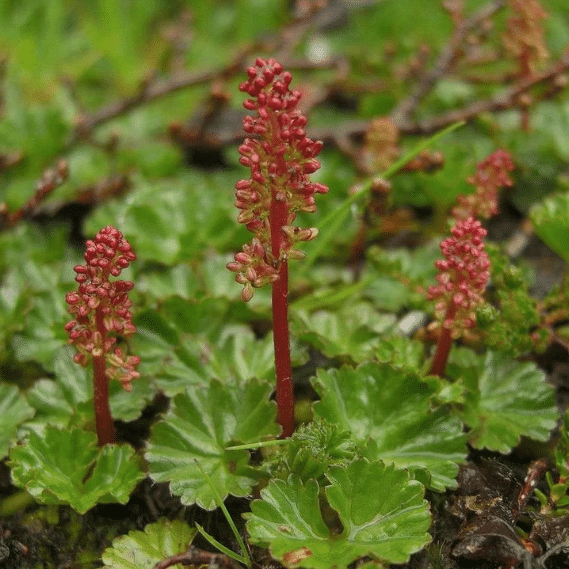
Devil’s Strawberry (Gunnera magellanica) is a compact, mat-forming moisture-loving plant with small glossy green leaves and unusual orange-red berry-like fruits on pollinated female plants. Growing only around 10–15cm tall, this dwarf Gunnera makes excellent ground cover for bog gardens, damp soil and natural pond surroundings.
£11.50 (inc VAT)
A compact dwarf Gunnera for bog gardens, damp ground and pondside ground cover
Devil’s Strawberry (Gunnera magellanica) is a fascinating low-growing moisture-loving perennial that forms a dense carpet of small, glossy green leaves. Also known as Baby Gunnera or Dwarf Rhubarb, it provides the distinctive textured foliage associated with Gunnera but on a dramatically smaller scale, making it ideal for bog gardens, damp pond edges and areas where a giant Gunnera would be completely unsuitable.
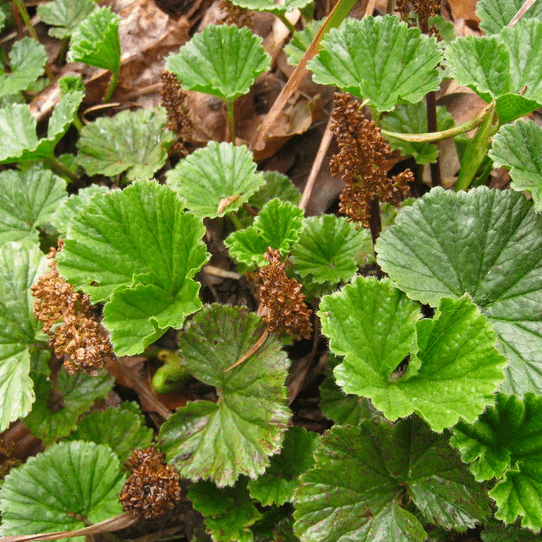
Native to South America and the Falkland Islands, Gunnera magellanica develops creeping, interwoven growth that gradually forms attractive ground cover. Its small, rounded to kidney-shaped leaves have crinkled or scalloped edges and create a lush green carpet over permanently moist ground.
During summer, small greenish flowers develop amongst the foliage. Female plants can subsequently produce distinctive clusters of orange-red to bright red berry-like fruits, which are responsible for the wonderful common name Devil’s Strawberry. Fruiting requires compatible male and female plants, so berries should not be guaranteed on an individual plant.
Why Choose Devil’s Strawberry?
The biggest attraction of Devil’s Strawberry is its compact, spreading habit. While giant Gunnera species can dominate a garden, Gunnera magellanica remains low and is primarily grown as moisture-loving ground cover.
It is particularly useful for filling gaps between taller bog garden plants, covering damp ground around ponds and softening the transition between a pond and the surrounding garden. The textured foliage also provides an interesting contrast alongside upright plants, grasses, ferns and flowering moisture-loving perennials.
Despite sharing the Gunnera name, this is a very different proposition from the giant Gunneras subject to UK invasive plant restrictions. The RHS specifically identifies Gunnera magellanica as one of the smaller Gunnera species suitable for wet soil around natural ponds.
Where to Plant Gunnera magellanica
Devil’s Strawberry performs best in humus-rich, consistently moist or poorly drained soil. A sheltered position in partial or dappled shade is particularly suitable.
It is an excellent choice for bog gardens, pond surroundings, damp borders and naturalistic waterside planting. However, it should primarily be regarded as a moisture-loving pondside plant rather than a submerged aquatic plant.
Avoid allowing the soil to completely dry out, especially during warm summer weather. It can also be grown in containers provided its moisture requirements are maintained.
Devil’s Strawberry Size & Growing Information
- Botanical name: Gunnera magellanica
- Common name: Devil’s Strawberry
- Other names: Baby Gunnera, Dwarf Rhubarb
- Plant type: Mat-forming perennial
- Origin: South America and Falkland Islands
- Position: Partial or dappled shade
- Soil: Humus-rich, consistently moist soil
- Approximate height: Around 10–15cm, potentially higher in ideal conditions
- Approximate spread: Around 30cm initially, potentially 50–100cm as an established mat
- Flower colour: Greenish
- Flowering period: Summer
- Fruit: Orange-red to bright red berry-like fruits on female plants when pollinated
- Growth habit: Low, creeping and mat forming
- Hardiness: RHS H4
- Foliage: Deciduous
- Time to mature: Approximately 2–5 years
The RHS lists an eventual spread of 0.5–1m for established plants, so give it room where a spreading ground-cover effect is wanted.
Caring for Devil’s Strawberry
The key to successfully growing Devil’s Strawberry is moisture. Keep the soil consistently damp throughout the growing season and water thoroughly during dry spells.
Adding organic matter can improve moisture retention, while mulching around the plant helps prevent the root zone from drying excessively.
Very little pruning is required. Damaged or dead foliage can simply be removed when necessary. Plants can also be divided during spring if an established clump becomes larger than required or if you want to establish it elsewhere.
Slugs and snails may occasionally damage the young foliage, so newly established plants are worth monitoring.
Dispatching Your Devil’s Strawberry Plant
Our moisture-loving pond and bog garden plants are living plants whose appearance changes naturally throughout the seasons.
During spring and summer, Devil’s Strawberry will normally be supplied with active foliage, although the amount of growth will depend on the time of year and maturity of the plant. Plants may occasionally be trimmed before dispatch where necessary to protect delicate foliage during transportation.
Although sometimes described as evergreen in cultivation, the RHS classifies Gunnera magellanica as deciduous, and colder conditions can cause foliage to die back. Plants dispatched during the colder months may therefore have very little visible top growth. Fresh foliage should develop as growing conditions improve.
Product photographs normally show established plants during their active growing or fruiting season, so the plant received may differ in appearance according to the season.








Reviews
There are no reviews yet.