







Floating Pond Plants: Frogbit, Water Soldiers and Winter Care
Floating Pond Plants: Free Floaters and Rooted Floating Leaves
Some pond plants float freely. Others are rooted in a basket or the pond bed, with leaves that rest on the surface. Getting that distinction right makes choosing and planting them much easier.
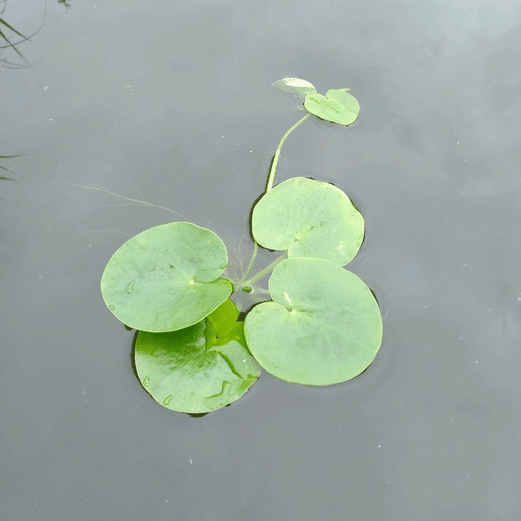
Frogbit and Water Soldier are familiar options for a sunny garden pond, but they need different amounts of room and have different shapes and seasonal habits. A photograph tells you how they can look; the botanical name and care instructions tell you what you need to provide.
Our starting point is the whole pond: sunlight, water movement, the plants already there and access for maintenance. A small wildlife pool, a deep ornamental pond and a busy koi pond can call for quite different planting. We would choose a manageable plant for those conditions before deciding how much to buy.
Before you choose: confirm the botanical name, establish whether it floats freely or needs a rooting position, and allow for its mature spread. Keep some open water and room to reach the equipment. Floating foliage can contribute to the planting scheme, but it does not guarantee clear water or replace suitable filtration and aeration in a stocked fish pond.
A true free-floating plant does not need to be planted into ordinary pond compost. Its growth can sit at the water surface rather than depend on a basket standing on a shelf. That makes the term sound straightforward, but shop names and casual descriptions often group several different things together. A water lily is commonly discussed alongside floating plants because its leaves sit on the water. Its roots, however, need a suitable planting position.
The same distinction applies to Water Hawthorn and Brandy Bottle. They can contribute floating leaves, but they should not be unpacked and treated like a loose portion of Frogbit. Floating baskets and planting islands introduce another category: these are containers that support plants, rather than species of floating aquatic plant. Artificial floating decorations are different again.
The RHS guide to choosing pond plants separates free-floating plants from other aquatic groups. Use that distinction when planning a purchase. Ask what you are receiving, where the roots belong and what the mature plant needs, rather than relying on the single word “floating”.
| Type | Examples | What to check before buying |
|---|---|---|
| Free-floating aquatic | Frogbit; Water Soldier has a seasonal floating habit | Species identity, light, room for spread and its particular seasonal care |
| Rooted plant with floating leaves | Water lilies, Water Hawthorn, Brandy Bottle | Rooting method, planting depth and mature spread |
| Floating container | Floating planting basket or planting island | The container instructions and the needs of the exact plant placed in it |
| Artificial decoration | Artificial lilies or floating flowers | Dimensions, positioning and cleaning; do not treat it as a growing plant |
Check the pond before choosing a plant
Look at the water with the pond running normally. Mark the sunny area, shade from walls or trees, the return and any surface skimmer. Include the place where you usually inspect the fish. A planting scheme can look balanced from the patio yet be awkward to look after from the edge.
Then watch what wind and circulation do to loose material. A corner that is quiet with the waterfall off may behave differently once the system is running. Plants that repeatedly gather at a skimmer or overflow will need attention; preserve the equipment’s normal operation when planning their position.
Make a quick planting sketch
- Write down the surface dimensions and mark established foliage. Include space for growth, rather than measuring only the gap left today.
- Keep the routes needed for netting, lifting baskets and removing leaves. Check that you can reach the corner where loose plants tend to collect.
- Note what you want from the planting: a native wildlife plant, a particular leaf shape or a manageable seasonal display.
That turns “we would like more floating plants” into a useful choice: which named plant suits this area, and how will it be managed? If the sketch shows that the only open patch is also your cleaning access, leave it open while you rethink the arrangement.
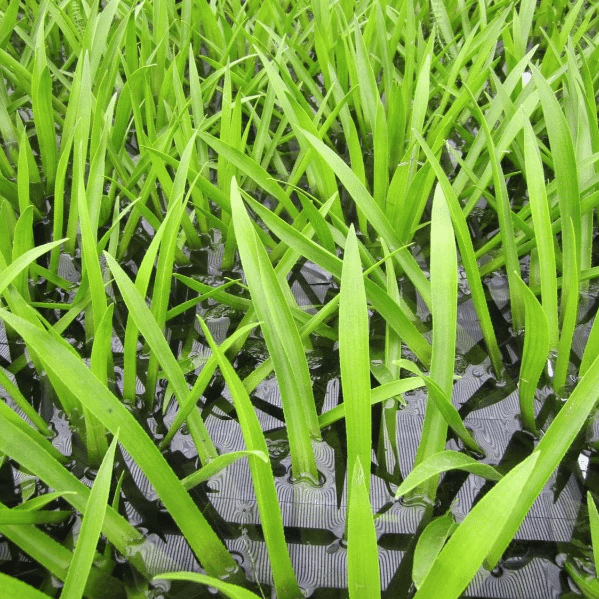
Frogbit: check that it is Hydrocharis morsus-ranae
Frogbit, Hydrocharis morsus-ranae, is a floating aquatic perennial with small rounded leaves and white flowers. Its resemblance to a miniature water lily is appealing, but use its own growing requirements when choosing a place for it.
The RHS Frogbit profile lists full sun and still, alkaline water, and records native status. It also gives an important winter detail: the overwintering buds must not freeze at the pond bottom. A container that freezes right through therefore needs particular care and species-specific advice.
Keep the full name on the label. “Frogbit” and “Smooth Frogbit” are different plants. A similar common name does not establish the same origin, hardiness or winter requirements.
Decide how you will inspect its spread and retrieve unwanted growth. Consider the corner where wind and water movement gather loose material. If you cannot reach it comfortably, solve the access problem before increasing the planting. A plant that is easy to add still needs a place you can manage.
In a small pool, assess the whole arrangement. Leave an open view of the water and consider the combined effect of several surface-covering plants. The starting quantity depends on the supplied portion, the pond and the room already occupied; a count alone tells you very little. Our small-pond planting guide helps you compare compact lilies, marginals and submerged cover when planning the rest of the pond.
Water Soldier: allow room and handle it carefully
Water Soldier, Stratiotes aloides, forms a rosette of narrow foliage with sharp edges. The RHS describes a deciduous aquatic perennial for full sun. Its upright shape is quite different from Frogbit’s rounded leaves, so judge it as a plant in its own right. RHS Water Soldier profile.
Plan the handling as well as the appearance. Keep sharp rosettes away from a narrow edge where you kneel to work or where children may reach into the pond. Decide how you will retrieve and thin the plants without putting your hand blindly through the foliage.
A single supplied rosette gives only a starting point. Allow for the area several rosettes could occupy, the foliage already present and the reach needed for maintenance. We would choose another planting approach if that growth cannot be accommodated comfortably; a small available space does not make the species permanently small.
Check the location before choosing it
The RHS explains that Water Soldier must not be planted or caused to grow in the wild in Northern Ireland, while distinguishing this from a ban on sale. Keep garden plants out of natural waterways and check the current rules for your destination before ordering.

Rooted plants with floating leaves offer a different option
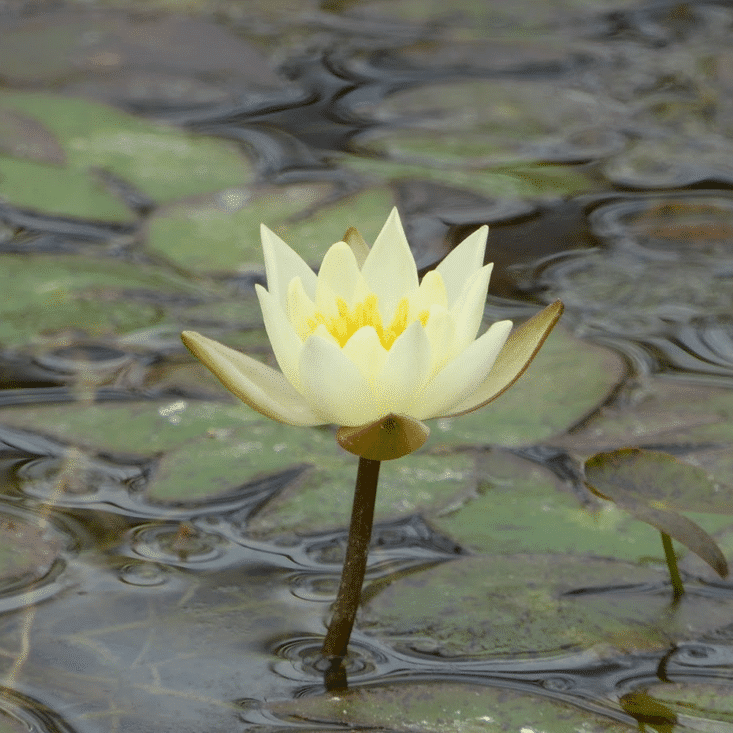
Free floaters are not the only way to create foliage on the surface. A rooted aquatic can provide a more fixed planting position, which may be useful where loose plants would collect against equipment or move out of the area you want to cover. The choice then depends on whether the pond provides the correct depth and enough space for the plant’s mature spread.
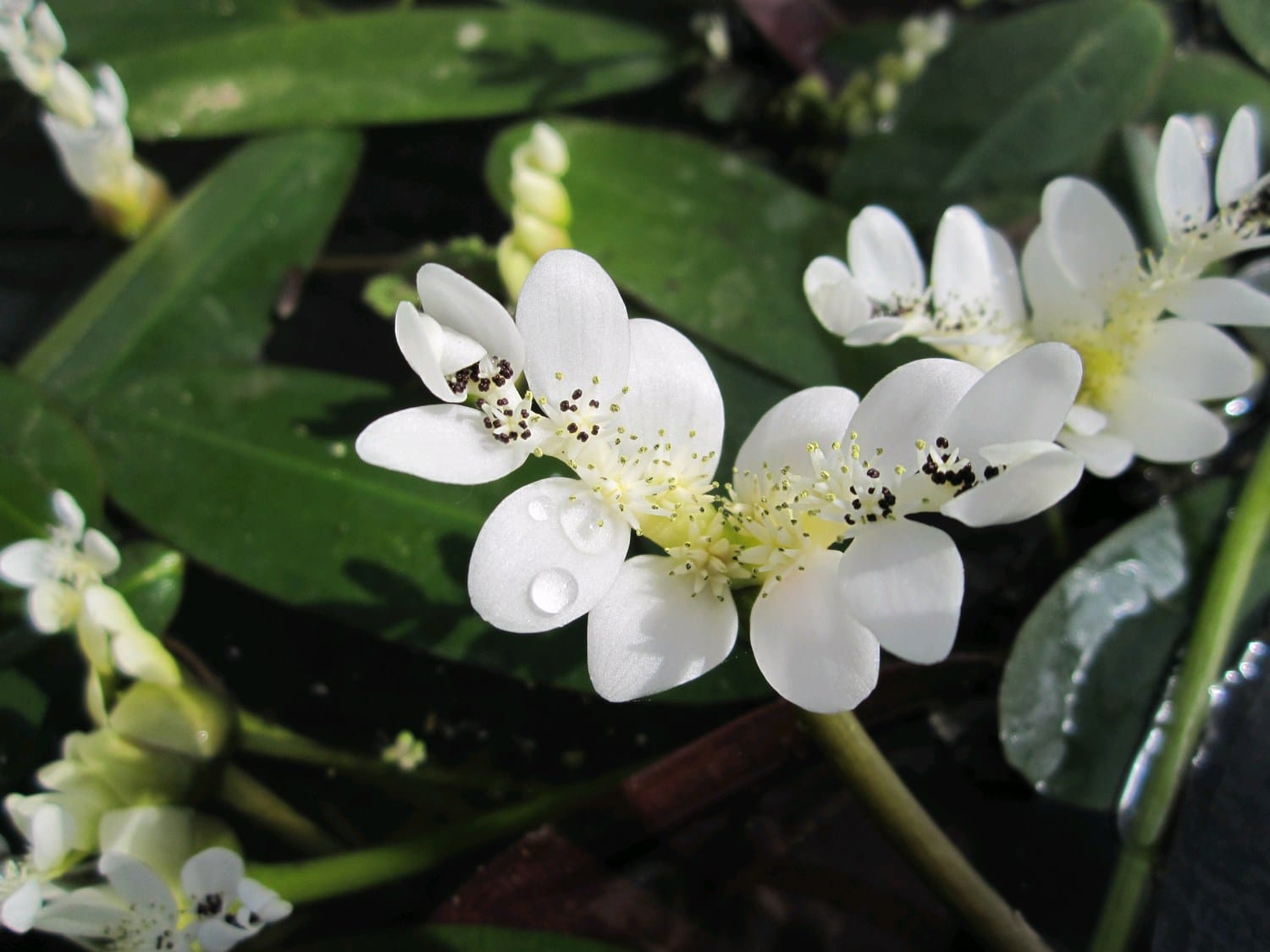
Water Hawthorn
Water Hawthorn, Aponogeton distachyos, is a tuberous aquatic that needs a rooted position in mud or a suitable submerged container. The RHS lists sun or partial shade and still water, and warns that it can spread strongly in favourable conditions. It belongs in the rooted floating-leaf part of a chooser, rather than among plants simply placed loose on the surface. Follow the supplied planting instructions for the exact plant. RHS Water Hawthorn profile.
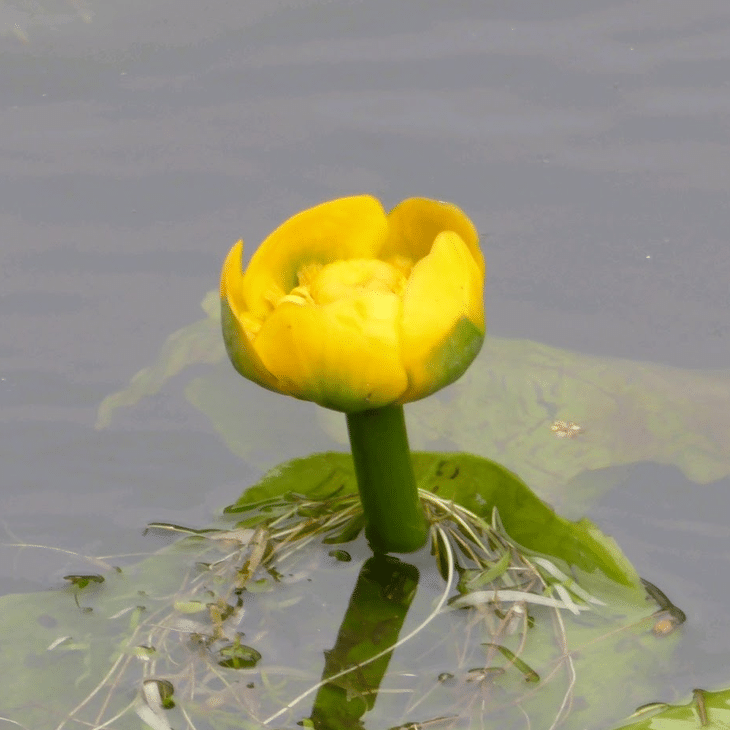
Brandy Bottle
Brandy Bottle, Nuphar lutea, is another rooted aquatic with floating leaves and yellow flowers. The RHS lists sun or partial shade. It is a distinct plant, not a small substitute for every garden water lily, and it needs to be assessed against the pond’s space and planting arrangement. RHS Brandy Bottle profile.
For water lilies, use our water lily care guide to work through size, sunlight, baskets and depth. Choosing between a small lily and a loose floating plant is much easier once you have separated the desired appearance from the different planting requirements.
How much of the surface should remain open?
Leave enough open water to see and manage the pond. The RHS pond-plant guidance suggests roughly half the surface covered by foliage as a general planning guide. It is a reference for the whole planting scheme, with fish load, pond shape and equipment still needing consideration.
Count the foliage already there. A lily taking up a large patch matters even when the new purchase is only a portion of Frogbit. Open water between plants can provide the view or access that makes the pond pleasant to use; it does not all need filling.
A simple example: a pond measuring two metres by one metre has two square metres of surface. If an established lily already occupies about one square metre, do not treat the other square metre as a fresh allowance for floating plants. The RHS figure considers the combined foliage. It does not tell you how many portions of any plant to buy.
Keep essential fittings visible and reachable. Check the overflow, the skimmer and places where the level changes. An overhead photograph taken from the same position each month is a useful way to compare spread without relying on memory.
When thinning is needed, work on a manageable area, keep removed growth contained and assess the result. Repeatedly clearing large amounts may mean the species or combination is too vigorous for the space. Changing the planting plan can be more useful than treating every visit as another clearance.
Do floating pond plants need soil or baskets?
The answer follows the plant’s growth type. Free-floating plants do not need to be forced into compost just because other pond plants arrive in pots. Rooted aquatics require an appropriate rooting position. A floating container has its own instructions and does not automatically turn any garden plant into a suitable aquatic.
Before unpacking a new plant, read the label and identify the supplied form. A loose portion, a bare-root plant and a planted basket are different things to handle. If the form is unexpected, ask the supplier about the plant before trying to adapt instructions written for another species. Keep the label so you can identify it later, particularly when foliage changes through the year.
For rooted aquatics, establish how planting depth is measured. A figure measured from the top of the planting medium is not the same as the distance from the water surface to the pond floor. Basket height and the position of the growing point both matter to the arrangement. Our guide to planting pond plants in baskets explains the method in more detail.
Avoid improvising by burying unfamiliar growing points, adding ordinary garden soil to the water or weighing down loose growth without first checking the plant’s needs. The simplest successful planting job is usually the one based on the correct identity and the supplier’s instructions from the start.
Adding plants without making future maintenance awkward
Choose a time when you can watch the pond after positioning the plants. You want to see where loose growth settles with the equipment running, before leaving it unattended.
- Check the delivery. Read the botanical label and supplied form before putting anything in the water. If it is unexpected, ask about that exact plant. Keep packaging out of the pond.
- Keep a useful record. Photograph the label with the plant. Have a suitable clean container ready if you need to hold it while checking its identity or condition.
- Watch the first position. See whether wind and circulation carry it towards a return, overflow or skimmer. Make a practical adjustment that preserves normal circulation and safe access.
- Check the next maintenance job. You should still be able to inspect fittings, remove debris and lift the baskets already in the pond without pulling through a mass of growth.
Use any inspection or isolation method recommended for the particular plants and the pond they are entering. Chemical dips and treatment doses need their own instructions; one method should never be assumed to remove every possible pest. With valuable fish, get advice suited to the pond before introducing unfamiliar material or using a plant treatment.
This is also why we would start with a manageable amount. You can observe how it behaves and decide whether the position works before filling the remaining space.

Seasonal care: why a floating plant may disappear
A summer photograph does not show the plant’s appearance all year. The RHS pond-plant guidance describes winter sinking in Frogbit and Water Soldier. Their absence from the surface can be seasonal, so identify the plant and check the conditions before assuming that it has failed.
| Plant or life cycle | What changes through the seasons | What to check in your pond |
|---|---|---|
| Frogbit, Hydrocharis morsus-ranae | A perennial with seasonal surface growth; RHS advice says its overwintering buds must not freeze at the pond bottom. | The plant’s identity and whether the water could freeze right through. Do not judge its winter state from a summer photograph. |
| Water Soldier, Stratiotes aloides | A deciduous aquatic; RHS pond guidance describes winter sinking. | Seasonal behaviour and the pond conditions before disturbing the bottom to search for it. |
| Tender plants, including Water Lettuce | Tender status does not establish an outdoor winter-care routine. | Exact-species care and destination rules. Do not transfer the instructions for native Frogbit. |
| Water Chestnut, Trapa natans | Kew records an aquatic annual. | The supplied form and its annual life cycle. Ask for care instructions for the exact plant or seed supplied before planning how to overwinter it. |
Keep labels and a record of where the plants were placed. There is no guaranteed date on which every pond’s growth will return to the surface. If you are unsure, use those records to ask a specific care question before clearing apparently empty material or disturbing the whole planting scheme.
Frogbit, Smooth Frogbit and tender alternatives
The native Frogbit discussed here is Hydrocharis morsus-ranae. Smooth Frogbit is a different species: Hydrocharis laevigata, also known as Limnobium laevigatum. Kew accepts the first name and records the second as a synonym. The shared common name can be misleading: establish Smooth Frogbit’s outdoor suitability, seasonal care and required conditions before choosing it. The instructions for native Frogbit cannot answer those questions for a different species.
Water Lettuce, Pistia stratiotes, is a distinctive floater, but the RHS classes it as tender. It is not a hardy native alternative. It is banned from sale in Northern Ireland, where DAERA’s invasive-species rules apply, and must not be planted or caused to grow in the wild in the UK. Check the current rules for your destination before choosing or moving it.
Water Chestnut, Trapa natans, has another life cycle again. Kew records it as an aquatic annual. That is enough reason to check its supplied form and care separately, including any winter or seed handling, rather than copying a perennial’s instructions.
Using floating foliage in fish ponds and wildlife ponds
Plant for the sort of pond you have. Wildlife cover, fish observation and access for routine care can all matter, but their balance will differ.
- In a wildlife pond: consider varied cover alongside a clear view of the water. Keep safe routes into and out of the pond in the plan.
- In a fish pond: preserve the equipment arrangement and the places used for feeding, observation and maintenance. Keep fittings reachable as the foliage expands.
Surface foliage does not replace reliable oxygen management in a stocked fish pond. If oxygenation is the main reason for the purchase, use our guide to oxygenating pond plants alongside the pond’s aeration and filtration needs. Floating leaves and submerged oxygenating growth are different parts of the planting discussion.
Where fish disturb plants, record what is happening. A basket being moved, damaged loose roots and a portion gathering at a return call for different practical responses. Adding more plants before establishing the cause can simply repeat the problem. Our guide to plants for koi ponds covers the wider planting choices and protection discussion.
Floating baskets and plant islands are containers
A floating basket can provide a planting position where the arrangement calls for a container at the surface. The container and the plant still need to be assessed separately. A plant suited to wet soil does not automatically tolerate every amount of water around its roots because a basket floats.
When comparing floating pond baskets or an Aquascape floating plant island, start with the practical problem you want it to solve. Perhaps there is no suitable shelf, or you want a different way to arrange selected plants. Use the exact container’s instructions to establish suitable planting and support.
Before you position an island
- Check its dimensions and what the instructions say about positioning and planting. Do not infer a safe load from a photograph.
- Work out how you will reach it, inspect the plants and lift it if needed. Keep the route used for netting and cleaning clear.
- Check the needs of the named plants you intend to use, including the water around their roots.
Artificial floating flowers offer a decorative effect. Assess them for their dimensions, cleaning and intended use, and keep them separate from living plants when discussing growth, native species or the amount of biological planting in the pond.
A floating pond basket is a container supporting a plant. Match the planting method to the exact container and plant instructions.
Thinning, removing and disposing of pond plants responsibly
Management starts with choosing a plant you can contain within your own pond. Keep labels and avoid introducing an unidentified plant from another pond. The ability to pass surplus growth to someone else is not a sensible reason to select a vigorous plant without checking its identity, suitability and any restrictions.
When you need to thin growth, plan where the removed material will go before starting. Keep it contained while you work. Do not put unwanted plants, fragments or pond water into streams, rivers, other natural water bodies or drains. Follow the disposal route appropriate to the exact plant and your local guidance, particularly for restricted species.
Native status does not make deliberate release into the wild acceptable. Nor should a plant that looks harmless in a small garden container be assumed harmless elsewhere. The rules differ by jurisdiction and species, so a general article cannot give universal permission to move, sell or release every aquatic plant it mentions.
Keep tools and containers free of loose plant fragments before using them elsewhere. If you are arranging professional pond maintenance, tell the person doing the work which plants are present and where you want them retained. A labelled planting record is more useful than a last-minute description such as “the small floating one”.
For the current regulated-species position in England and Wales, refer to DEFRA’s invasive plant guidance. Use the relevant authority’s advice for other destinations, rather than treating one country’s list as a complete UK rule.
Solving common problems without guessing
The plants gather in the wrong place
Watch the pond with its normal equipment running and note the wind direction. If plants collect at a skimmer, return or overflow, check the fitting and remove obstructions safely. Preserve necessary circulation. If a fixed position is essential, consider whether a suitable rooted plant would be easier to manage.
Growth is taking over the view
Compare the pond with your original layout, thin appropriately and keep removed material contained. Then review the plant’s mature habit. Repeated heavy clearance is a reason to reconsider the species or combination, as well as the amount currently present.
The plant has vanished in winter
Check its name and seasonal behaviour first. A hardy perennial’s winter disappearance needs a different explanation from cold damage to a tender species. Use labels and earlier photographs when asking for advice; summer foliage is not a year-round requirement.
The leaves look damaged or growth is weak
Before adding feed or treatment, collect enough information to describe the problem:
- A photograph of the whole plant, the affected leaves and its position.
- The botanical name, when it arrived and how it was supplied.
- Any changes in light, water movement or the pond since it was added.
Those details help narrow the question. A close-up of one leaf alone may not establish a deficiency, pest or water-quality problem. Check identity and care instructions, and ask for help with the evidence you have rather than choosing a treatment at random.

A practical buying checklist
Before choosing a plant, make sure you can answer the following questions. They give you a much better basis for a suitable purchase than a long list of plants sorted only by appearance.
- What is its botanical name? Check the species, and the cultivar where relevant, rather than relying on a shared common name.
- Does it float freely or need a rooting position? Establish whether you need a suitable shelf, container or deeper planting arrangement.
- Does the pond meet its light and water requirements? Assess the actual position with normal equipment running.
- How much room will it need? Include the foliage already present and leave practical maintenance access.
- What will arrive? Read the description of the supplied portion, pot or bare-root form and follow its instructions.
- What happens in winter? Learn the exact plant’s life cycle before expecting a year-round summer display.
- Is it appropriate for my destination? Check current species restrictions and the seller’s delivery information before ordering.
- How will I manage unwanted growth? Plan containment, safe handling and responsible disposal from the start.
We do not deliver pond plants to Northern Ireland. For other destinations, check the delivery information and the current availability shown on the individual product page.
Keep the answers with a simple planting record. Record the plant name, date added, position and any care instructions. Add a photograph through the growing season and note any thinning or movement. That record helps you refine the planting scheme without having to rediscover the same information every year.
Floating pond plants work best when they are chosen as part of the whole pond. Start with the conditions you have, distinguish the different growth types and leave yourself room to look after them. Browse our pond plants, use the individual plant information to narrow your choice, and ask us if you need help matching a plant to the pond you have described.
