







Frogbit (Hydrocharis morsus-ranae)
| Size | Pack of 5 Plants |
|---|---|
| Plant Type | Floating |
| Sun / Shade | Full Sun to Part Shade |
| Flower Colour | White |
| Growth Rate | Medium |
| Native to UK | Yes |
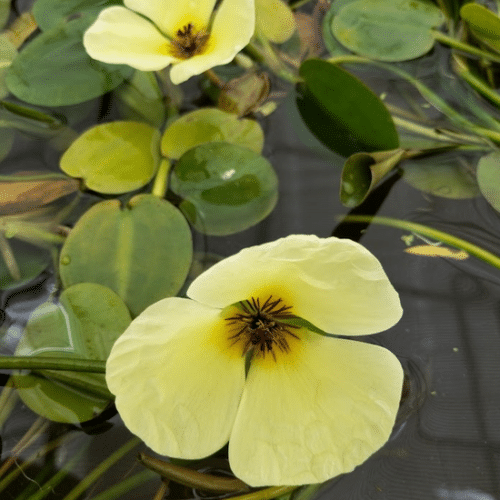
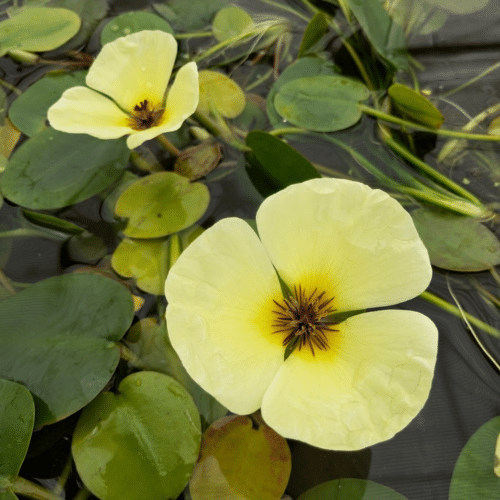
Frogbit is a small floating aquatic with rounded green leaves and little white, three-petalled flowers. A yellow mark at the base of each petal adds detail when it flowers. It gives a different effect from a large rooted waterlily because groups of small rosettes sit at the water surface.
£14.50 (inc VAT)
Frogbit (Hydrocharis morsus-ranae)
Small floating leaves and white summer flowers
Frogbit is a small floating aquatic with rounded green leaves and little white, three-petalled flowers. A yellow mark at the base of each petal adds detail when it flowers. It gives a different effect from a large rooted waterlily because groups of small rosettes sit at the water surface.
The plant spreads by stolons which connect young plants. Roots hang into the water, rather than needing the same planted basket position as a waterlily. Place it gently on suitable still water and allow the roots to settle naturally. Do not bury the floating crown under a layer of compost or gravel.
Choose a sunny area of still water. RHS guidance favours alkaline conditions, and the depth must protect its overwintering buds from freezing solid on the pond bottom. The fact that the summer leaves float does not remove the need for a suitable pond beneath them.
It is a native species in Britain and Ireland, but nursery-grown stock should stay in the managed garden pond. Native status does not mean it is appropriate to introduce purchased plants into a natural pond, ditch or stream. Check plants for unwanted hitchhikers and keep surplus material out of wild water.
A colony can spread beyond the width of an individual rosette. The RHS gives an established spread guide of roughly 0.5–1 m, with the foliage close to the surface. Thin it if it starts to shade submerged plants too heavily or crowd the pond edge. Retaining open water is part of sensible management.
The visible rosettes are seasonal. Frogbit forms overwintering buds, so winter disappearance should not automatically be treated as failure. Remove soft decaying foliage, keep the pond from freezing to the bottom and look for renewed growth in spring. Leaf damage may come from snails or aquatic insect larvae as well as handling.

What you receive
We supply Frogbit as a pack of five plants. The pack is the number of plants supplied, rather than a measure of the area they will eventually cover.
Unpack promptly and keep the living growth wet while preparing its position. The amount of visible growth changes with the season, so a newly supplied plant may look smaller than an established planting in the photograph. Introduce it as described below rather than leaving it to dry in the packaging.
Is Frogbit right for your pond?
Frogbit is for a sunny, still-water surface where small linked rosettes can spread without covering every gap. Its established colony may occupy around 0.5–1 m, and it favours still alkaline water. Check room around skimmers and pump intakes as well as the decorative surface area.
Positioning and getting established
Place the rosettes gently at the surface with roots hanging in the water and the leaves free above them. They do not need to be buried in soil or weighted down as a waterlily basket. Choose a sheltered still area where they are not continually submerged by a return or trapped in an intake.
After introduction, inspect the hanging roots and linked rosettes to make sure they are clear of equipment. Check again after wind or a change in water flow, moving them gently if they have gathered against a skimmer. Keep access to lift unwanted daughter plants as the patch develops.
Choose a position you can reach for inspection and thinning, with space between the plant and equipment. Watch the light that actually reaches the leaves as other planting grows. A sunny garden can still have a shaded underwater position beneath a dense raft of lilies or floating plants.
Practical care and growth management
- Keeping the right position: Check the planting after introduction and after other plants fill out. Keep live growth appropriately wet, avoid crushing shoots while moving nearby baskets and maintain access to the planted area. Review its true light and water position if new growth is poor.
- Managing this plant: Thin the linked rosettes when they make a dense mat, lifting manageable portions and checking them for pondlife before disposal. Leave open water and keep the roots clear of equipment. Remove soft decaying leaves without pulling apart healthy new rosettes unnecessarily.
- Medium and feeding: Do not treat a floating rosette as a potted lily needing tablets pushed into compost. Keep its leaves and roots in suitable water and inspect light, crowding and temperature before adding anything. Any feeding product must be appropriate to the actual planting and used as directed.
- Tidying without spreading it: Remove soft decaying material and collect loose stems, roots or leaves rather than allowing them to drift into equipment. Check removed growth for pondlife before disposal. Keep nursery plants, fragments and pond waste within managed garden arrangements and out of natural ponds, streams and drains.
Seasonal appearance and winter care
Frogbit forms resting buds that overwinter below water. The summer rosettes can disappear, so winter absence at the surface is not automatically failure. The pond needs enough unfrozen water to protect those buds from freezing to the bottom, with renewed rosette growth expected as conditions allow.
Size and growing conditions
- Position
- Free-floating rosettes in still pond water
- Depth
- Surface floating; pond must remain deep enough to protect overwintering buds from bottom freezing
- Reference point
- Not a basket-depth measurement; leaves at surface, roots below
- Sun
- Full sun; still alkaline water favoured
- Height
- Leaves close to the water surface
- Spread
- Approximately 0.5–1 m for an established colony
- Flowering
- Small white three-petalled flowers in summer
- Winter care
- Deciduous; resting buds overwinter below water if protected from freezing solid.
- Native status
- Native species in Britain and Ireland
- RHS information
- RHS plant profile: Hydrocharis morsus-ranae
Delivery and basket information
We do not deliver live plants to Northern Ireland.
Orders received by 11am Monday to Wednesday are normally dispatched on the following working day using a next working day courier service. During busy periods, dispatch may occasionally take an extra day.
To avoid plants being held in depots over a weekend, we do not usually dispatch on Fridays. Highlands and Islands orders using a two day service are not normally dispatched on Thursdays.
Please read our delivery information for delivery arrangements and contact us if you need to check the timing of a particular order.
Unpack promptly and keep the live growth from drying out. Follow the planting guidance above and the supplied label for its position in the water.
Other plants to compare
Smooth Frogbit — For a tropical glossy-leaved floater requiring warm protected conditions rather than this native outdoor winter-bud cycle.
Water Soldier — For a larger toothed-leaf rosette with its own seasonal sinking habit.









Reviews
There are no reviews yet.