





Swan Mussel (Anodonta Cygnea)
| Plant Type | Mollusc |
|---|---|
| Native to UK | Yes |
Swan Mussels, Anodonta cygnea, are large peaceful freshwater mussels for mature ponds with soft muddy or silty substrate. They are natural filter feeders that consume fine suspended particles from the water column, making them a fascinating addition to large wildlife ponds and natural pond ecosystems.
£15.99 (inc VAT)
Out of stock
Out of stock
Swan Mussel | Anodonta cygnea
A large peaceful freshwater mussel for mature ponds, valued for natural filter feeding, unique shell appearance and wildlife pond biodiversity.
Natural freshwater mussel for large mature ponds and wildlife pond ecosystems
The Swan Mussel, botanically known as Anodonta cygnea, is a large freshwater bivalve mollusc found in still and slow moving freshwater habitats. It is valued by pond keepers for its natural filter feeding behaviour, peaceful nature and distinctive shell based appearance on the pond floor.
This is a live pond animal rather than a pond plant. Swan Mussels live on or partly within soft mud, silt or sandy pond substrate, where they filter tiny suspended particles from the water. They feed by drawing water through their siphons and extracting microscopic food such as algae particles, phytoplankton, bacteria and fine organic matter. This makes them a fascinating addition to a mature wildlife pond or large natural pond.
Swan Mussels can help support water clarity by removing some fine suspended particles from the water column. They should not, however, be treated as a complete replacement for proper pond care, planting, filtration or maintenance. They will not solve heavy green water, blanketweed or poor water quality on their own. They work best as part of a balanced, established pond with plenty of natural life and a steady supply of microscopic food.
These mussels are best suited to larger, mature ponds with a soft muddy or silty floor, good oxygen levels and a natural supply of suspended food. They are not ideal for very small ponds, brand new ponds, sterile filtered systems or recently cleaned ponds where there may be limited natural food available. If a Swan Mussel dies unnoticed in a small pond, it can quickly pollute the water, so they should only be used where the pond is large enough and suitable enough to support them.
Swan Mussels are completely peaceful and do not behave aggressively towards fish, plants or other pond wildlife. They can be kept in suitable ponds with non predatory coldwater fish and natural pond life, but they should not be kept with animals likely to disturb, damage or eat them, such as crayfish or large destructive fish.
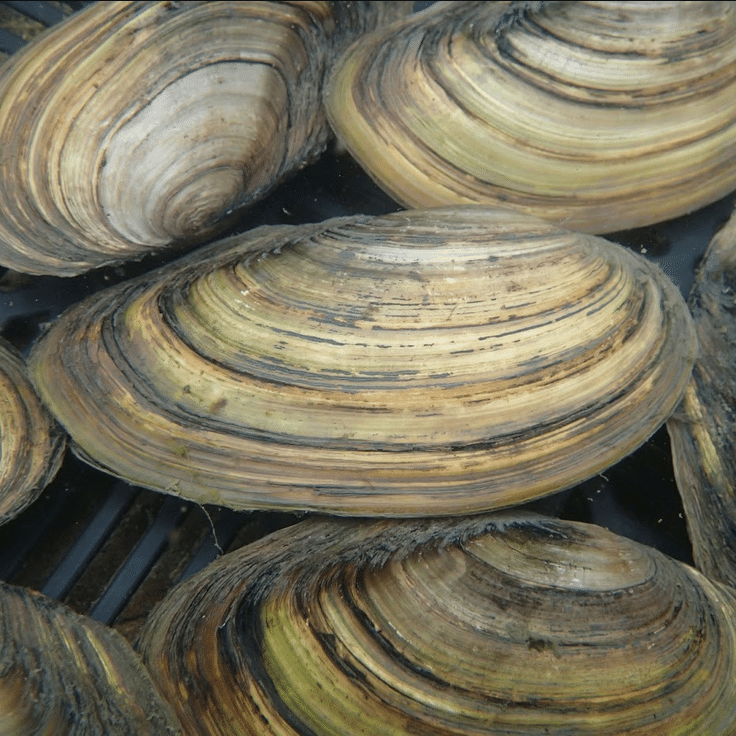
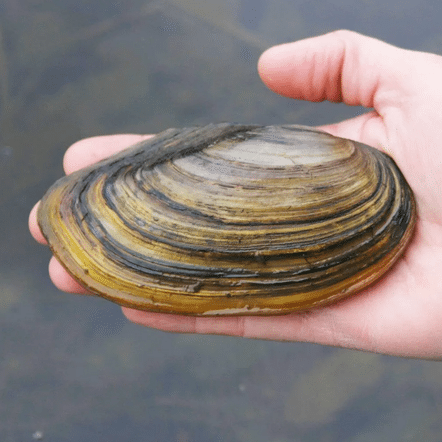
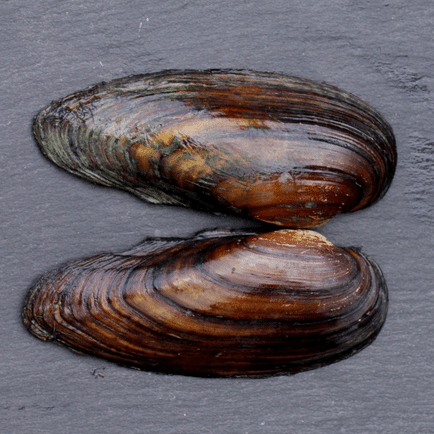
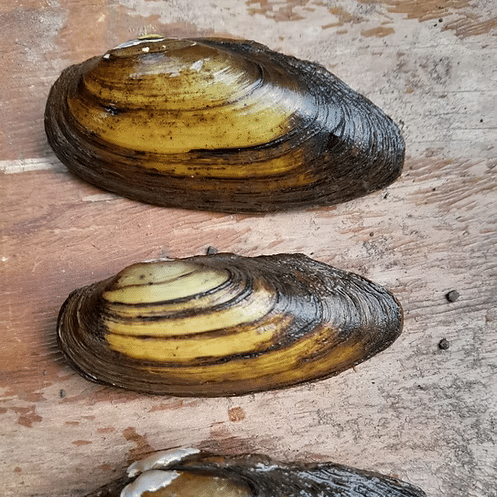
Their shells are usually pale green, olive, brown or green brown, often with smooth growth lines. Mature Swan Mussels can reach impressive sizes, commonly around 10 cm to 20 cm depending on age and conditions.
Key benefits
- Large peaceful freshwater mussel
- Natural filter feeder for mature ponds
- Feeds on fine suspended particles in the water
- Useful for established wildlife ponds and large natural ponds
- Lives on or partly within soft mud, silt or sandy substrate
- Adds biodiversity and natural pond interest
- Completely peaceful with suitable pond life
- Distinctive pale green to brown shell appearance
- Helps support a natural pond ecosystem
- Suitable for ponds with plenty of natural microscopic food
- Good for large ponds with stable water quality
- Stocking guide of around 1 mussel per square metre
Reasons to buy Swan Mussels
Swan Mussels are a good choice if you want to add a fascinating natural filter feeding species to a mature pond. They are quiet, peaceful and unusual, making them an interesting addition for customers who enjoy natural pond ecosystems.
They are especially well suited to larger wildlife ponds where there is a soft pond floor, plenty of natural life and a steady supply of microscopic food in the water. In the right setting, they can form part of a more complete pond ecosystem alongside pond plants, snails, insects, amphibians and suitable fish.
Swan Mussels are also useful for customers who want to improve biodiversity in a natural pond. They add a different type of pond life to the usual fish, snails and plants, and their filter feeding behaviour makes them fascinating to observe when conditions allow.
They are not suitable for every pond. If your pond is very small, newly built, heavily cleaned or lacks natural food, Swan Mussels are unlikely to be the best choice. They are best reserved for mature, stable ponds with the right conditions.
Care instructions
Introduce Swan Mussels only to a mature pond with stable water quality, good oxygen levels and a natural supply of microscopic food.
The pond should have a soft muddy, silty or sandy area where the mussel can settle and partially bury itself. Avoid placing mussels onto bare liner, sharp gravel or unstable surfaces where they cannot position themselves properly.
Place the mussel gently onto the pond floor or into a shallow soft substrate area. Do not throw it into the pond. Allow it time to settle and move naturally.
Avoid adding Swan Mussels to newly built or recently cleaned ponds. Very clean ponds may not contain enough suspended food for them to filter.
Do not use pond treatments, algae treatments, medications or chemicals unless they are clearly safe for freshwater mussels and other aquatic invertebrates. Many treatments can harm mussels.
Maintain good oxygen levels, especially during warm weather. Swan Mussels need well oxygenated water and may struggle in stagnant, polluted or low oxygen conditions.
Check occasionally where possible. If a mussel dies, remove it promptly, especially in smaller ponds, as dead mussels can quickly affect water quality.
Flowering period
Swan Mussels do not flower.
They are live freshwater bivalves rather than plants. Their value comes from their filter feeding behaviour, natural pond floor presence and contribution to pond biodiversity.
Size and pond conditions
Common name: Swan Mussel
Scientific name: Anodonta cygnea
Product type: Live freshwater bivalve mollusc
Approximate size: Usually around 10 cm to 20 cm depending on stock, age and availability
Shell colour: Pale green, olive, brown or green brown, with natural variation
Shell shape: Large, smooth, flattened freshwater mussel shell
Temperament: Completely peaceful
Feeding type: Filter feeder
Food source: Microscopic algae, phytoplankton, bacteria and fine suspended organic particles
Best pond type: Large mature ponds, wildlife ponds and natural ponds
Recommended pond conditions: Stable, mature, well oxygenated water with natural suspended food
Substrate: Soft mud, silt or sand
Water movement: Still or slow moving water preferred
Suitable tank mates: Peaceful coldwater fish and natural pond wildlife where conditions are suitable
Avoid with: Crayfish, large destructive fish or animals likely to disturb or damage the mussel
Recommended stocking guide: Around 1 Swan Mussel per square metre of suitable pond area
Not suitable for: Very small ponds, brand new ponds, sterile systems, heavily cleaned ponds or ponds with poor oxygen levels
How many Swan Mussels will I need?
A useful stocking guide is around 1 Swan Mussel per square metre of suitable pond area.
This should be treated as a guide only. The right number will depend on pond size, water quality, oxygen levels, substrate, natural food availability and whether the pond is mature enough to support them.
For smaller ponds, it is better to be cautious. Swan Mussels are large animals, and if one dies unnoticed it can quickly pollute the water in a small pond.
For best results, introduce a modest number into a large, established pond and monitor how they settle before adding more.
Introducing your Swan Mussel
Unpack your Swan Mussel promptly when it arrives and keep it moist until it is introduced to the pond.
Do not leave it exposed to sun, wind or drying conditions.
Place the mussel gently into a shallow area of the pond where there is soft mud, silt or sand. It should be able to settle naturally and partially bury itself.
Avoid placing it directly into deep water if you cannot monitor it. A shallow but suitable area makes introduction easier and allows you to check that it has settled.
Live mussels may not appear very active. They often remain still or move slowly through the substrate. This is normal.
If a mussel opens widely, smells bad or appears dead, remove it from the pond immediately.
Dispatching your pond livestock
Swan Mussels are live pond animals and are packed carefully to protect them during transit. They may arrive less active after delivery, especially during cooler weather.
Unpack them promptly on arrival and introduce them to a suitable mature pond as soon as practical.
Do not allow Swan Mussels to dry out. Keep them cool, shaded and moist until they are placed into the pond.
Avoid introducing them during extreme heat, freezing conditions or immediately after pond treatments or major pond cleaning.
Because Swan Mussels are live animals, their size, shell colour and appearance will naturally vary. Shell markings, growth lines and colour differences are normal.





Reviews
There are no reviews yet.