






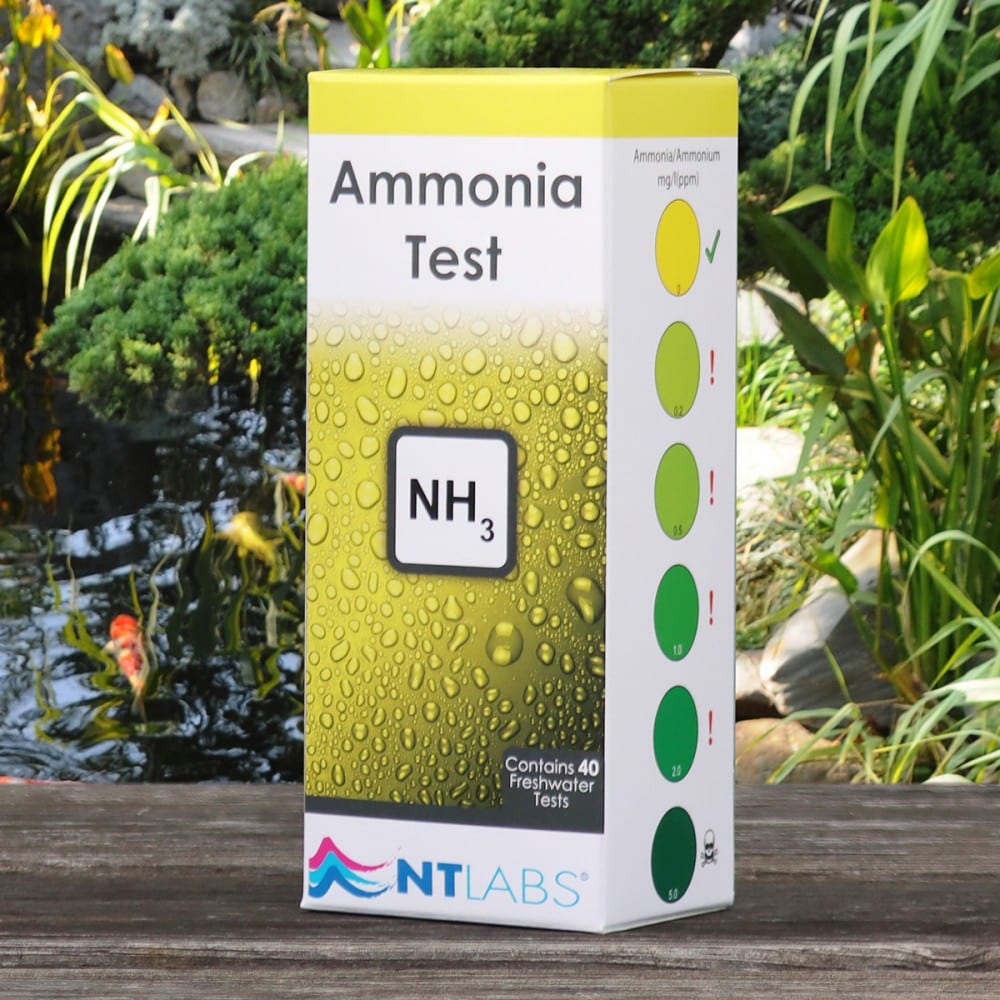
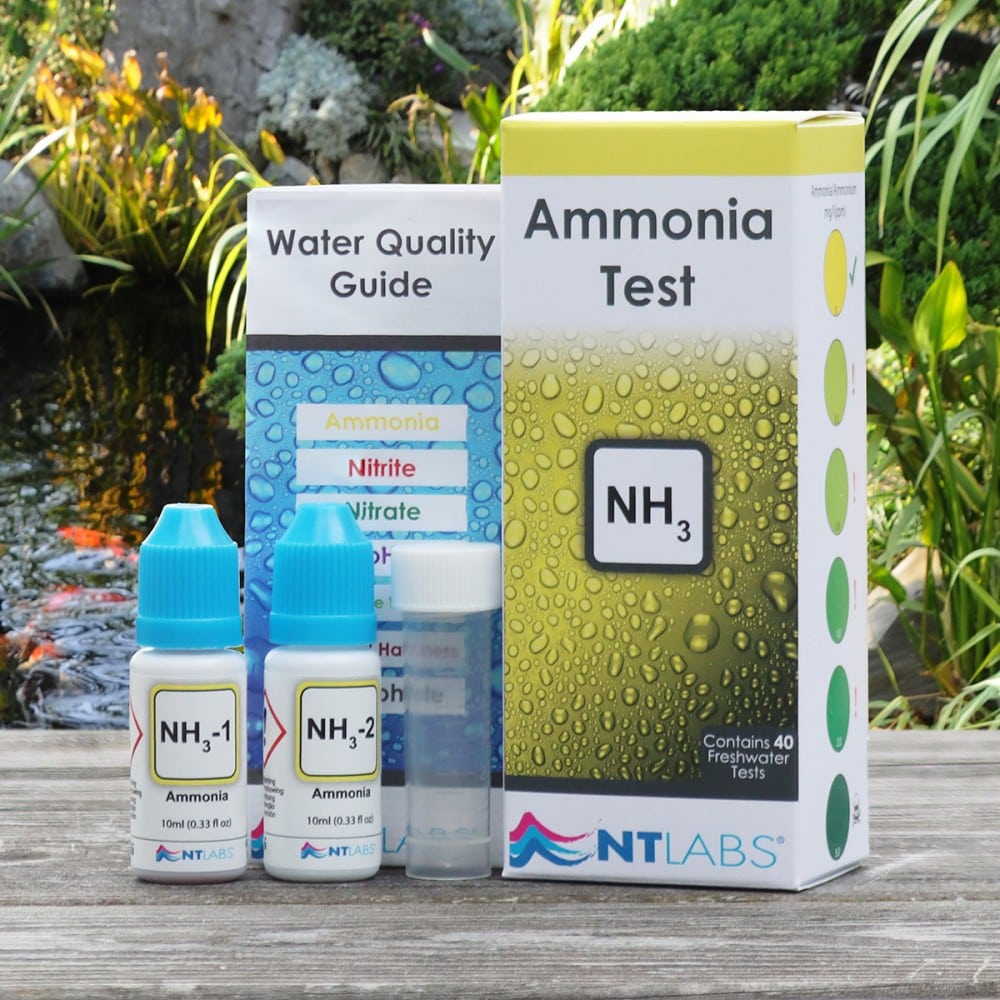
NT Labs Pond Ammonia Test Kit
| Brand |
|---|
NT Labs liquid ammonia test for freshwater ponds. Contains 40 tests using the current two-reagent method, with a 5ml sample and ten-minute colour development.
£7.20 (inc VAT)
NT Labs Pond Ammonia Test Kit
Check invisible fish waste with a dedicated liquid water test
The NT Labs Pond Ammonia Test Kit gives you a practical way to check ammonia in freshwater pond water. It is useful when establishing a filter, investigating an unexpected change in fish behaviour or keeping a regular record of water quality. Clear water can still contain ammonia, so a visual inspection of the pond cannot replace testing. This is a water-testing product: it measures a sample taken from the pond and does not treat the pond itself.
The current NT Labs formulation contains two reagents and provides 40 tests. The manufacturer has updated the earlier three-reagent method, so use the instructions supplied with your own kit rather than mixing instructions from different versions. A dedicated ammonia kit also makes sense if you use this test more frequently than the other tests in a larger water-testing set.
Product details at a glance
| Test | Ammonia in freshwater |
|---|---|
| Test quantity | 40 tests |
| Current method | Two liquid reagents and colour comparison |
| Sample volume | 5ml |
| Development time | 10 minutes |
Using the current two-reagent kit
Take 5ml of pond water in the clean test tube. Add five drops of Ammonia 1 and five drops of Ammonia 2, cap the tube and mix thoroughly. After ten minutes, compare the sample with the supplied chart against its white area. Yellow represents zero; green indicates ammonia. Follow the enclosed instructions and bottle labels if your pack differs from the current presentation.
Set out the chart, bottles and timer before starting. Work where you can count the drops clearly and read the scale without a strong colour cast from artificial lighting. Keep the sample separate from pond water once reagents have been added. A measured sample and the correct reading time are more useful than trying to speed up the process or estimate quantities by eye.
Why ammonia belongs in your testing routine
Fish produce ammonia as waste, while uneaten food and decaying material can add to the load on the system. Biological filtration processes ammonia through nitrite to nitrate. A new filter needs time to establish this activity, and an established filter can also be disturbed by an interruption or inappropriate maintenance. Testing helps you see what is happening instead of assuming that a running pump means the biological filter is coping.
Use results alongside a record of feeding, stocking and recent maintenance. For example, a reading taken shortly after a filter problem is more informative when you also know when the problem started and whether circulation has been restored. Recording those details creates a useful history if you later need advice. It also helps you avoid changing several things at once without knowing which change affected the result.
Read ammonia alongside the other water parameters
NT Labs explains that pH influences the balance between ammonia and ammonium. An ammonia result therefore needs context: check pH and nitrite as well, and include KH when reviewing the stability of the water. Do not assume that a single satisfactory measurement means every aspect of water quality is correct. This kit does not measure dissolved oxygen, chlorine, temperature or parasites.
If you want a compact set for several routine checks, compare the NT Labs Pond Lab Mini Test Kit. If ammonia is the parameter you need to monitor most often, keeping this separate kit available can make repeated checks easier without replacing an entire combined set.
What to do with an unexpected reading
First check the test procedure, sample volume, reading time and expiry information. Repeat an unexpected result with a fresh sample if you suspect a testing mistake. Record the actual chart value rather than simply noting that the water was “good” or “bad”. When asking for help, include your other readings, pond volume, fish load and any recent additions or equipment interruptions.
Fish showing distress need prompt attention. Water-quality problems can resemble disease, so do not choose a medication solely from an ammonia result or from appearance. Follow the kit guidance and seek suitable pond or veterinary advice where needed. Our NT Labs Pond Mature and NT Labs Koi Care Zeolite pages explain separate filtration-support products; their suitability depends on the problem and the rest of your system.
Keep comparable records
Write down the date, result and test used each time. Different test brands can report nitrogen compounds on different bases, so use the supplied scale and instructions when comparing results. Keep the chart with its matching reagents, check dates before testing and store the kit according to its label. When replacing an older kit, read the new instructions before the first test rather than relying on a remembered drop count.
A simple notebook or phone record is enough. Include follow-up results after corrective work so that you can see whether the situation is improving. The value of this kit is the information it gives you: consistent sampling, careful reading and a clear record turn an isolated colour comparison into something you can use to manage the pond.





Reviews
There are no reviews yet.