







Goat’s Beard (Aruncus Dioicus)
| Size | 1 Ltr, 3 Ltr |
|---|---|
| Plant Type | Moisture |
| Sun / Shade | Full Sun to Part Shade |
| Flower Colour | White |
| Growth Rate | Medium |
| Native to UK | No |
| Plant group |
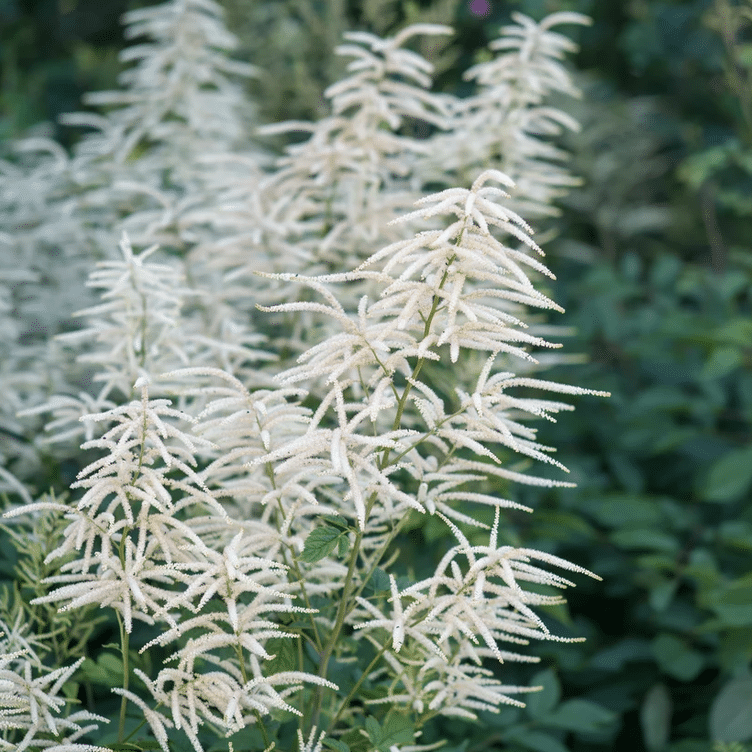
Goat’s Beard (Aruncus dioicus) is a spectacular moisture-loving perennial producing large clumps of attractive foliage topped with feathery creamy-white summer flowers. Growing approximately 1.5–2m tall, it is ideal for bog gardens, damp pond edges, wildlife gardens and naturalistic planting where height and structure are required.
Price range: £9.50 through £13.50 (inc VAT)
A spectacular moisture-loving perennial with feathery cream-white flowers
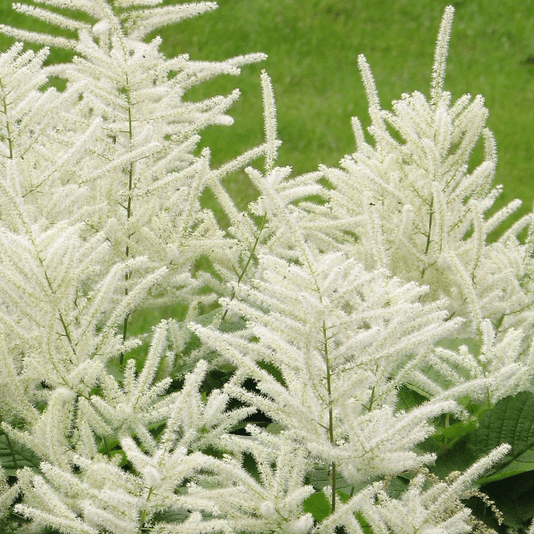
Goat’s Beard (Aruncus dioicus) is a large, impressive herbaceous perennial that brings height, texture and a wonderfully natural appearance to bog gardens, damp borders and pondside planting. Sometimes known as Bride’s Feathers or Buck’s Beard, this moisture-loving plant develops into a substantial clump of attractive green foliage topped by masses of airy, creamy-white flower plumes during early to midsummer.
The overall appearance is often compared to an enormous Astilbe. However, Goat’s Beard has a looser, more natural character, with its delicate flower plumes moving gently above the foliage. This makes it particularly effective around natural ponds, wildlife ponds and informal bog gardens where a softer style of planting is desired.
Aruncus dioicus naturally grows in moist woodland and other damp habitats across parts of the Northern Hemisphere. It performs particularly well in fertile soil that remains reliably moist and has also received the RHS Award of Garden Merit.
Why Choose Goat’s Beard?
Goat’s Beard is an excellent choice when you need height and structure around a pond without using a shrub or woody plant. Mature plants can reach around 1.5–2m or more, creating an impressive backdrop behind smaller moisture-loving plants.
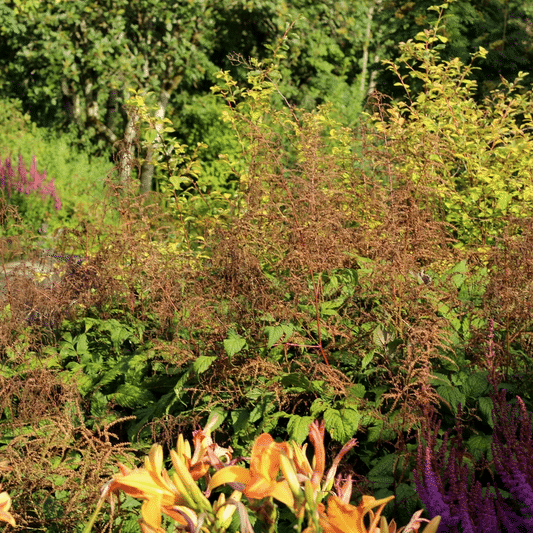
Its dark green, divided foliage forms a substantial bushy clump, while the creamy-white flowers appear in large feathery plumes above the leaves. After flowering, the ageing flower heads can also be left standing to provide additional texture and interest.
The foliage develops attractive yellow and orange tones as autumn approaches before eventually dying back for winter.
Where to Plant Aruncus dioicus
Goat’s Beard prefers moist, fertile soil and is ideal for bog gardens, damp borders, woodland-style gardens and areas surrounding ponds and streams.
This is a moisture-loving pondside plant rather than a submerged marginal pond plant. Plant it in the damp ground around your pond rather than placing the crown beneath the water.
It grows in full sun or partial shade, although moisture becomes increasingly important in sunnier positions. A partially shaded position with rich, moisture-retentive soil is particularly suitable.
Allow plenty of space when planting. Goat’s Beard is a substantial perennial and works particularly well towards the middle or rear of a planting scheme, where its eventual size will not overwhelm smaller plants.
Goat’s Beard Size, Spread & Flowering
- Botanical name: Aruncus dioicus
- Common name: Goat’s Beard
- Other names: Bride’s Feathers, Buck’s Beard
- Synonyms: Aruncus sylvester, Aruncus vulgaris, Spiraea aruncus
- Plant type: Herbaceous perennial
- Position: Full sun to partial shade
- Soil: Fertile, moist and moisture-retentive
- Planting depth: 0cm – plant in damp soil, not underwater
- Approximate mature height: 150–200cm
- Approximate mature spread: 50–100cm
- Flower colour: Creamy white
- Flowering period: Early to midsummer, typically June to July
- Growth habit: Upright, bushy and clump forming
- Foliage: Deciduous
- Time to mature: Approximately 2–5 years
- Hardiness: Hardy
- RHS Award: Award of Garden Merit
Caring for Goat’s Beard
The most important part of caring for Goat’s Beard is providing consistent moisture. Water well following planting and do not allow the surrounding soil to dry out during prolonged warm or dry weather.
Adding organic matter when planting can improve moisture retention, while a layer of mulch around established plants can help keep the root zone cool and damp.
Once established, Goat’s Beard is relatively low maintenance. Old growth can be cut back after flowering if a tidy appearance is preferred, or the flower heads can be retained for their later-season structure. Dead foliage can be removed during autumn or winter, with fresh growth emerging again in spring.
Established clumps can also be divided in spring or autumn if required.
An Excellent Companion for Other Moisture-Loving Plants
Because of its impressive height, Goat’s Beard works particularly well as a backdrop to lower-growing Hostas, Astilbes, Carex, ferns and other bog garden plants.
Combining plants with different heights and foliage textures can create a much more natural transition from the water’s edge into the surrounding garden, particularly around wildlife ponds and larger naturalistic water features.
Dispatching Your Goat’s Beard Plant
Our moisture-loving pond and bog garden plants are living plants, so their appearance naturally changes throughout the year.
During spring and summer, Goat’s Beard may arrive with active foliage and developing stems. Plants ordered around the flowering season may have buds or flowers, although flowering cannot be guaranteed when dispatched.
During autumn and winter, Aruncus dioicus naturally dies back and may therefore arrive with little or no growth visible above the compost. This is completely normal for a herbaceous perennial, with new shoots developing from below ground when temperatures and growing conditions improve.
Taller foliage and flower stems may occasionally be trimmed before dispatch to protect the plant during transportation. Product photographs generally show established plants during their main growing or flowering season, so the plant received may differ in size and appearance according to the time of year.







Reviews
There are no reviews yet.