







Fringed Water Lily (Nymphoides peltata)
| Size | 1 Ltr, 3 Ltr, 10 Ltr |
|---|---|
| Plant Type | Deep Water |
| Sun / Shade | Full Sun to Part Shade |
| Flower Colour | Yellow |
| Growth Rate | Medium to Fast |
| Native to UK | Yes |
Fringed Water Lily has rounded green leaves and bright yellow flowers with distinctly fringed petals. The flowers are much smaller than those of many familiar ornamental waterlilies, but that should not be taken to mean the whole plant stays miniature. Its spreading underwater stems can cover a generous area.
£18.00 (inc VAT)
Fringed Water Lily (Nymphoides peltata)
Small yellow fringed flowers on a vigorous floating-leaved plant
Fringed Water Lily has rounded green leaves and bright yellow flowers with distinctly fringed petals. The flowers are much smaller than those of many familiar ornamental waterlilies, but that should not be taken to mean the whole plant stays miniature. Its spreading underwater stems can cover a generous area.
This is a rooted aquatic, not a free-floating rosette. It grows from submerged soil and sends stems out through the water, producing floating leaves and flowering growth above them. Give it a secure basket or planting area and think about the space available after a season of growth, rather than only the size of the supplied plant.
Full sun is a good starting choice. A specialist UK grower also describes tolerance of dappled shade and slow movement, but the key consideration is room to expand. It can become tangled and vigorous, particularly in favourable conditions, so it needs an owner prepared to thin and contain it.
For establishment, the grower recommends placing the planted soil 0–20 cm below the surface, then lowering an established plant into deeper water, up to around 1 m. Measure from soil to water surface rather than the bottom of the basket. Follow the supplied label if the young growth needs a different starting position.
Its yellow flowers are a summer feature, with the main surface growth dying back seasonally. An established plant can spread roughly 1.5–2.5 m under RHS guidance, which makes it important to leave open water and avoid smothering smaller neighbouring plants. The floating leaves do not guarantee clear water or replace other pond care.
Keep this plant contained in the garden pond and never release it into the wild. Northern Ireland has specific restrictions on causing it to grow in the wild, even though the RHS distinguishes that from a sale ban. Remove excess stems carefully and dispose of them where they cannot reach a stream, ditch or another natural waterbody.

What you receive
We supply Fringed Water Lily in the format you select: 1-litre. Litre sizes describe the starting planted container, not a guaranteed number of shoots or flowers.
Unpack promptly and keep the living growth wet while preparing its position. The amount of visible growth changes with the season, so a newly supplied plant may look smaller than an established planting in the photograph. Introduce it as described below rather than leaving it to dry in the packaging.
Is Fringed Water Lily right for your pond?
Fringed Water Lily has small yellow flowers but can spread around 1.5–2.5 m, so it is not a miniature just because the blooms are small. Choose a sunny managed pond position where you can reach and thin the spreading stems. Keep it clear of delicate neighbours and leave some water surface open.
Positioning and getting established
Root it securely in suitable aquatic medium and establish the basket at the level directed by its supplied label. Specialist guidance starts young plants with roughly 0–20 cm above the planted soil, with established plants able to be lowered towards 1 m. Measure that water above the planting, excluding basket height; the deeper tolerance is not a compulsory starting position.
Use appropriate aquatic planting medium and keep the roots or rhizome at the correct level, leaving the growing point clear. Lower the planted basket slowly so that loose medium stays contained, and support its whole base on a stable shelf or planting stand.
Choose a position you can reach for inspection and thinning, with space between the plant and equipment. Watch the light that actually reaches the leaves as other planting grows. A sunny garden can still have a shaded underwater position beneath a dense raft of lilies or floating plants.
Practical care and growth management
- Keeping the right position: Check the planting after introduction and after other plants fill out. Keep live growth appropriately wet, avoid crushing shoots while moving nearby baskets and maintain access to the planted area. Review its true light and water position if new growth is poor.
- Managing this plant: Check the edge of the floating-leaf patch and remove unwanted spreading stems before they tangle through neighbouring plants or equipment. Collect all cut pieces and dispose of them away from natural water. A basket helps organise the roots but does not remove the need to manage the plant’s spread.
- Medium and feeding: Use suitable medium for a rooted planting and follow the plant’s own guidance before adding feed. Apply any aquatic fertiliser within the medium as its label directs; do not scatter it into open pond water. Poor light, unsuitable depth or a loose planting are not corrected by extra feed.
- Tidying without spreading it: Remove soft decaying material and collect loose stems, roots or leaves rather than allowing them to drift into equipment. Check removed growth for pondlife before disposal. Keep nursery plants, fragments and pond waste within managed garden arrangements and out of natural ponds, streams and drains.
Seasonal appearance and winter care
The foliage is deciduous and reduces at the end of the growing season. Remove soft decaying leaves carefully and keep the rooted plant in its appropriate underwater position. Treat seasonal leaf loss separately from the need to control vigorous summer growth.
Size and growing conditions
- Position
- Rooted floating-leaved aquatic; generous managed space
- Depth
- initially 0–20 cm, established plants can be lowered to around 1 m
- Reference point
- Water above the planted soil or growing point, excluding the height of the container.
- Sun
- Full sun preferred; some dappled-shade tolerance
- Height
- Leaves at surface; flower stems around 10 cm above it
- Spread
- 1.5–2.5 m; vigorous
- Flowering
- Yellow fringed flowers in summer
- Winter care
- Deciduous hardy aquatic; remove decaying seasonal foliage.
- Native status
- Native status recorded in Britain and Ireland; Northern Ireland has a specific no-wild-release restriction.
- RHS information
- RHS plant profile: Nymphoides peltata
Delivery and basket information
We do not deliver live plants to Northern Ireland.
Orders received by 11am Monday to Wednesday are normally dispatched on the following working day using a next working day courier service. During busy periods, dispatch may occasionally take an extra day.
To avoid plants being held in depots over a weekend, we do not usually dispatch on Fridays. Highlands and Islands orders using a two day service are not normally dispatched on Thursdays.
Please read our delivery information for delivery arrangements and contact us if you need to check the timing of a particular order.
Finofil baskets are made from 100% recycled polypropylene co-polymer. They are not suitable for ordinary kerbside recycling; reuse them where possible and check local specialist recycling options. Their fine mesh helps retain aquatic soil while allowing water to reach the roots.
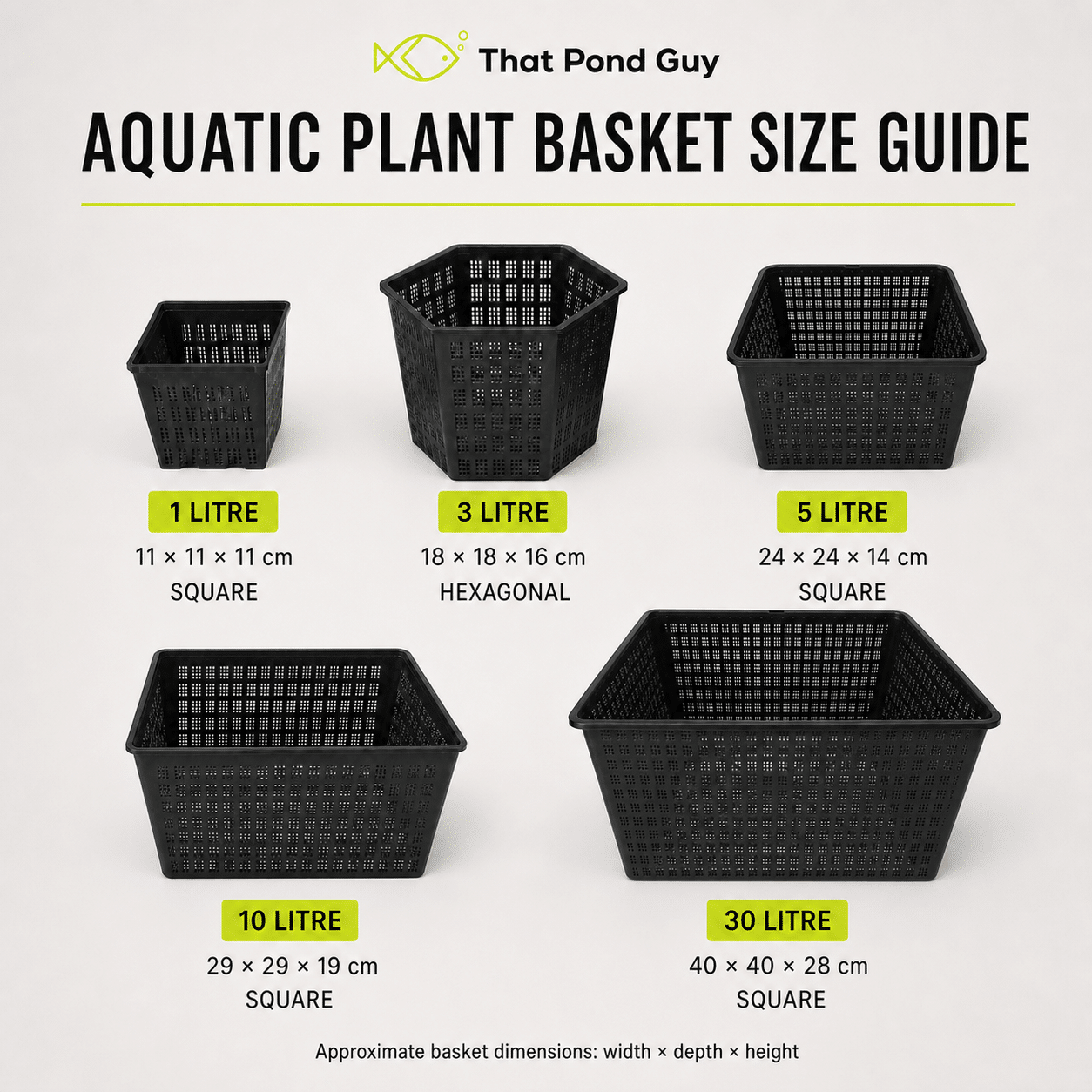
Basket measurements for the offered sizes:
- 1 Litre Basket – usually 11 × 11 × 11cm square; some varieties may be supplied in a 14cm diameter × 10cm round basket
Other plants to compare
Water Hawthorn — For fragrant white flowers and cooler-season interest rather than summer fringed yellow blooms.
Pygmaea Helvola — For a genuinely miniature yellow-flowered waterlily when this species would spread too widely.







Reviews
There are no reviews yet.