







Yellow Water Snowflake (Nymphoides thunbergiana)
| Size | 1 Ltr, 3 Ltr, 10 Ltr |
|---|---|
| Plant Type | Deep Water |
| Sun / Shade | Full Sun to Part Shade |
| Flower Colour | Yellow |
| Growth Rate | Medium to Fast |
| Native to UK | No |
Yellow Water Snowflake (Nymphoides thunbergiana) has fringed yellow flowers and rounded floating leaves. Supplied in a selected aquatic basket; allow room for plantlets and check winter protection for an outdoor pond.
Price range: £18.00 through £58.00 (inc VAT)
Yellow Water Snowflake (Nymphoides thunbergiana)
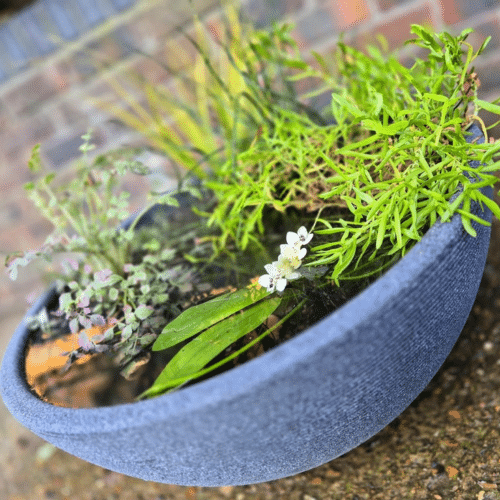
Fringed yellow flowers above rounded floating leaves
Yellow Water Snowflake brings small fringed flowers and a light layer of floating foliage to the pond. The plant is rooted below the surface, with rounded green leaves spreading across the water and yellow flowers held just above them. It has the outline of a small waterlily, but belongs to the Nymphoides group rather than Nymphaea.
The fine, feathery edges are the detail to look for in the flowers. Their colour can appear softer or stronger with the light and the age of the bloom. The leaves have a notch at the base and form a useful backdrop between flowers, so the planting still has interest when no flower is open. Allow a clear view of the surface rather than hiding it beneath a larger lily.
It spreads by floating stems that can produce new rooted plantlets. That is different from a free-floating plant simply drifting around the pond: the original planting remains anchored, while the new growth can extend its reach. A spread guide of about 30–60 cm is useful when placing an individual plant, but it is not a limit on a colony allowed to establish from several plantlets.
Choose still or gently moving water in a sunny position, with some tolerance of partial shade in our growing guidance. Keep the floating leaves out of repeated fountain spray and leave access to the basket. A spreading surface plant is easier to manage if you can reach its outer growth before it meets pump intakes or the neighbouring lilies.
The planting guide is around 30–40 cm of water above the top of the planted basket. Start a short young plant where its leaves can reach the surface and lower it gradually as they extend, following the supplied label. The container and any support occupy part of a shelf’s depth, so measure the water over the planting rather than the whole depth of the pond.
Summer is the main season for its leaves and flowers, with June–September a guide for UK pond display rather than a promise of continuous flowering. The floating foliage provides shade and places for small pond creatures to shelter, while open water should remain around the planting. Keep growth within the intended area and plan winter care before choosing it: this southern African species should not be assumed to overwinter reliably in every unheated UK pond.
What you receive
Your Yellow Water Snowflake is supplied planted in the aquatic basket size selected: 1 litre, 3 litres or 10 litres. Check the current selector and availability message when ordering. Container volume describes the supplied basket; it does not guarantee a particular leaf count, flower count or area of surface cover on arrival.
Unpack promptly and keep the roots and planting wet while you prepare the position. Leaf length and fullness vary with the season and the growing stage. A recently supplied plant may have less surface growth than an established planting, and flowers need not be present when it arrives.
Is Yellow Water Snowflake right for your pond?
Choose it when you want rounded floating foliage and small fringed yellow flowers, with the ability to manage the new plantlets as they appear. Leave room for the planting to extend and for some water to remain uncovered. Its leaf cover can create shade, but the plant is one part of pond care rather than a substitute for managing fish waste, water quality or circulation.
Check the winter arrangements as well as the summer space. A seasonal feature or a planting that can be moved and protected is a different proposition from a pond where every plant must remain outside without attention. If reliable year-round outdoor performance is essential, confirm the supplied plant’s winter instructions before ordering.
Planting depth and getting established
Use a stable, level shelf or support and keep an already planted basket intact. The 30–40 cm guide is water above the basket top, not the distance from its base to the surface. For example, a basket standing on a shelf takes up some of that shelf’s total depth. Check the actual cover after positioning it, and keep short leaves within reach of the surface during establishment.
If a young plant needs a shallower start, use a broad, secure support and lower the planting in stages as the leaves extend. Do not balance a large basket on a small unstable stack. Check the supplied care label before increasing depth, especially if the plant has little active top growth.
When repotting is needed, use a suitable aquatic basket and aquatic growing medium, keeping the growing parts at their proper planting level. Lower it slowly so loose material is not washed out. Ordinary light potting compost and a heavy dose of garden feed are poor substitutes for a planting medium intended for pond use.
Looking after the plant
- Managing surface spread: Follow the floating stems and remove surplus plantlets before the planting occupies more water than intended. Work in small sections so you can see what remains rooted and retain healthy leaves. Keep the pond edge, pump access and neighbouring plants clear.
- Making another plant: A plantlet can be separated once it has developed its own roots. Cut the connecting stem between the rooted tufts and settle the new plant into a suitable wet planting position. Keep it wet throughout handling; a loose leaf without a rooted growing point is not the same as an established plantlet.
- Tidying and feeding: Remove soft yellowing leaves and spent flowers where they can be reached safely, collecting the material rather than allowing it to decay in the pond. If feeding is needed during active growth, use a suitable aquatic fertiliser at its labelled rate and check what is already in the basket before adding more.
- Checking weak growth: Look at the amount of light reaching the leaves, the water above the planting and the condition of the roots before increasing feed. A recently moved plant needs time to establish. Heavily shaded or submerged young leaves are a positioning issue that extra fertiliser cannot solve.
- Keeping plants contained: Check removed foliage for pond animals and return those animals to the pond. Keep unwanted plants and fragments out of streams, ditches and natural ponds, and dispose of surplus responsibly within the garden waste arrangements available to you.
Summer growth and winter planning
Expect the planting to be fullest while conditions support active growth. Flowering and leaf production depend on the season, light and establishment, so a photograph of a flowering plant does not describe its appearance throughout the year. Tidy soft deteriorating material as growth slows, while retaining sound roots and healthy leaves.
Do not use planting depth as a winter-hardiness rating. Before cold weather, check the instructions supplied with this stock for the protection and water temperature it needs. Keep any plant being moved wet and in a suitable bright aquatic setting. Do not rely on a shallow container or an exposed pond providing the same winter conditions as a protected growing space.
Size and growing conditions
- Botanical name
- Nymphoides thunbergiana
- Flowers
- Yellow fringed flowers held above the floating leaves
- Leaf habit
- Rounded, notched floating leaves from a rooted aquatic plant
- Spread guide
- About 30–60 cm for an individual planting; new plantlets can extend its reach
- Planting guide
- About 30–40 cm of water above the planted basket; establish young growth according to the supplied label
- Light and water
- Full sun to partial shade; still or gently moving water
- Season
- Main UK display generally June–September, depending on growth and conditions
- Winter
- Confirm protection for the supplied plant; reliable outdoor UK overwintering is not assumed
- Native status
- Not native to Britain or Ireland
- RHS information
- RHS plant profile: Nymphoides thunbergiana
Dispatch and supplied aquatic baskets
We cannot deliver live plants to Northern Ireland.
Orders received by 11am Monday to Wednesday are normally dispatched on the following working day using a next working day courier service. During busy periods, dispatch may occasionally take an extra day. Check the product’s current availability message before ordering.
To avoid plants being held in depots over a weekend, we do not usually dispatch on Fridays. Highlands and Islands orders using a two-day service are not normally dispatched on Thursdays.
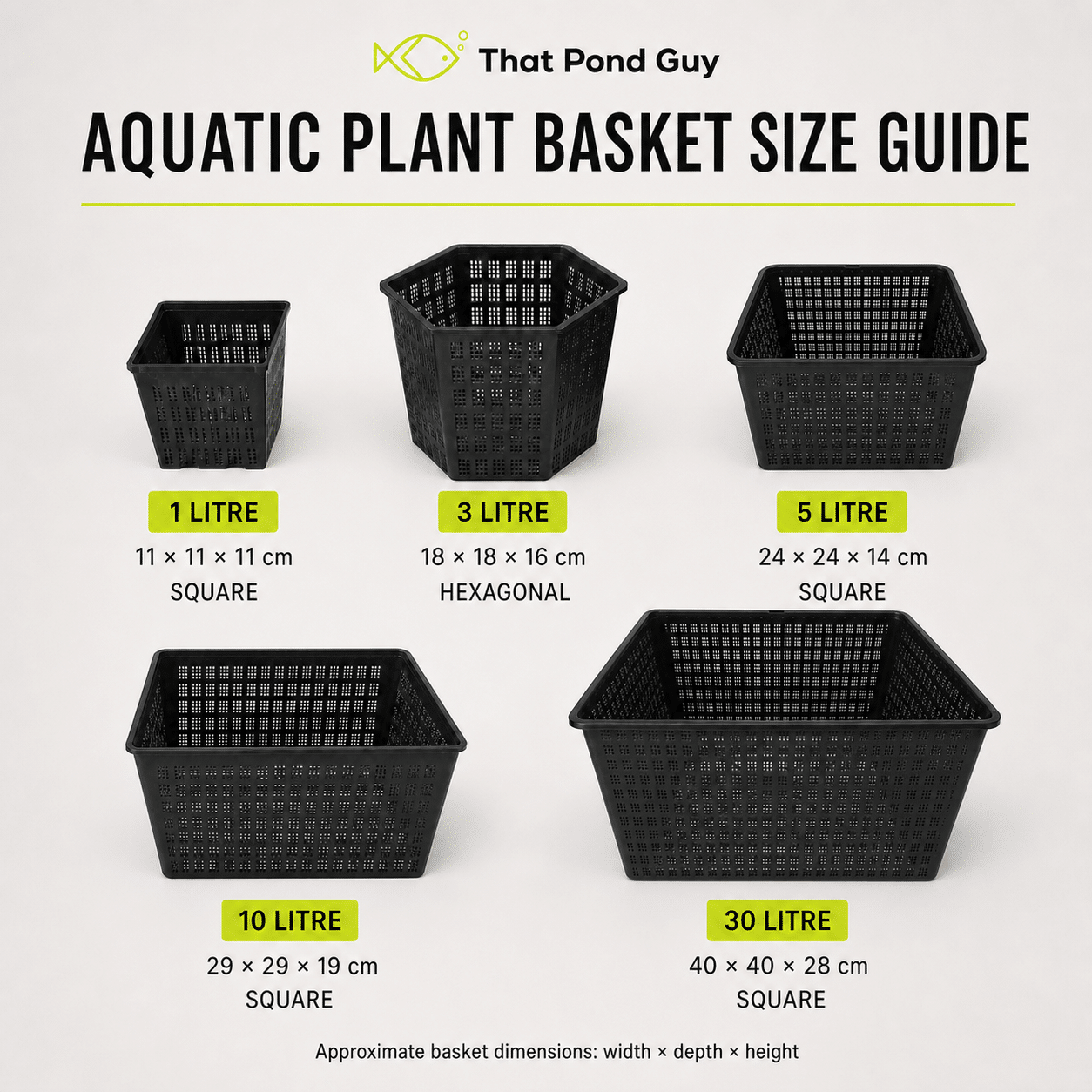
Finofil baskets are made from 100% recycled polypropylene co-polymer. Their fine dual-mesh construction helps retain aquatic soil while letting water reach the roots. Reuse the basket where possible; these black baskets are not suitable for ordinary kerbside recycling, so check local specialist options when reuse is no longer possible. Basket shape can vary slightly with the plant and availability.
- 1-litre basket
- Usually 11 × 11 × 11 cm square; some plants use a 14 cm diameter × 10 cm round basket
- 3-litre hexagonal basket
- 18 × 18 × 16 cm
- 10-litre square basket
- 29 × 29 × 19 cm
Other rooted floating-leaved plants to compare
Fringed Water Lily — Another yellow-flowered Nymphoides, with its own vigorous mature spread and planting requirements to consider.
Brandy Bottle — A much more substantial large-pond planting with broad leaves and cupped yellow flowers, rather than small fringed blooms.
Choosing plants and planting supplies
Deep water pond plants — Compare the actual water cover and surface space each rooted plant needs.
Pond plant baskets and planting supplies — Choose a suitable aquatic container and growing medium when a plant needs repotting.



Reviews
There are no reviews yet.