







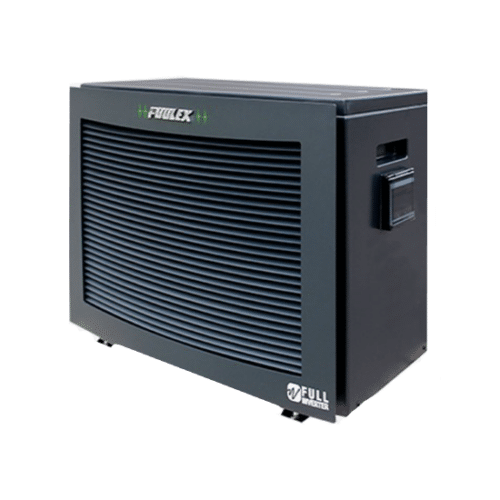
Poolex Jetline Premium Fi 210 28.42kW Three-Phase Heat Pump with Wi-Fi
| Brand | |
|---|---|
| Rated heat output | 25–30 kW |
| Heating Output | 28.42kW |
| Best Use | Swimming pools |
| Heating type | Air source heat pump |
| Connection Size | 50mm / 1½ inch PVC connectors |
| Wi-Fi control | Built in |
| Heating control | Inverter |
| Power supply | Three phase |
| Air discharge | Horizontal |
| Electrical input | Electrical input — air 26°C / water 26°C: 0.48–4.08 kW, Electrical input — air 15°C / water 26°C: 0.63–4.18 kW, Maximum electrical input: 6.15 kW |
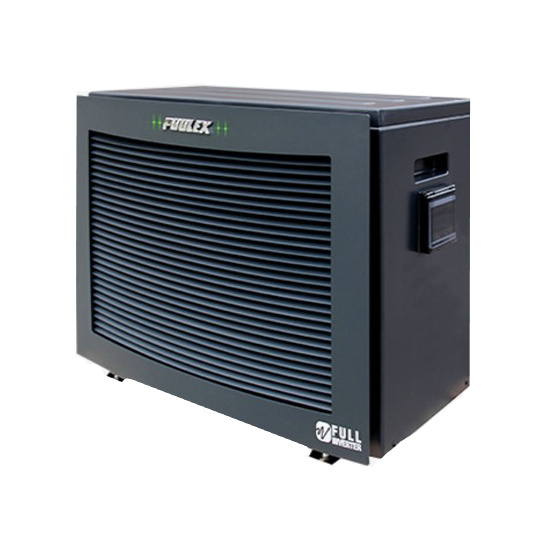
Jetline Premium Fi 210 three-phase inverter heat pump with built-in Wi-Fi. The dedicated three-phase manual specifies an 8–40°C heating setting range. Check the model-specific output, water flow and electrical supply below; winter pond sizing must account for heat loss and cold-weather performance.
£4,900.00 (inc VAT)
Poolex Jetline Premium Fi 210 28.42kW Three-Phase Heat Pump with Wi-Fi
At a glance
- Model heat-output rating: 28.42 kW
- Power supply: Three phase
- Compressor control: Inverter
- Air discharge: Horizontal
The model rating is heat delivered to the water, not electricity consumption. Compare the test conditions and cooler-weather figures in the technical specifications below.
Three-phase inverter heating with an 8°C minimum heating setting
This is the three-phase 210, intended for an installation with a suitable three-phase supply. Compare it with the separate single-phase 210 using the exact electrical specification, not the shared model number alone.
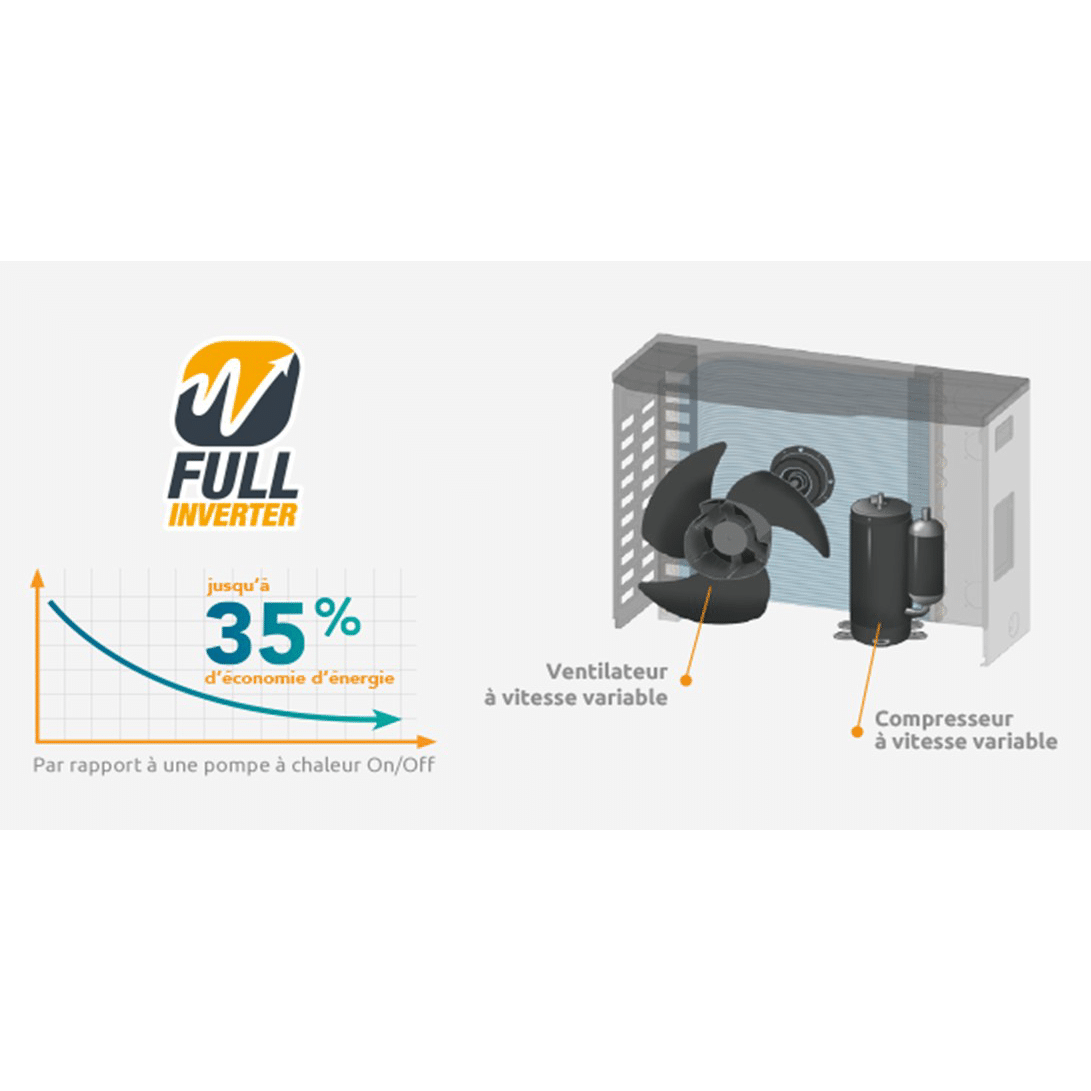
The Jetline Premium Fi uses inverter control to vary its operation as the demand changes. Built-in Wi-Fi provides remote control, while the water circuit and outdoor installation remain essential to its performance. Use the model-specific figures below to compare it with the other heaters in our air source heat pump range.
Choosing a heater for your target temperature
The dedicated three-phase manufacturer manual specifies a heating setting range of 8–40°C. A 12°C target is within that control range, but maintaining it through winter still depends on the pond cover, insulation, heat loss and available heating output in cold air. Check the exact electrical model and controller against the Jetline Premium Fi three-phase manual and compare our pond heating range before selecting the installation.
A low operating air temperature and a low water temperature setting mean different things. The operating limit describes the air conditions in which the equipment can run; it does not change the lowest temperature available on the thermostat. Equally, operating in cold air does not mean the heater produces its warm-weather output throughout winter.
Jetline Premium Fi 210 three phase technical information
- Type: Full inverter air source heat pump
- Model: Jetline Premium Fi 210 three phase
- Recommended pool volume: 110 to 145m³
- Maximum heating output at A26/W26: 28.42kW
- Minimum output at A26/W26: 6.53kW
- Power consumption at A26/W26: 4.08 to 0.48kW
- COP at A26/W26: 13.59 to 6.96
- Maximum heating output at A15/W26: 20.75kW
- Minimum output at A15/W26: 4.79kW
- Power consumption at A15/W26: 4.18 to 0.63kW
- COP at A15/W26: 7.59 to 4.97
- Maximum electrical power: 5.96kW
- Power supply: 380 to 415V three phase
- Nominal flow: 9m³/h
- Refrigerant: R32
- Dimensions: 1060mm x 485mm x 736mm
- Weight: 79kg net / 92kg gross
- Noise level at 10m: less than 24 to 33dB(A)
- Connections: 50mm / 1½ inch PVC connectors
- Heat exchanger: Twisted Tech titanium
- Heating setpoint range: 8–40°C
- Operating air temperature: −15–43°C
How to use the capacity figures
The pool volume above is the manufacturer’s pool selection guidance. It is not a rating for keeping a covered koi pond at a specific temperature through a UK winter. The amount of heat needed depends on the water surface area, covers, exposure, construction, pipework and target temperature, as well as the number of litres.
When comparing heat pumps, use matching air and water test conditions. The A26/W26 and A15/W26 figures show performance at two different test points. Neither should be treated as a guaranteed output on a freezing night. Give the installer your intended heating season and water temperature so that the selection accounts for the real job.
Electrical input and heating output are separate measurements. A heat pump transfers heat from the air into the water, so its useful heating output can exceed the electricity it consumes. However, an advertised COP is tied to particular conditions and is not a fixed multiplier for every hour of operation. Running costs change with weather, demand and use.
Water flow, connections and servicing
Check the nominal water flow in the specification before choosing the circulating pump or planning the heater branch. Pipe length, bends, valves and other equipment all affect the flow delivered to the heat exchanger. The maximum number on a circulation pump’s box is not necessarily the flow available in the installed circuit.
A correctly arranged bypass allows the heater branch to be balanced and isolated for servicing. Match the supplied connections to the chosen pipework, allow access to the unions and provide a practical draining arrangement. Have the installation planned as a complete water circuit rather than adding fittings simply because they were used on another model.
Outdoor position and electrical supply
Install the unit on a firm, level base with the clearances required by its manual. Leave the air inlet and discharge unobstructed. A close enclosure or fence can cause the machine to draw its cooled discharge air back into the inlet, reducing the heat available to collect. Leave room for inspection and service work as well as airflow.
Normal operation produces condensate, so provide an appropriate drainage route. Consider where this water will go in cold weather and avoid discharging it onto a frequently used path. Positioning should also take account of neighbouring properties and the sound produced while the heater is working.
Have a qualified electrician confirm the supply, protection and cable requirements for this exact model. In the larger sizes, single-phase and three-phase products are separate choices. Selecting the correct phase is part of specifying the product, not a setting that can be changed after delivery.
Using the heater through the season
Set a heating plan appropriate to the water’s intended use and check the actual temperature independently. For fish ponds, avoid abrupt temperature changes and continue monitoring water conditions. Wi-Fi control is useful, but does not replace routine checks that circulation is running and the equipment is unobstructed.
Keep the air path clear and inspect the condensate route. If the unit is taken out of service for freezing weather, follow its draining and winterisation instructions. Turning off the electricity alone does not empty water from the heat exchanger. A stored heater and an actively heating installation need different winter arrangements.
Compare before ordering
Compare output, flow and electrical supply alongside the purchase price. For further help with the overall selection, read our pond heating guide. Tell us your volume, intended temperature, covers and heating season if you need help identifying the appropriate model.
Other heat pumps to compare
Compare nearby models and alternative ranges before choosing your heater.
- Poolex Jetline Premium Fi 155 21.43kW Three-Phase Heat Pump with Wi-Fi — Lower rated output in this range: 21.43 kW at A26/W26; three-phase supply.
- Poolex Silverline Top 200T 19.93kW Three phase Heat Pump for Pools and Koi Ponds — An alternative range to compare: 19.93 kW published rating; see its specification table for test conditions; three-phase supply. This alternative offers vertical air discharge. Check operating temperatures, water flow and installation requirements against your intended use.
- Poolex Silverline Top 150T 15kW Three phase Heat Pump for Pools and Koi Ponds — An alternative range to compare: 15 kW published rating; see its specification table for test conditions; three-phase supply. This alternative offers vertical air discharge. Check operating temperatures, water flow and installation requirements against your intended use.
Rated heating output is measured at the stated air and water temperatures. In these figures, A means air temperature and W means water temperature, both in degrees Celsius. Heating output is not electrical consumption or a guarantee of winter performance. For a koi pond, compare the minimum water setpoint and cold-weather output as well as the headline kW rating.
Electrical input and running consumption
| Electrical input — air 26°C / water 26°C | .48–4.08 kW |
|---|---|
| Electrical input — air 15°C / water 26°C | .63–4.18 kW |
| Maximum electrical input | 6.15 kW |
Electrical input is the electricity consumed by the heat pump; heating output is the heat delivered to the water. Input varies with compressor speed, air and water temperatures and operating mode. These laboratory figures are not a guaranteed winter consumption rate. Energy use in kWh equals average electrical input in kW multiplied by hours running; multiply that by your electricity tariff to estimate cost. Maximum input and circuit protection are separate specifications.
Three-phase electrical connection
This model requires a dedicated 380–415V three-phase installation, not a standard UK plug-and-socket connection. Published manufacturer documents give conflicting circuit-protection figures for the 210 Tri. The protection rating must therefore be confirmed against the exact supplied unit and its installation instructions before electrical work is specified.
See our Jetline Premium range guide and model comparison, or compare all air source heat pumps.
Availability and delivery
Most of our heat pumps are kept in stock. Some models may be dispatched directly from our supplier, and availability can change. Please allow 1–2 weeks for delivery where additional lead time is needed. We will keep you informed of your order’s progress and expected delivery date. If you need your heat pump by a particular date, please contact us before ordering so we can confirm the current lead time.



Reviews
There are no reviews yet.