






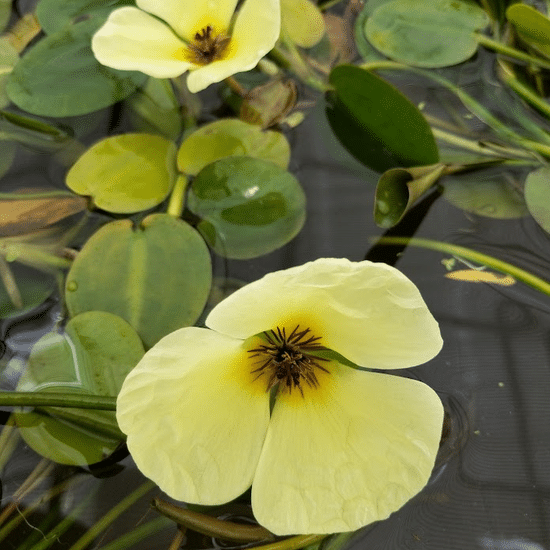

Water Poppy (Hydrocleys nymphoides)
| Size | Pack of 5 Plants |
|---|---|
| Plant Type | Deep Water |
| Sun / Shade | Full Sun to Part Shade |
| Flower Colour | Yellow |
| Growth Rate | Medium |
| Native to UK | No |
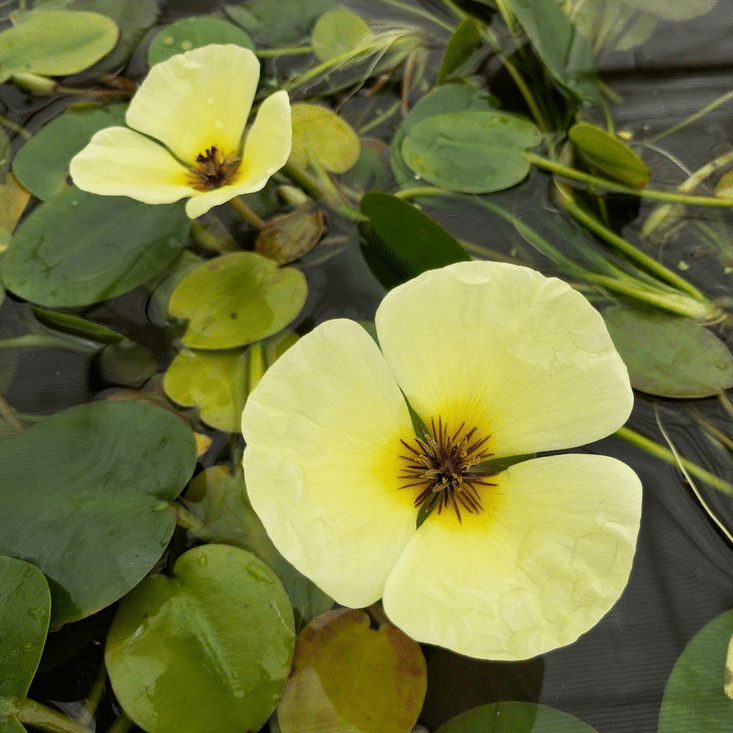
Water Poppy has glossy, oval to heart-shaped leaves and yellow, three-petalled flowers with a darker centre. Its rounded floating foliage can resemble other pond plants, but the flower structure distinguishes it from true waterlilies and fringed Nymphoides. It is a plant for warm-season interest rather than a British native substitute.
£18.50 (inc VAT)
Water Poppy (Hydrocleys nymphoides)
Yellow flowers and floating leaves for a warm summer pond
Water Poppy has glossy, oval to heart-shaped leaves and yellow, three-petalled flowers with a darker centre. Its rounded floating foliage can resemble other pond plants, but the flower structure distinguishes it from true waterlilies and fringed Nymphoides. It is a plant for warm-season interest rather than a British native substitute.
Stems spread out over the water and can root at their nodes. In suitable conditions the growth expands into a wider patch, so it needs occasional thinning and space around neighbouring plants. Treat a small supplied plant as the beginning of that growth, rather than assuming it will remain the size of its nursery container.
It is often listed with floating plants, but Water Poppy can root in shallow aquatic soil. UK horticultural guidance describes shallow placement up to around 20 cm of water, with foliage extending onto the surface. Follow the supplied label and keep the growing point positioned appropriately rather than automatically planting at waterlily depth.
Choose full sun and a sheltered, warm position. Flowering depends on temperature and establishment, and each individual flower is brief. Enjoy it as a warm-season display rather than relying on an exact calendar of flowers throughout the British growing season, particularly while a young plant is settling in.
Water Poppy is tender in British outdoor conditions and is often grown as warm-season pond planting. A suitable warm, protected growing setup is different from an exposed garden pond. Plan the winter arrangement before purchase rather than expecting the plant to survive outdoors simply because its roots are underwater.
Remove decaying tender growth as the season ends. Thin unwanted stems and keep fragments within the managed garden, away from natural waterways. A mixed planting scheme should still leave open water and access to equipment; no floating plant should be sold as a guaranteed cure for algae or poor water quality.
What you receive
We supply Water Poppy as a pack of five plants. The pack is the number of plants supplied, rather than a measure of the area they will eventually cover.
Unpack promptly and keep the living growth wet while preparing its position. The amount of visible growth changes with the season, so a newly supplied plant may look smaller than an established planting in the photograph. Introduce it as described below rather than leaving it to dry in the packaging.
Is Water Poppy right for your pond?
Water Poppy gives yellow three-petalled flowers and glossy rounded leaves in a warm sunny feature. It can spread around 1 m under suitable UK cultivation, so allow space and access for thinning. Treat it as tender seasonal planting rather than a British-native substitute or a hardy waterlily that can be left unchanged outdoors.
Positioning and getting established
Root it in suitable shallow aquatic planting medium where the supplied guidance directs, with water up to around 20 cm above the planted growing point under UK horticultural advice. Keep the leaves at their natural surface or emergent position. It is a rooting plant, so the method differs from simply dropping a free-floating Frogbit rosette onto the water.
Allow space below the floating leaves for the submerged stems and roots, keeping the rosettes clear rather than burying them under medium. Inspect the planting after introduction and after changes in water level. Keep the container or rooted area reachable so you can manage extending stems and move the tender planting when protection is needed.
Choose a position you can reach for inspection and thinning, with space between the plant and equipment. Watch the light that actually reaches the leaves as other planting grows. A sunny garden can still have a shaded underwater position beneath a dense raft of lilies or floating plants.
Practical care and growth management
- Keeping the right position: Check the planting after introduction and after other plants fill out. Keep live growth appropriately wet, avoid crushing shoots while moving nearby baskets and maintain access to the planted area. Review its true light and water position if new growth is poor.
- Managing this plant: Thin spreading stems to keep the surface open and collect fragments before they reach equipment. Individual flowers can be brief, so inspect the whole plant and its new growth rather than treating a faded one-day bloom as a failure. Remove soft decaying material as conditions cool.
- Medium and feeding: Use suitable medium for a rooted planting and follow the plant’s own guidance before adding feed. Apply any aquatic fertiliser within the medium as its label directs; do not scatter it into open pond water. Poor light, unsuitable depth or a loose planting are not corrected by extra feed.
- Tidying without spreading it: Remove soft decaying material and collect loose stems, roots or leaves rather than allowing them to drift into equipment. Check removed growth for pondlife before disposal. Keep nursery plants, fragments and pond waste within managed garden arrangements and out of natural ponds, streams and drains.
Seasonal appearance and winter care
Water Poppy is tender under UK outdoor conditions. Plan for a seasonal display or a genuinely suitable protected aquatic setup; there is no reliable promise that a shallow outdoor planting will survive winter. Keep any removed stems and roots out of natural waterways.
Size and growing conditions
- Position
- Rooting shallow-water plant with floating/emergent leaves
- Depth
- Shallow water up to around 20 cm under UK horticultural care guidance; follow supplied label
- Reference point
- Water above the planted soil or growing point, excluding the height of the container.
- Sun
- Full sun; sheltered warm position
- Height
- Leaves at the surface, with submerged stems and roots.
- Spread
- Can spread around 1 m under UK horticultural guidance; thin as necessary
- Flowering
- Yellow 3-petalled warm-season flowers, darker centre; individual flowers brief
- Winter care
- Treat as tender seasonal planting; no reliable outdoor winter-survival promise.
- Native status
- Central/South American species; not native to Britain or Ireland
- RHS information
- RHS plant profile: Hydrocleys nymphoides
Ordering and delivery
We do not deliver live plants to Northern Ireland.
Orders received by 11am Monday to Wednesday are normally dispatched on the following working day using a next working day courier service. During busy periods, dispatch may occasionally take an extra day.
To avoid plants being held in depots over a weekend, we do not usually dispatch on Fridays. Highlands and Islands orders using a two day service are not normally dispatched on Thursdays.
Please read our delivery information for delivery arrangements and contact us if you need to check the timing of a particular order.
Other plants to compare
Water Hawthorn — For a rooted aquatic with cooler-season scented white flowers and a different outdoor care cycle.
Frogbit — For small free-floating native rosettes that do not need this rooting medium.



Reviews
There are no reviews yet.