






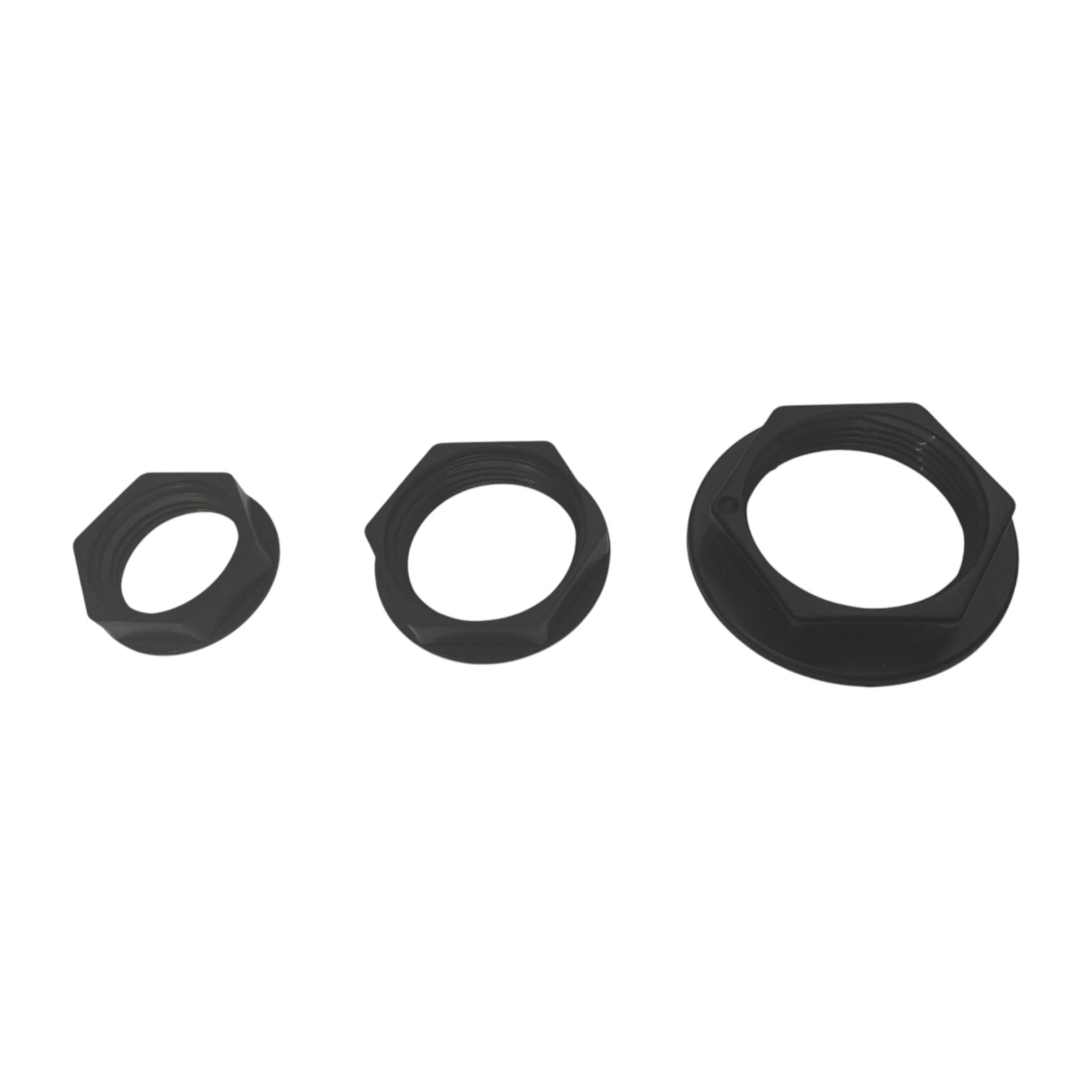
Female BSP Back Nuts – 1/2 to 2 inch
| Connection type | Female BSP |
|---|---|
| Component | Retaining back nut |
| BSP thread size | 1/2 inch BSP, 3/4 inch BSP, 1 inch BSP, 1 1/4 inch BSP, 1 1/2 inch BSP, 2 inch BSP |
Female BSP retaining back nuts in six nominal sizes from 1/2 to 2 inch. Match the male thread on the fitting. Nut only; connector, washer and sealing components are separate.
Price range: £1.68 through £8.64 (inc VAT)
Female BSP Back Nuts for Threaded Fittings
A back nut secures a compatible male-threaded fitting in position. These female BSP back nuts are available in six nominal thread sizes, from 1/2 inch to 2 inch, making it easier to replace a missing or damaged retaining nut without automatically buying a complete fitting. Match the thread on the component being retained, rather than the bore of the hose attached to it.
Each option is a back nut only. A tank connector, hose tail, washer, gasket or union assembly is not included. The nut provides the retaining action; the complete fitting must use its specified sealing arrangement to make the installation watertight. A retaining nut should not be treated as a blanking cap or as a substitute for a missing seal.
Choose the correct nominal thread size
| Female BSP size | Supplier reference | Match to |
|---|---|---|
| 1/2 inch | PN064 | Compatible 1/2 inch BSP male thread |
| 3/4 inch | PN065 | Compatible 3/4 inch BSP male thread |
| 1 inch | PN066 | Compatible 1 inch BSP male thread |
| 1 1/4 inch | PN067 | Compatible 1 1/4 inch BSP male thread |
| 1 1/2 inch | PN068 | Compatible 1 1/2 inch BSP male thread |
| 2 inch | PN069 | Compatible 2 inch BSP male thread |
BSP means British Standard Pipe. Its nominal inch size is a thread designation, not the measured diameter across the outside of the nut. This matters when comparing a nut with a pipe, hose or hole in a tank. Start with the original fitting’s specification or markings, then check the complete thread and retaining arrangement.
For example, a hose tail can have one size of hose connection and a different size of thread. The back nut must suit the threaded section. Similarly, a plastic union may use a manufacturer-specific union thread even when its pipe sockets are described in familiar inch sizes. These BSP back nuts are not advertised as universal replacement union collars.
What to check on the existing fitting
Look at the male thread, the available threaded length and the surface against which the nut will tighten. There must be enough suitable thread for the intended retaining arrangement. Check the old nut, washers and the fitting together where possible, keeping the removed parts until the replacement has been compared and the installation checked.
Inspect for crossed, flattened or cracked threads. A new nut cannot repair damage to the fitting it screws onto. If the original component is distorted or has a broken flange, replacing the complete fitting may be the better repair. Do not force a nut that only starts for a short distance and then binds.
Also allow room for installation and later maintenance. A nut positioned behind a filter, close to a frame or against another fitting can be difficult to reach once the system is assembled. Check access before connecting the pipework, particularly when the fitting passes through a vessel wall.
Retaining the fitting and sealing the joint
The retaining nut and the sealing components perform different jobs. Use the washer or gasket arrangement specified for the fitting, in the correct position and against a suitable surface. Follow that fitting’s instructions if a particular sealant is required. Adding an improvised stack of washers or extra sealant does not establish that incompatible components are safe to use together.
The nut should clamp the intended assembly without pulling the connected pipework out of line. Support pipes and hoses so that their weight does not twist the fitting. If the surrounding material flexes excessively as the nut is tightened, stop and check the installation rather than continuing to apply force.
We have not assigned a universal tightening torque, maximum wall thickness or pressure rating to this range. Those details depend on the complete fitting and installation. The supplier reference and nominal BSP size identify the available nut, but do not replace the original equipment’s fitting instructions.
Replacing a back nut
Isolate the relevant equipment and drain the affected section before dismantling a water-carrying connection. Take a photograph of the original arrangement if several washers or fittings are involved. Clean the accessible threads and sealing surfaces using a method suitable for their materials, and keep debris out of the open pipework.
Offer the new nut squarely to the matching thread and check that it engages correctly. Keep the main fitting aligned while assembling the retaining parts. Tighten according to the fitting instructions, avoiding tools or extra leverage that could damage the nut, flange or vessel wall.
Refill and return the system to service in the correct sequence, checking the connection for leakage. Inspect again under normal operating conditions. If a leak remains, isolate the connection and identify whether the problem is the seal, the fitting or the surrounding surface; repeatedly tightening the nut may make the damage worse.
Related fittings and alternatives
If the main connection is damaged, compare complete fittings in our pond building supplies. For a change in thread size, browse BSP threaded reducers. A reducer changes the connection arrangement; a back nut retains a fitting, so choose the part for the job it needs to perform.
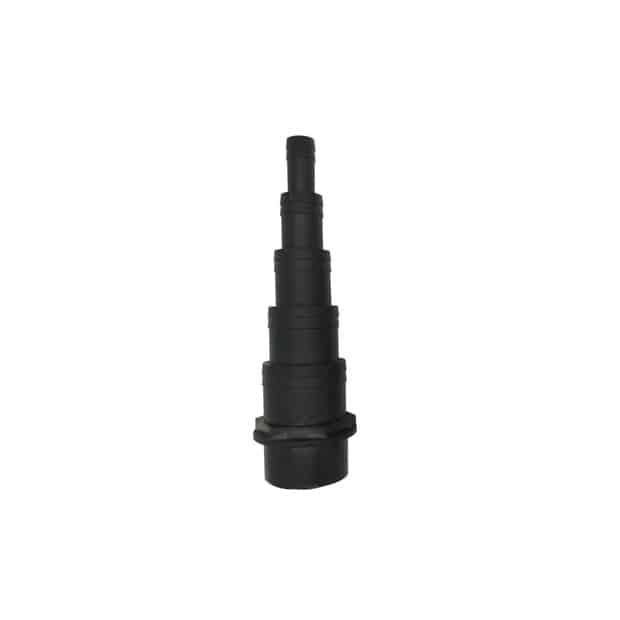
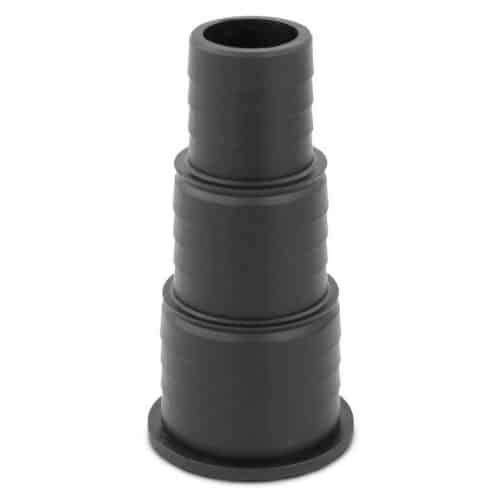
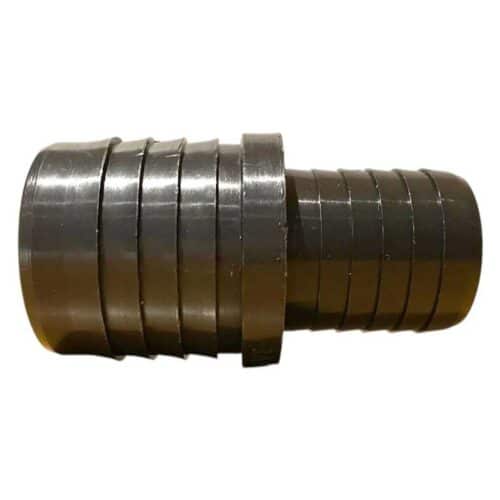
For hose-based installations, our stepped hose tails offer other connection options. Check both the thread and hose measurements before ordering related parts. Keeping those two measurements separate helps avoid a correctly sized nut being paired with an unsuitable hose connection.


Reviews
There are no reviews yet.