





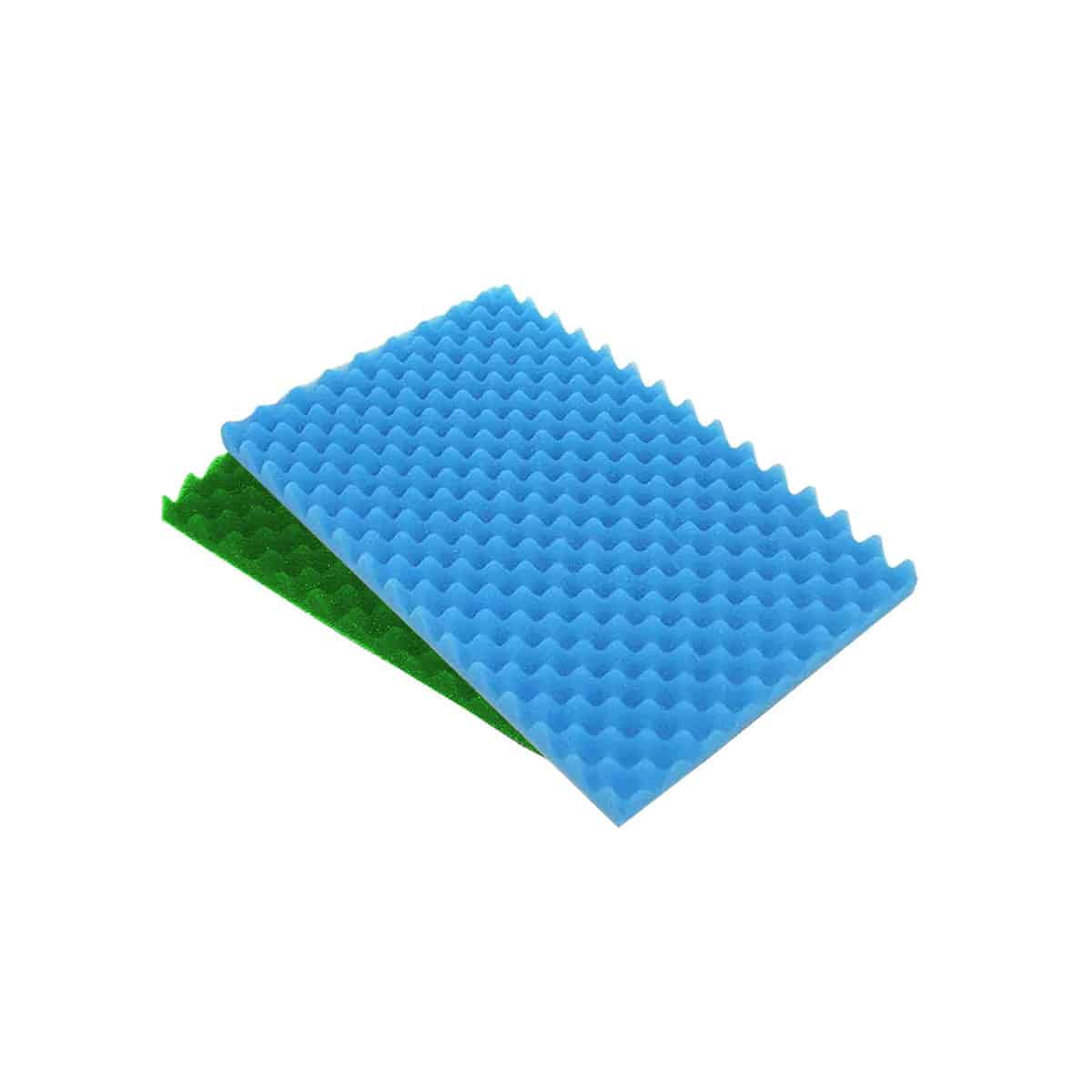
Aquateck Pond Filter Foam Set 1 – 425 × 280mm, Two Foams
| Brand | |
|---|---|
| Sheet size | 425 × 280mm |
| Pack quantity | One coarse and one fine foam |
| Part type | Replacement filter foam |
One coarse and one fine replacement pond filter foam, each measuring 425 × 280mm. Supplied without pre-cut holes. Check your filter dimensions and layer arrangement before ordering. Supplier reference AQ043.
£9.99 (inc VAT)
Aquateck Pond Filter Foam Set 1 – Two 425 × 280mm Foams
Aquateck Foam Set 1 provides one coarse and one fine replacement filter foam, each measuring 425 × 280mm. The sheets are supplied without pre-cut holes. It is a practical option when the foam in a compatible pond filter has worn out, lost its shape or no longer fits properly. Check both the dimensions and the number of layers in your filter before ordering: Set 1 contains two foams, while other similarly named sets can contain three or four pieces.
This is replacement filter media, not a complete filtration system. It does not include a filter box, pump, ultraviolet clarifier or biological media. The sheets can be cut to suit an appropriate filter arrangement, but the original filter’s required foam layout and water route must still be preserved. A matching outside measurement alone does not establish compatibility with every filter.
Check the size and pack contents
| Product | Aquateck Foam Set 1 |
|---|---|
| Supplier reference | AQ043 |
| Sheet dimensions | 425 × 280mm |
| Pack quantity | Two foams |
| Purpose | Replacement mechanical filter media |
Measure the space the foam needs to fill, including any corners, central opening or retaining features. Compare the filter’s instructions and the original media where possible. An old foam that has stretched, collapsed or been compressed may not be a reliable cutting template without checking it against the filter chamber itself.
Foam thickness, grade and the complete assembly also matter. Do not assume that a two-piece set can replace a three-stage stack simply because the sheets have the same length and width. Where your filter needs a specific moulded foam or an exact replacement set, choose that model-specific part instead of adapting a sheet unnecessarily.
How filter foam helps the pond
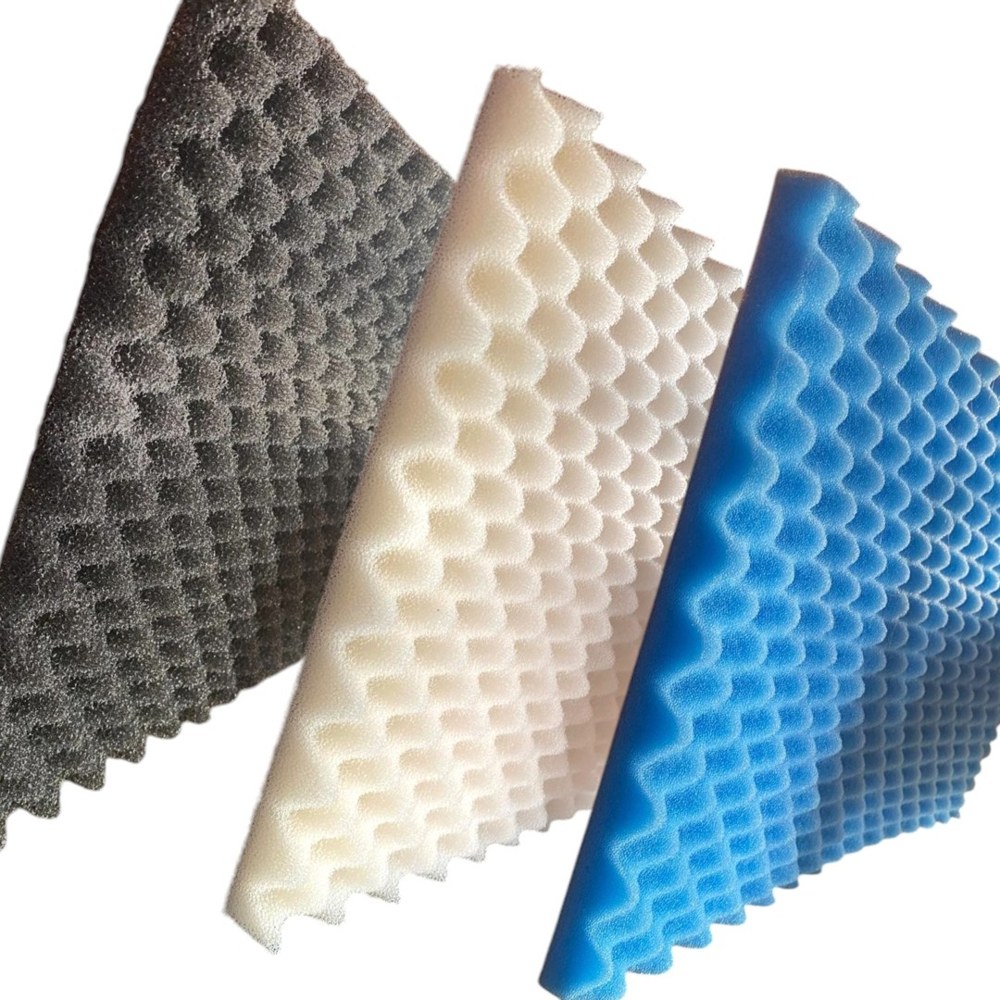
As water passes through the filter, foam captures suspended particles that would otherwise continue circulating. Removing that collected waste during normal maintenance helps keep the mechanical filtration stage working. Foam does not remove the need for a correctly sized pump, suitable biological filtration or routine water-quality checks.
Filter foam can also become colonised by beneficial microorganisms over time. New foam does not instantly have the same established population as the media it replaces. Avoid treating a complete media change as a substitute for understanding why a filter is struggling, particularly if fish numbers, feeding or pump flow have recently increased.
Green water and visible debris are different issues. A foam set is intended to collect particles; it is not a blanketweed treatment or a replacement UV lamp. If the pond remains green despite a clean, correctly assembled filter, check the complete system and identify the cause rather than continually replacing otherwise serviceable foam.
Fitting and cutting the sheets
Isolate the relevant electrical equipment before opening the filter and follow the manufacturer’s dismantling instructions. Allow a pressurised unit to depressurise correctly before removing its lid. Keep the existing layers in order as they are removed, and note how they fit around supports, pipes or retaining grids.
Mark the required outline carefully and cut only when the fit has been checked. Remove small loose offcuts before installing the foam. The finished piece should occupy the intended space without leaving an easy route for dirty water around its edges. Equally, forcing too much material into the chamber can distort the foam or obstruct the intended water path.
Refit the layers in the order specified for your filter, check the lid seal and close the unit correctly. Restart in accordance with the filter and pump instructions. Check for leaks, normal outlet flow and signs of water bypassing the media. If the flow has changed substantially, stop and inspect the arrangement rather than assuming that extra resistance is harmless.
Cleaning and replacement
Inspect the foams at intervals appropriate to your pond and filter. Debris loading varies with feeding, stocking, nearby trees and the season, so a fixed cleaning interval does not suit every installation. Reduced flow, an overflowing filter or visibly clogged media calls for investigation; a blocked hose or dirty pump can cause similar symptoms.
Follow the filter manufacturer’s cleaning method. Where foam is also supporting biological activity, a gentle rinse in removed pond water helps avoid unnecessarily disturbing it. Do not use household detergents. Replace foam that is torn, breaking down or permanently distorted, rather than discarding every sheet merely because it has become discoloured.
After a substantial media change, keep an eye on the fish and test the water. Replacing all established media at once can affect biological performance, especially in a heavily stocked pond. Keep feeding appropriate to the conditions and investigate unusual behaviour or poor test results promptly.
Related media and pond care
For a different filter arrangement, compare our pond filters and check the specified replacement media for the model you own. Our Kockney Koi three-piece foam sets are another option where their dimensions and three-layer arrangement are appropriate; they are not automatically interchangeable with this two-piece set.
If the complete system needs attention, browse our pond pumps. Match the pump’s actual flow through your pipework to the filter’s requirements. New foam can restore a worn mechanical stage, but it cannot compensate for an unsuitable pump or an undersized filter.







Reviews
There are no reviews yet.