






Kockney Koi Three-Piece Pond Filter Foam Sets
| Brand |
|---|
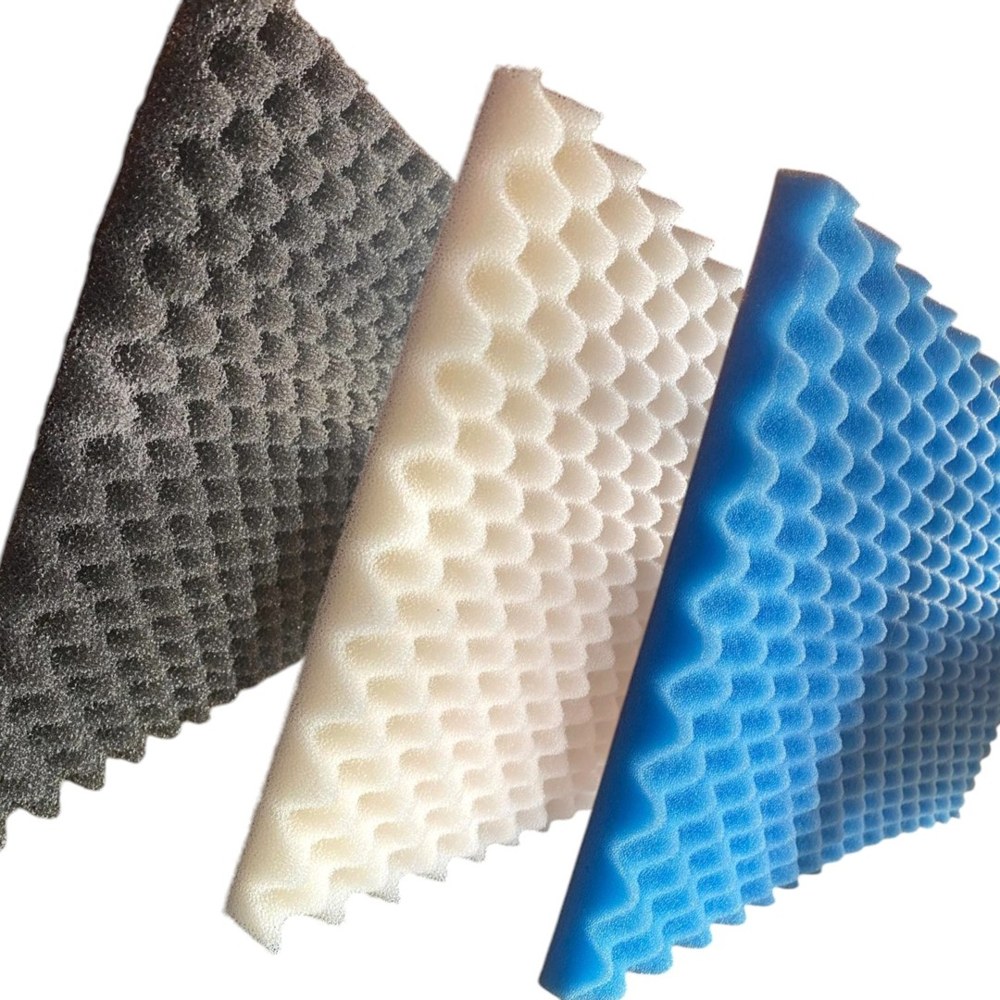
Three Kockney Koi filter foam sheets: coarse black, medium white and fine blue. Choose 11 × 17, 18 × 25 or 21 × 42 inches to suit your filter compartment. Fit the grades in the correct water-flow order.
Price range: £9.95 through £37.95 (inc VAT)
Kockney Koi Three-Piece Pond Filter Foam Sets
Coarse, medium and fine sheets for staged pond filtration
Kockney Koi three-piece foam sets provide three different grades of mechanical filter media in one pack. Each set contains a coarse black sheet, a medium white sheet and a fine blue sheet. Water passes through the coarser material first, followed by the medium and fine grades, so larger debris is intercepted before it reaches the finer foam. Choose the sheet dimensions to suit the media compartment in your pond filter.
These sets are useful when existing foam has become damaged, lost its shape or no longer fits its supports properly. They are also an option for compatible filter arrangements that use replaceable sheet media. Check the available space and the filter manufacturer’s requirements before ordering: a sheet-size match is an important starting point, but the complete arrangement must also allow water to move through the intended route.
Choose the correct sheet size
| Set size | Approximate metric dimensions | Contents |
|---|---|---|
| 11 × 17 inches | 279 × 432mm | Three sheets: coarse, medium and fine |
| 18 × 25 inches | 457 × 635mm | Three sheets: coarse, medium and fine |
| 21 × 42 inches | 533 × 1,067mm | Three sheets: coarse, medium and fine |
The inch sizes are the manufacturer’s nominal sheet dimensions; the metric figures are rounded conversions for easier comparison. Measure the media tray or chamber rather than relying only on the outside dimensions of the filter box. Allow for supports, dividers and any existing pipework. If you are replacing shaped or drilled inserts, check whether sheet foam is appropriate before changing the original media layout.
For a straightforward replacement, compare the old foam’s original shape with the compartment as well as measuring the material itself. Worn or compressed foam may no longer show the dimensions that gave the correct fit when new. A loose edge can provide a route around the media, while forcing oversized material into a small compartment can distort the intended water path.
Fit the grades in the correct order
Kockney Koi specifies black first, white second and blue last in the direction of water flow. Establish where the water enters the media before positioning the sheets; the correct sequence depends on the flow direction, not simply which colour is at the top of the box. Retain the filter’s original supports and follow its instructions for how media should be seated.
The coarse sheet receives the larger particles. The following grades provide progressively finer screening, with the blue sheet dealing with smaller suspended debris. This staged approach helps spread the mechanical filtration work across the set. A finer sheet placed first may collect debris more quickly and require attention sooner. Do not add extra layers simply to fill a space without checking that the filter is designed to accommodate them.
Mechanical filtration and the rest of your system
Foam traps suspended solids as pond water moves through it. The retained material still needs to be removed during maintenance; capturing waste is not the same as removing it from the system. Kockney Koi also identifies these foams as surfaces on which beneficial bacteria can establish. New sheets should nevertheless be treated as new media, rather than as a ready-mature biological filter.
Clear-looking water does not, on its own, establish that pond-water chemistry is suitable. Maintain the other biological media and monitoring appropriate to your installation. Likewise, these three-grade sets are different from Kockney Koi activated carbon foam sheets, which is selected for a separate filtration purpose. Choose each type of media for the job you need it to perform rather than assuming that all foam sheets are interchangeable.
Cleaning and replacement checks
Inspect the foams as part of the filter’s normal maintenance routine. Look for accumulated debris, changes in water movement, water bypassing a sheet or media that has shifted from its support. Follow the filter manufacturer’s cleaning method and isolate equipment as directed before opening or servicing it. Avoid household detergents or cleaning products that are not intended for the aquatic equipment concerned.
There is no single cleaning interval that suits every pond. Fish stocking, feeding, seasonal debris and the rest of the filtration arrangement affect how quickly solids collect. Use the actual condition of the foams and your filter’s guidance to decide when cleaning is needed. When servicing, inspect each sheet for tears, permanent deformation and gaps that remain after it has been reseated.
If established foam contributes to your system’s biological filtration, plan replacement with that role in mind. Follow the equipment guidance and monitor the pond after significant media changes. Keeping a correctly sized spare set can help you deal with physically damaged media without improvising a replacement from unsuitable household foam.
Planning your replacement
Before choosing a set, confirm the required sheet dimensions, the flow direction and the space available for all three grades. Our pond filter range can help when reviewing the wider filtration system, while our contact page provides a way to ask about a particular replacement. Supplying the filter model, media measurements and a clear photograph of the compartment makes it easier to identify the right option.




Reviews
There are no reviews yet.