






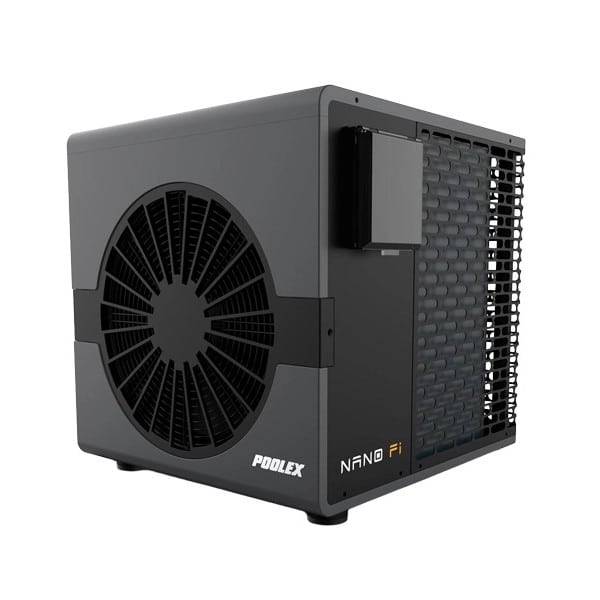
Poolex Nano FI 3 Compact Inverter Pool Heat Pump with Wi-Fi
| Brand | |
|---|---|
| Heating type | Air source heat pump |
| Wi-Fi control | Built in |
| Heating control | Inverter |
| Power supply | Single phase |
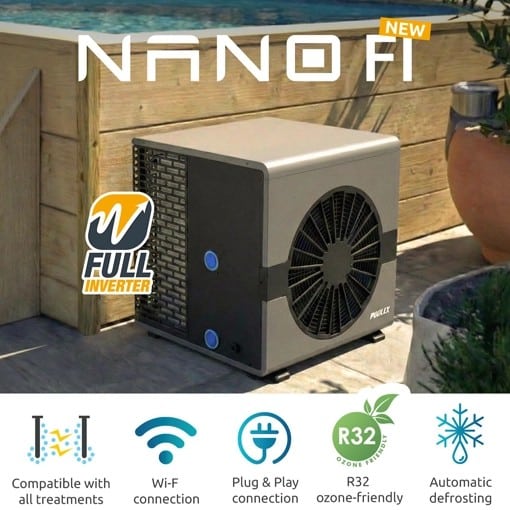
Nano FI 3 compact full inverter swimming pool heat pump with 2.4GHz Wi-Fi. Published heat output 1.56–3.00kW at A26/W26, with 1.3m³/hour water flow. Check the intended season and installation before selecting the capacity.
£575.00 (inc VAT)
Out of stock
Out of stock
Poolex Nano FI 3 Compact Inverter Heat Pump
Wi-Fi controlled heating for an appropriately sized swimming pool
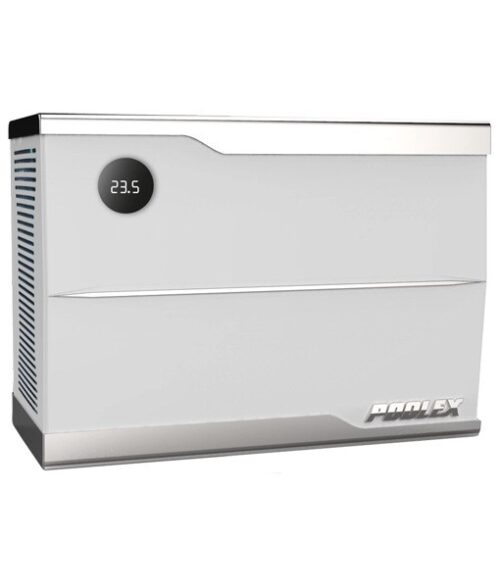
The Nano FI 3 brings inverter control to a compact swimming pool heater. The manufacturer reference is PC-NANO-B3N, and its published output ranges from 1.56–3.00kW at 26°C air and 26°C water. At the cooler test condition of 15°C air and 26°C water, the published range is 1.05–2.45kW. Comparing both conditions gives a more useful starting point than choosing from the model number alone.
Its compact cabinet, built-in Wi-Fi and inverter operation make it an option to compare for a smaller pool installation. Check the pool’s size, cover, exposure, target temperature and intended season before choosing the capacity. A compact footprint does not remove the need for open outdoor airflow or suitable water circulation.
Nano FI 3 specifications
| Manufacturer reference | PC-NANO-B3N |
|---|---|
| Heat output at A26/W26 | 1.56–3.00 kW |
| Heat output at A15/W26 | 1.05–2.45 kW |
| Water flow | 1.3 m³/hour |
| Compressor control | Full inverter |
| Power supply | Single phase, 220–240V |
| Wi-Fi | Built in, 2.4GHz |
| Refrigerant | R32 |
| Cabinet dimensions | 440 × 430 × 428 mm |
| Heat exchanger | Titanium |
| Maximum electrical input | 1.46 kW |
| Maximum current | 8 A |
| Electrical input at A15/W26 | 0.15–0.57 kW |
| Unit weight | 23 kg |
| Sound pressure at 1 metre | Approximately 50 dB(A) |
| Sound pressure at 10 metres | Below 35 dB(A) |
These electrical and sound figures are from the UK distributor’s Nano FI manual. Maximum input is an electrical specification, not the heat delivered to the water. Sound pressure depends on measurement distance and installation conditions; compare noise figures at the same distance.
Temperature settings and operating modes
The Nano FI manual supplied by our UK distributor lists a 15–40°C heating-mode setting range and a separate 7–40°C automatic-mode range. Automatic mode can switch between heating and cooling; it is not the same as a heating-only thermostat. For a low-temperature koi pond installation, check the supplied controller and the intended operating mode before ordering. Setting a temperature does not establish the capacity to maintain it in winter.
Choose the heating season first
A pool used in the warmest part of summer creates a different heating demand from one used in spring and autumn. Tell us when you want to swim, the temperature you want to maintain and whether the water will be covered when it is not in use. Wind exposure and surface area are important alongside volume, especially for an above-ground pool with exposed sides.
Manufacturer pool-volume guidance assumes particular conditions. It should not be interpreted as the same capacity in every month or location. As air temperatures fall, the heating performance changes, and the water may lose heat more quickly. Allow for initial warm-up as well as maintaining temperature once the pool has reached its target.
For koi pond use, establish the exact required heating setpoint and winter duty before choosing this pool heater. Do not apply a summer swimming-pool volume guide to a covered pond at 12°C. Our air source heat pump range includes other models to compare for a pond installation, and our pond heating guide explains the wider sizing considerations.
What full inverter control does
The Nano FI adjusts compressor and fan operation within its working range as the heating demand changes. This differs from a fixed-speed heater that cycles at one operating speed. Inverter control can reduce output as the water approaches the target, but it does not make running costs independent of the weather, heat loss or temperature setting.
Heating output and electricity consumption are separate figures. When assessing efficiency, compare measurements at the same test conditions and avoid treating the highest published COP as a prediction for the whole season. A well-fitted pool cover can reduce the heating demand and should be considered as part of the installation.
Circulation and hose connections
This model’s published water-flow requirement is 1.3m³/hour. Check the circulation available after allowing for the filter, hoses, bends and other fittings. A small cartridge filter pump may need particular attention: the flow printed on its packaging is not necessarily the flow through the complete installed circuit.
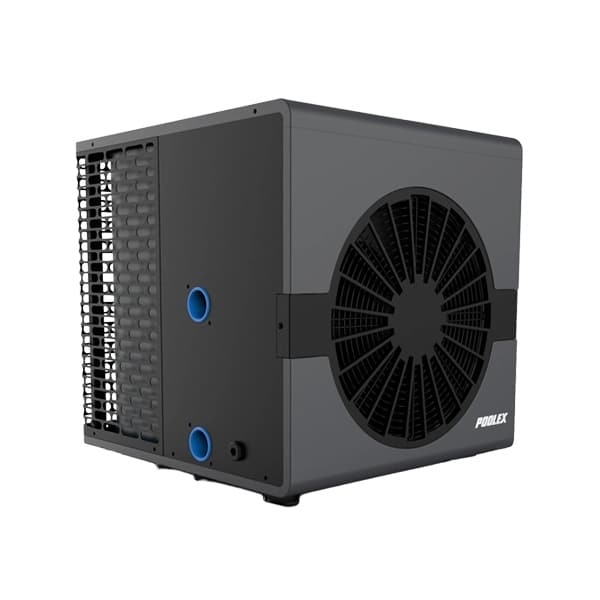
The manual lists two hydraulic fittings adapting the 1-inch connections to 32/38mm hose, with clamps, a drainage kit and four mounted anti-vibration pads. Confirm these fittings against the hoses already on the pool before ordering additional parts. Keep hoses supported, avoid unnecessary restrictions and allow access to disconnect the heater for servicing or seasonal storage. If a bypass is needed to suit the installation, arrange it so the heater receives the correct flow rather than assuming every setup needs the same valve position.
A compact cabinet still needs outdoor space
The 440 × 430 × 428mm cabinet is compact. The manual requires at least 1.5 metres of clear space in front and 30cm at the sides and rear, with no obstruction above the unit. These airflow clearances are separate from electrical safety distances around the pool; have the installation position checked against the applicable UK requirements. Do not place the unit in a sealed box, against an obstruction or under a cover that traps its cooled discharge air. Leave enough room to reach the controls, water connections and service panels.
Use a stable base and plan where condensate will drain. Water released during normal heat-pump operation should not collect around the equipment or create a slippery walking area. Keep leaves, vegetation and stored items away from the air path, and review the position as the garden or pool area changes during the season.
Electrical connection and Wi-Fi
Use a suitable protected supply and follow the exact UK unit’s electrical instructions. Have the circuit checked if its suitability is uncertain. Keep outdoor electrical connections appropriately protected and retain safe access for isolation. Do not improvise an extension-cable arrangement to compensate for an unsuitable installation position.
The integrated 2.4GHz Wi-Fi connection supports control through the Poolex app. Check signal coverage at the chosen location and follow the pairing instructions. Remote settings are convenient, but regular physical checks of water flow, hoses, drainage and the heater remain necessary.
Routine use and winter storage
Follow the startup sequence in the manual and confirm water circulation before operating the heater. Allow the water time to respond to a temperature change and monitor it with a suitable thermometer. Investigate a recurring fault using the manual’s guidance instead of repeatedly resetting the equipment.
When the pool and heater are taken out of service, drain and winterise the unit as instructed. Turning off the electricity does not empty the heat exchanger, and trapped water must not be left to freeze. Plan hose disconnection, drainage and storage access when the heater is first installed so seasonal maintenance remains straightforward.
Compare pool heating options
Browse our swimming pool heating range to compare equipment for different pool sizes and seasons. Match the heater to the complete installation before choosing between capacities.
Compare other Poolex Nano FI models
Compare heating output at matching air and water temperatures, and check the required water flow and electrical supply. For pond use, confirm that the controller settings suit your intended water temperature before choosing the heating capacity.



Reviews
There are no reviews yet.