






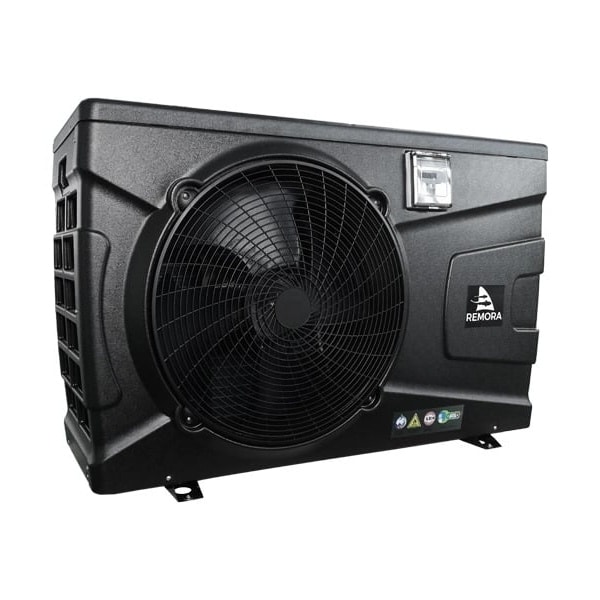
Remora f20 On/Off Heat Pump with Wi-Fi for Koi Ponds and Pools
| Brand | |
|---|---|
| Heating type | Air source heat pump |
| Wi-Fi control | Built in |
| Heating control | Fixed speed |
| Power supply | Single phase |
| Air discharge | Horizontal |
The Remora f20 is a fixed-speed air source heat pump with Smart Life Wi-Fi control for koi ponds and swimming pools. A 5–40°C heating setpoint range supports a choice of pond temperatures. Check the performance, flow and electrical requirements below when planning your installation.
£2,700.00 (inc VAT)
Available on back-order
Available on back-order
Remora f20 On/Off Heat Pump for Koi Ponds and Swimming Pools
Controlled heating and cooling with built-in Wi-Fi
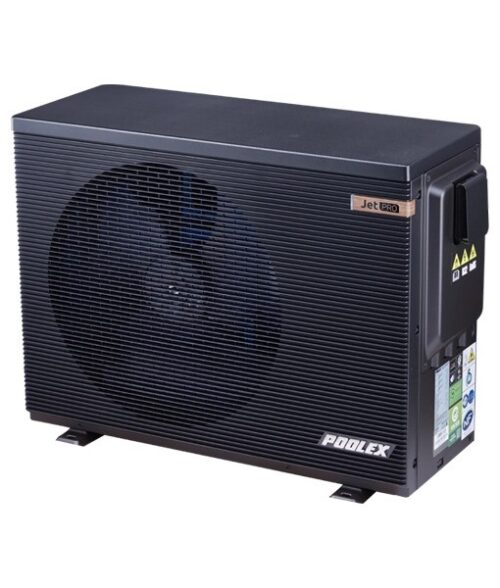
The Remora f20 is a fixed-speed air source heat pump for koi ponds and swimming pools, with Smart Life Wi-Fi control and a heating setpoint range of 5–40°C. Its published heat output is 20.14kW at 24°C air and 26°C water, falling to 16.55kW at 15°C air and 26°C water. Compare those conditions when assessing it against other models.
The on/off compressor works at a fixed operating speed, cycling in response to the controller. This is a different control arrangement from the Remora Inverter and Professional ranges. It provides another option when comparing purchase cost, heat demand and the way you intend to use the heater.
For koi keepers, the first decision is what you want the heater to achieve. Holding a covered pond at a moderate temperature during winter is a different job from warming the water earlier in spring. Use the published specifications alongside your pond’s heat requirement when choosing the model. Compare other models in our air source heat pump range, or explore the alternatives under pond heating.
Remora f20 specifications
| Heating output at A24/W26 | 20.14 kW |
|---|---|
| Heating output at A15/W26 | 16.55 kW |
| Maximum current | 25.3 A |
| Water flow range | 8–9 m³/hour |
| Net weight | 78 kg |
| Water connections | 1½ inch |
| Power supply | Single phase |
| Heating setpoints | 5–40°C |
| Operating air range | −15–43°C |
| Refrigerant | R32 |
| Wi-Fi | Smart Life app |
| Electrical input at A15/W26 | 2.74 kW |
| COP at A15/W26 | 6.04 |
| Nominal water flow | 8.8 m³/hour |
| Dimensions (L × W × H) | 1125 × 470 × 707 mm |
| Published noise level at 10 metres | 30 dB |
| Supply voltage | 230 V |
Choosing it for a covered koi pond
If your aim is approximately 12°C through winter, tell us the pond volume, surface dimensions, construction, cover arrangement and location. Include any exposed filter chambers or long external pipe runs. Two ponds containing the same number of litres can lose heat at very different rates, so volume is a starting point rather than a complete sizing calculation.
The output figures above also show why the model name should not be treated as a guaranteed winter heating output. Published performance changes with the test conditions. Neither of those figures is a specific prediction for a cold night with the pond at 12°C. A winter recommendation needs to allow for the local conditions, heat loss and time spent defrosting. For a winter recommendation, provide the pond dimensions, cover details, location and target temperature so the heater can be matched to the heat loss.
For spring and autumn use, explain when you intend to start heating and the temperature you want to maintain. A heater selected for modest seasonal support may not have enough reserve for continuous winter duty or a higher target temperature. Resolve that choice before comparing purchase prices, as the most economical installation is one selected for the intended job.
Understanding on/off heating
A fixed-speed compressor does not continuously adjust its speed to match demand in the same way as an inverter. The controller starts and stops heating as necessary within its operating logic. Keep the required water circulation available and follow the manual when setting timers or coordinating the heater with other equipment.
Heating output is different from electricity consumption. Compare efficiencies at matching air and water temperatures, and do not use a warm-weather COP as a forecast for the whole winter bill. Covers, insulation and exposed pipework have a substantial effect on the heat that must be replaced.
Water flow and installation planning
Plan the water circuit so that the heater receives the specified flow. The circulating pump, pipe diameter, fittings and any bypass arrangement all affect what reaches the heat exchanger. Do not assume the pump’s advertised maximum flow is the flow through the installed heater. Include suitable isolation and service access so maintenance does not require dismantling the surrounding filtration.
Before ordering fittings, check the exact supplied union arrangement against the installation manual and the pipework already on your pond. Provide space to disconnect the water connections and to drain the equipment when necessary. A bypass can be useful for setting the heater branch flow and for servicing, but it must be arranged to suit the actual system.
Outdoor siting and electrical connection
Choose a firm, stable outdoor position that leaves the manufacturer’s required clearances around the unit. Keep the air inlet and discharge clear of close fencing, vegetation and stored equipment. Enclosing a heat pump without a designed airflow route can cause it to draw its own cooled discharge air back in, reducing its ability to collect heat.
Allow for condensate drainage as part of the installation. Water produced during normal operation needs somewhere suitable to go without creating a slippery path or collecting around the base. Leave enough access for inspection and cleaning, as well as for opening service panels.
The f20 requires hardwired electrical installation. Have a qualified electrician assess the supply, cable route and circuit protection for the exact model before installation. Wiring advice for the smaller plug-connected models does not apply to this unit.
Remote temperature control
The Smart Life app allows temperature checks and adjustments when the unit has a suitable Wi-Fi connection. Check signal coverage at the chosen location and follow the setup instructions. Local inspections remain important; remote control is not a substitute for checking circulation and equipment condition.
Daily use, monitoring and winter care
Make temperature changes gradually and monitor the pond with a suitable thermometer. App access is useful for checking settings, but it is not a substitute for inspecting water circulation, the pond and the equipment. If the heater stops, investigate the cause and follow the fault guidance before changing settings repeatedly.
Keep the air path clear and inspect the drainage route regularly. If the heater will be taken out of service during freezing conditions, follow the manual’s draining and winterisation instructions. Switching the electrical supply off alone does not remove water trapped inside the heat exchanger. An idle unit and an actively heating installation require different winter arrangements.
Choosing between heat pump types
Compare this fixed-speed model with the alternatives in our air source heat pump range. Match the controls, heating output and electrical requirements to your intended use. Our pond heating guide explains the wider selection considerations.
Installation manual and model information
Download the Remora F manual for installation, controls and fault guidance. Use the f20 column when comparing dimensions and electrical details. A24/W26 means air at 24°C and water at 26°C; A15/W26 means air at 15°C and water at 26°C. The quoted noise figure is measured at 10 metres, so it should not be compared directly with a figure measured beside another unit.
Circulation and space for the f20
The f20’s nominal flow is 8.8m³/hour, making water-circuit planning especially important. Its 16.55kW heating output at A15/W26 must be considered alongside that flow requirement and its published maximum current of 25.3A. Check the circulation available through the heater branch after allowing for the completed pipework.
At 1125 × 470 × 707mm and 78kg, the f20 needs an appropriately sized base and a planned delivery route. It is a hardwired model, so a smaller heater’s existing plug connection should not be treated as a suitable supply. Compare the Remora f6 if you are planning a much smaller heating duty, rather than selecting capacity from the largest available model.




Reviews
There are no reviews yet.