





NT Labs Pond Nitrate Test Kit
| Brand |
|---|
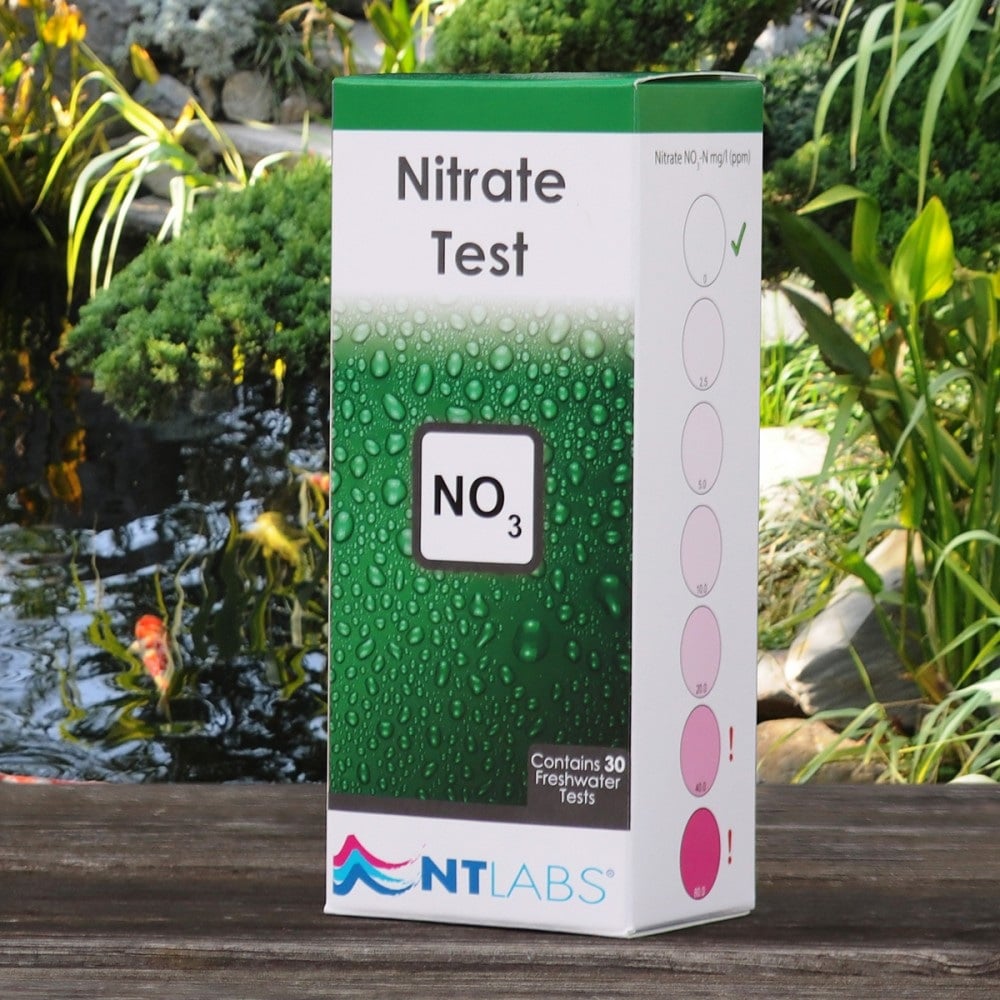
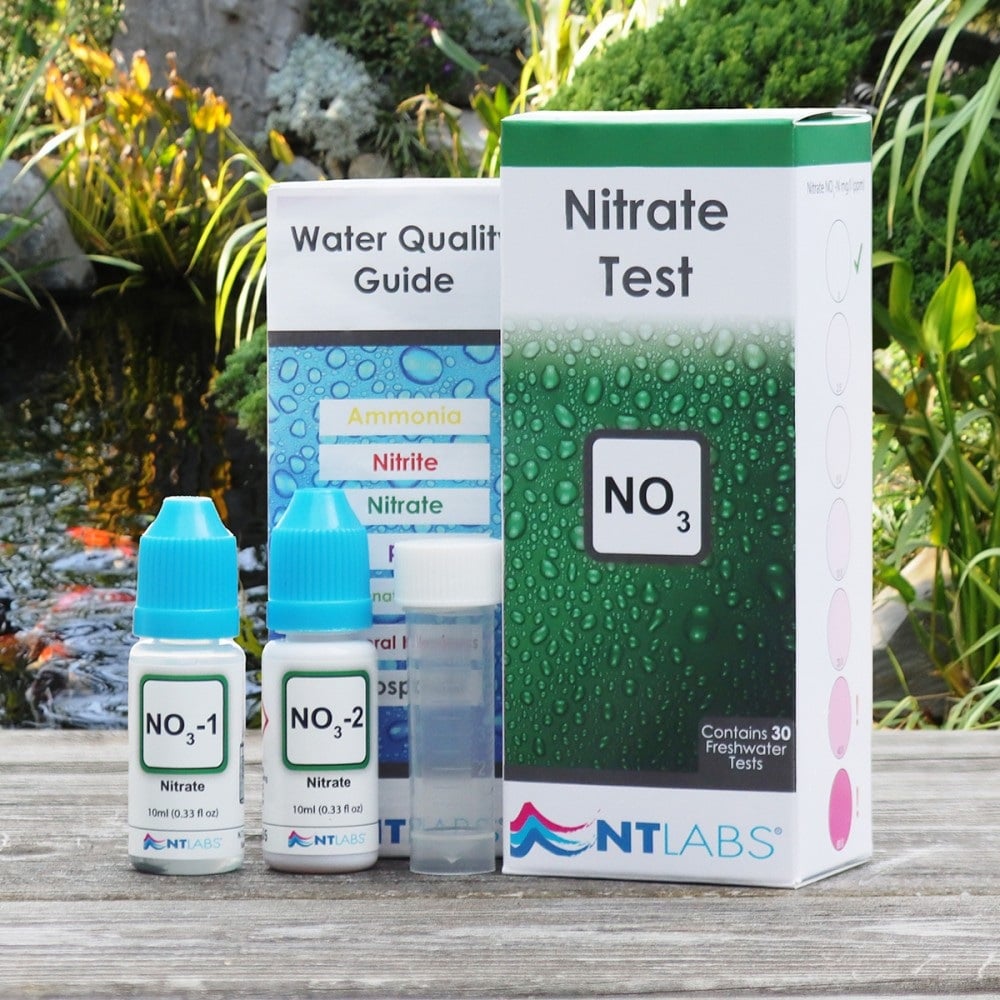
NT Labs freshwater nitrate test kit with 30 tests. Two-reagent liquid method with a 5ml sample and ten-minute colour development.
£6.50 (inc VAT)
NT Labs Pond Nitrate Test Kit
Track nitrate in pond water and compare it with your top-up supply
The NT Labs Pond Nitrate Test Kit measures nitrate in freshwater, helping you follow changes in your pond over time. It is a useful addition to a water-testing routine when reviewing nutrient build-up, maintenance or the water used for topping up. Nitrate and nitrite are separate parameters. This product tests nitrate, commonly written as NO3; it does not replace a nitrite test.
The kit contains 30 tests and uses two liquid reagents with a colour chart. Its preparation step matters: the first reagent needs thorough shaking before you measure the drops. Following the full method gives you a result you can use when comparing pond samples, rather than a colour produced from an incompletely mixed reagent.
Product specification
| Parameter | Nitrate |
|---|---|
| Application | Freshwater testing |
| Test quantity | 30 tests |
| Sample volume | 5ml |
| Reagents | Nitrate 1 and Nitrate 2 |
| Development time | Ten minutes |
Using the nitrate test correctly
Take 5ml of water in the clean tube. In good light, invert and shake Nitrate 1 vigorously until no sediment remains at the bottom. Add six drops of Nitrate 1 and six drops of Nitrate 2 to the sample, cap and mix. After ten minutes, compare it with the chart. Colourless represents zero; pink indicates nitrate. Use the supplied instructions for your specific pack.
Set the bottles, tube and chart out before beginning so you can concentrate on the sequence. Do not omit shaking Nitrate 1 simply because the liquid appears ready to use from the side of the bottle. Read the result at the stated time and record it before putting the kit away. Keep the chart dry and readable for your next test.
Why source water is worth checking
Nitrate levels are influenced by the water entering the pond as well as the pond itself. Testing your normal replacement water gives you useful context when reviewing a pond result. If that supply already contains nitrate, a water change cannot be assessed on the assumption that every litre added is nitrate-free. Compare samples using the same kit and method.
Label samples clearly if you test the pond and supply together. Record where each sample came from, especially if you use more than one water source. Keep these readings with the dates and amounts of water changes. This creates a more useful picture than an isolated reading and makes it easier to discuss a maintenance plan with someone who has not seen the pond.
Understand the difference between nitrate and nitrite
Nitrate is produced during the biological processing of fish waste. Ammonia and nitrite checks address different stages of that process, so a nitrate result alone cannot confirm that the whole filtration system is working correctly. Continue testing the other parameters that matter to your pond, especially when establishing a new filter or investigating fish distress.
Nitrate also forms part of the nutrient picture in a planted pond. Fish load, feeding and plant growth all need consideration when looking at a trend. A test result should inform your next step rather than trigger a fixed treatment regardless of conditions. Do not choose an algae treatment solely because you have measured nitrate, or assume that reducing one parameter will resolve every form of unwanted growth.
Build a useful maintenance record
Note feeding changes, cleaning work, plant removal and water changes alongside your results. These details help explain why a reading may have changed. If you make a maintenance adjustment, plan a follow-up test and compare the outcome. Changing several parts of the system at once makes it harder to understand which action made a difference.
A routine record does not need specialist software. A simple list with dates, nitrate results and source-water readings is enough to start. Keep the actual values instead of only writing “high” or “low”. If a result is beyond the supplied chart, record that limitation rather than guessing a more precise number than the test can show.
Choose companion products by what they measure
For broader routine testing, compare the Oase AquaActiv QuickSticks 6-in-1 and check the parameters included before choosing a set. Different kits use different methods and scales. This NT Labs nitrate kit is useful when you specifically want a separate liquid nitrate test to keep alongside existing equipment.
If you are reviewing how the filter is supported, the NT Labs Pond Mature page explains a biological filter product. It is not a substitute for measuring nitrate or a claim that every nitrate reading requires a filter additive. Choose any treatment or maintenance action for the actual problem and follow its instructions.
Keep comparisons consistent
Use the chart supplied with this kit and check the measurement basis before comparing it with results from another brand. Nitrogen compounds may be reported differently, so matching two numbers without checking their units can be misleading. Keep reagents with their own labels, follow storage directions and check expiry information before testing.
This is a sample-testing kit rather than a chemical to add to the pond. Keep tested water separate from the pond and follow the label for disposal and cleaning. If you are unsure of a reading, repeat the test carefully with a fresh sample. Bring the result and your maintenance record when asking for advice so that the next step can be based on the pond’s actual condition.





Reviews
There are no reviews yet.