







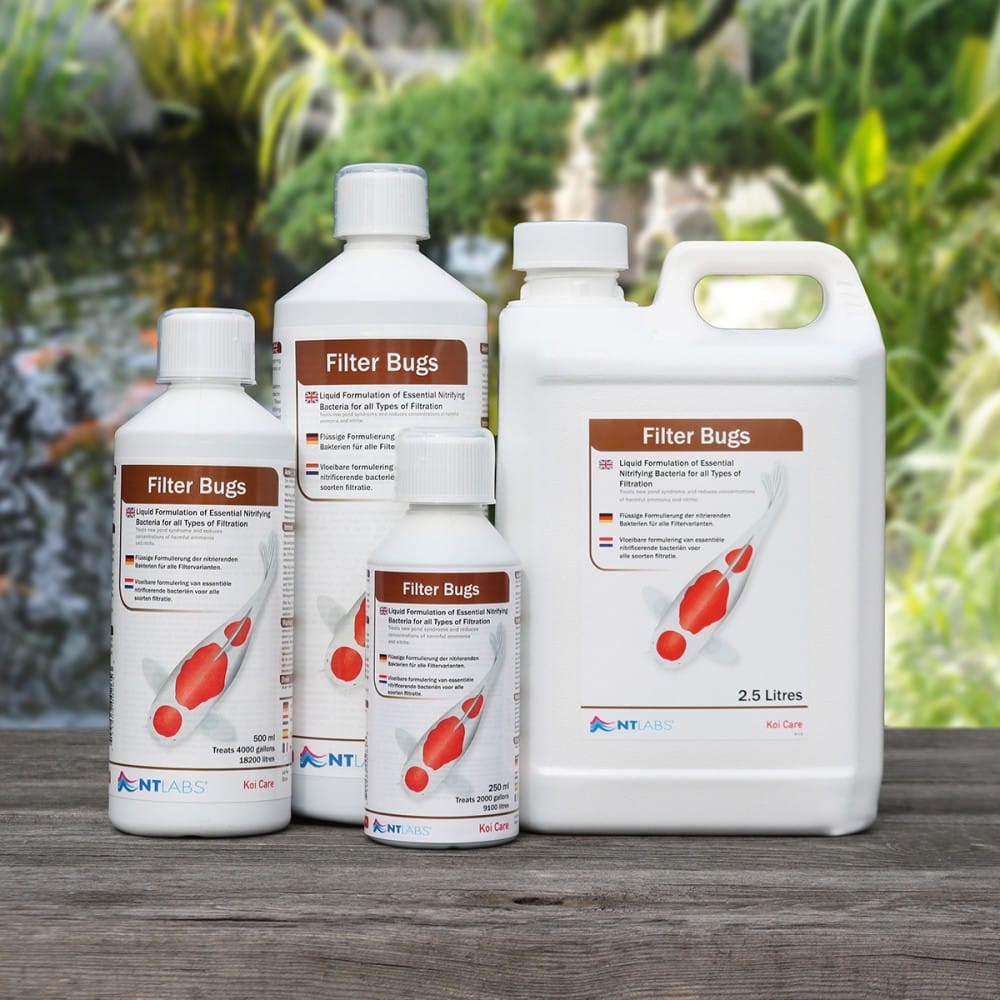
NT Labs Filter Bugs
| Size | 2.5 Litres, 1 Litre, 250ml, 500ml |
|---|---|
| Brand | |
| Treatment Type | Beneficial bacteria and sludge control |
| Target Problem | ammonia and nitrite support, filter maturity |
| Product Form | Liquid / pond treatment |
| Seasonal Use | Spring / Summer / Autumn |
| Treatment Purpose | Beneficial bacteria and filter boost |
Liquid beneficial bacteria for pond filter start-up and ongoing biological support. Choose 250ml, 500ml, 1 litre or 2.5 litres. Add to biological media and switch off the UV for at least 24 hours after dosing; follow the label.
Price range: £10.40 through £49.69 (inc VAT)
NT Labs Koi Care Filter Bugs
Liquid filter bacteria for starting and supporting a pond’s biological filter
NT Labs Koi Care Filter Bugs supplies cultures of beneficial bacteria for the biological stage of a koi or garden pond filter. It is useful when starting a new system, bringing a pond back into regular operation in spring, or supporting filtration after cleaning, a substantial water change or a course of pond treatment. The liquid is measured to suit the volume of water and added to the biological filter media.
Choose from 250ml, 500ml, 1 litre and 2.5 litres. The larger container is a practical option for a larger pond or for keepers who use Filter Bugs regularly, while the smaller bottles suit lower water volumes. Each option contains the same type of treatment; select the quantity you need rather than expecting a larger bottle to provide a different formulation.
What Filter Bugs does in the filter
The manufacturer identifies Nitrosomonas, Nitrobacter, Nitrospira and supporting cultures in the formulation. These help populate the filter with organisms involved in biological filtration. That biological stage has a different role from a sieve, brush or foam that catches visible particles. A pond can look clear while its water chemistry still needs attention, so appearance alone is not a reliable way to judge whether the filter is coping.
Filter Bugs supports the filter rather than replacing adequate filtration, oxygen supply or sensible feeding. A new pond needs careful monitoring as its biological capacity develops. Avoid treating a dose of bacteria as permission to add a large number of fish immediately. Introduce changes gradually and use water-test results to guide feeding and stocking decisions.
When to use it
- When establishing a new biological filter.
- At the beginning of the pond season.
- After a substantial water change or pond clean.
- After a medicinal treatment or the introduction of new fish.
- When testing detects ammonia or nitrite, alongside the appropriate water-quality action.
NT Labs also permits regular weekly use, with more frequent additions if desired. Follow the instructions on your container and keep a simple record of doses and water tests. Recording changes helps you see whether a problem began after extra feeding, filter maintenance or an increase in fish numbers, rather than repeatedly adding products without checking the underlying cause.
Dosing and choosing a bottle size
The manufacturer’s current dosage guide is 10ml per 364 litres, equivalent to 80 imperial gallons. Use the actual water volume and read the bottle label before dosing. At this rate, the following figures describe approximately how much water one bottle covers for a single dose; they are not a statement of maximum pond size or the number of weeks a bottle will last.
- 250ml: approximately 9,100 litres per single dose.
- 500ml: approximately 18,200 litres per single dose.
- 1 litre: approximately 36,400 litres per single dose.
- 2.5 litres: approximately 91,000 litres per single dose.
For example, a 3,640-litre system requires 100ml at the stated guide rate. A 1-litre bottle therefore provides ten such doses. If you are estimating volume from pond dimensions, allow for the shape and actual filling level; a rectangular calculation can overstate the water held in a sloping-sided pond. Include water held in the filter where appropriate and avoid confusing imperial gallons with US gallons.
Adding Filter Bugs to the system
Test the pond water first, measure the required quantity and introduce it directly to the biological filter media. NT Labs instructs users to switch off the ultraviolet unit for at least 24 hours after dosing. This refers to the UV stage: it is not an instruction to stop the pond’s circulation or aeration. Check how your own equipment is connected so that switching off the UV does not inadvertently interrupt the flow through the filter.
Make a note or set a reminder to restore the UV after the recommended interval. Keep the pump intake clear and ensure that water is still passing through the filter normally. If your equipment combines several functions in one unit, follow its operating instructions and confirm the correct way to isolate the UV before treating the pond.
What to do if ammonia or nitrite is present
Ammonia and nitrite should both read zero in a healthy, established pond. NT Labs advises a partial water change before using Filter Bugs when concentrations are dangerous. Address the reason for the result as well: excessive feeding, inadequate aeration or a filter that is not coping with the fish load all require attention. Use appropriately conditioned replacement water and continue testing rather than assuming that a single addition has resolved the issue.
If fish are showing distress, seek prompt advice with the test results, pond volume, fish numbers and details of recent changes available. This makes it easier to distinguish a developing filtration problem from another cause. Do not delay necessary corrective action while waiting for a bacterial treatment to establish.
Compatibility and ongoing pond care
NT Labs states that Filter Bugs may be used with Pond Salt Plus at its general tonic and anti-stress levels. That statement should not be extended to every salt concentration or combination of pond medicines. Check the instructions for any other product in use, particularly when planning a treatment course. Store and handle the container according to its label and use a clean measuring vessel.
Continue routine testing even when the pond looks healthy. Filter Bugs fits into a maintenance routine built around adequate circulation, aeration, measured feeding and careful filter cleaning. Choosing the correct bottle size and keeping clear records makes repeat dosing straightforward without losing sight of the water-quality results that matter to your fish.
Related pond treatments and advice
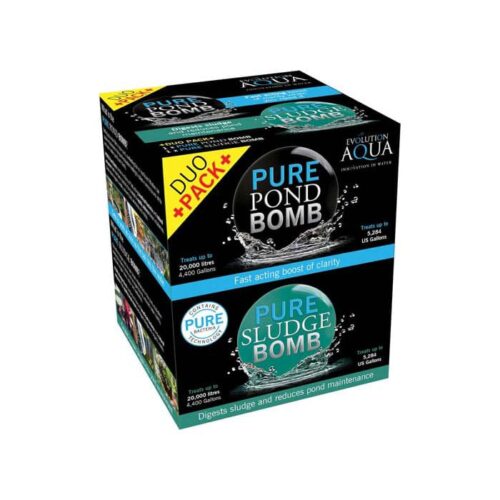
Compare our beneficial bacteria and filter boosters for other ways to support biological filtration. NT Labs Pond Mature is a separate product in the Pond range, with its own directions. For a different bacterial format, see Evolution Aqua Pure Pond Bomb. Our guide to koi health explains why water quality is central to a sensible pond-care routine.


Reviews
There are no reviews yet.