






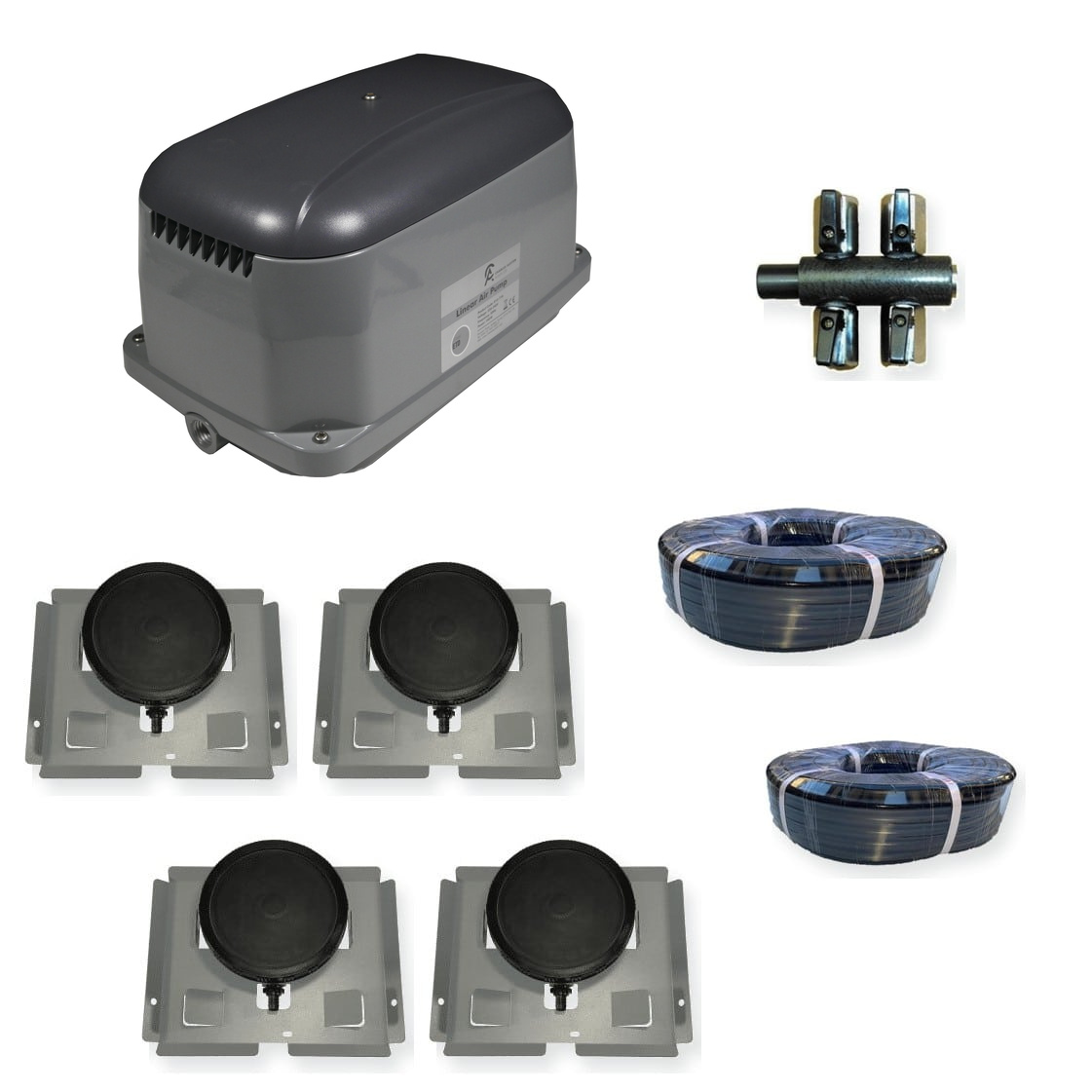
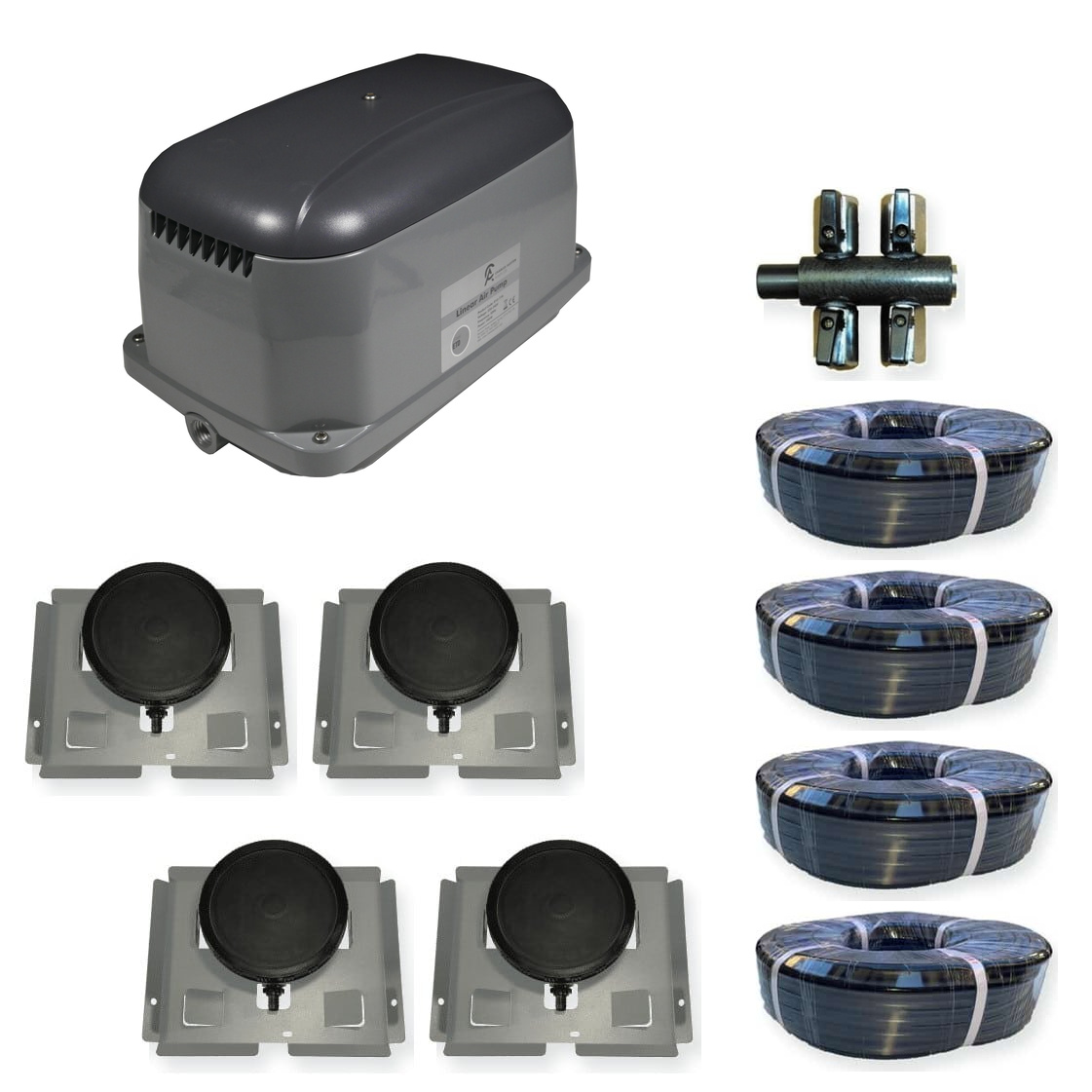
Charles Austen 200 Four-Zone DSW1 Pond Aeration Kit
| Brand | |
|---|---|
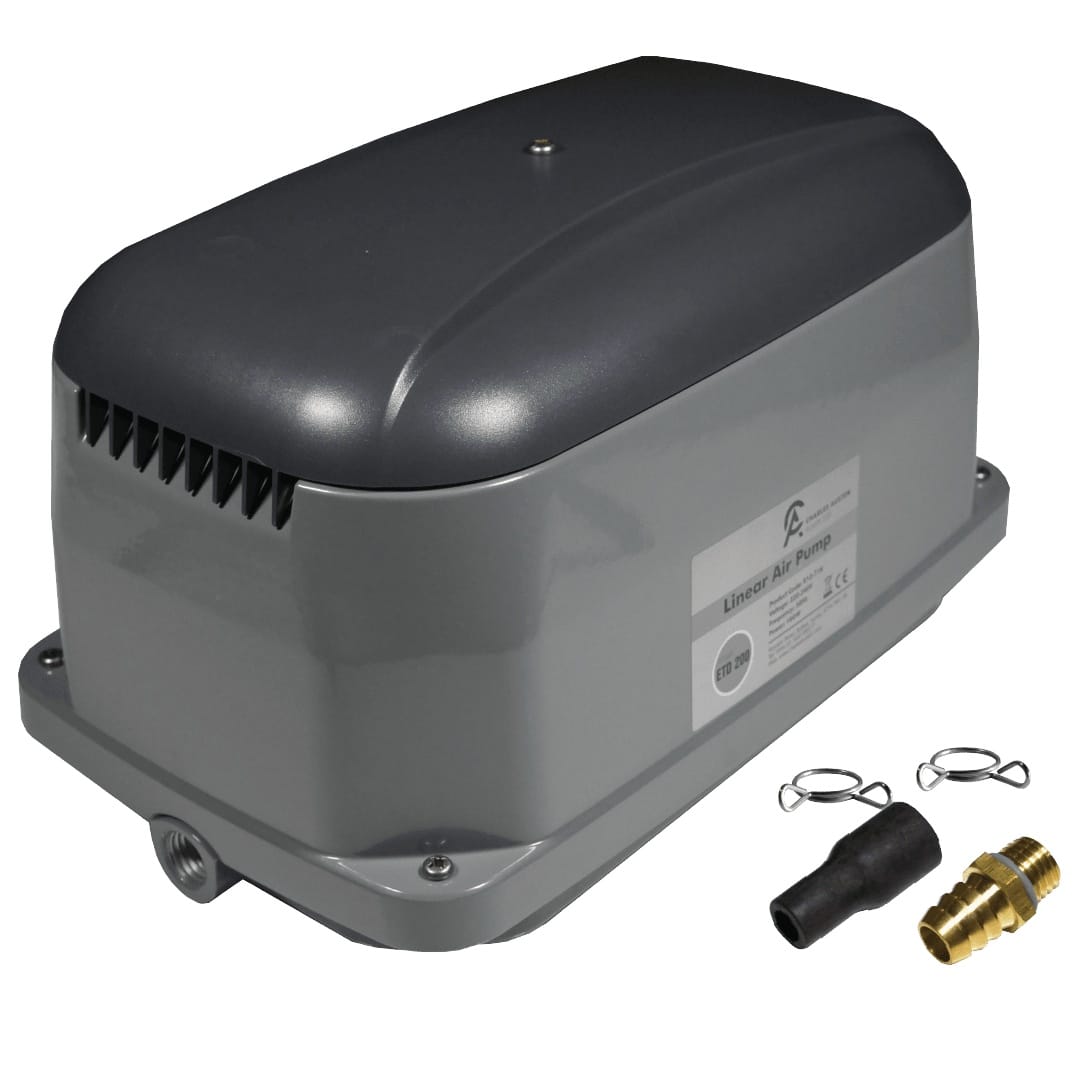
| Air Pump | Charles Austen ETi200, Charles Austen ETD200, Charles Austen ET200 |
| Power | 100 W, 160 W, 195 W |
| Diffuser Layout | 4 x DSW1 stations |
| Weighted Airline | 60m total (4 x 15m), 120m total (4 x 30m) |
| Air Flow | 200 L/min |
| Air Pressure | 0.15 bar, 0.2 bar |
| Water body size | Large pond / small lake |
Aerate four separate areas from one pump. Four self-sinking DSW1 stations, an adjustable four-way manifold and matched weighted airline. Compare ETi200, ETD200 and ET200, then choose four 15 m pre-cut runs or four 30 m runs.
Price range: £1,056.99 through £1,490.99 (inc VAT)
Available on back-order
Charles Austen 200 Four-Zone DSW1 Pond Aeration Kit
Put a diffuser where each part of the pond needs it rather than concentrating all four discs in one place. This kit supplies four individual DSW1 stations from one bank-side pump and lets you adjust each branch at the manifold. It suits ponds or small lakes with separate bays, an island or an irregular shoreline where one central plume cannot circulate water evenly. The four runs are independent: you can place a station on each side of an obstruction without joining the airlines in the water.
Choose your pump by the resistance it needs to work against, and choose your airline by the longest individual route. If the pond has only two areas to cover, the 200 Twin DSW2 kit groups the same four discs into two stations. For an open pond with one useful location, compare the 200 Central DSW4 kit.
Which 200-series pump suits your pond?
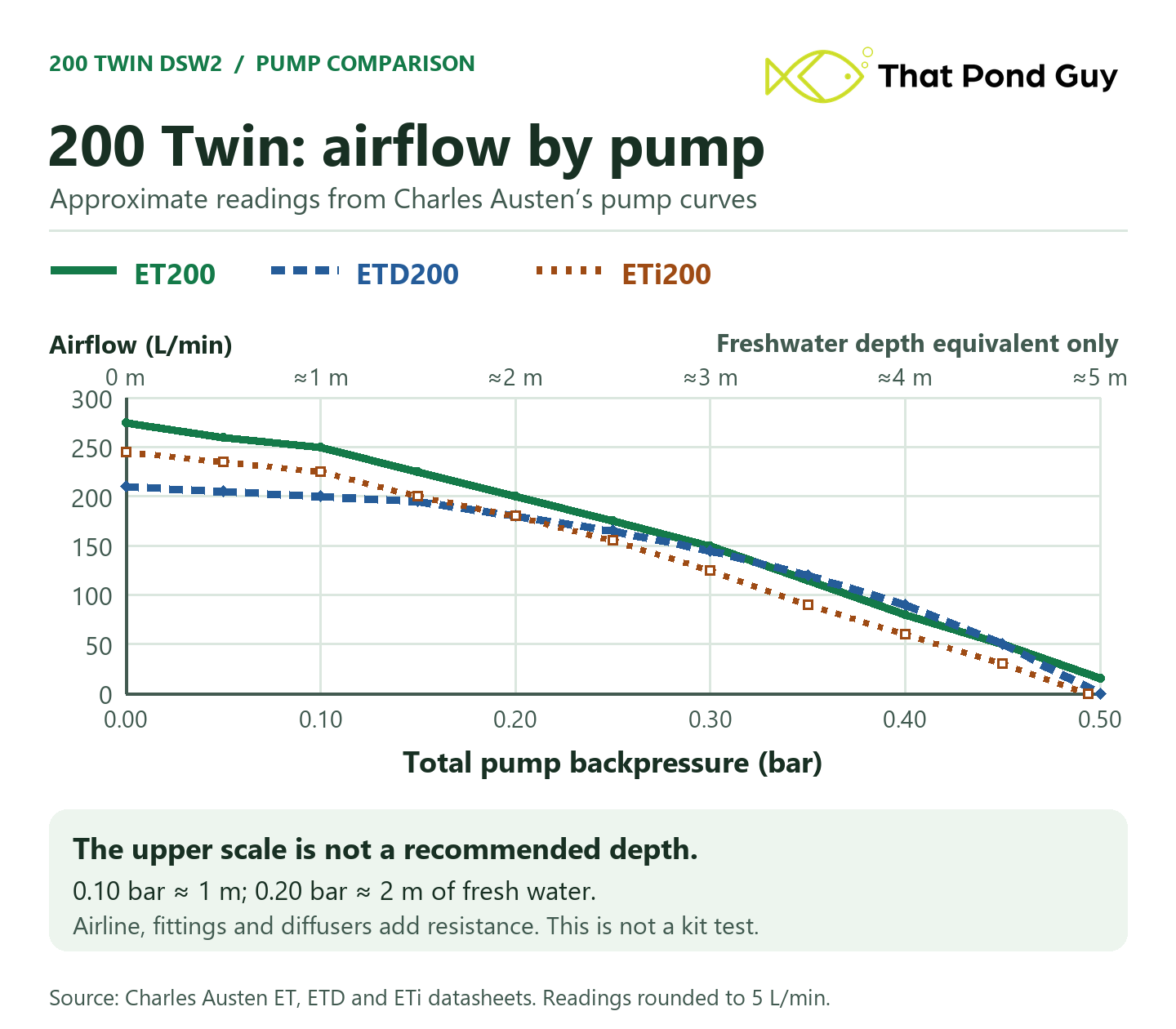
The ETi200 and ETD200 share the same published airflow and pressure rating, but the ETi200 uses less rated power. The ET200 needs more power but is rated to deliver the same airflow against greater pressure. That can matter where some stations sit deeper, or where long lines and bends add resistance. Check the selector for current availability and the status of the option you choose.
| Pump | Published duty | Rated power | What it offers |
|---|---|---|---|
| ETi200 | 200 L/min at 0.15 bar | 100 W | Lowest rated power where extra pressure is not needed. |
| ETD200 | 200 L/min at 0.15 bar | 160 W | Conventional alternative at the same stated duty. |
| ET200 | 200 L/min at 0.20 bar | 195 W | More pressure at the stated flow for more demanding runs. |
Airflow, backpressure and actual diffuser depth
Use the lower scale to compare the pumps at the same total backpressure. About 0.10 bar corresponds to 1 m of freshwater depth, and 0.20 bar to 2 m. Measure from the water surface to each diffuser. Two stations at different depths can need different flow adjustments even when their airlines are the same length.
These are pressure equivalents, not recommended maximum depths. Airline, fittings, manifolds and diffuser membranes add resistance. The pump’s output at the installed pressure is lower than its output at the same depth working against water alone.
What’s in the kit?
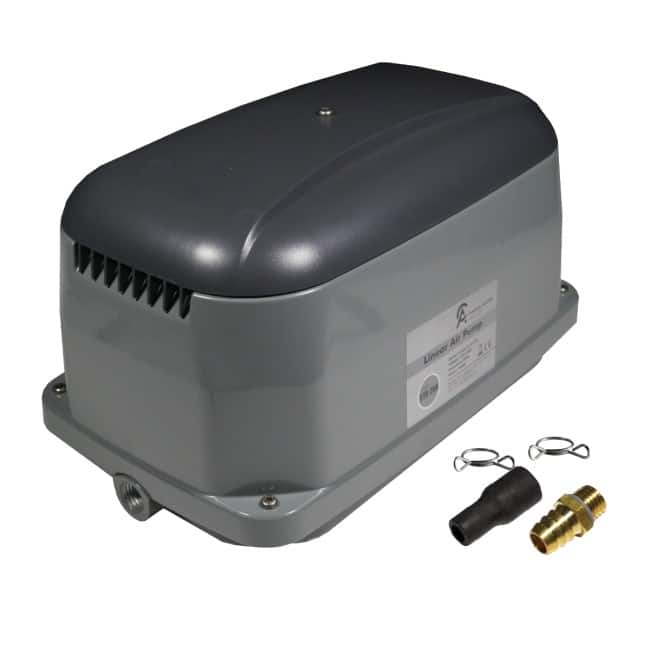
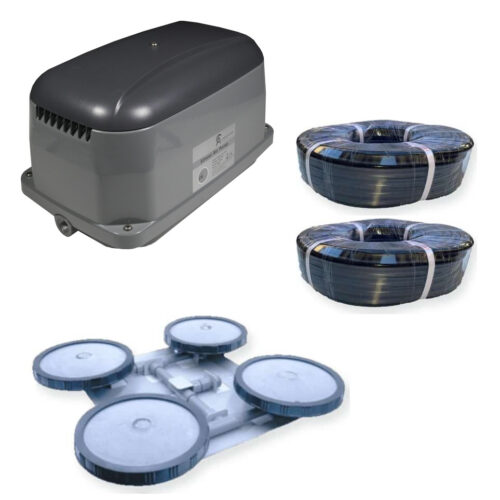
- Your selected Charles Austen air pump.
- Four DSW1 self-sinking diffuser stations, each with one diffuser disc.
- A four-way air manifold with an 18 mm inlet, 14 mm valved outlets, and matching kit fittings and clips.
- Either four pre-cut 15 m runs (60 m total), or four 30 m runs (120 m total) of heavy-duty weighted airline.
Choose the airline length and balance the four branches
Measure each complete route from the manifold to the station, including the section on the bank, the descent into the pond and any bends. Four 15 m runs give you 15 m per station, not a 60 m single run; a route of 18 m needs the longer option. Keep the runs as direct as the pond shape allows.
At 200 L/min, an even split would be 50 L/min per disc. Each DSW1 head is designed for 30–60 L/min, so treat that split as a planning figure only. Air tends to favour the shallower or shorter branches. Start with the manifold outlets open and adjust gradually to balance the four plumes without choking the system. A consistent bubble pattern and, where needed, a flow check are more useful than assuming the valves will all need the same setting.
Position and check the system
Keep the pump and electrical connection above the water on a stable, dry, ventilated site. Secure each airline connection, keep it free of sharp bends and place the stations clear of very soft sediment. Check for leaks and restrictions during commissioning. If you are adding aeration to a pond with poorly circulated deep water, introduce it gradually. Send us the depth at each planned station and the full airline route if you would like help choosing the pump or comparing other pond and lake aeration kit layouts.







Reviews
There are no reviews yet.