






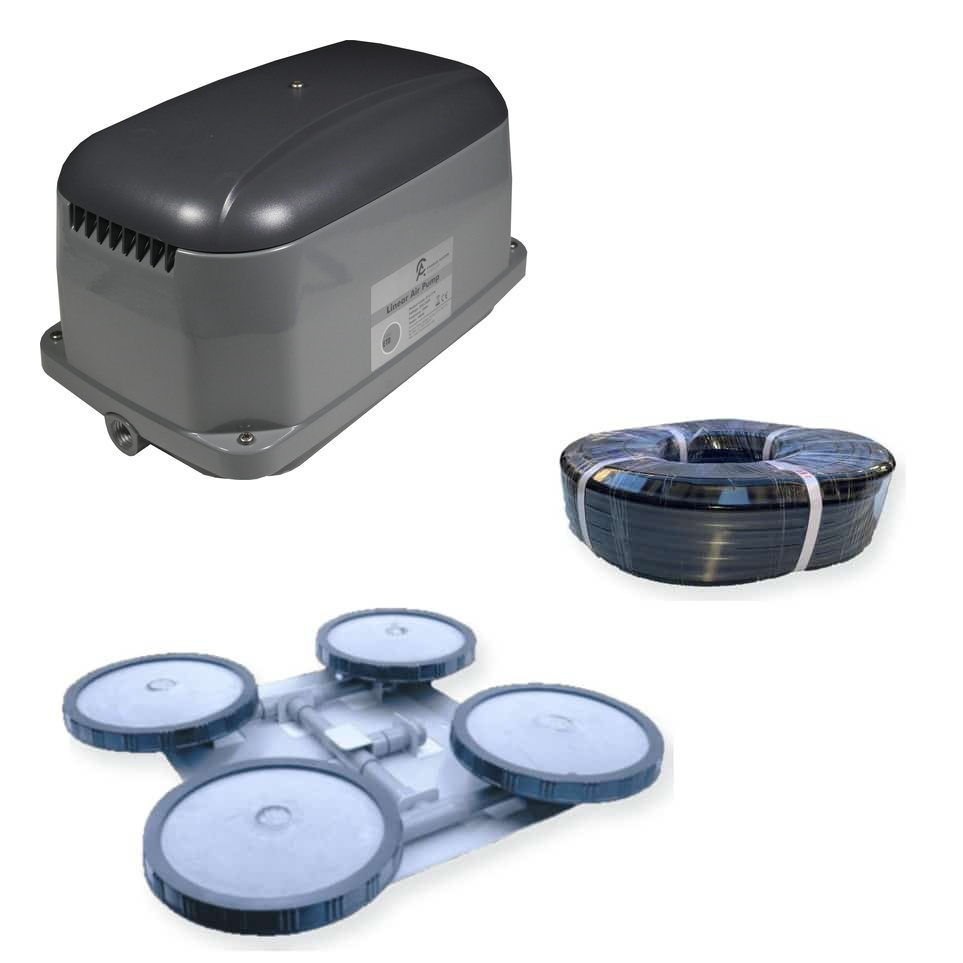
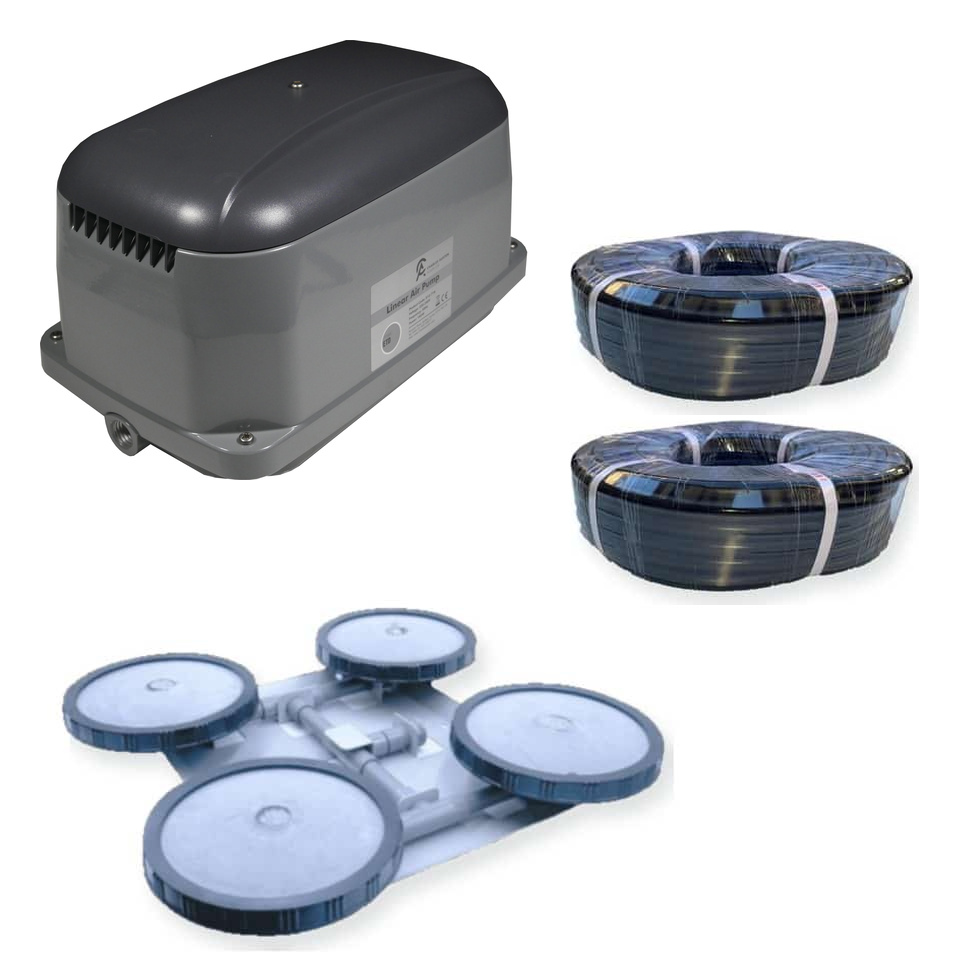
Charles Austen 200 Central DSW4 Pond Aeration Kit
| Brand | |
|---|---|
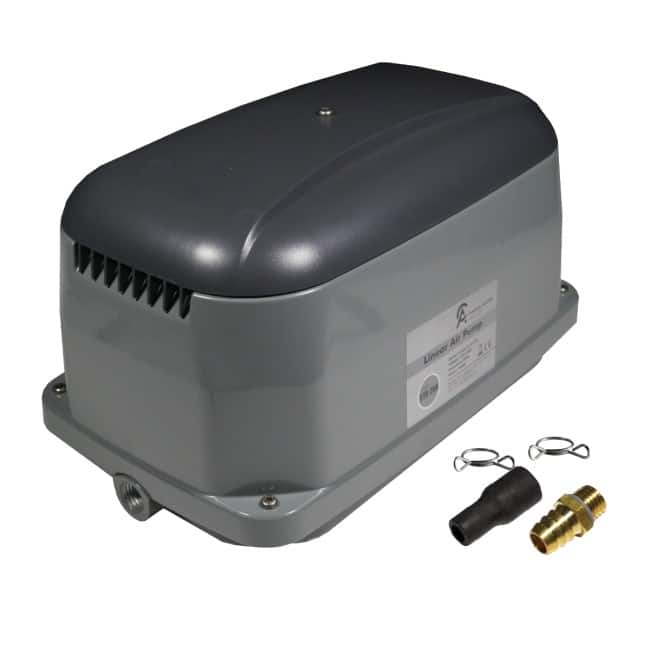
| Air Pump | Charles Austen ETD200, Charles Austen ET200, Charles Austen ETi200 |
| Power | 100 W, 160 W, 195 W |
| Diffuser Layout | 1 x DSW4 station |
| Weighted Airline | 30m total (1 x 30m), 60m total (2 x 30m with joiner) |
| Air Flow | 200 L/min |
| Air Pressure | 0.15 bar, 0.2 bar |
| Water body size | Large pond / small lake |
Run four diffuser discs from one central DSW4 station. Choose the low-power ETi200, the conventional ETD200 or the higher-pressure ET200, with one 30 m reel or two 30 m reels and a straight joiner. A practical layout for open ponds and small lakes with one clear area to aerate.
Price range: £566.99 through £841.49 (inc VAT)
Charles Austen 200 Central DSW4 Pond Aeration Kit
This kit runs four diffuser discs on a single DSW4 station, using one weighted airline from the bank. It makes sense for an open pond or small lake with one clear area for the bubble plume to rise and move water. Choose an ETi200, ETD200 or ET200 to suit the depth and airline route, then pick 30 m or 60 m of airline. If an island, bend or shallow shelf splits the water into separate areas, the 200 Twin DSW2 kit spreads the same four discs across two stations instead.
Which 200-series air pump should you choose?
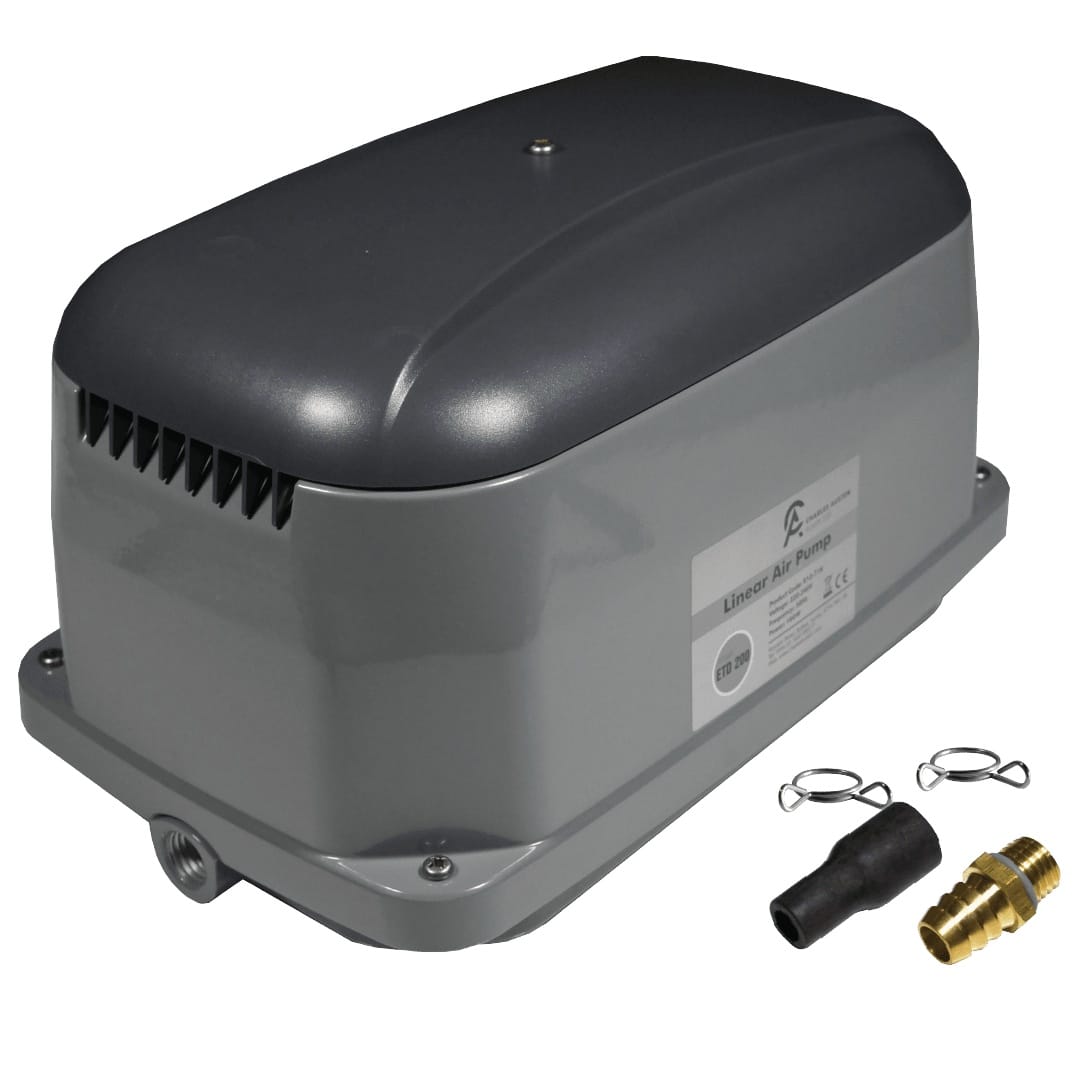
All three pumps are rated at 200 litres per minute, but not at the same pressure. Start with the ETi200 if you want the lowest kit price and lowest rated power draw, and your diffuser and airline route do not need the extra pressure of the ET200. The ETD200 is the conventional 160 W alternative, with the same stated flow and pressure rating as the ETi200. Choose the ET200 when you need more pressure at the rated airflow—for example, for a deeper diffuser or a route with more resistance.
| Pump | Rated airflow and pressure | Rated power | When to choose it |
|---|---|---|---|
| ETi200 | 200 L/min at 0.15 bar | 100 W | Lowest rated power and lowest kit price. |
| ETD200 | 200 L/min at 0.15 bar | 160 W | Conventional alternative for the same rated flow and pressure. |
| ET200 | 200 L/min at 0.20 bar | 195 W | More pressure at the rated airflow for demanding routes. |
Water depth, pressure and airflow at the diffuser
In fresh water, 1 m of depth adds roughly 0.10 bar of static pressure, 1.5 m roughly 0.15 bar and 2 m roughly 0.20 bar. Measure from the water surface to the diffuser, not to the deepest point in the pond if you plan to position the station higher.
How the three pumps compare: Read the total backpressure along the bottom of the graph and follow each curve to see the approximate airflow in litres per minute. The depth scale along the top is the equivalent water pressure alone; it does not account for the airline, fittings or diffuser.
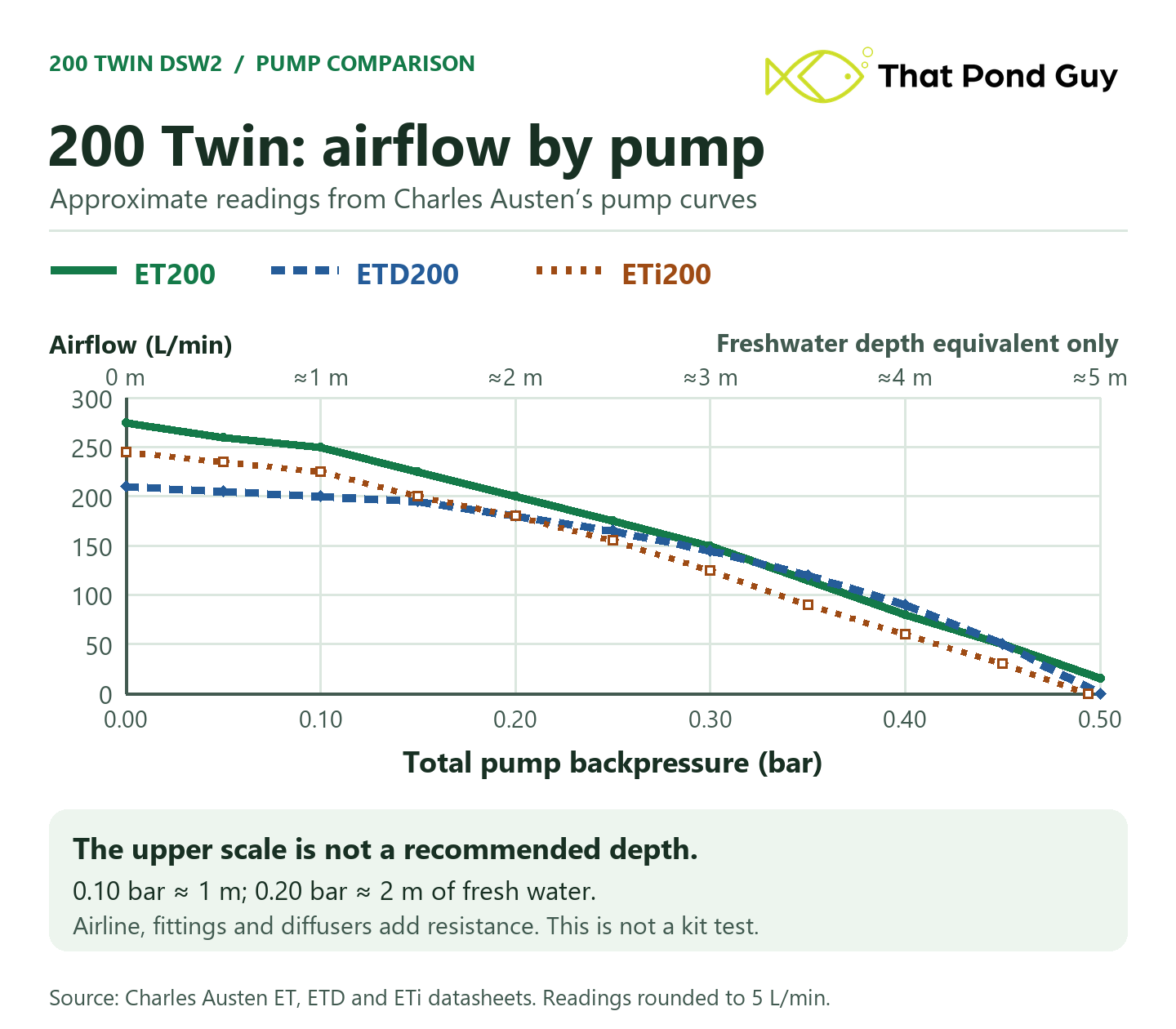
Those are pressure equivalents, not recommended maximum installation depths. The airline, fittings and diffuser membranes add resistance. As the combined pressure rises, a pump will deliver less airflow. Check the pump performance at the total operating pressure rather than relying on the pond depth alone.
Each of the four diffuser heads is designed for 30–60 L/min. At 200 L/min, an even split would be 50 L/min per head. That is a useful planning figure, not a guaranteed result after losses. Longer routes, tight bends, dirty membranes and leaks all affect what reaches the station. If you’re unsure between the pumps, tell us the planned diffuser depth and full airline length so we can help you compare them.
What comes with each airline option?
- 30 m: one 30 m reel of weighted airline.
- 60 m: two 30 m reels of weighted airline, with a straight joiner included so you can connect the lengths on site.
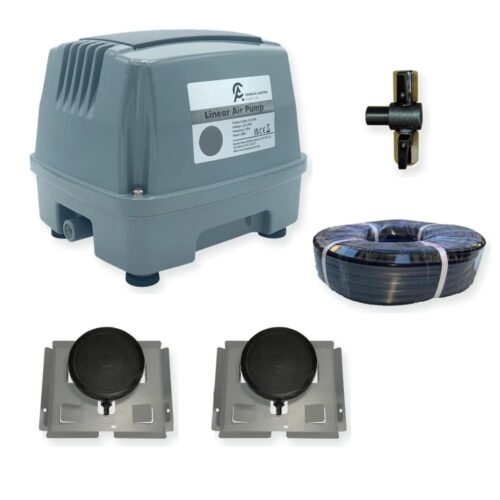
Both options include your chosen air pump, one Charles Austen DSW4 diffuser station with four discs, and the matching pump and airline fittings and clips. This is a single feed to one station, so there is no separate branch manifold to set or balance. The kit uses heavy-duty weighted airline with a nominal ½-inch bore.
Plan the full route before choosing 30 m or 60 m
Include the distance across the bank, the slope into the water and the bends around obstacles. A 26 m route leaves about 4 m spare on the 30 m option, while a 38 m route needs the 60 m option even if the pond is only 20 m across. Enough airline to reach the station is not the same as enough airflow at the station: compare the longer route and the depth together.
Position and check the station
Put the pump on a firm, dry, ventilated base above the water level, with a protected outdoor electrical supply. Lower the DSW4 onto a stable area clear of very soft sediment and keep the airline free of sharp bends. Check your connections for leaks and look for a consistent bubble pattern when commissioning. Inspect the pump filter, clips and diffuser membranes periodically; a change in the bubble pattern can be the first sign of a leak or restriction.
There is no single maximum pond volume for this kit: shape, fish loading, existing circulation and the purpose of the aeration all matter. For an irregular pond with separate bays, compare the Twin or browse our large pond and lake aeration kits before choosing a single central station.







Reviews
There are no reviews yet.