





Aquascape Pondless & Wetland Filtration
Pondless waterfalls and wetland filters: two different layouts
A pondless waterfall stores its water underground and recirculates it through the feature. A constructed wetland filter treats pond water as it rises through a media bed. Both can use modular components, but the reservoir and filtration arrangements have different jobs.
For hidden water storage, start with AquaBlox and suitable pump access. For a V2 wetland, start with the Centipede Module and Snorkel Vault package, then plan the storage layer, filter media and return route.
The cutaway below shows how the wetland components fit together, with direct links to the individual parts.
Is a wetland filter the same as a pondless reservoir?
No. A reservoir stores recirculating water; a wetland is designed to treat pond water through distribution, settlement and biological-media layers. Their components can overlap, but their jobs and sizing are different.


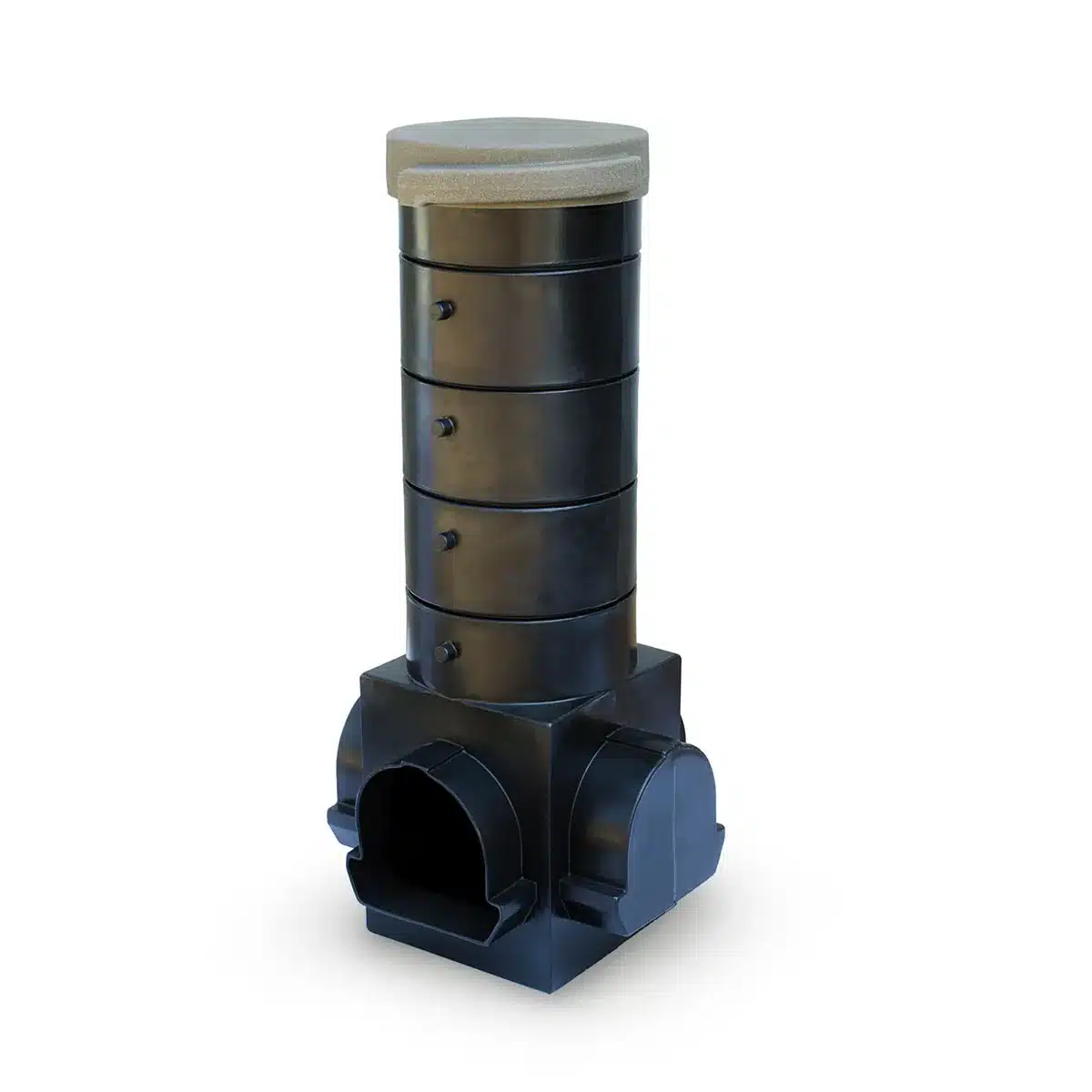


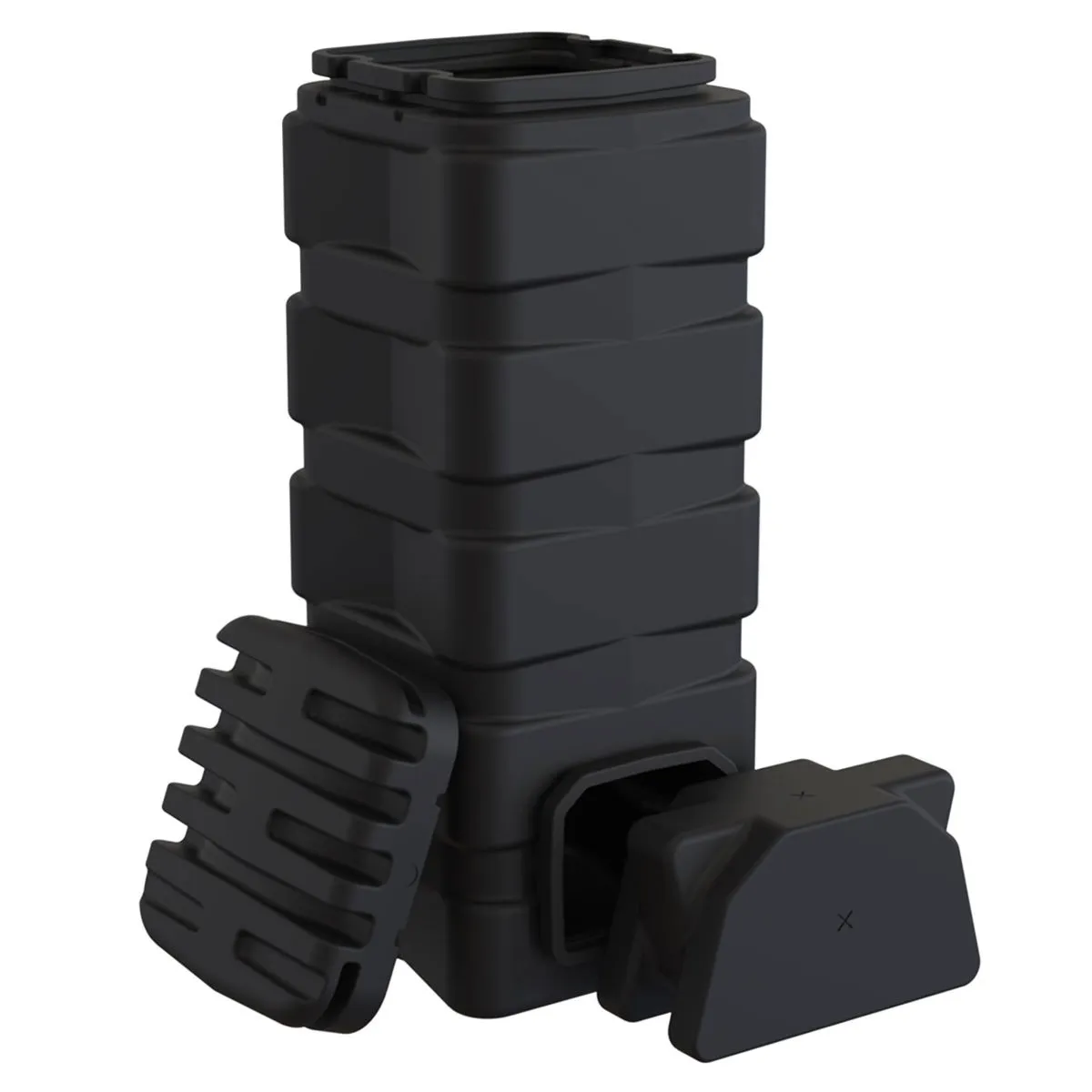


How an Aquascape wetland filter works
Pumped water enters the distribution area at the bottom. The open space spreads the flow and allows heavier solids to settle before water rises through the biological-media and gravel layers. The filtered water then returns to the pond. Plants can form part of the upper bed, taking up nutrients as they grow.
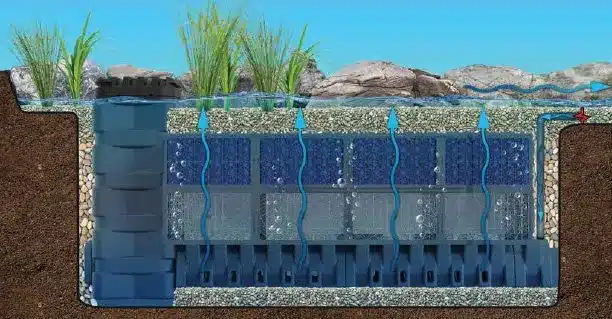
The parts in the cutaway
- Snorkel Vault and Lid V2 with End Cap provides the access shaft for periodic clean-out. This package already includes an end cap, so do not add another unless the design needs one.
- Centipede Module V2 distributes incoming water beneath the filter bed. Additional modules extend the distribution area.
- Small AquaBlox and Large AquaBlox create the open water-storage and settlement space above the distribution layer.
- FilterBlox adds biological filter tubes held within a modular structure. It is different from an empty AquaBlox water-storage module.
- Snorkel Vault Extension V2 increases access depth where the filter bed design requires it.
- Centipede End Cap V2 provides a plumbing connection at the end of a run when an additional end cap is needed.
Keep a route for cleaning
The Snorkel provides access to the lower area without digging up the whole filter bed. Do not bury or obstruct its lid. Plan the periodic clean-out and waste-water route before the bed is filled; a well-sized filter still collects material that eventually needs removing.
Size the filter around the pond
Pond volume alone is not enough to specify a wetland. Fish load, feeding, the intended pump flow, available footprint and the media arrangement all affect the design. Additional FilterBlox layers and access extensions should be part of that design rather than an assumption that more layers always solve inadequate space.
V2 components and older systems
The V2 Centipede and Snorkel are identified separately from the older large and half-module range. When extending an existing filter, identify the generation before ordering adjoining parts. Use the correct adjoining components for the installed generation.
For a decorative waterfall with no pond, compare Pondless Waterfall Kits before building a fish-pond wetland arrangement that the feature does not need.
