







KiGen Tosai RG-92 3mm Floating Koi Food
| Brand | |
|---|---|
| Pellet Size | 3mm |
| Food Type | Colour Enhancing, Growth |
| Feeding Season | Seasonal Feeding |
| Pellet Behaviour | Floating |
| Weight | 1.2kg, 5kg |
A 45% protein, 3 mm floating food for young koi, with LT71 fishmeal, sorghum and added RG-92 hot-spring algae extract. Designed for development, skin quality and colour. Available in 1.2 kg and 5 kg bags.
Price range: £32.50 through £115.00 (inc VAT)
Out of stock
KiGen Tosai RG-92 3mm Floating Koi Food
Small floating pellets with RG-92 for young-koi growth, skin quality and development
KiGen Tosai RG-92 is a 3 mm floating koi food for young fish, combining a 45% protein formula with RG-92 hot-spring algae extract. LT71 fishmeal, sorghum and a vitamin and mineral premix form the nutritional foundation, with particular attention to growth, skeletal development, skin quality and colour during the early stages of a koi’s life.
It is the KiGen choice for keepers who want a smaller young-koi pellet with RG-92 already included in the food. Floating pellets also give a clear view of the meal, helping you watch feeding confidence and check that smaller or less assertive fish receive food.
A focused diet for developing young koi
The early growth period is about more than adding length. A young koi is developing body structure and condition at the same time as its skin and colour change. Tosai RG-92 provides a growth-focused recipe for this stage, with the smaller pellet format suited to fish that cannot comfortably take the range’s 6 mm foods.
- 45% protein in the finished feed.
- 3 mm floating pellets for young koi.
- LT71 fishmeal as the principal protein source.
- Sorghum as a carbohydrate ingredient, alongside a vitamin and mineral premix.
- RG-92 hot-spring algae extract included in the formulation.
- 1.2 kg and 5 kg bags.
Understanding the RG-92 ingredient
RG-92 is an extract from microalgae originating in the hot springs of Beppu, Japan. KiGen includes it in the recipe with the aim of supporting nutrient use, vitality and skin quality during development. It is incorporated into the food, so using Tosai RG-92 does not involve mixing a separate coating onto each meal.
The extract is distinct from a live bacterial probiotic. Its inclusion is one feature of the food, alongside the protein, carbohydrate and micronutrient formulation. Choose it as the enriched young-koi option and continue to judge feeding by the fish’s response and the condition of the system.
LT71 fishmeal, sorghum and micronutrients
Protein for growth and body maintenance
LT stands for low-temperature processing of fishmeal, a drying approach intended to preserve protein quality. Protein supplies amino acids used for developing and maintaining the fish’s tissues. The 45% figure is the protein level of the finished Tosai RG-92 food; LT71 refers to the fishmeal ingredient and is not the final protein percentage.
Energy and the structure of the pellet
Sorghum supplies starch for energy and helps form the extruded pellet. The vitamin and mineral premix complements those main ingredients. In a young-koi diet, the overall balance matters because feeding has to support development while remaining within the pond or grow-on system’s capacity to process waste.
KiGen’s formula is developed with natural red and white colour and skin quality in mind. Consistent nutrition can support a fish’s development, while its genetics, environment and keeping conditions continue to shape the result. Watching body condition over time is more useful than treating a strong feeding response as a reason to keep increasing the ration.
Tosai RG-92 product details
| Detail | Tosai RG-92 |
|---|---|
| Crude protein | 45% |
| Crude fat | 8.1% |
| Crude fibre | 1.3% |
| Crude ash | 13% |
| Pellet | 3 mm floating |
| Bag sizes on this page | 1.2 kg and 5 kg |
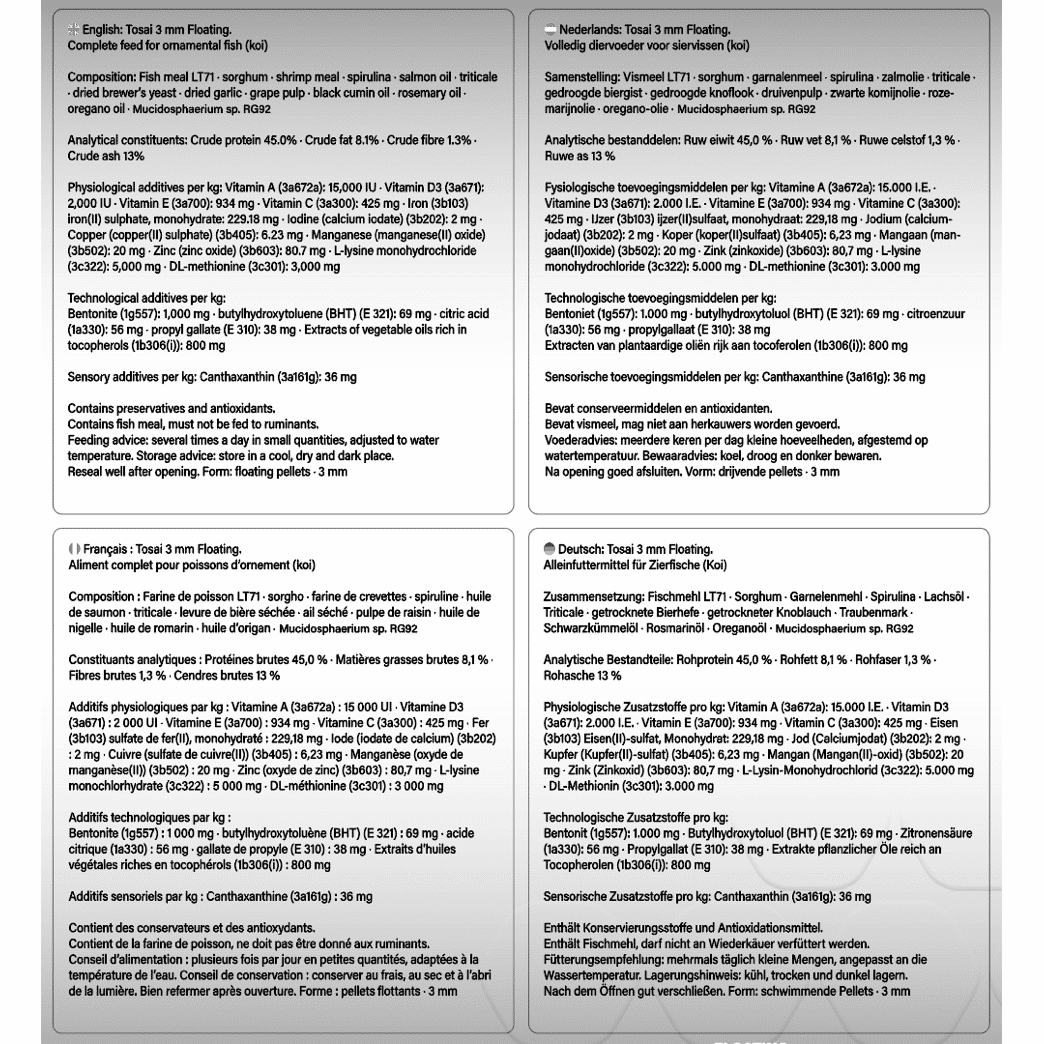
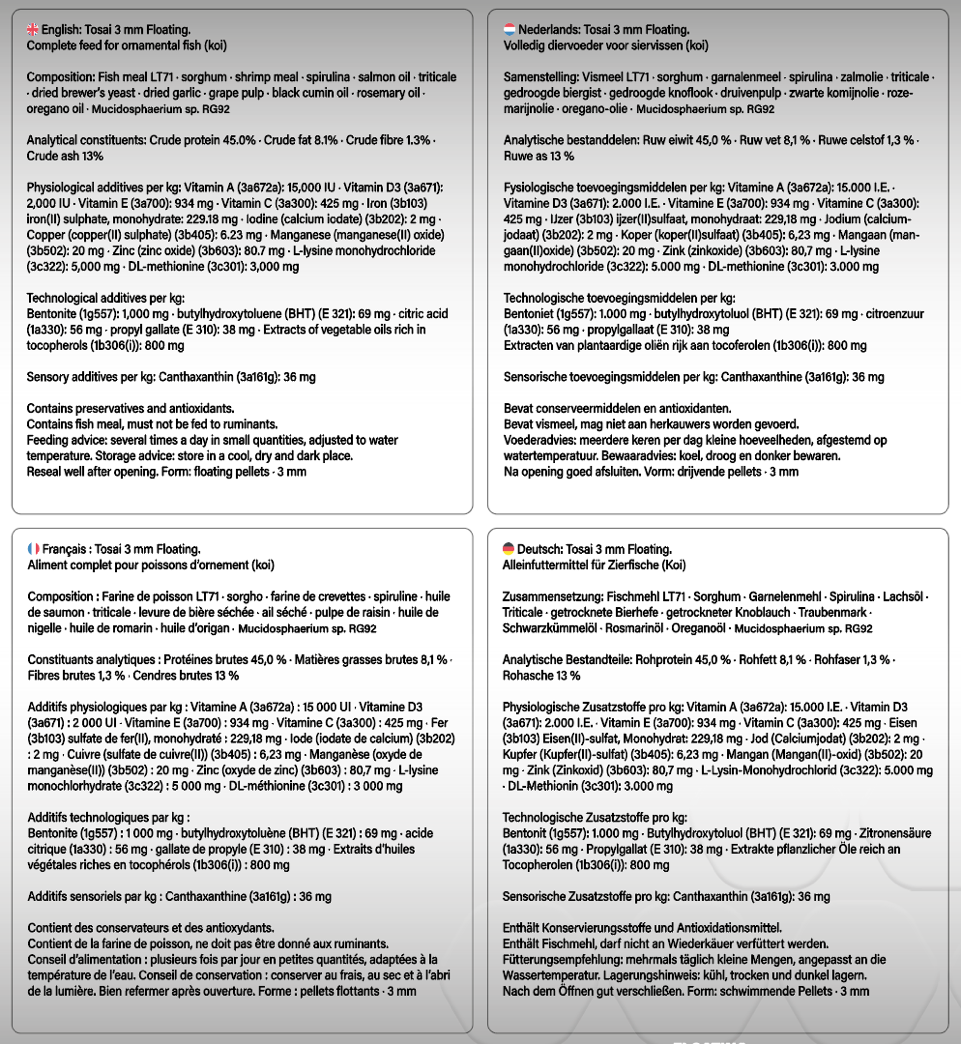
These figures and the composition below follow the label artwork published in KiGen’s own product galleries, checked on 7 September 2026. The labels name sorghum, whereas the January brochure uses millet. We use the label wording here and omit ingredient inclusion percentages that it does not declare. Check the bag supplied for the declaration and instructions applicable to that pack.
Declared composition
Tosai RG-92: LT71 fishmeal; sorghum; shrimp meal; spirulina; salmon oil; triticale; dried brewer’s yeast; dried garlic; grape pulp; black cumin oil; rosemary oil; oregano oil; Mucidosphaerium sp. RG92.
The complete food contains cereal ingredients, including triticale or wheat ingredients; it should not be described as gluten-free. Ingredient names and fishmeal grades are separate from the finished food’s analytical percentages.
Vitamins, minerals and other declared additives
| Declared additive | Tosai RG-92 |
|---|---|
| Vitamin A (3a672a) | 15,000 IU/kg |
| Vitamin D3 (3a671) | 2,000 IU/kg |
| Vitamin E (3a700) | 934 mg/kg |
| Vitamin C (3a300) | 425 mg/kg |
| Iron(II) sulphate, monohydrate (3b103) | 229.18 mg/kg |
| Iodine, calcium iodate (3b202) | 2 mg/kg |
| Copper(II) sulphate (3b405) | 6.23 mg/kg |
| Manganese(II) oxide (3b502) | 20 mg/kg |
| Zinc oxide (3b603) | 80.7 mg/kg |
| L-lysine monohydrochloride (3c322) | 5,000 mg/kg |
| DL-methionine (3c301) | 3,000 mg/kg |
These are the label’s additive declarations, not a separate analysis of the total naturally occurring nutrients in the food.
Tosai RG-92 — technological additives per kg: bentonite (1g557), 1,000 mg; butylhydroxytoluene/BHT (E321), 69 mg; citric acid (1a330), 56 mg; propyl gallate (E310), 38 mg; extracts of vegetable oils rich in tocopherols (1b306(i)), 800 mg. Sensory additive: canthaxanthin (3a161g), 36 mg/kg.
Contains preservatives and antioxidants. Contains fishmeal and must not be fed to ruminants. This is complete feed for ornamental fish (koi).
Read the manufacturer’s label: Tosai RG-92 label. Label images are also available in the product gallery.
Feeding Tosai RG-92 in a pond or grow-on system
KiGen’s published Tosai RG-92 label advises several small feeds each day, adjusted to water temperature. It does not supply a numerical temperature-to-ration table. Use that formula’s current pack instructions rather than treating the standard Tosai chart as a confirmed RG-92 feeding schedule.
Start from the instructions on the Tosai RG-92 bag, taking account of measured water temperature, the size of the fish and their appetite. Adjust the amount as conditions and appetite change.
Offer small amounts that the fish clear comfortably within a few minutes. Where several feeds are used, divide the total daily allowance between them. If a ration is given as a percentage of fish body weight, it applies to the combined weight of the fish being fed, not the volume of the pond or the weight of the food bag.
For example, a daily allowance of 1% for 2 kg of fish would equal 20 g in total. This illustrates the calculation only; it is not a recommended feeding rate at every temperature. With an automatic feeder, weigh what it dispenses so that extra feeding times do not silently increase the daily quantity.
Young koi in a controlled grow-on environment can have a very different feeding routine from fish in an unheated garden pond. Increase food only when appetite, oxygen supply and the filter can support it. In cooling water, reduce feeding in line with the pack and the fish’s activity. Do not feed fish that are inactive or ignoring food.
Remove leftovers and monitor ammonia and nitrite as feeding changes. If either rises, cut back promptly and address the water conditions. More food means more waste even with a high-quality diet, and the presence of RG-92 does not change that basic requirement.
Choosing between Tosai and Tosai RG-92
Both are 3 mm floating foods aimed at young koi. Standard Tosai is the straightforward growth-focused option; Tosai RG-92 is for keepers who specifically want the algae extract included. The larger 6 mm RG-92 Special is a different product, intended for fish ready to handle that pellet size.
Bag size, introduction and storage
The 1.2 kg bag suits a smaller group of young fish or an initial introduction. The 5 kg bag is useful for regular feeding where it will be used while fresh. Both options contain 3 mm floating pellets. Select the bag above for its current availability.
Introduce the food progressively while observing appetite and waste. Reseal the bag after feeding, store it in a cool, dry place away from direct sunlight and use a dry scoop. Keep moisture out and follow the pack’s best-before and storage instructions.
Choosing between the KiGen foods
Use our KiGen koi food comparison guide to compare all six foods by pellet size, protein level, feeding purpose and floating or sinking format.
- KiGen Tosai — 3 mm floating food for the growth and development of young koi.
- KiGen Miori — an accessible 6 mm floating food for balanced everyday feeding.
- KiGen Manju — a 6 mm floating maintenance diet for condition and cooler active periods.
- KiGen Kinsai — premium 6 mm floating or sinking food for growth, body shape and colour.
- KiGen RG-92 Special — the 6 mm premium option with RG-92, in floating and sinking pellets.
Explore our complete koi food range to compare other diets and pellet sizes.

Reviews
There are no reviews yet.