






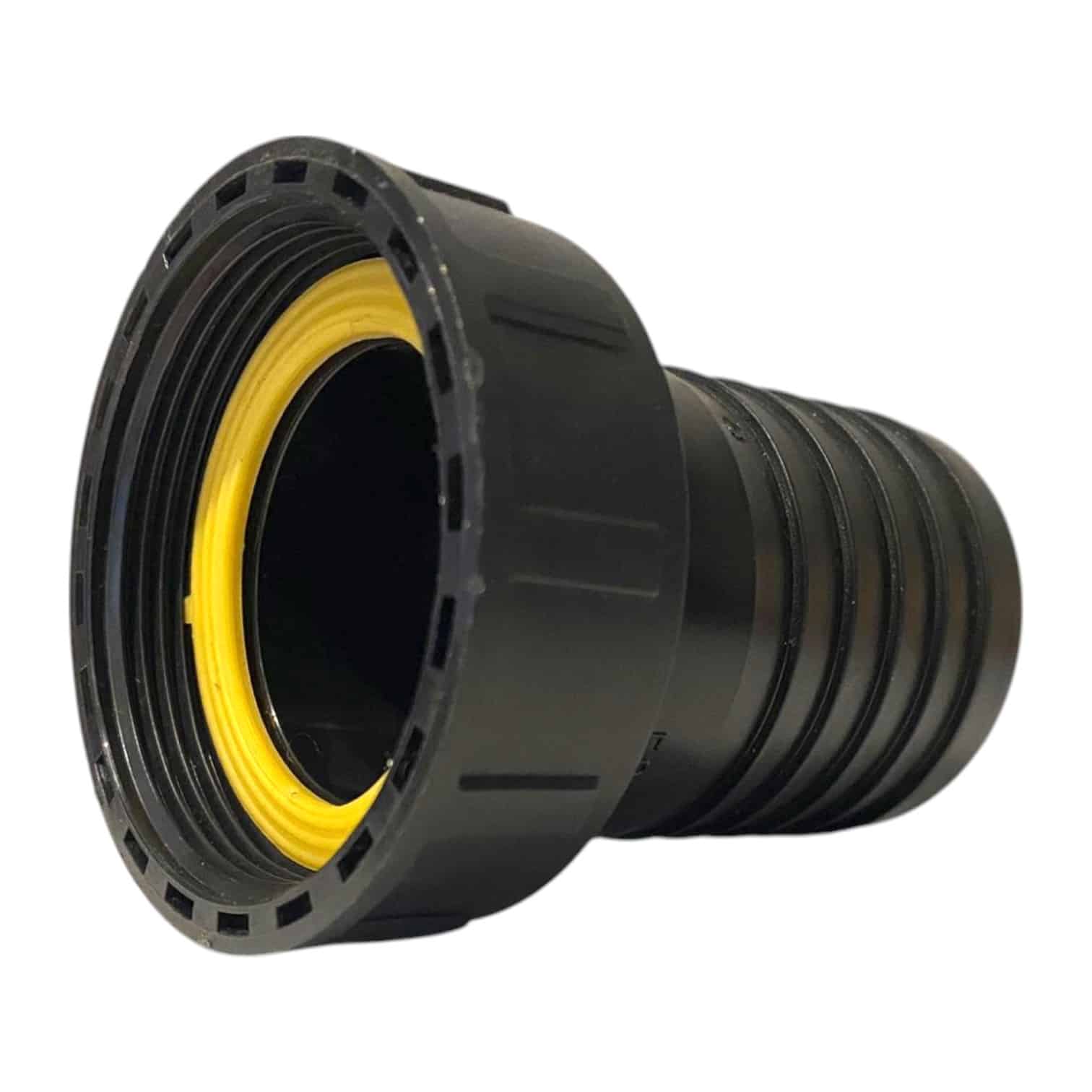
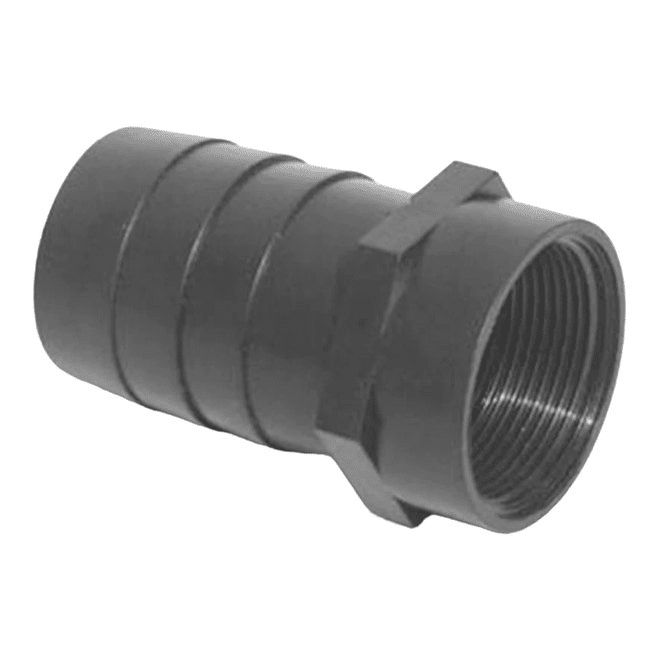
Female BSP Threaded Pond Hosetails
| Connection type | Female BSP thread to hose barb |
|---|---|
| Quantity | One fitting |
| Thread and hose size | 3/4 inch female BSP to 3/4 inch hose, 1.25 inch female BSP to 1 inch hose, 1.25 inch female BSP to 1.25 inch hose, 1.5 inch female BSP to 1.5 inch hose, 2 inch female BSP to 2 inch hose |
Straight female BSP threaded adaptors for flexible pond hose. Select the thread and hose bore together. Each option contains one fitting; hose, clips and separate sealing materials are not included.
Price range: £3.65 through £10.05 (inc VAT)
Female BSP Hosetails for Flexible Pond Hose
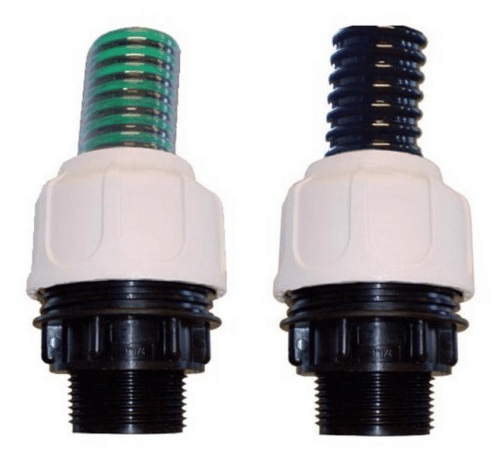
These straight adaptors join a matching male BSP threaded connection to flexible hose. The female thread is on the inside of the fitting, while the projecting hose tail accepts the selected hose bore. They are useful when a pump, filter or separate connector presents an external thread and your next connection is a hose run. Choose the complete thread-and-hose combination: the two measurements describe different ends.
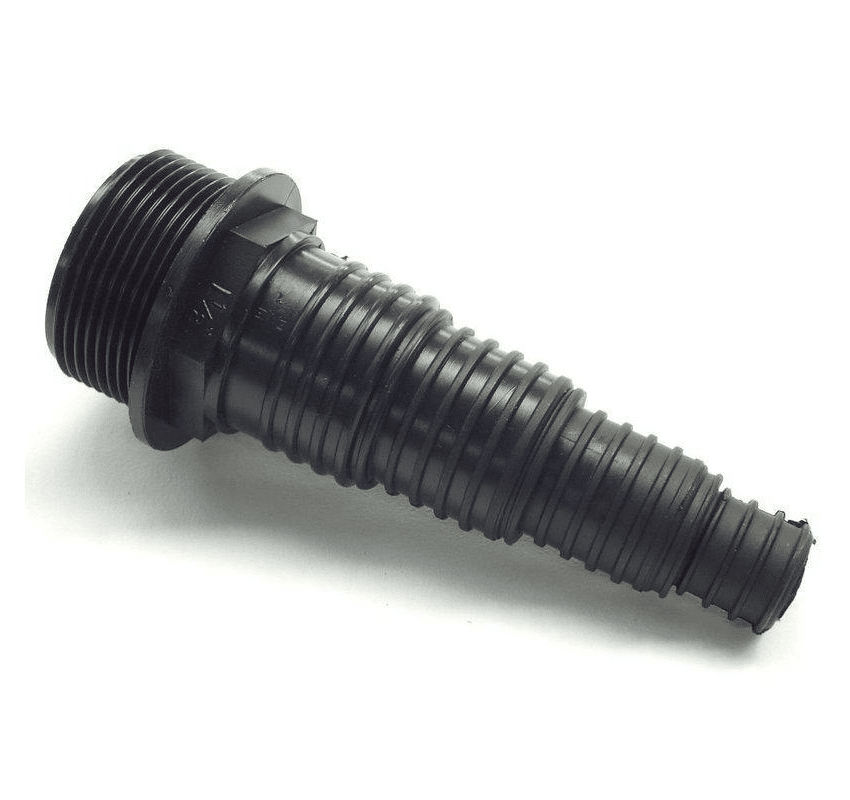
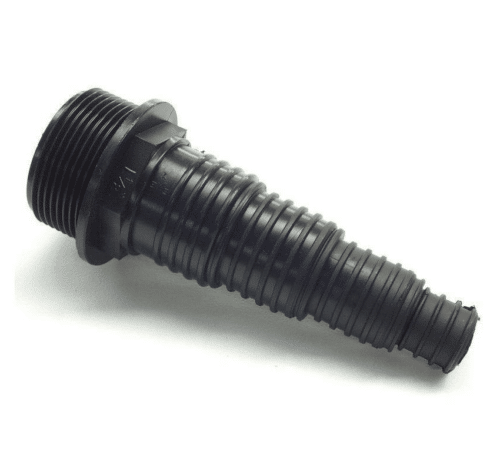
Each option is one adaptor. Hose, clips, a pump and separate sealing materials are not included. These are single-size hose tails, rather than stepped tails that offer several hose diameters on one fitting. Check the actual connection on your equipment before ordering, because a male threaded hosetail would connect to the opposite type of port.
Available connection sizes
| Female BSP thread | Hose internal diameter | Reference |
|---|---|---|
| 3/4 inch | 3/4 inch | PN009M |
| 1 1/4 inch | 1 inch | PN009K |
| 1 1/4 inch | 1 1/4 inch | PN009H |
| 1 1/2 inch | 1 1/2 inch | PN009HH |
| 2 inch | 2 inch | PN009KK |
The 1¼ inch female BSP to 1 inch hose option is a reducing connection. The other options shown have the same nominal inch designation at each end, but that does not mean the thread and hose measure the same physical diameter. BSP labels follow a pipe-thread convention; hose sizes refer to the bore. A connection that looks approximately the right width may still be the wrong fitting.
Identify the receiving thread first
Look for the connection specification in your pump or filter instructions, or identify an existing correctly fitting adaptor. An external thread needs a female fitting of the same standard and nominal size. A smooth pipe spigot or solvent-weld socket cannot be connected simply by screwing this adaptor over it. Likewise, other thread standards should not be treated as interchangeable with BSP.
Start a threaded connection squarely and by hand. If it catches immediately, rocks excessively or requires force to begin turning, stop and recheck the sizes and thread condition. A damaged first thread can make an otherwise correct fitting difficult to install. Tightening harder is not a reliable way to correct a mismatch and may damage the equipment port.
Select hose by its bore
Read the hose’s marked internal diameter. Common pond-hose equivalents are approximately 19mm for ¾ inch, 25mm for 1 inch, 32mm for 1¼ inch, 38mm for 1½ inch and 50mm for 2 inch. These are nominal trade sizes; verify that your hose is intended for the selected tail. The outside diameter includes the hose wall and is the measurement needed when selecting a retaining clip.
The adaptor connects two components; it does not increase the capacity of the pump or remove a restriction elsewhere in the system. Reducing the hose bore can increase resistance, especially on longer runs. Follow the equipment’s permitted hose sizes and flow arrangements, and keep the route as direct as reasonably possible. Avoid sharp bends that flatten the hose immediately after the fitting.
Make a serviceable connection
Before disconnecting equipment, switch it off and isolate or drain the relevant water line. Leave enough room around the adaptor to fit a hose clip and remove the hose again during servicing. A hose full of water can be heavy, so support it independently rather than allowing its weight to pull sideways on the threaded port.
Check the equipment instructions for the sealing arrangement. Some connections seal against a washer or an O-ring; others use an appropriate thread-sealing method. Do not assume that thread tape should be added to every joint, or that a washer is included with this fitting. Use the specified components and avoid overtightening plastic connections.
Place the clip over the hose before pushing the hose onto the barb, seat the hose properly and position the clip over the supported part of the connection. Secure the hose without cutting into it or distorting the tail. Check that the hose remains relaxed in its final position rather than twisting the adaptor as you move the equipment back into place.
Check the complete joint under operation
Restart the system in accordance with its instructions and inspect the threaded end and hose end separately. Water appearing around the fitting may have travelled from another connection, so identify the source before adjusting anything. Isolate the system again before rectifying a leak. Check the seal, thread engagement, clip position and hose condition rather than repeatedly applying more force.
Include the connection in routine maintenance checks, particularly after moving a pump or cleaning a filter. Look for strain from the hose, a loosened clip or damaged material. Leave the adaptor accessible so that replacing a hose or removing equipment does not require dismantling unrelated pipework.
Related fittings and alternatives
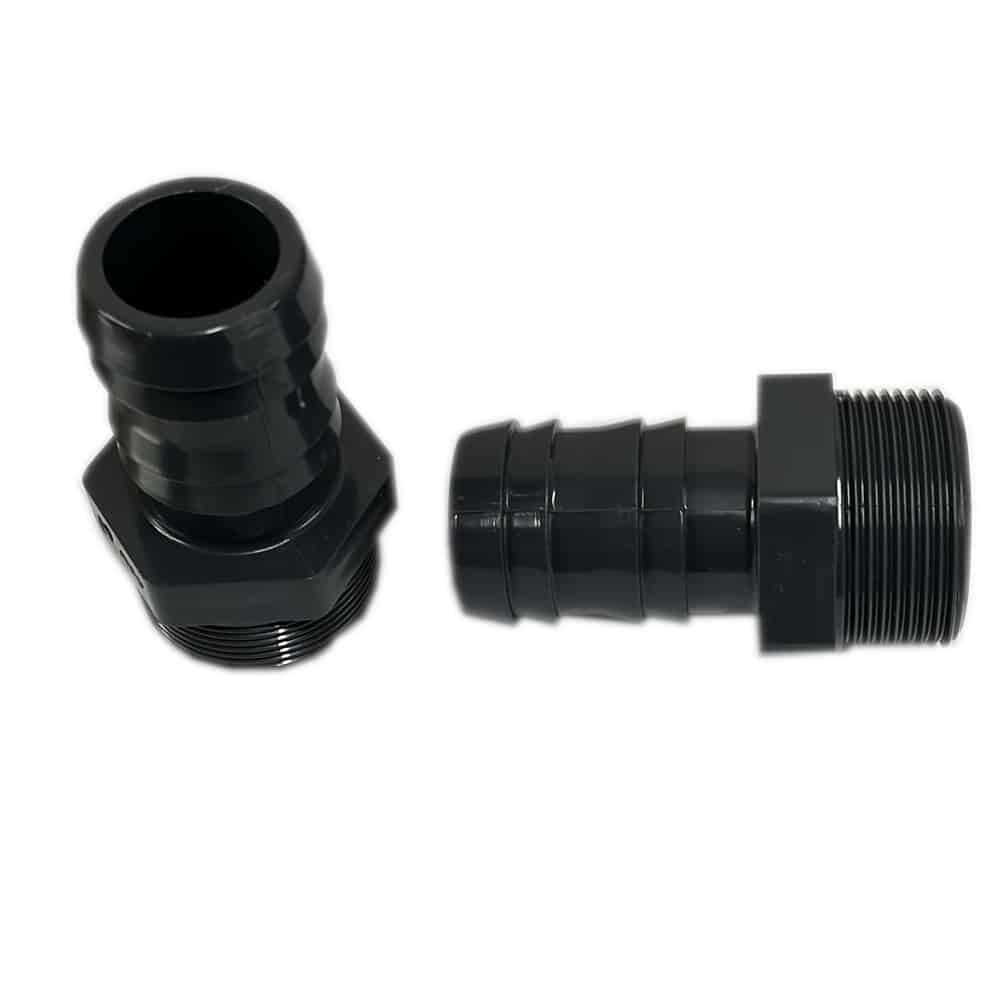
For a different combination, our female threaded 1½ inch to 2 inch hosetail connects a larger hose to a smaller nominal thread. If your equipment instead has an internal thread, compare the male threaded 1½ inch hosetail. These are alternative connection arrangements, not universal replacements for the options above.
A stepped 1½ inch BSP hosetail offers another fitting style where its stated hose sizes suit the installation. For a rigid threaded transition, see our BSP threaded reducers. Select fittings as a complete connection plan, checking every mating surface rather than matching only the largest number in a product title.
Choose these fittings by the stated connections and confirm any additional material or operating requirements before purchase. For specialist service or a pressurised circuit, use documented ratings for the actual fitting and connected equipment. The size choices here establish the connection arrangement; they do not establish suitability for every possible application.




Reviews
There are no reviews yet.