






Evolution Aqua K1 Micro Filter Media – 1L, 25L & 50L
| Brand | |
|---|---|
| Pack Size | 1-litre, 25 Litres, 50 Litres |
| Media Type | Floating biological and mechanical filter media |
| Media Size | 7mm diameter × 9mm length |
| Total Surface Area | 1,400m² per m³ |
| Protected Surface Area | 950m² per m³ |
| Made In | United Kingdom |
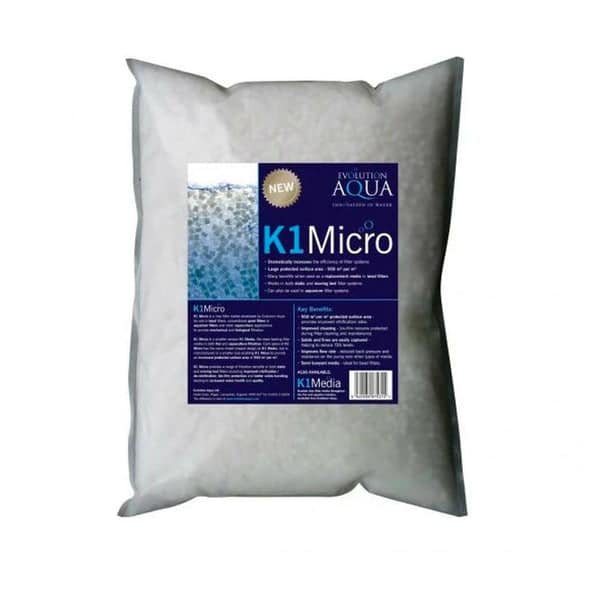
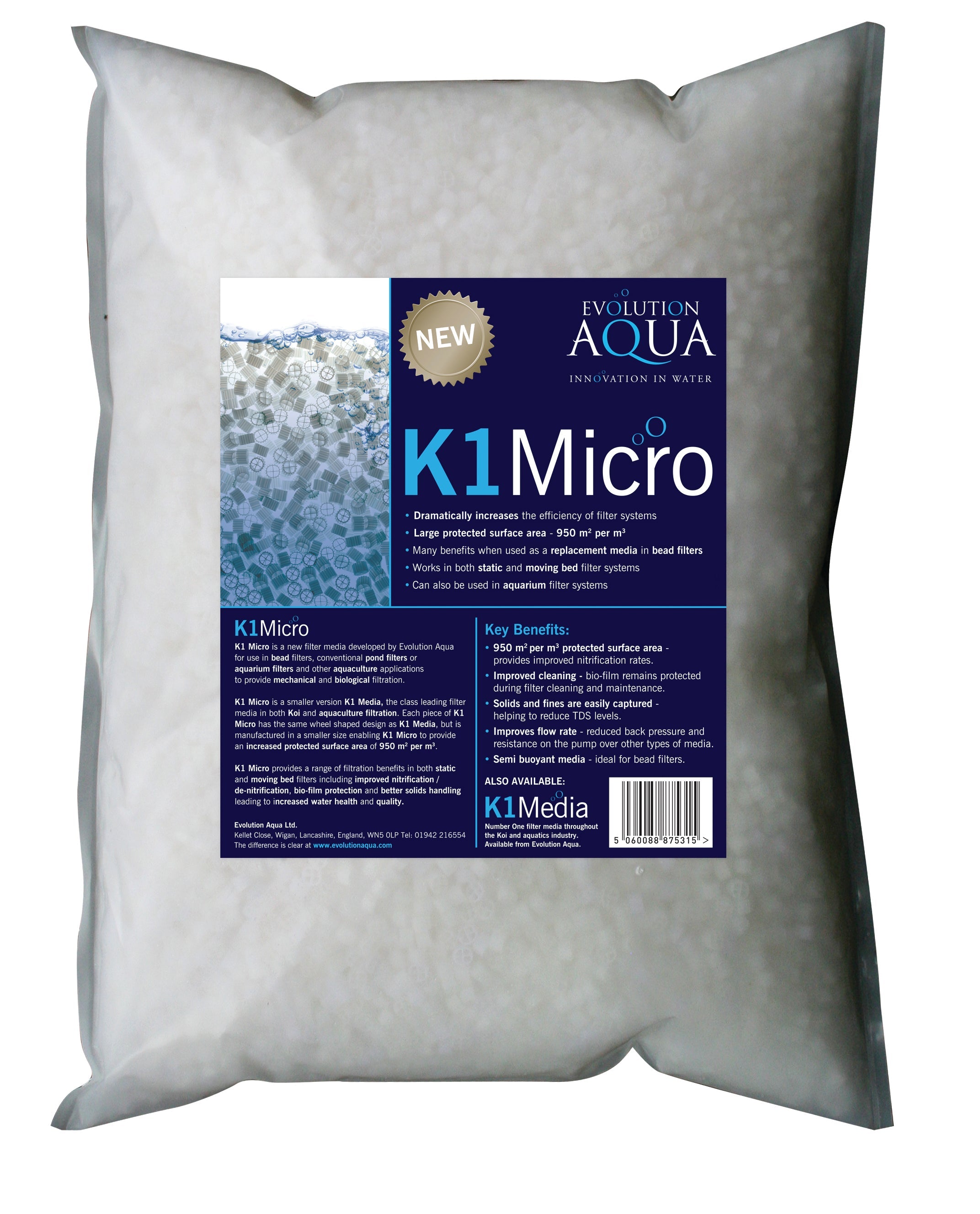
Genuine UK-made Evolution Aqua K1 Micro media in 1L, 25L and 50L packs, with 950m²/m³ protected surface area for compatible static, bead and moving-bed filters. Select the pack size specified for your filter.
Price range: £10.95 through £109.95 (inc VAT)
Evolution Aqua K1 Micro Filter Media
Compact floating media for fine mechanical capture and high-area biological filtration
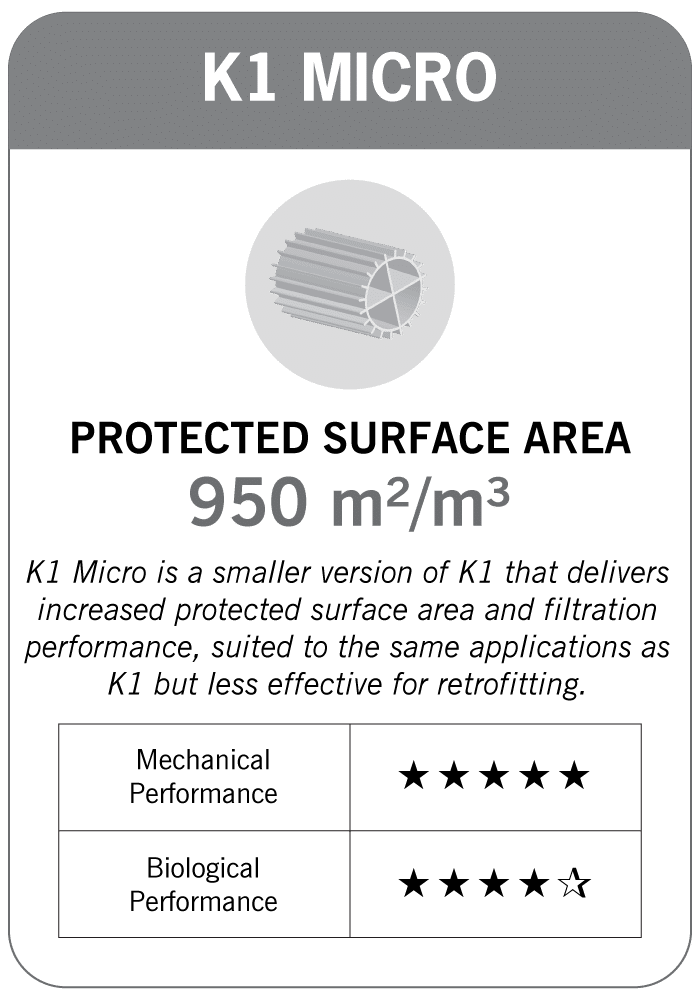
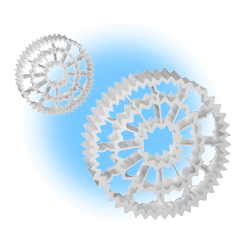
K1 Micro is Evolution Aqua’s smaller wheel-shaped filter media for bead filters, static Eazy-style mechanical stages, moving beds and suitable pond or aquarium filters. Each piece measures approximately 7mm in diameter by 9mm long. The compact structure provides a total surface area of 1,400m² per m³ and a protected surface area of 950m² per m³, giving beneficial bacteria sheltered internal surfaces while still allowing water and oxygen to pass through the bed.
Choose the 1-litre pack for a measured top-up or a small compatible filter; it is the same 7mm K1 Micro format as the larger packs, not standard K1 or K+ media. The 25-litre bag suits a larger replacement or a filter that specifies that volume. The 50-litre bag is a practical choice where a bigger vessel needs filling. A pack’s litre figure describes media volume, not the pond volume it can filter. Fish load, feeding and the filter’s hydraulic design determine biological demand. Follow the filter manufacturer’s stated media quantity rather than filling a chamber by eye: too much media can prevent proper movement or cleaning.
If you are topping up an established filter, measure the current media first and check the maker’s maximum before ordering several small packs. Keep mature media working while the new pieces condition, then test ammonia and nitrite after any substantial change. In an Eazy section, Evolution Aqua specifies 18 litres for the Nexus 220+ and 20 litres for the Nexus 320+; the 1-litre pack is for a measured shortfall, not a reason to exceed those amounts.
K1 Micro technical specification
| Density | Floating / initially semi-buoyant in use |
|---|---|
| Nominal diameter | 7mm |
| Nominal length | 9mm |
| Total surface area | 1,400m² per m³ |
| Protected surface area | 950m² per m³ |
| Available packs | 1 litre, 25 litres and 50 litres |
Static and moving-bed use
In a static mechanical stage, the closely packed pieces create a tortuous route that captures suspended waste and fines. During cleaning, air agitates the media so trapped dirt can be flushed away. In a moving biological stage, continuous aeration tumbles the media, renews the exposed biofilm and keeps oxygenated water moving across the protected surfaces.
New media can take several days to wet fully and move as expected. Do not keep increasing the air or removing media immediately. Check the water level, diffuser, airline and recommended fill volume, then allow the clean plastic time to condition.
Choosing the correct media
K1 Micro is the specified mechanical media in current Evolution Aqua Nexus Eazy sections. Larger biological chambers may instead use K+ Media or a larger-format medium. For DIY vessels or large retention grids, compare Evolution Aqua K3+ Media, whose 25mm diameter can be easier to contain.
Browse our complete pond filter media range. A moving bed also needs correctly sized pond aeration; insufficient air leaves sections stationary and reduces oxygen transfer.
Installation and maintenance
- Confirm the filter’s specified media type and maximum volume.
- Check every screen and outlet can retain 7mm media securely.
- Rinse new media with clean water before installation; do not use detergent.
- Seed new media naturally in a mature system or with a suitable filter starter, then monitor ammonia and nitrite.
- Never wash mature biological media in chlorinated tap water.
- Retain wet, oxygenated mature media during maintenance and avoid replacing an entire biological bed at once unless the system is otherwise supported.
Frequently asked questions
How much K1 Micro is in a Nexus?
Evolution Aqua states that the Nexus 220 Eazy uses 18 litres and the Nexus 320 Eazy uses 20 litres. Do not overfill the mechanical chamber.
Can K1 Micro replace bead-filter beads?
It is suitable for many compatible bead filters, but confirm the vessel’s laterals, slots and cleaning process can retain and agitate the smaller media.
Why is new media floating at the top?
New K1 Micro takes time to absorb water and condition. Evolution Aqua notes that this can take up to a week.
Does new media instantly mature a filter?
No. The plastic provides habitat, but a stable bacterial biofilm still needs oxygen, food, time and safe water chemistry.
What is the difference between K1 Micro and K3+?
K1 Micro is 7mm with much higher surface area and finer capture; K3+ is a larger 25mm format suited to DIY conversions and screens where small media would escape.





Reviews
There are no reviews yet.