





Pond Plant Baskets & Aquatic Planting Supplies
Pond Plant Baskets and Aquatic Planting Supplies
Aquatic baskets, pond plant compost, gravel, fertiliser and planting accessories for clean, stable and successful pond planting.
Essential pond planting supplies for aquatic plants, waterlilies and marginal pond plants
Our Pond Plant Baskets and Aquatic Planting Supplies category includes the essential products needed to plant, repot and maintain pond plants properly. Whether you are adding new marginal plants, refreshing waterlilies, creating a wildlife pond edge or potting up oxygenating and deep water plants, the correct planting supplies help make the job cleaner, easier and more reliable.
Pond plants should not usually be planted using ordinary garden compost or standard plant pots. Normal compost can be too light and too rich for pond use. It can float, cloud the water and release excess nutrients into the pond, which may contribute to algae problems. Aquatic soil, pond plant baskets and suitable gravel top dressings are designed to keep plants secure while allowing water, oxygen and nutrients to reach the roots.
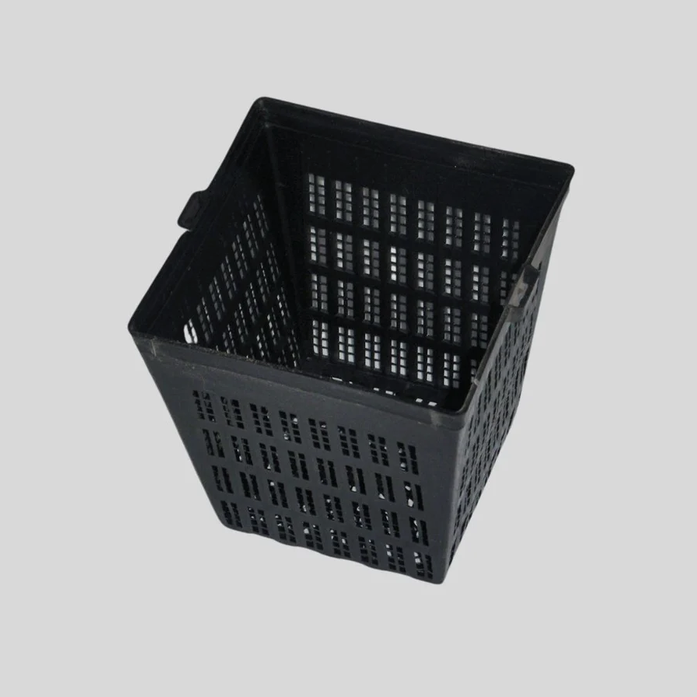
Aquatic baskets are used to hold pond plants in position on shelves, margins and deeper planting areas. Finofil Aquatic Baskets are especially useful because their strong fine mesh design helps reduce soil loss while still allowing water to circulate freely through the basket. This means aquatic plant roots can establish properly without the planting soil washing into the pond as easily.
Aquatic soil provides a heavier, lower nutrient planting medium for pond plants, waterlilies, marginal plants and deep water plants. It helps anchor plants securely in the basket and creates a stable growing environment for roots. A gravel top dressing can then be added to the surface to help hold soil in place, reduce disturbance from fish and give visible baskets a neater finish.
This category also includes useful pond planting accessories such as hessian liners, floating marginal baskets, basket handles and aquatic plant fertiliser. Hessian liners can help retain soil in open mesh baskets, floating marginal baskets allow you to add plants to ponds without shelves, and basket handles make maintenance easier when plants need lifting, feeding, trimming or repositioning.
These products are ideal for wildlife ponds, garden ponds, koi ponds with planted areas, raised ponds, fibreglass ponds, natural ponds and container water gardens. Used together, they help create a cleaner, healthier and more attractive planted pond.
Why choose proper aquatic planting supplies?
Using the correct pond planting supplies helps your plants establish more successfully while keeping the pond cleaner.
Aquatic baskets keep plants contained and make them easier to lift, move and maintain. Aquatic soil supports root growth without the problems caused by standard compost. Gravel helps keep the planting surface tidy, while fertiliser tablets provide targeted feeding for hungry plants such as waterlilies and strong growing marginals.
Good planting supplies also make future maintenance easier. Plants can be divided, trimmed, moved or refreshed without disturbing the whole pond.
Popular products in this category
Finofil Aquatic Baskets are strong pond plant baskets made from 100% recycled plastic. They are available in a range of round, square, contour and hexagonal sizes to suit different planting needs.
Aquatic Soil is designed for planting pond plants into aquatic baskets. It is heavier and more suitable for underwater use than normal compost.
Aquatic Gravel is used as a top dressing for planted baskets, helping to hold soil in place and reduce disturbance.
Aquatic Plant Fertiliser provides slow release feeding for pond plants, waterlilies and marginal plants grown in baskets.
Hessian Aquatic Planter Squares help line open mesh baskets and retain aquatic soil during planting.
Floating Marginal Baskets allow you to add potted marginal plants to ponds without shelves.
Basket Handles make it easier to lift and maintain compatible planted aquatic baskets.
Key benefits
• Makes pond planting cleaner and easier
• Helps keep aquatic soil contained in baskets
• Supports healthy root growth for pond plants
• Suitable for marginal plants, waterlilies and deep water plants
• Helps reduce soil clouding in pond water
• Useful for new planting, repotting and dividing pond plants
• Ideal for wildlife ponds, garden ponds and water gardens
• Includes aquatic baskets, soil, gravel, fertiliser and accessories
• Helps protect plant roots from disturbance
• Useful for raised ponds, lined ponds and fibreglass ponds
• Makes seasonal pond plant maintenance easier
• Helps create a neater and more professional planted finish
Choosing the right pond planting supplies
Choose aquatic baskets when you need to pot pond plants before placing them into the water. Smaller baskets are useful for young plants and compact marginals, while larger baskets are better for mature plants, irises, reeds, rushes and waterlilies.
Choose aquatic soil when planting or repotting pond plants. Avoid ordinary compost, as it can float, break down quickly and release unwanted nutrients.
Choose aquatic gravel when you want to top dress baskets, hold soil in place and create a tidier finish.
Choose aquatic plant fertiliser for hungry plants, especially waterlilies and strong growing marginals during active growth.
Choose hessian liners for open mesh baskets where soil retention is needed.
Choose floating marginal baskets if your pond has no planting shelves or if you want to add low growing plants to open water.
Choose basket handles if you need to lift planted baskets for trimming, feeding or maintenance.
Planting and care guidance
Use aquatic soil, heavy loam or suitable pond planting compost for pond baskets.
Do not use standard multi purpose compost, peat based compost or lightweight potting mixes in the pond.
Choose the correct basket size for the plant. A small plant can start in a smaller basket, while larger plants need more root room and stability.
Place the plant into the basket at the correct height, then firm the soil gently around the roots.
Top dress with clean aquatic gravel if required, taking care not to bury the plant crown too deeply.
Lower planted baskets slowly into the pond to reduce soil disturbance.
Check baskets during the growing season and trim old or excessive growth when needed.
Repot or divide overcrowded pond plants when growth becomes weak, baskets split or roots become too congested.
Suitable pond uses
Best for: Wildlife ponds, ornamental ponds, koi ponds with planted areas, raised ponds, fibreglass ponds, lined ponds, natural ponds, water gardens and container ponds
Suitable plants: Marginal plants, waterlilies, deep water plants, moisture loving pondside plants in suitable containers and selected aquatic plants
Useful planting areas: Pond shelves, shallow margins, deeper planting zones, container ponds and floating planting areas
Best planting medium: Aquatic soil, heavy loam or suitable pond planting compost
Useful finishing product: Aquatic gravel top dressing
Maintenance level: Low to moderate, depending on plant type and pond size
Important note: Always match basket size, soil type and planting depth to the plant being grown
Dispatching your pond planting supplies
Pond planting supplies are carefully packed before dispatch to help them arrive in good condition.
Aquatic baskets, gravel, soil, fertiliser, hessian liners and other accessories may be packed together or separately depending on weight, size and safe packing requirements.
Aquatic soil and gravel are heavy items, so delivery costs may vary depending on the total order weight.
If planting supplies are ordered with live pond plants, items may be packed separately to help protect the plants during transport.
On arrival, check all items before use and store dry products such as hessian, fertiliser and unused soil somewhere suitable until you are ready to plant.
£295.00 (inc VAT)
✔️ In stock - ready for dispatch




Pond Plant Baskets and Aquatic Planting Supplies FAQs
Below are the most common questions about choosing, using and caring for pond plant baskets, aquatic soil, gravel, fertiliser, hessian liners and other pond planting supplies.
1. Why do pond plants need aquatic baskets?
Aquatic baskets help keep pond plants contained, supported and easier to manage. They allow the plant roots to grow into aquatic soil while still letting pond water, oxygen and nutrients move around the root zone.
They are especially useful for marginal plants, waterlilies and deep water plants because they make it easier to position the plant at the correct depth, move it later if needed and lift it for trimming, feeding or dividing.
2. Can I plant pond plants directly into the pond?
In some natural ponds, plants can be planted directly into suitable mud or substrate. However, in most garden ponds, lined ponds, fibreglass ponds and raised ponds, aquatic baskets are usually the better option.
Planting into baskets helps protect the pond liner, keeps soil contained and makes future maintenance much easier. It also helps stop vigorous plants spreading too far across the pond.
3. What size aquatic basket do I need?
The right basket size depends on the plant size, growth habit and how long you want it to stay in that basket.
Small 1 litre and 2 litre baskets are useful for young plants and compact marginals. Medium baskets such as 3 litre, 3.5 litre and 5 litre sizes are suitable for many everyday pond plants. Larger 10 litre and 30 litre baskets are better for established plants, taller marginals, waterlilies, reeds, rushes and plants that need extra root space.
4. What are Finofil Aquatic Baskets?
Finofil Aquatic Baskets are strong pond plant baskets made with a coarse mesh structure and fine mesh infill. This design helps reduce aquatic soil loss while still allowing water to flow through the basket.
They are widely used by aquatic plant growers because they are strong, practical and suitable for a wide range of pond plants. Many Finofil baskets do not normally need a hessian liner because the fine mesh already helps hold the soil in place.
5. Do I need hessian liners with Finofil baskets?
In most cases, a hessian liner is not normally required with Finofil baskets because the fine mesh helps retain the aquatic soil.
Hessian liners are more useful with open mesh baskets where soil can easily wash through the sides. They can also be helpful when planting very fine soil mixes or when you want extra support while the plant roots establish.
6. What is aquatic soil?
Aquatic soil is a specialist planting medium designed for pond plants. It is heavier and lower in nutrients than standard garden compost, making it much more suitable for underwater use.
It helps anchor plants securely in baskets while reducing the risk of soil floating, clouding the pond or releasing too many nutrients into the water.
7. Can I use normal compost for pond plants?
No, standard multi purpose compost is not recommended for pond plants.
Normal compost is usually too light and too rich for pond use. It can float out of the basket, cloud the water and release excess nutrients, which may encourage algae. Aquatic soil, heavy garden loam or suitable pond planting compost is a much better choice.
8. Why is gravel used on top of pond plant baskets?
Aquatic gravel is used as a top dressing over the soil in pond plant baskets. It helps hold the soil in place, reduces disturbance when the basket is lowered into the pond and gives the basket a neater finish.
It can also help discourage fish from digging into the soil, although it will not make the basket completely fish proof.
9. Should I put gravel over every pond plant basket?
Gravel is useful for most planted baskets, especially if the basket will be visible, placed near fish or lowered into moving water.
However, do not bury the crown of the plant too deeply. Use a light, even layer over the soil surface and keep the growing point clear where needed.
10. What is aquatic plant fertiliser used for?
Aquatic plant fertiliser provides nutrients to pond plants grown in baskets. Over time, plants can use up the nutrients in the soil, especially strong growing marginals and waterlilies.
Slow release fertiliser tablets are pushed into the aquatic soil so the plant can feed through its roots. This helps support healthy root growth, stronger foliage and better seasonal performance.
11. Can I use normal garden fertiliser in pond baskets?
No, ordinary garden fertiliser should not be used in pond baskets.
Many garden fertilisers release nutrients too quickly and can pollute the pond water or encourage algae. Use a fertiliser designed for aquatic plants and always push it into the soil rather than placing it loose in the pond.
12. When should I feed pond plants?
Spring is usually the best time to feed pond plants because this is when many aquatic plants begin active growth.
Waterlilies and strong growing marginal plants often benefit from feeding when they are repotted or as the growing season begins. Always follow the fertiliser guidance and avoid overfeeding.
13. What are hessian aquatic planter squares used for?
Hessian aquatic planter squares are used to line pond plant baskets before adding soil. They help hold aquatic soil inside open mesh baskets while still allowing water and roots to pass through.
The hessian gradually breaks down as the plant roots establish and hold the soil naturally.
14. Are hessian liners biodegradable?
Yes, hessian liners are biodegradable. They are made from natural hessian and are designed to break down gradually over time.
They provide support during planting and early establishment, then slowly degrade as the roots grow through the basket and bind the soil together.
15. What are floating marginal baskets used for?
Floating marginal baskets are used to add potted marginal pond plants to ponds without planting shelves. They float on the surface and hold the whole potted plant in place.
They are ideal for raised ponds, steep sided ponds, container ponds and lined ponds where there is nowhere to place a standard basket on a shallow shelf.
16. Can I plant directly into a floating marginal basket?
No, floating marginal baskets are designed to hold the whole potted plant. Do not plant directly into the netting.
Choose a suitable low growing marginal plant in the correct pot size, place the pot into the floating basket and float it on the pond surface.
17. Which plants work best in floating marginal baskets?
Floating marginal baskets work best with lower growing or trailing marginal plants. Good options include Creeping Jenny, Slender Club Rush, Water Forget Me Not and other compact pond plants.
Avoid very tall, heavy or top heavy plants, as they can make the basket unstable, especially in windy weather.
18. What are aquatic basket handles used for?
Aquatic basket handles make it easier to lift, move and maintain pond plant baskets. They are especially useful for baskets placed below the water surface, such as waterlily baskets or deeper marginal plant baskets.
Handles allow you to bring the basket closer to the surface for trimming, feeding, dividing or repositioning without pulling the plant by its foliage.
19. How do I plant a pond plant into an aquatic basket?
Choose a suitable aquatic basket and part fill it with aquatic soil.
Place the plant into the basket at the correct height, then add more aquatic soil around the roots. Firm the soil gently, add aquatic plant fertiliser if required and finish with a layer of aquatic gravel. Lower the basket slowly into the pond at the correct planting depth for that plant.
20. How deep should I place pond plant baskets?
This depends on the plant. Marginal plants are usually placed on shallow pond shelves, often with the top of the basket just below the water surface. Waterlilies and deep water plants need deeper positions, depending on their size and maturity.
Always check the planting depth for the individual plant before placing the basket into the pond.
21. Can pond plant baskets be used in koi ponds?
Yes, pond plant baskets can be used in koi ponds, but koi may disturb the plants and soil. Use strong baskets, aquatic soil and a gravel top dressing to help protect the planting.
Plants often do better in protected planting zones, shelves or floating baskets where koi cannot easily dig into them.
22. How often should pond plants be repotted?
Many pond plants benefit from repotting every few years, although this depends on the plant type and growth rate.
Repot when the basket is overcrowded, roots are tightly packed, growth has weakened or the plant is lifting itself out of the basket. Spring is usually the best time to divide and repot many pond plants.
23. Can I reuse old aquatic baskets?
Yes, aquatic baskets can often be reused if they are still strong and undamaged.
Remove old soil, dead roots and plant debris before reuse. Check the basket for cracks or weakness, especially if it has held a large plant for several seasons. Replace any basket that has become brittle, split or unsafe to lift.
24. How should I stop soil clouding the pond when planting?
Use aquatic soil rather than normal compost, plant into a suitable basket and top dress with aquatic gravel.
Water the basket before placing it into the pond and lower it slowly. This helps settle the soil and reduces the amount that escapes into the water.
25. What products do I need for planting pond plants properly?
For most pond plants, you will need an aquatic basket, aquatic soil and a gravel top dressing. For open mesh baskets, you may also want a hessian liner.
For hungry plants such as waterlilies and strong growing marginals, aquatic plant fertiliser can also be added to the soil during planting.
26. Are aquatic planting supplies safe for fish and wildlife?
Aquatic baskets, aquatic soil, gravel and hessian liners are suitable for pond use when used correctly.
Always use pond safe planting products and avoid standard compost, garden fertilisers, pesticides or unsuitable materials that could release excess nutrients or harmful substances into the water.
27. Can I use aquatic baskets in a wildlife pond?
Yes, aquatic baskets are very useful in wildlife ponds. They allow you to place marginal plants, waterlilies and other pond plants at the correct depth while keeping roots contained.
Baskets also make maintenance easier, which helps prevent excessive old growth from breaking down in the pond.
28. Can aquatic planting supplies be used in container ponds?
Yes, smaller baskets, aquatic soil and gravel are ideal for container ponds and mini ponds.
Choose compact plants and smaller basket sizes so the container does not become overcrowded. Floating marginal baskets can also be useful where there is limited shelf space.
29. Why should I avoid peat based compost in ponds?
Peat based compost is not suitable for pond planting because it can float, cloud the water and release unwanted nutrients. It may also be too light to hold plants securely underwater.
Aquatic soil or heavy loam is a better option because it is denser and more stable in water.
30. How should I store unused pond planting supplies?
Store unused aquatic soil somewhere dry and sealed if possible.
Keep hessian liners, fertiliser tablets and spare baskets in a cool, dry place until needed. Gravel can be stored dry and rinsed before use if required.
Keeping supplies clean and dry makes future pond planting and repotting much easier.
