






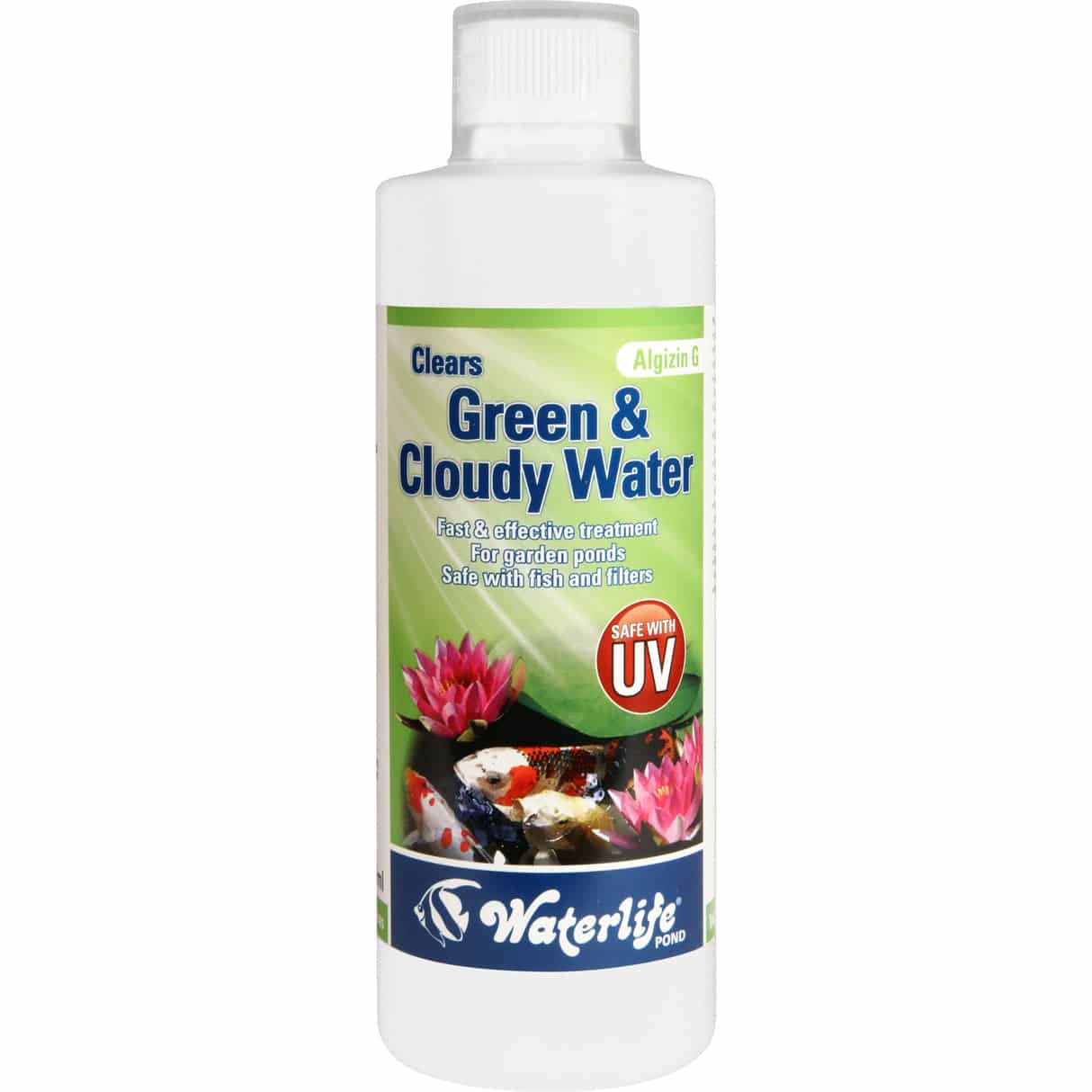
Waterlife Algizin G Green Water Treatment
| Brand | |
|---|---|
| Container Size | 250ml, 500ml, 1 Litre |
| Treatment Type | Green-water flocculant |
| Suitable For | Garden ponds with suspended green algae |
| Treatment Form | Liquid |
Fast-acting Waterlife Algizin G flocculant for green or cloudy pond water, in sizes covering up to 45,000 litres.
Price range: £12.75 through £22.99 (inc VAT)
Waterlife Algizin G Green Water Treatment
Flocculates suspended algae so that the pond filter can remove it
Algizin G is Waterlife’s treatment for green water caused by millions of microscopic algae cells suspended through the pond. Instead of targeting attached blanket weed, it binds fine suspended material into larger particles that can settle or be captured by the pond’s mechanical filtration.
Use it when the water itself is green or cloudy and visibility through the pond has been lost. If you can lift long green strands from the edges or plants, that is blanket weed and Algizin P is the more relevant product. Green water can also indicate excess nutrients, insufficient UV performance or poor mechanical capture, so the treatment should be paired with a system check.
What this Waterlife treatment is for
- Designed for suspended green-water algae rather than attached blanket weed.
- Binds fine algae particles into larger material that can be filtered or settled.
- Derived from natural ingredients according to Waterlife’s current product information.
- Available for ponds from 11,250 to 45,000 litres per bottle.
- Safe for fish, plants and filtration bacteria when used as directed.
Check the pond before treating
Start by testing ammonia, nitrite, pH and, where relevant, KH. Poor water quality can cause lethargy, flashing, excess mucus, sore skin and secondary infection, so adding medication without checking the water can hide the real cause. Work out the actual pond volume after allowing for shelves, rockwork, pipework and filter chambers; a guessed volume can lead to under-dosing or over-dosing.
Confirm that the pond has adequate oxygen and that the mechanical filter is operating before treatment. Apply the calculated label dose, monitor the water and clean the mechanical filter as the flocculated material accumulates. A follow-up bacterial product may help process residual organic material, but should not replace physical removal.
- Do not use this product for long strands of blanket weed.
- Rapid algae removal can create an oxygen demand, particularly during warm weather.
- Do not overdose to compensate for an undersized or ineffective filter.
- Investigate persistent green water by checking UV lamp age, quartz cleanliness, flow rate and nutrient input.
Read the current container label before every use because formulations, directions and regulatory wording can change. Do not mix remedies unless the manufacturer explicitly says they are compatible. Keep strong aeration running, watch the fish during treatment and obtain specialist advice when the diagnosis is uncertain or fish are severely distressed.
Available sizes and stated coverage
| Pack size | Manufacturer’s stated coverage | Supplier code |
|---|---|---|
| 250ml | Up to 11,250 litres | WR923 |
| 500ml | Up to 22,500 litres | WR924 |
| 1 Litre | Up to 45,000 litres | WR332 |
Use it as part of a complete pond-care plan
For attached string algae, compare Algizin P. Add biological support with BacterLife P and compare the wider pond algae treatment range.
A treatment can correct a specific problem, but long-term results still depend on appropriate filtration, circulation, oxygen, stocking and feeding. Remove decaying waste, clean mechanical filtration sensibly and retest the water after the course instead of repeatedly adding products by appearance alone.
Frequently asked questions
What is the difference between Algizin G and Algizin P?
Algizin G is for suspended green water; Algizin P is for attached blanket weed and string algae.
Does Algizin G replace a UV clarifier?
No. It can clear a current bloom, but recurring green water should prompt checks of the UV, flow, filtration and nutrient load.
Why must the filter be cleaned afterwards?
The treatment binds algae into larger particles. Removing that material prevents it decomposing and returning nutrients to the pond.
Is it safe with fish?
Waterlife states that it is safe for fish, plants and filtration bacteria when used exactly as directed.



Reviews
There are no reviews yet.