






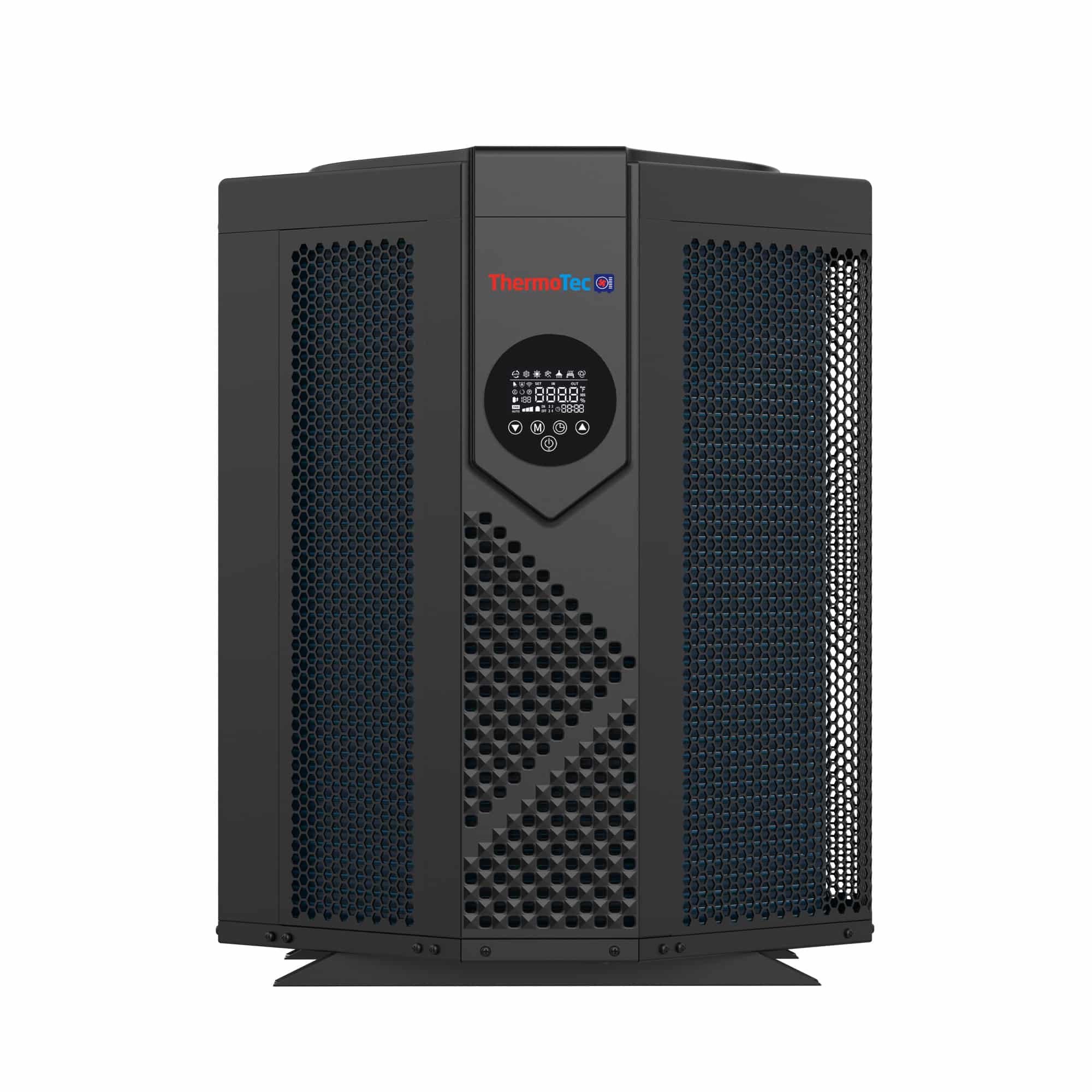
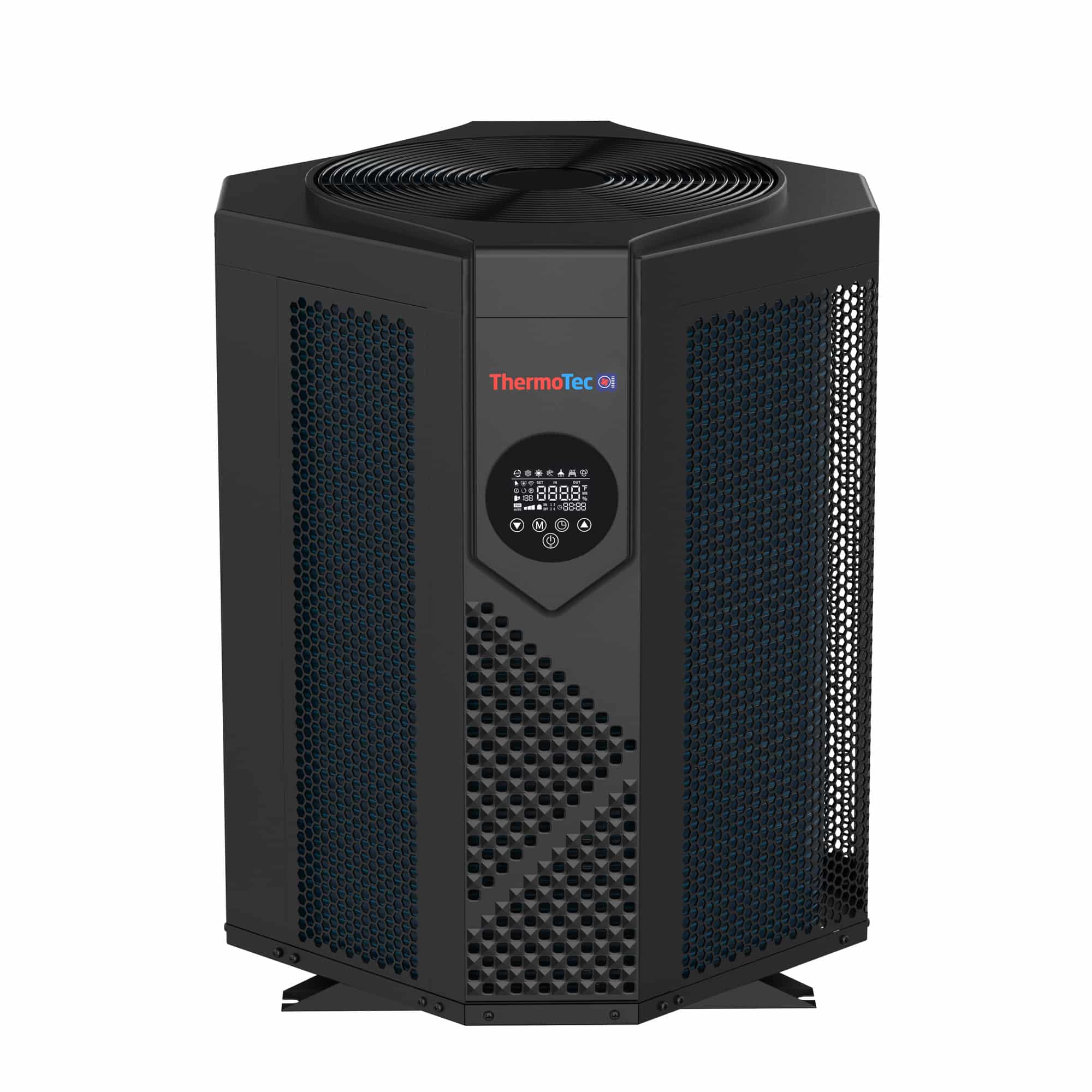
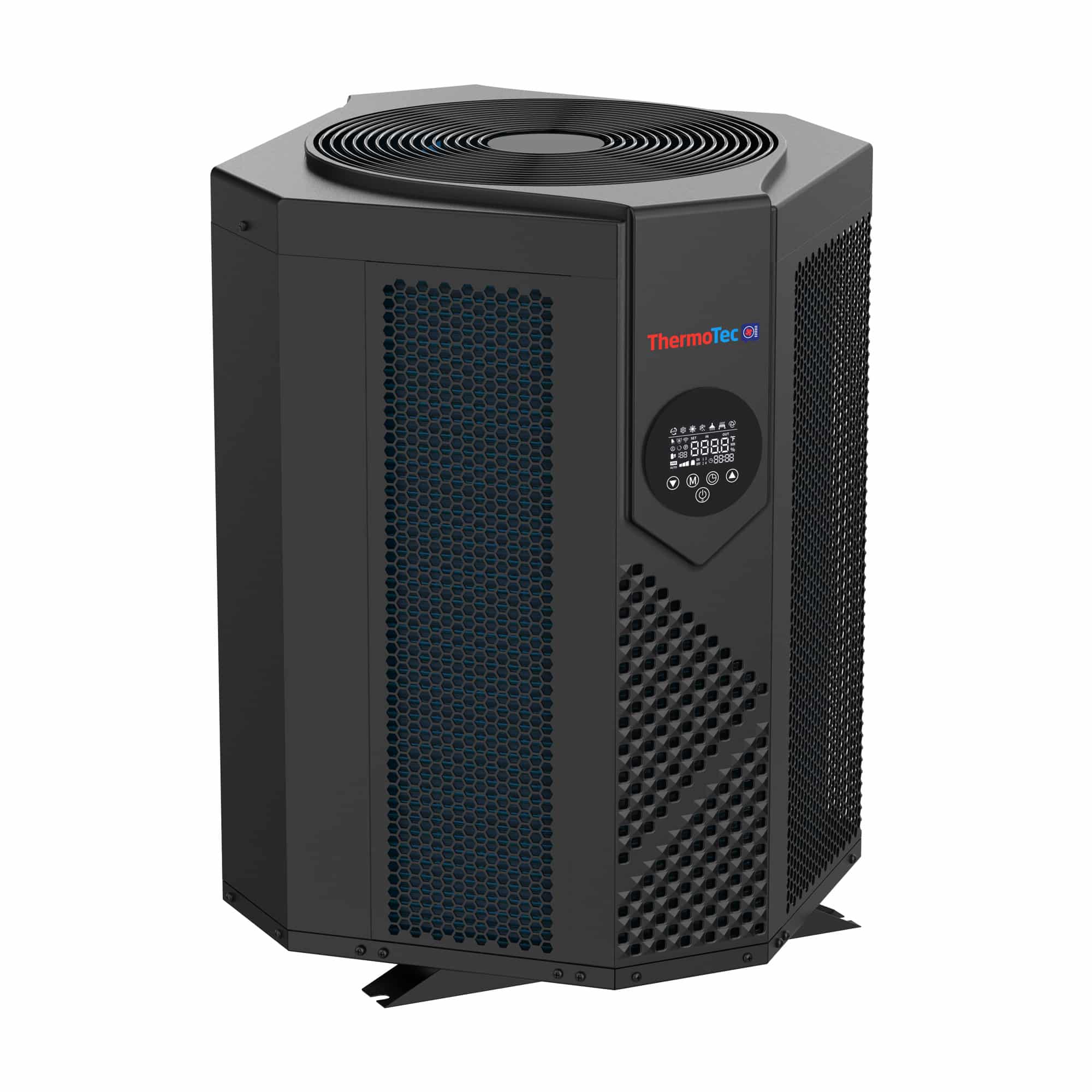
Thermotec Apex 8kW Inverter Pond Heat Pump
| Brand | |
|---|---|
| Heating type | Air source heat pump |
| Wi-Fi control | Built in |
| Heating control | Inverter |
| Power supply | Single phase |
| Air discharge | Vertical |
Thermotec Apex 8kW single-phase inverter heat pump with Wi-Fi, upward air discharge and 50mm water connections. Heating settings 9–40°C. Select for the actual heat demand, water flow and installation conditions.
£1,005.00 (inc VAT)
Thermotec Apex 8kW Inverter Heat Pump for Koi Ponds
Compact vertical heating with inverter control and Wi-Fi
The Thermotec Apex 8kW is a single-phase inverter heat pump with an upward air discharge, Wi-Fi control and a titanium water heat exchanger. It is the smaller Apex option, with published output of 1.87–6.02kW at 15°C air and 26°C inlet water. Its compact vertical arrangement suits installations where a forward air discharge would be awkward, provided the required overhead and surrounding clearances are available.
An air source heat pump takes heat from the outdoor air and transfers it to circulating water. The Apex varies its compressor and fan speed as demand changes, allowing it to reduce its output once the water approaches the selected temperature. It belongs within our pond heating range, where you can compare heat pumps with direct electric heaters and other temperature management equipment.
Choosing between the Apex 8kW and 11kW
The model name describes a nominal heating capacity, rather than constant electricity consumption. At the published test condition of 27°C air and 26°C inlet water, the Apex 8 delivers 2.57–8.02kW of heat, while the Apex 11 delivers 3.53–11.02kW. In cooler air, available output falls: at 15°C air and 26°C inlet water, the corresponding ranges are 1.87–6.02kW and 2.57–7.93kW. These figures make a more useful comparison than looking only at the largest number in the product name.
For pond use, model selection should account for the water volume, surface area, wind exposure, insulation, winter cover, local weather and the temperature you intend to maintain. A small sheltered pond held at a modest winter temperature has a different heat requirement from an exposed pond maintained much warmer. Swimming pool volume recommendations should not be treated as a guarantee of winter pond performance.
Performance, water flow and connections
| Specification | Apex 8 |
|---|---|
| Heating output at 27°C air / 26°C water | 2.57–8.02kW |
| Heating output at 15°C air / 26°C water | 1.87–6.02kW |
| Recommended water flow | 3.45m³/hour |
| Water connections | 50mm |
| Electrical supply | 220–240V, single phase, 50Hz |
| Rated current | 9.87A |
| Net weight | 36kg |
| Net dimensions (length × width × height) | 510 × 510 × 708mm |
| Electrical input at 15°C air / 26°C water | 0.37–1.42kW |
| COP at 15°C air / 26°C water | 4.23–5.08 |
| Rated electrical input | 2.16kW |
| Sound pressure at 1 metre | 44–51dB(A) |
| Sound pressure at 10 metres | Below 31dB(A) |
| Water pressure drop | 8kPa |
The heating water setting range is 9–40°C and the published heating ambient range is −15°C to 43°C. The minimum operating air temperature describes the conditions in which the equipment can run; it does not promise full rated output at −15°C. Cooling is also available, but any temperature adjustment on a stocked pond should be planned carefully and made gradually.
Where to install an Apex heat pump
The vertical discharge arrangement sends air upwards. This can help where the layout makes a forward blowing unit awkward, but it still needs generous free space. It must not be boxed into a sealed enclosure or placed beneath an obstruction that sends discharged air straight back through the heat exchanger. The installation diagram specifies at least 1,000mm above the unit and 500–1,000mm around it, depending on the side. Use Figure 3.3-4 in the linked manual to identify the correct orientation before positioning walls, fences or overhead structures; the cabinet dimensions alone do not describe the space required.
Install the unit outdoors on a stable, level support capable of carrying its weight. Keep access to the controller, pipework and service panels. Provide drainage for condensate, which is produced during normal operation, and position the discharge so it does not create a nuisance near doors, seating areas or neighbouring windows. A compact footprint does not mean that the working clearances can be omitted.
Connecting the pond water circuit
The Apex requires a separate circulation pump and clean, filtered water flowing through its heat exchanger. Match the actual flow through the heater to the selected model rather than assuming that a pond pump’s advertised maximum flow will be available after pipework, filters and height losses. A properly arranged bypass allows the installer to balance the heater circuit and isolate it when servicing or draining is necessary.
The 50mm connections need compatible pipework and fittings. Support the pipes so their weight does not bear on the water connections. The manual recommends keeping the pipe route between the water body and heat pump short; unnecessary pipe length increases heat loss and resistance. Consult the installation instructions before deciding on reducers, valves or the final pump arrangement.
Controls, efficiency and everyday use
The LCD controller and Wi-Fi function provide ways to monitor and adjust the unit. Inverter operation helps match output to demand, but running cost still depends on the weather, water temperature, heat losses and operating schedule. Published COP figures apply to specific laboratory conditions and should not be read as a fixed efficiency for every day of the year. A well fitted pond cover and insulated exposed pipework can reduce the heat that the system needs to replace.
Winter operation and maintenance
Keep the air passages clear and maintain the pond’s filtration so that the water circuit remains clean. Inspect the installation for restricted flow, damaged pipe insulation and obstructed drainage. If the unit is shut down during freezing weather, follow the manual’s drain down procedure; water trapped inside a heat exchanger can freeze even when the outdoor unit is marketed for winter operation. When operating through winter, the circulation and power arrangements must follow the manufacturer’s instructions.
Electrical installation and refrigerant servicing require appropriately qualified professionals. The Apex contains R32 refrigerant and should not be opened or modified as a routine pond maintenance job. For help comparing the Apex with a larger heater, browse our air source heat pumps and discuss your pond dimensions, cover and intended winter temperature with us before choosing the size.
Supplier pond size guidance
The Apex koi specification sheet gives a maximum pond volume of 2,500 gallons for the Apex 8kW in its koi specification sheet. This is supplier selection guidance, not a guaranteed capacity for every winter installation. Discuss your target temperature, covers, surface area and local conditions before ordering.
Installation manual
Read the Thermotec Apex installation manual before planning the water circuit, electrical connection and outdoor clearances. Keep the instructions supplied with your exact unit for installation, controller settings and maintenance.
Comparing the noise and electrical figures
The sound figures above are published sound-pressure measurements at the stated distances. They are not sound-power ratings, and walls, neighbouring buildings and the installation position can change what you hear on site. Likewise, electrical input at a laboratory test point is different from the model’s nominal heating output. The rated-input figure helps identify the equipment specification; your installer must still size the circuit using the manual, unit label and actual cable route.
Compare the other Apex model
Also see the Thermotec Apex 11kW Inverter Pond Heat Pump to compare heating output, water flow and electrical requirements.







Reviews
There are no reviews yet.