






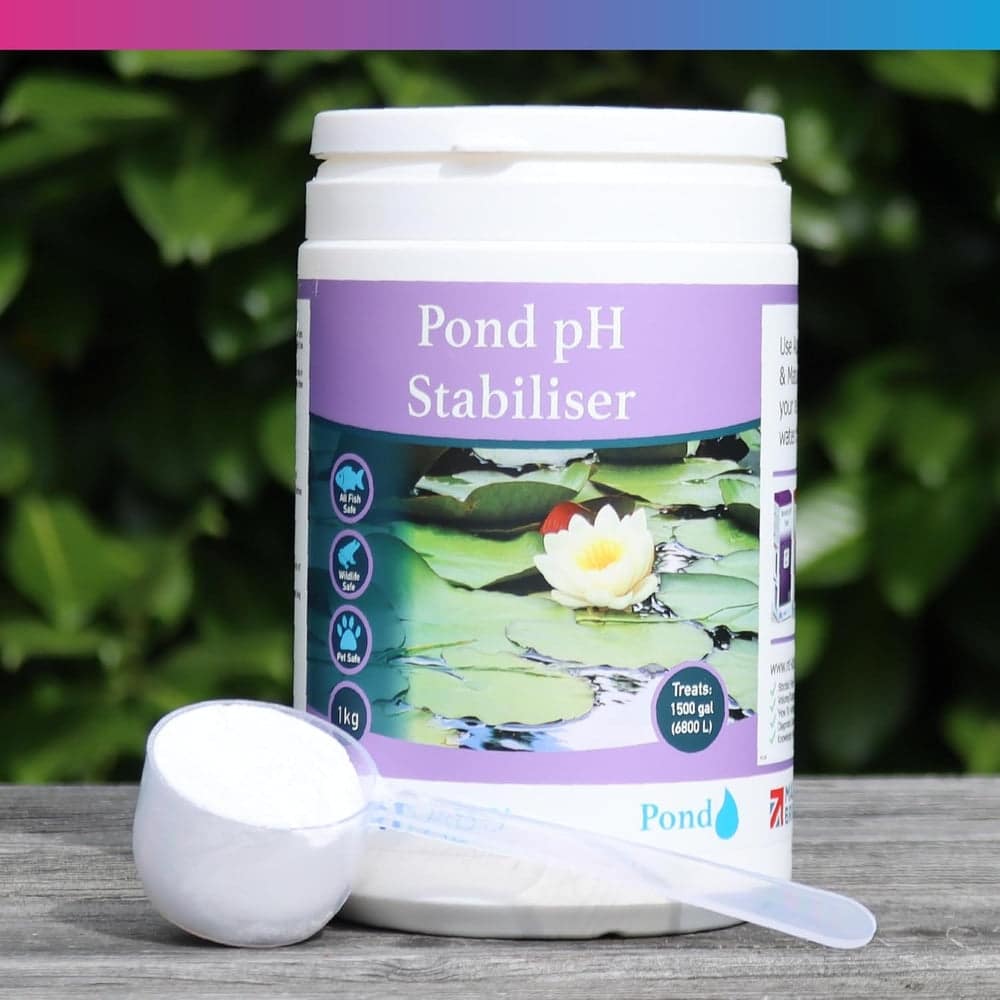
NT Labs Pond pH Stabiliser 1kg
| Brand | |
|---|---|
| Treatment Type | Carbonate hardness stabiliser |
| Suitable For | Fish ponds with low or declining KH |
| Treatment Form | Mineral powder |
A 1kg carbonate-hardness mineral treatment that replenishes KH and helps prevent dangerous pH instability in fish ponds.
£14.99 (inc VAT)
NT Labs Pond pH Stabiliser 1kg
Replenish carbonate hardness before a low KH becomes a dangerous pH crash
NT Labs Pond pH Stabiliser replenishes carbonate hardness, or KH, which acts as the pond’s buffer against rapid pH movement. Fish respiration, biological filtration and the breakdown of organic waste all consume alkalinity over time; soft source water and heavy rainfall can make the problem worse.
The 1kg tub treats up to 6,800 litres according to current product packaging. It is a KH stabiliser, not a product for forcing the pH to a chosen number, so test both KH and pH before use.
What this product is designed to do
- Replenishes the carbonate hardness consumed by pond biology.
- Helps protect against sudden pH drops.
- Useful where source water is naturally soft or low in alkalinity.
- Safe for pond fish when the current instructions are followed.
- One 1kg pack treats up to approximately 6,800 litres.
How to use it well
- Test KH with a reliable drop test before dosing.
- Also test pH; this product stabilises pH rather than selecting a new target value.
- Dissolve the measured powder in a bucket of pond water.
- Add gradually with the pond circulating.
- Retest KH and pH before deciding whether any further correction is needed.
Always calculate the real water volume and follow the current label supplied with the product. Pond volumes should allow for shelves, stonework, filter chambers and pipework. Never increase a treatment dose simply because the water has not changed as quickly as expected.
Important checks before use
- Do not make a large alkalinity change in one uncontrolled dose.
- Investigate repeated KH loss, including heavy stocking, high feeding and very soft top-up water.
- Never mix concentrated pond chemicals together.
- Follow the current label even if an older online guide gives a different dose.
Test water before treating. Ammonia and nitrite should be zero in a mature stocked pond, while pH and KH should be stable. Treatments can support a sound system, but they cannot compensate for inadequate circulation, oxygen, filtration or excessive feeding.
Pack sizes, coverage and current prices
| Pack | Stated coverage | Supplier code | Price |
|---|---|---|---|
| 1kg | Up to 6,800 litres | NT050 | £14.99 |
Build it into a sensible pond-care routine
Use a reliable KH and pH test kit before and after treatment. Compare other pH and mineral treatments for a properly diagnosed water-chemistry problem.
Biological filters consume carbonate hardness, especially in heavily fed koi ponds. Regular KH testing is therefore part of filter management, not simply a response after the pH has already crashed.
Compare KH and pH buffers
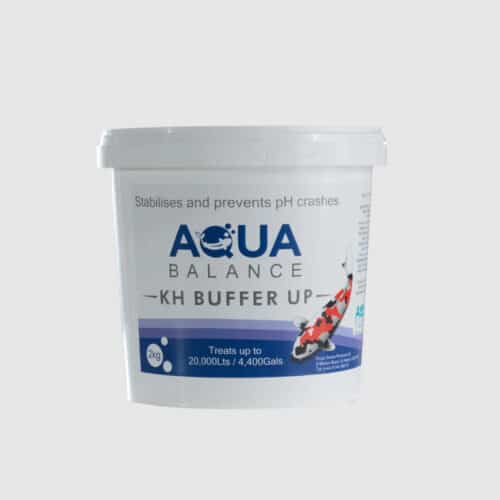
Alternative mineral-buffer products include Aqua Balance KH Buffer Up and Kusuri Biobalance. Compare the stated dose and minerals supplied, then select from measured KH and pH rather than adding several buffers together.
Frequently asked questions
Does this raise pH?
Its purpose is to replenish KH and stabilise pH. It should not be used to chase a target pH without testing.
What KH should I aim for?
NT Labs recommends keeping KH above 6°dKH for optimal stability; take local water and fish requirements into account.
How is it added?
Dissolve the measured powder in a bucket of pond water and add gradually.
Why does KH fall?
Acid-producing biological processes consume alkalinity, and soft source water may replace very little.
Should I retest?
Yes. Retest KH and pH after the correction before adding more.





Reviews
There are no reviews yet.