






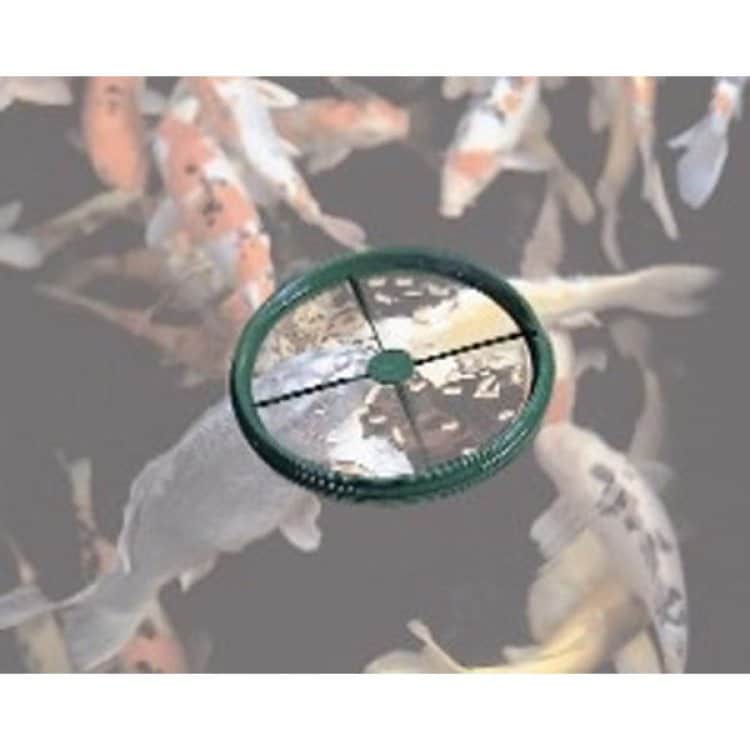
Nishikoi Pond Floating Feeding Ring
Keep floating pellets and sticks together while your fish feed
The Nishikoi Pond Floating Feeding Ring provides a defined place for offering floating fish food. Place it on the water and add food within the ring, where fish can approach from below. It helps keep pellets or sticks together instead of allowing them to spread immediately across the surface and into planted areas.
A feeding ring can make a familiar daily job easier to observe. You can see where the food is, which fish are feeding and whether any remains after the feeding period. It is particularly useful where floating food otherwise drifts towards an awkward corner or disappears between marginal plants before you can judge how much has been eaten.
Choose food that suits surface feeding
This ring is intended for floating food such as pond pellets and sticks. Choose the food for your fish first, taking account of species, fish size and the feeding directions on the pack. The ring gives you somewhere to offer that food; it does not determine the appropriate portion or change the nutritional requirements of the fish.
For suitable food formats to compare, see Nishikoi Staple Pellets and Nishikoi Pond Sticks. Check the particular food’s directions and pellet size before choosing. Sinking food will pass below a floating ring, so plan the feeding arrangement separately for fish that feed lower in the water.
Find a useful feeding position
Choose a part of the pond where you can reach the ring comfortably and watch the fish without leaning over an unsafe edge. Allow the fish room to approach. Avoid crowding the ring tightly between pots or other objects that make feeding difficult to see or leave you unable to retrieve uneaten food.
Watch the surface movement before deciding on the position. A strong return or waterfall can move floating food and disturb a feeding area. Start with a small amount of food and observe what happens under normal operating conditions. Keep the feeding area clear of equipment inlets and check that neither the ring nor its contents is being drawn towards them.
The ring is a floating accessory, so continue to check its position rather than assuming it will remain exactly where it was first placed. Wind and changing surface flow can alter the arrangement. An accessible location makes it easier to bring the ring back when needed and remove it for cleaning.
A practical feeding routine
Use the quantity and feeding guidance supplied with the food. Offer a modest portion and give the fish time to take it before deciding whether more is appropriate. There is no need to fill every open space in the ring: the visible area is a feeding location, not a measuring cup.
Stay nearby while the fish are eating. A consistent observation point can make changes easier to notice, including food being left behind or one fish hanging back while others feed. Keep a note of unusual behaviour and relevant water-test results when seeking advice. Adding more food should not be the automatic response when the first portion is not eaten.
Remove leftover food using a suitable small net or other appropriate pond tool before it disperses. Work gently around the fish. The ring has an open centre, so lifting it is not the same as lifting a bowl containing the remaining food. Deal with leftovers first, then retrieve the ring if it needs cleaning.
Keep the food and feeding equipment clean
Keep dry food in its original, properly closed container and follow the storage instructions. Use a clean, dry scoop or measuring container when portioning it. Food that has already been placed in the pond should not be returned to the dry-food tub.
Inspect the ring regularly and remove visible deposits using a cleaning method suitable for equipment that will return to the pond. Keep household cleaning products away from feeding accessories. Before returning it to service, check the outer rim and internal dividers for damage and make sure nothing has become trapped around them.
Using a ring through the seasons
Follow the food manufacturer’s temperature and seasonal guidance throughout the year. A feeding ring can help you watch consumption, but it does not mean fish should receive the same food or amount in every season. Adjust the routine to the food directions and the condition of the pond rather than continuing to offer a fixed quantity simply because the ring is in place.
The ring can also be used in an aquarium. In a tank, check the available surface space, water movement and access for the fish before positioning it. For either setting, keep the feeding point observable and the ring easy to retrieve. This listing supplies the feeding ring; fish food is purchased separately.






Reviews
There are no reviews yet.