






Lysimachia Punctata ‘Alexander’ (Golden Candles)
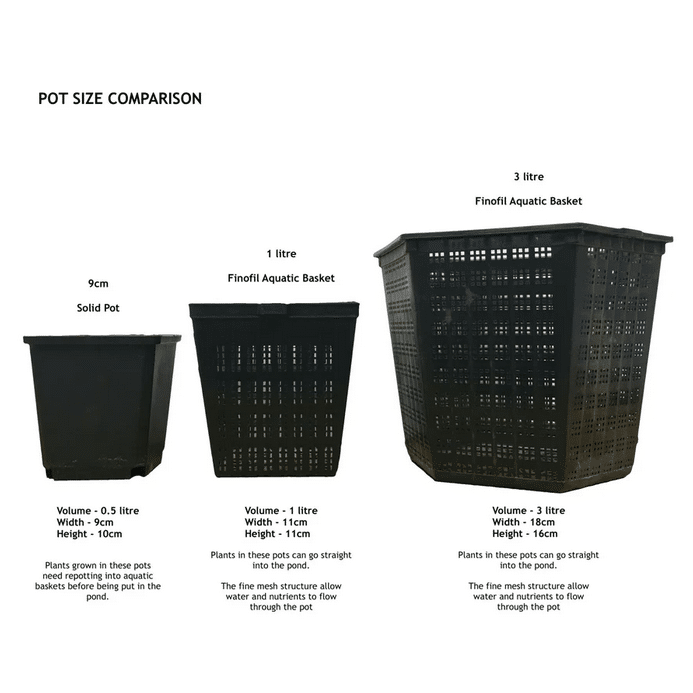
| Size | 1 Ltr, 1 Ltr – pack of 3, 3 Ltr |
|---|---|
| Plant Type | Moisture |
| Sun / Shade | Full Sun to Part Shade |
| Flower Colour | Yellow |
| Growth Rate | Medium |
| Native to UK | No |
| Plant group |
Dotted Loosestrife ‘Alexander’ (Lysimachia punctata ‘Alexander’) is a hardy moisture-loving perennial with attractive cream-edged foliage and masses of bright yellow summer flowers. Ideal for bog gardens, damp borders and planting around ponds, it grows approximately 40–80cm tall and provides excellent colour while attracting bees and other pollinating insects.
Price range: £11.50 through £25.00 (inc VAT)
Dotted Loosestrife ‘Alexander’ (Lysimachia punctata ‘Alexander’)
A colourful moisture-loving perennial with variegated foliage and bright yellow summer flowers
Dotted Loosestrife ‘Alexander’ (Lysimachia punctata ‘Alexander’) is a vigorous, clump-forming perennial that provides an attractive combination of colourful foliage and bright yellow summer flowers. Particularly well suited to bog gardens, damp borders and planting around ponds, this hardy perennial is an excellent choice for adding colour and structure to areas where the soil remains consistently moist.
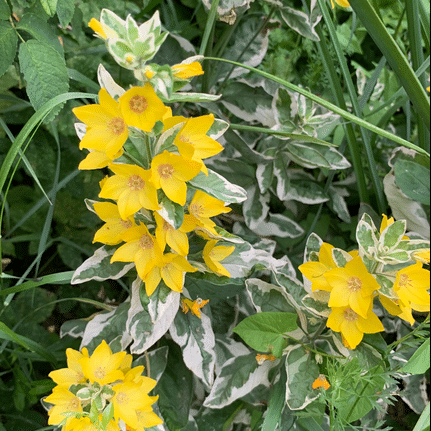
One of the most attractive features of ‘Alexander’ is its foliage. Upright stems carry lance-shaped leaves with distinctive creamy-white margins, often developing attractive pink tones when the young growth first emerges. This variegation provides interest before the plant begins flowering and helps distinguish ‘Alexander’ from the plain green form of Lysimachia punctata.
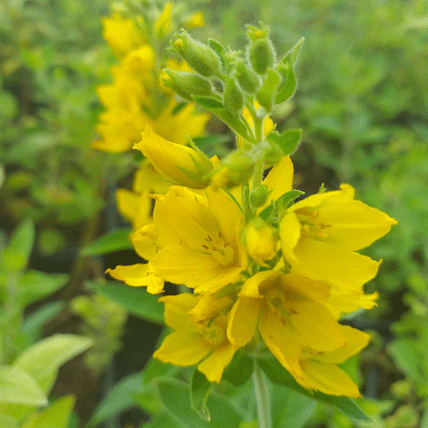
During mid to late summer, clusters of vivid yellow, star-shaped flowers develop around the upright stems. Small reddish markings towards the centre provide additional detail, while the abundance of flowers creates a bold splash of colour around ponds and damp garden areas.
Why Choose Dotted Loosestrife ‘Alexander’?
This is a particularly useful moisture-loving plant if you want something that provides interest for more than just its flowering period. The variegated leaves contribute colour and texture throughout the growing season, while the yellow summer flowers create an eye-catching display.
The flowers are also attractive to bees and other pollinating insects, making ‘Alexander’ a useful addition to wildlife-friendly gardens and naturalistic pond planting schemes.
Its upright, bushy habit works well amongst lower-growing bog garden plants and can help create a gradual transition between marginal planting around the water and conventional garden borders further away from the pond.
Where to Plant Lysimachia ‘Alexander’
Dotted Loosestrife ‘Alexander’ prefers moist, fertile and moisture-retentive soil and is particularly suitable for bog gardens, damp borders, pond surroundings and other areas that naturally retain moisture.
Although an excellent plant for around ponds, this variety should be treated as a moisture-loving pondside plant rather than a submerged marginal pond plant. Its recommended planting depth is 0cm, so the crown should not be permanently submerged beneath the pond surface.
It performs well in full sun or partial shade. Good soil moisture is especially important when grown in a sunny position.
Size, Spread & Flowering
- Botanical name: Lysimachia punctata ‘Alexander’
- Common name: Dotted Loosestrife ‘Alexander’
- Plant type: Hardy herbaceous perennial
- Origin: Non-native
- Position: Full sun to partial shade
- Planting depth: 0cm – plant in moist soil rather than submerged
- Mature height: Approximately 40–80cm
- Mature spread: Approximately 50–100cm
- Flower colour: Bright yellow
- Flowering period: Mid to late summer
- Foliage: Green with attractive creamy-white variegated margins
- Growth habit: Upright, bushy and clump forming
- Frost tolerance: Hardy
- Wildlife value: Attractive to bees and other pollinating insects
Caring for Dotted Loosestrife ‘Alexander’
Once established, Lysimachia punctata ‘Alexander’ is relatively straightforward to maintain. Keep the soil consistently moist, particularly during prolonged dry weather, and avoid allowing newly planted specimens to completely dry out.
As this is a vigorous perennial with a spreading habit, established clumps can be divided periodically if they become larger than required. Division is also an effective way of rejuvenating older plants.
After flowering, faded flower stems can be removed to keep the plant looking tidy. The foliage and stems naturally die back as temperatures fall and can be cut down during autumn or winter. Fresh shoots will emerge again from the root system in spring.
Dispatching Your Moisture-Loving Pond Plants
Our moisture-loving and bog garden plants are living plants whose appearance naturally changes throughout the year. The plant you receive may therefore look different from photographs showing a mature specimen in full summer growth.
During spring and summer, plants may arrive with active foliage, developing stems, flower buds or flowers depending on their stage of growth. During autumn and winter, Lysimachia punctata ‘Alexander’ naturally enters dormancy and may be supplied with considerably less visible growth above the compost.
Plants may also be trimmed before dispatch where necessary to minimise damage during transportation. This does not affect their long-term health and new growth will develop when conditions are suitable.







Reviews
There are no reviews yet.