





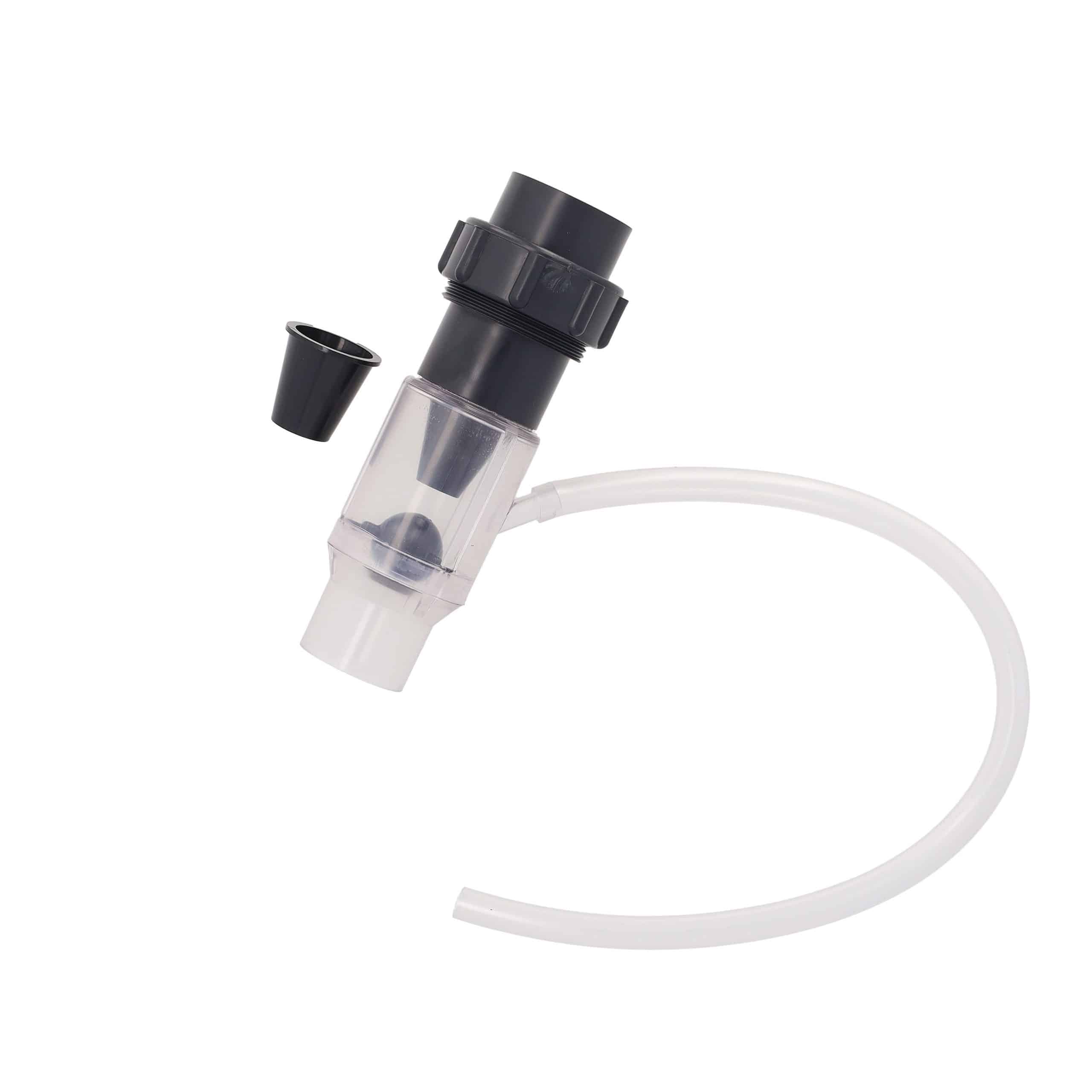
Kockney Koi Yamitsu Air Storm Venturi
| Brand | Kockney Koi Yamitsu |
|---|---|
| Material | ABS |
ABS pond venturi that draws air into a suitable flowing water return. Listed by Kockney Koi within its 1.5-inch solvent-weld fittings range. Check actual connections and the complete return layout before fitting.
£18.29 (inc VAT)
Kockney Koi Yamitsu Air Storm Venturi
Introduce air through a suitable pond water return
The Kockney Koi Yamitsu Air Storm Venturi draws air into moving water, allowing a suitable pond return to contribute to aeration. It uses the flow through its body to create suction at the air inlet. This makes it an option to consider when planning the water-return pipework, alongside the pump, filter and other fittings that determine how that return operates.
Kockney Koi identifies the body material as ABS and lists this model within its 1.5-inch solvent-weld fittings range. Check the actual pipe and fitting dimensions before ordering: the nominal size of a pipe system is not necessarily its measured outside diameter, and similarly named pressure-pipe and waste-pipe fittings should not automatically be treated as interchangeable.
How the venturi introduces air
A venturi changes the speed and pressure of water passing through a narrowed section. The resulting lower pressure at the suction connection allows air to enter and mix with the water stream. The water flow supplies the energy for this process; the fitting does not move pond water on its own.
This distinction matters when comparing a venturi with an air pump. An air pump pushes air through airline to an air stone or diffuser. A venturi depends on the water circuit in which it is installed. Decide which approach suits the intended location, the existing equipment and how you want the pond’s aeration to operate during routine maintenance.
Plan the whole return circuit
Check the pump’s operating information and the return layout before adding another fitting. The height of the return, pipe diameter, pipe length and other restrictions all influence the water reaching the venturi. A pump’s headline flow figure is not necessarily the flow available after water has passed through the installed system.
The pressure conditions on both sides of a venturi influence its ability to draw air. If the planned return is submerged or includes additional downstream fittings, include those details when assessing the arrangement. Do not select a pump by matching a single catalogue flow number without considering the rest of the circuit.
A simple sketch is useful when discussing installation: mark the pond water level, pump, filter, pipe sizes, vertical rise and proposed outlet position. Include any valves and branches. This makes it easier to identify where the new fitting belongs and whether there will be enough space to reach it afterwards.
Check the connections before assembly
Lay out the components and identify the water connections and air inlet using the instructions supplied with the product. Keep the air route open to the atmosphere as directed and protect it from becoming kinked, trapped or obstructed. Position the assembly so that normal cleaning does not require pulling on the small air connection.
Confirm the pipe material and jointing method before using any adhesive. Use a jointing product intended for the materials involved and follow its preparation and curing directions. Keep solvent or sealant away from the air opening and internal water passage. Only make the connections that the product instructions specify as permanent.
Support the surrounding pipework so the venturi is not carrying the weight of a long unsupported run. Leave access to any serviceable connection and allow space to inspect the body. After installation, check joints for leaks and confirm the return is operating normally before leaving the system unattended.
Checking performance in use
Observe the water return and air draw after the system has settled into normal operation. If aeration changes, first check whether water flow has also changed. A dirty filter, a partially closed valve or an obstruction elsewhere in the circuit can affect the conditions at the venturi even when the fitting itself appears unchanged.
Check the air inlet and tube for visible obstruction or damage. Isolate equipment as its instructions require before opening or cleaning any part of the system. Avoid inserting sharp tools that could damage the passage or connection. Reassemble correctly, restore circulation and check the joints again after maintenance.
Compare other pond aeration arrangements
Our pond air pumps and aeration equipment, including the Charles Austen ET200 air pump, provide other ways to deliver air where it is needed. An appropriately sized air pump and diffuser arrangement can operate separately from the water return, which may suit ponds where the return is switched off during filter servicing.
For larger installations, compare the large pond and lake aeration kits. Their pump, diffuser and depth guidance should be assessed separately from a venturi. Choose equipment for the pond’s requirements and intended operating depth rather than assuming that visible bubbles alone establish adequate oxygen levels throughout the water.
Before ordering
Have the pipe measurements, pump model and return layout available if you need help choosing the connection arrangement. This listing is for the Air Storm Venturi fitting; choose any additional pipework and equipment to suit the installation. Keep the product instructions with the pond’s maintenance information so its air inlet and service connections remain easy to identify.






Reviews
There are no reviews yet.