






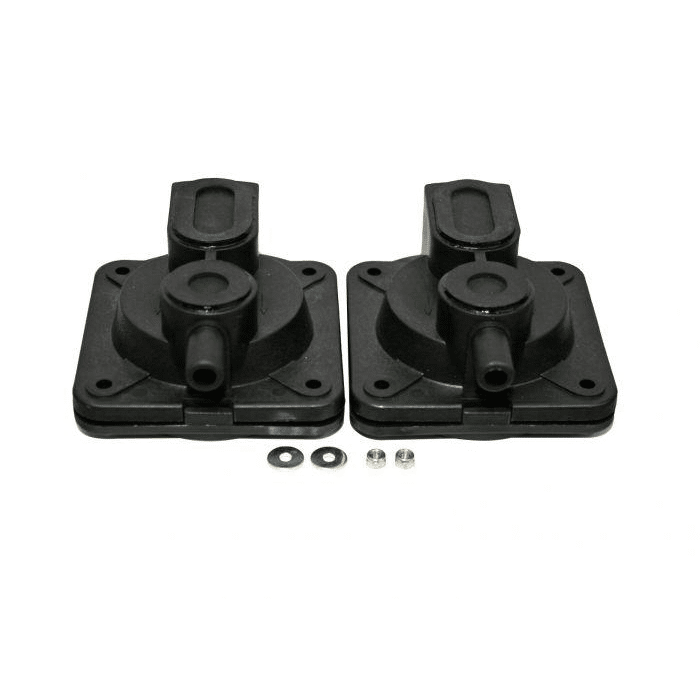
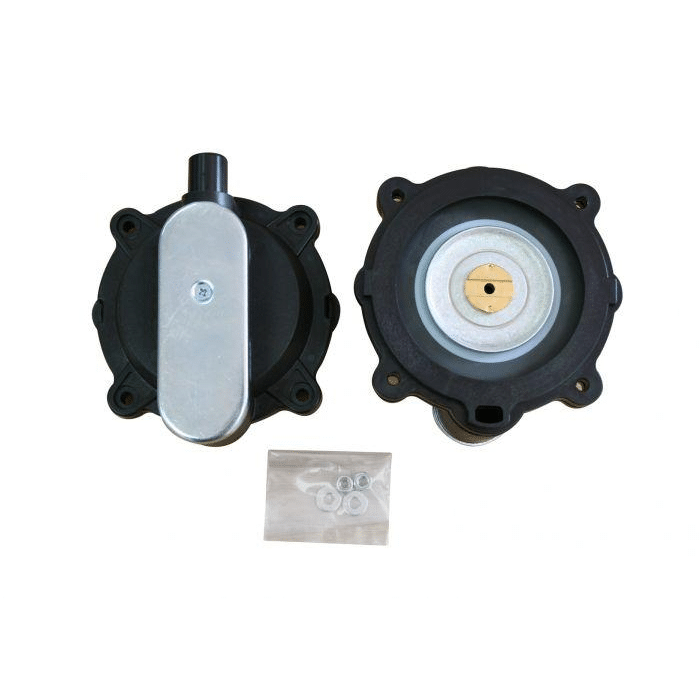
Evolution Aqua Airtech Replacement Diaphragm Kits
Model-specific replacement kits for Airtech 70, 75, 130 and 150 air pumps
These Evolution Aqua diaphragm kits are replacement parts for the Airtech air pump models shown in the selection. They let you service the diaphragm assemblies in an existing pump when those components need attention, rather than replacing the complete air pump. Select the model printed on your pump before ordering.
The kits are offered for the Airtech 70, 75, 130 and 150. For the 95 model, see our separate Evolution Aqua Airtech 95 diaphragm kit. Matching the model is essential: a diaphragm kit is a fitted internal part, and the output figure of a different pump does not establish that its parts are interchangeable.
When is a diaphragm replacement worth considering?
A reduction in air output can be a reason to inspect the diaphragms. Evolution Aqua’s support guidance identifies diaphragm replacement as one possible response to falling output and recommends annual replacement. Treat this as a maintenance recommendation for the manufacturer’s air pump range, rather than a guarantee that every loss of air has the same cause.
Before ordering parts, note what has changed. Is the pump running but delivering less air, or has it stopped operating altogether? Has the airline arrangement changed, or has the problem appeared after moving or servicing the pump? Those observations help distinguish routine maintenance from a different fault. A diaphragm kit replaces a particular group of components; it is not a repair for every electrical or mechanical problem.
Choose the option from the pump label
Check the model label on the pump itself and select the corresponding option. Do not identify the model from the filter it supplies: an air pump may have been replaced or moved since that filter was installed. If the label is worn, photographs of the whole pump and its remaining markings can help our team identify the appropriate spare.
If you are comparing your existing unit with a complete pump, our Airtech 70 Complete and Airtech 130 pages describe those pumps. The complete-pump pages and this spare-parts listing serve different purposes: the diaphragm kit does not include a new pump, airline or air stones.
Check the air path as well as the pump
When investigating reduced aeration, inspect the accessible airline for damage or kinks and check the connected air outlets as part of the system assessment. A restriction or disconnection outside the pump needs attention in its own right. Changing internal parts without checking where the air is going can leave the original problem unresolved.
Evolution Aqua also has separate guidance for a pump that runs without delivering air. That guidance identifies a displaced mounting grommet as a possible cause and refers to the exploded diagram in the pump manual. This is another reason to diagnose the symptom before assuming that new diaphragms are always the answer. Use the instructions for your exact pump when carrying out any internal inspection.
Preparing for the replacement
Disconnect the pump from its electrical supply before opening it or handling internal components. Work in a clean, dry space and keep removed fixings together. Record the original arrangement before dismantling so that the location of the assemblies and connections can be checked during reassembly.
Evolution Aqua provides a dedicated diaphragm replacement guide. Consult that resource and the instructions for the pump before beginning. The guide is a useful starting point for understanding the work involved; if you are unsure about servicing the unit, arrange suitable assistance rather than forcing a part into position.
What if the pump still does not work?
Replacing the diaphragms will not repair an unrelated fault. Evolution Aqua’s troubleshooting guidance notes that the electromagnet may need investigation if a pump still fails to work after a diaphragm-kit replacement. The electromagnet and activating arm are separate components, so they should not be assumed to come with this kit.
If the original symptom remains, stop and review the diagnosis. Tell us the exact pump model, what it was doing before the repair and what changed afterwards. That information is more useful than simply ordering another diaphragm set. Do not keep running a visibly damaged unit or one with an electrical fault while trying different parts.
Returning the pump to use
After reassembly, follow the pump instructions for restarting and check the air delivery at the connected outlets. Observe the unit rather than assuming that sound alone confirms normal operation. Keep a record of the service date and the kit fitted so that future maintenance and spare-part identification are straightforward.
If this pump provides the pond’s normal aeration, plan the work so that necessary aeration is maintained while it is unavailable. The purpose of the repair is to restore the existing pump’s operation; fitting new diaphragms does not turn a smaller Airtech into a higher-output model.





Reviews
There are no reviews yet.