






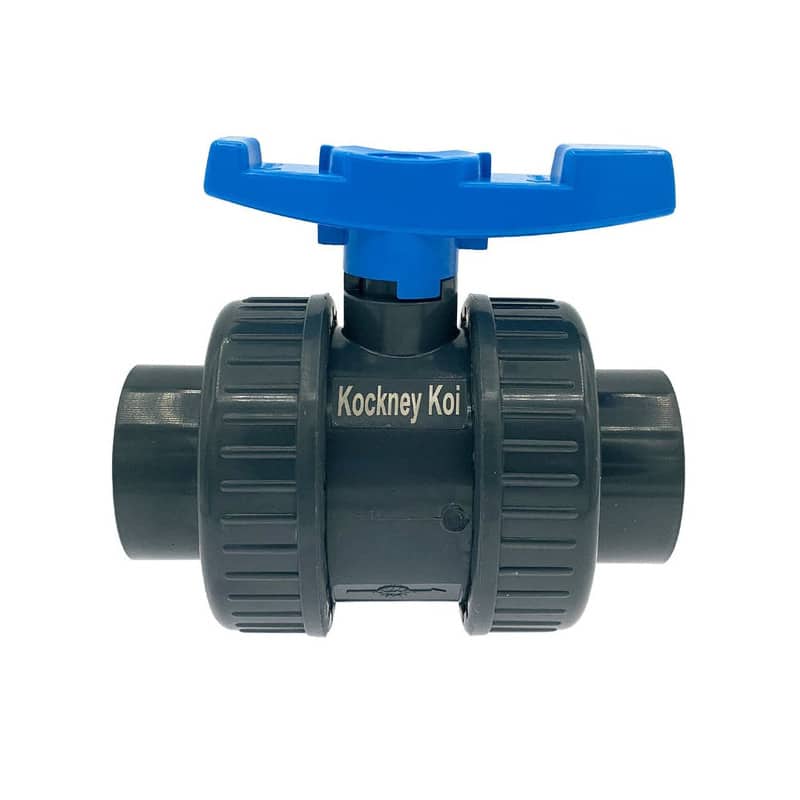
Kockney Koi Double Union Ball Valve
| Size | 4'' Pressure, 110 mm, 1½ inch solvent weld, 2 inch solvent weld, 21.5mm overflow |
|---|---|
| Brand |
Demountable Kockney Koi ball valves with a removable central body. Choose the matching solvent-weld or pressure-pipe connection. The 1½-inch and 2-inch solvent options differ from imperial pressure sizes; confirm the actual pipe standard before fitting.
Price range: £8.85 through £77.99 (inc VAT)
Kockney Koi Double Union Ball Valves
A double union ball valve combines manual flow control with a removable central body. It is useful in pond plumbing where you need to isolate a section and retain access for servicing. The collars at either side allow the valve body to be separated from the installed ends once the system has been safely isolated and drained. This avoids treating every future maintenance job as a pipe-cutting exercise.
This range includes different pipe connections. Choose the option for your pipe system, rather than assuming that every valve described by the same nominal inch size has the same socket. The smaller solvent-weld options are clearly separated from the existing 4-inch pressure-pipe and 110mm choices.
21.5mm overflow option
The 21.5mm option is Kockney Koi’s demountable double union valve for its UK overflow-pipe fitting range. Choose it for matching 21.5mm overflow pipe, rather than for the larger imperial pressure-pipe sizes. It provides a manual shut-off and a removable central valve body, with a union collar on each side. The visible handle makes the selected open or closed position easier to check. Handle colours and styles may vary between supplied batches.
Keep the union collars accessible when laying out a small overflow or service line. Isolate all routes feeding the section, switch off the relevant pump and safely drain any trapped water before releasing a union. A valve does not remove water already sitting between it and the equipment. Do not force an incompatible pipe into its socket or use extra solvent cement to compensate for a loose fit. The manufacturer does not publish a pressure rating on this product page; the overflow option should not be selected as a substitute for a specified pressure-rated fitting.
Choose the connection, not just the number
| Option | Connection guidance |
|---|---|
| 21.5mm overflow | The dedicated overflow-pipe option; different from imperial pressure and larger waste-pipe sockets. |
| 1½ inch solvent weld | Kockney Koi’s 1½-inch solvent-weld fit, often sold under the nominal 40mm waste-pipe size. |
| 2 inch solvent weld | Kockney Koi’s 2-inch solvent-weld fit, often sold under the nominal 50mm waste-pipe size. |
| 110 mm | The larger solvent-weld option for the matching 110mm pipe system. |
| 4” Pressure | The separate option for matching 4-inch imperial pressure pipe. |
Nominal 40mm and 50mm waste-pipe descriptions are not a promise that the socket measures exactly 40mm or 50mm internally. Equally, 110mm waste pipe and 4-inch imperial pressure pipe are different standards. Confirm the actual pipe outside diameter and the intended fitting system before buying or gluing. A loose fit should not be made up with extra cement.
Where a removable valve helps
A serviceable valve is useful near filters, pump circuits, waste outlets and other equipment that may need attention later. Think through the complete water route before positioning it. Isolating one side of equipment does not necessarily isolate its other connections, and water can remain trapped between valves after a pump has stopped.
Allow enough space around the handle for operation and around both union collars for access. A valve hidden tightly against a wall may technically fit but be awkward to remove. Consider where released water will go during maintenance, especially if the filter bay contains electrical equipment or the pipework sits below pond level.
How the double union arrangement works
The pipe ends remain part of the installed run while the union collars release the central assembly. That is a different construction from a simple one-piece ball valve glued into a pipe. Both can control flow, but the removable body makes a practical difference when planning service access.
The manufacturer notes that handle colours and styles can vary. Select by size and connection rather than expecting a particular handle colour to identify compatibility. The visible handle helps you see the operating position, but check the valve’s actual position during commissioning instead of relying on an assumption about a photograph.
Plan the pipework before assembly
Lay out the surrounding pipework and supports before making permanent joints. Keep the valve accessible and avoid placing pipe weight or sideways strain on its sockets. A well-supported run is easier to service and less likely to move when a union is undone. Leave room to remove the central body without pulling adjacent equipment out of alignment.
For matching smaller black pipework, compare our black waste pipe. If you are building an imperial pressure-pipe system, choose the corresponding pressure fittings and the correct pressure-fit valve option. Adaptors must be selected for the two actual pipe standards; an inch description on both components is not enough to establish a match.
Making the solvent-weld connections
Follow the valve, pipe and solvent-cement instructions together. Cut pipe square, remove burrs and prepare the mating surfaces as specified. Check the intended insertion depth and orientation before applying cement. Keep solvent cement away from the moving ball, seals and union threads: those are not surfaces to glue together.
Use a cement compatible with the materials and allow its specified curing period before putting the line into service. Cure time depends on the product and conditions, so a universal waiting time is not given here. Complete a controlled leak check with the surrounding joints visible before concealing pipework or returning the system to unattended operation.
Isolation and routine maintenance
Switch off the relevant equipment and isolate all water paths before releasing a union. Let trapped water drain and remove any pressure safely. Do not loosen a collar while the system is operating or assume that turning the handle alone makes every part of the surrounding installation safe to open.
Inspect accessible seals and mating surfaces when the valve is dismantled. Dirt on a sealing face can prevent correct reassembly. Use replacement parts intended for the specific valve, and do not assume that union nuts or seals from another manufacturer’s similarly sized valve are interchangeable. After reassembly, inspect the joint during a controlled restart.
Other fittings to compare
If you need a simpler valve without removable unions, our Kockney Koi black waste ball valves is a separate range. For an alternative style of isolation, compare Valterra slide valves and check its own connection options. A slide valve and a ball valve operate differently, so choose around how the line will be used and maintained.
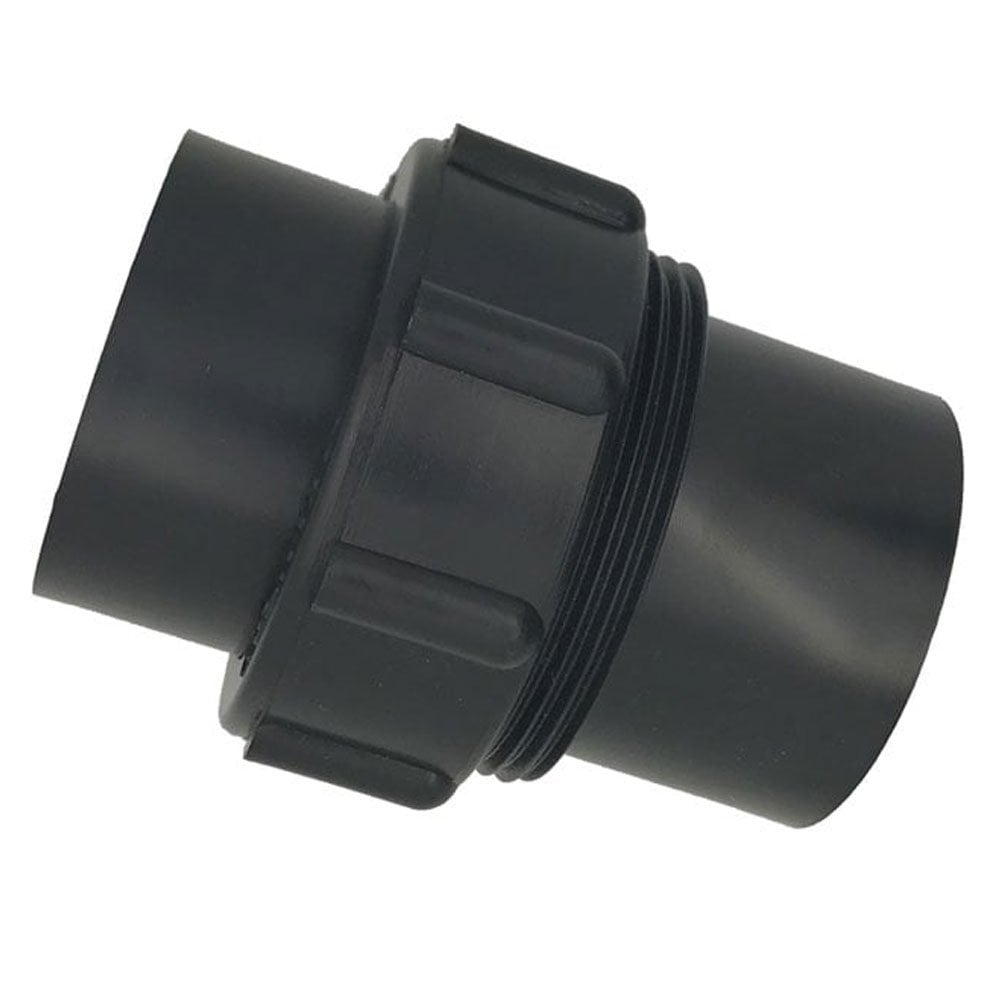
split unions can also help create a removable joint elsewhere in the pipe run. They do not replace an isolation valve: a connector separates the pipework, whereas the valve controls the water path. Planning those two jobs together makes future cleaning and equipment changes much more straightforward.



Reviews
There are no reviews yet.