





KiGen Kinsai 6mm Koi Food
| Brand | |
|---|---|
| Pellet Size | 6mm |
| Food Type | Colour Enhancing, Growth |
| Feeding Season | Seasonal Feeding |
| Pellet Behaviour | Floating, Sinking |
| Pellet Type | Floating, Sinking |
| Weight | 1.2kg, 5kg, 10kg |
Premium 6 mm koi food with LT71 fishmeal, shrimp meal, salmon oil and spirulina. Choose floating or sinking pellets for growth, body development and colour, in 1.2 kg, 5 kg or 10 kg bags.
Price range: £22.50 through £150.00 (inc VAT)
Out of stock
KiGen Kinsai 6mm Koi Food
Premium floating or sinking nutrition for balanced growth, body shape and colour
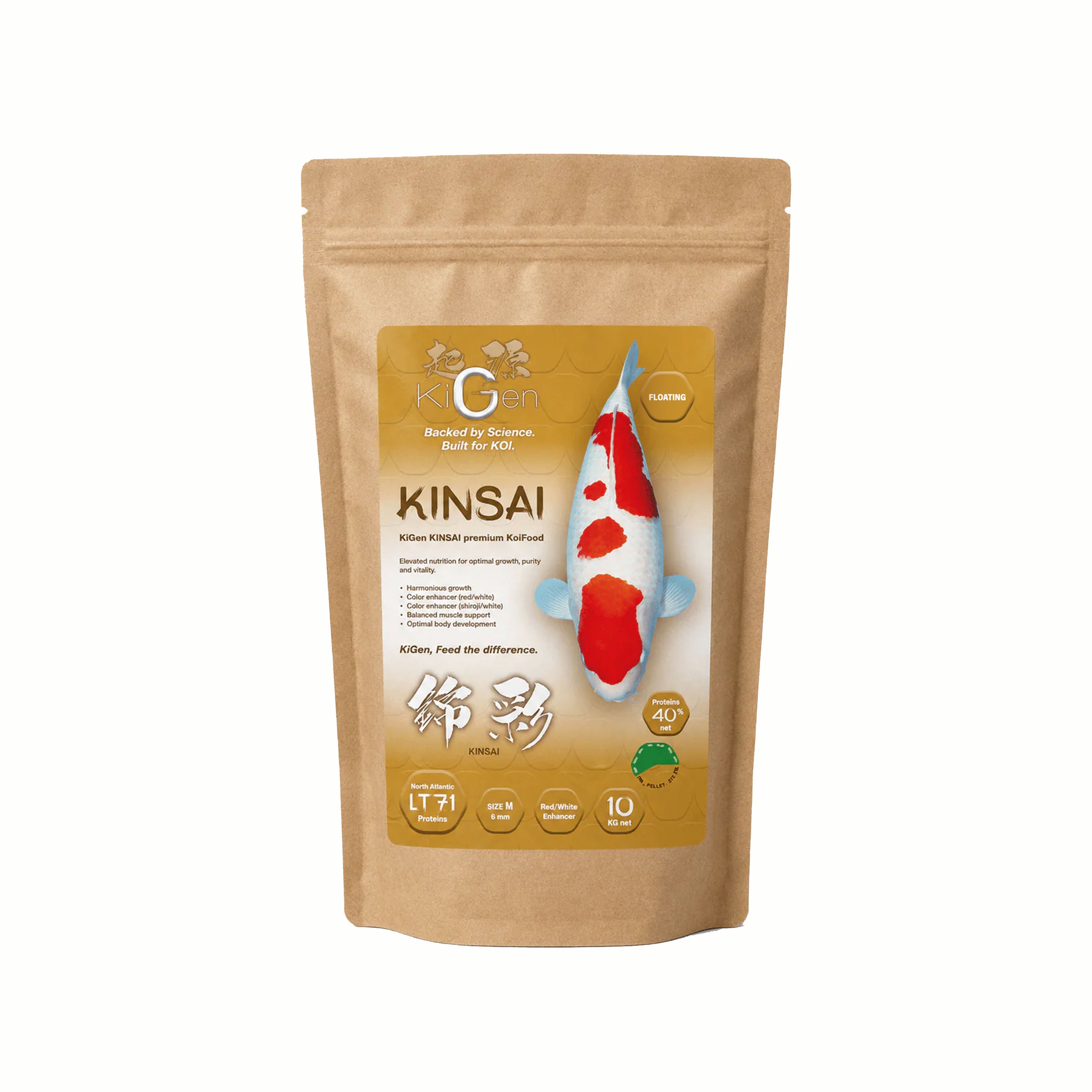
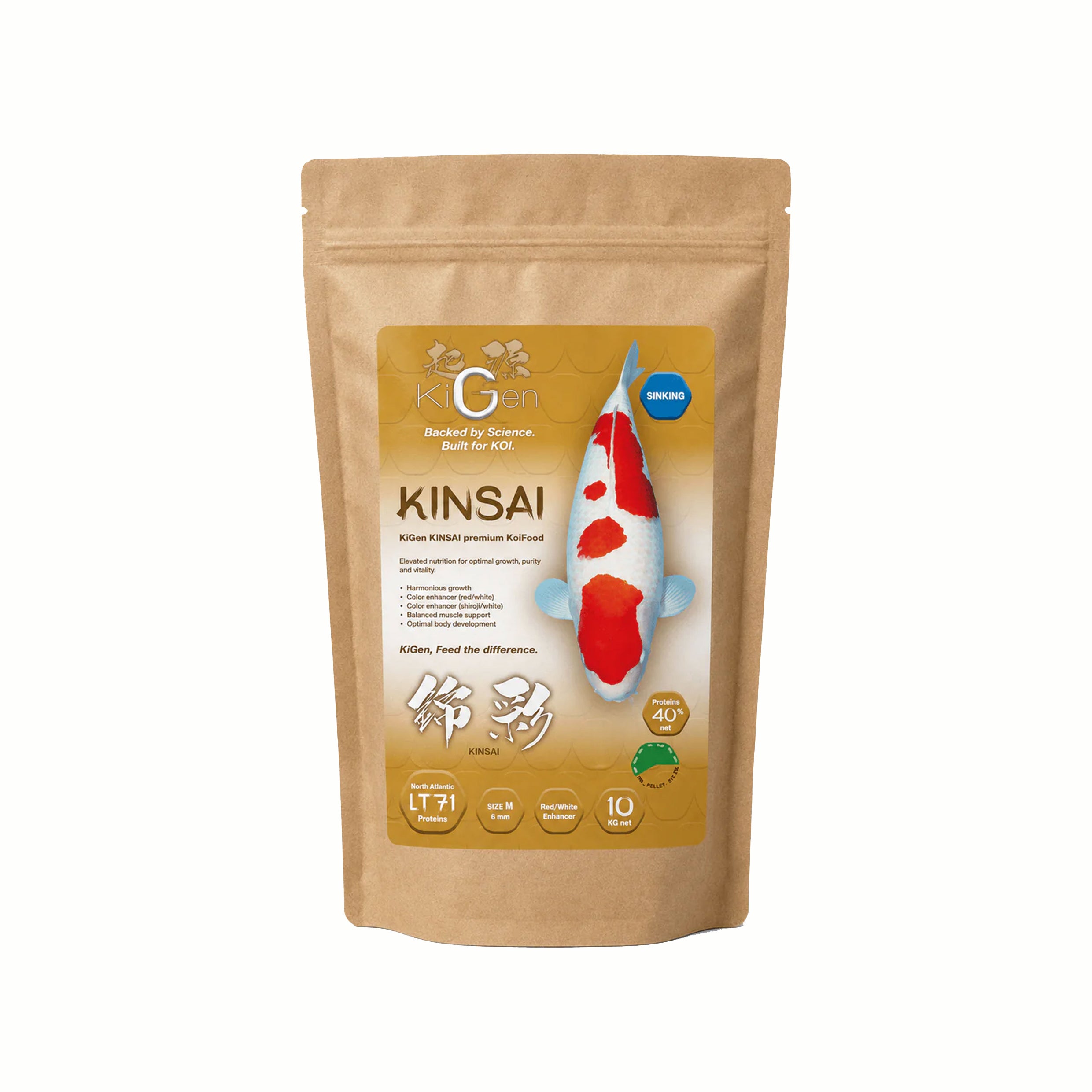
KiGen Kinsai is a premium 6 mm koi food for keepers who want to support growth, body shape, colour and overall condition in one regular diet. It combines LT71 fishmeal with shrimp meal, salmon oil, sorghum and a vitamin and mineral premix. Floating and sinking options let you match the pellet to the way your koi prefer to feed.
Kinsai is aimed at active koi during the main feeding and growth season. Its appeal is the balance of the formulation: usable protein for development, fats and carbohydrates for energy, and ingredients selected with skin quality and natural colour in mind. It is the premium KiGen choice for a 6 mm diet without the added RG-92 ingredient.
Why choose Kinsai?
- LT71 fishmeal and shrimp meal as the main animal protein ingredients.
- Salmon oil and sorghum within a balanced energy supply.
- Spirulina and other colour-supporting ingredients.
- Declared vitamins, trace minerals and amino-acid additives.
- Floating and sinking 6 mm pellets to suit different feeding habits.
- 1.2 kg, 5 kg and 10 kg options for each pellet type.
Inside the Kinsai recipe
LT71 fishmeal for protein quality
LT refers to low-temperature processing of the fishmeal. Gentle drying helps preserve the quality of the protein, including amino acids needed for tissue maintenance and development. Shrimp meal adds another marine ingredient to the formulation. The finished feed’s declared protein level is different from the LT71 ingredient designation, so the two should not be read interchangeably.
Energy, colour and skeletal development
Salmon oil contributes fats, while sorghum supplies starch and helps form a stable extruded pellet. Together with the protein ingredients, these support a feeding routine built around balanced development. Spirulina and natural colour-supporting ingredients are included with attention to beni, the red markings, and shiroji, the white skin.
Kinsai also contains antioxidants, active minerals and herbal oils within its supporting formulation. Its label declares vitamins A, D3, E and C, trace minerals and amino-acid additives. These details explain why the food is more than a headline protein percentage, but good results still rely on appropriate feeding, oxygen and water quality.
Floating and sinking Kinsai compared
Floating pellets make the meal easier to observe; sinking pellets can suit koi that prefer to feed below the surface. The recipes also differ nutritionally: compare both protein and fat when choosing a format, and count any mixture of the two within one daily ration.
| Detail | Kinsai floating | Kinsai sinking |
|---|---|---|
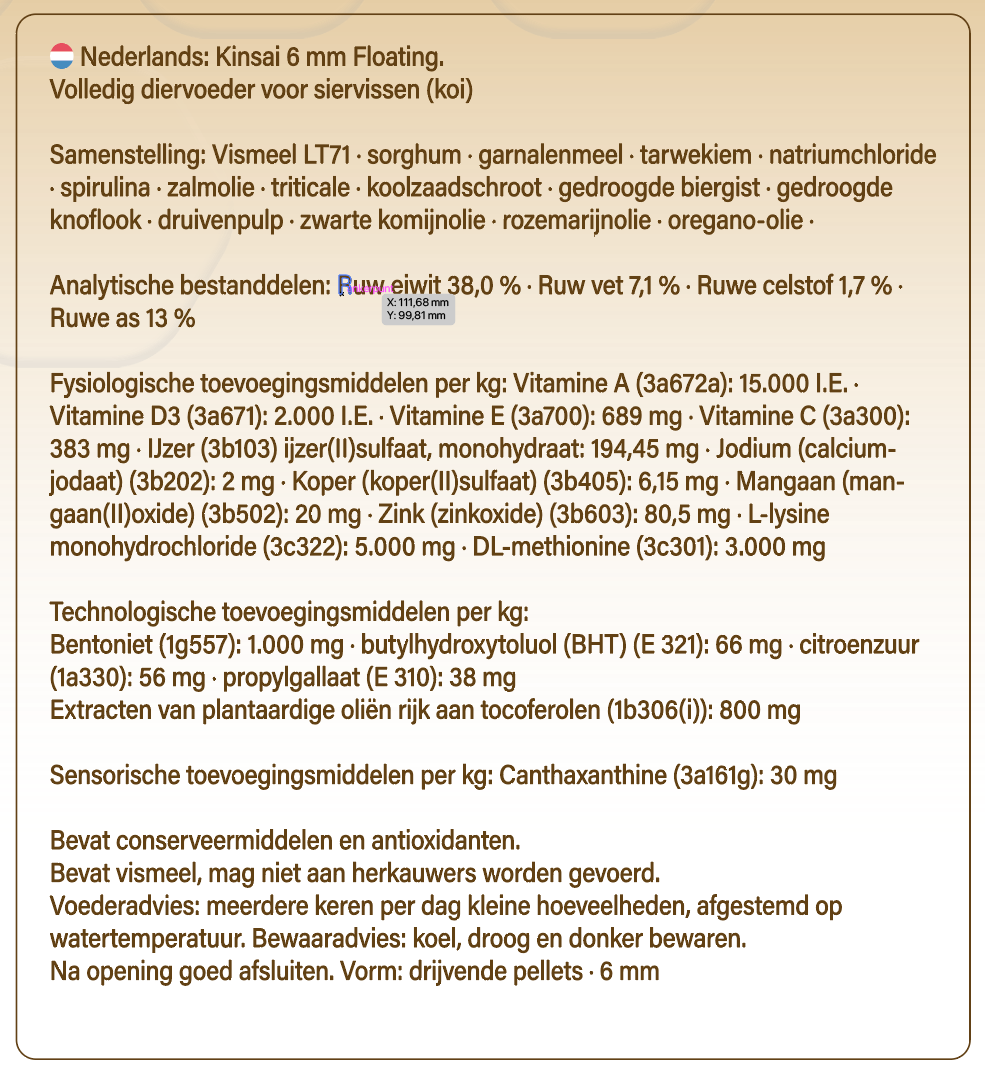
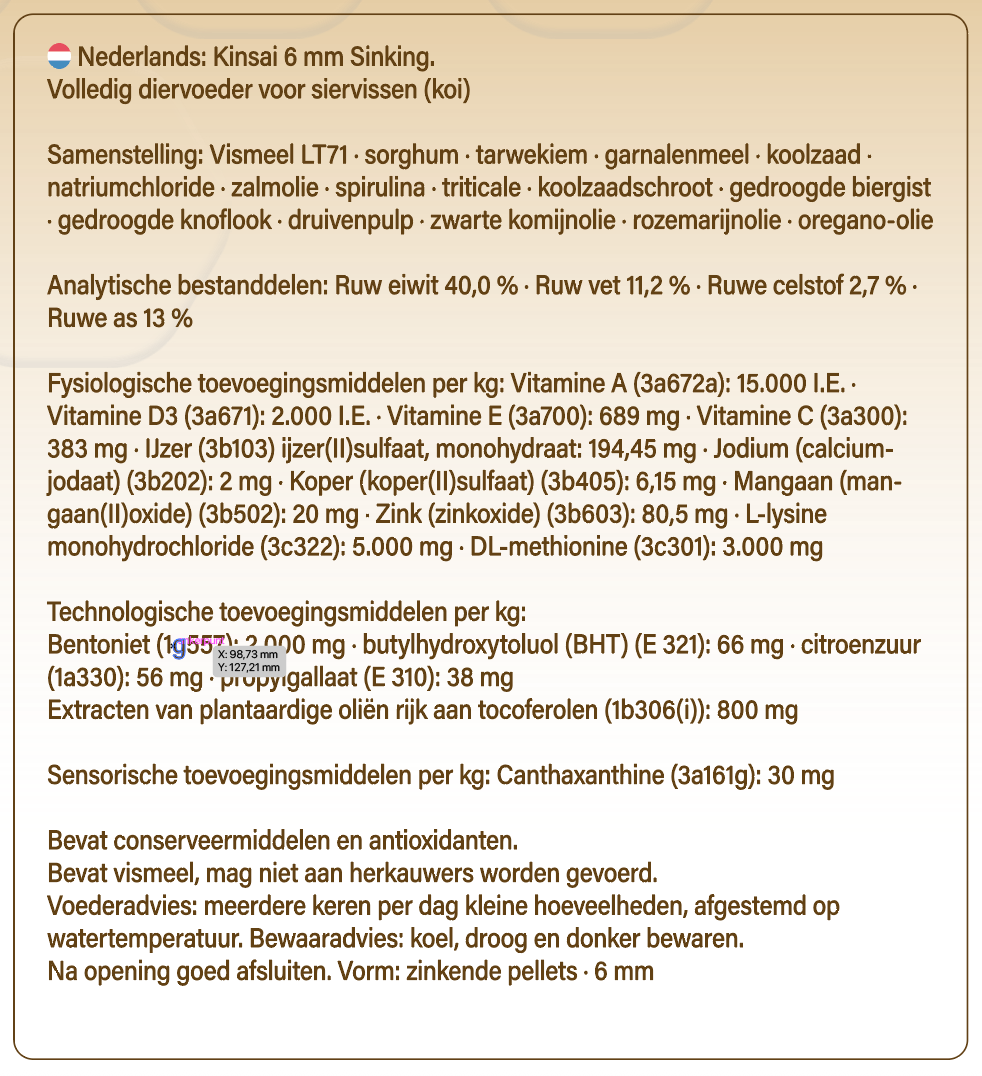
| Crude protein | 38% | 40% |
| Crude fat | 7.1% | 11.2% |
| Crude fibre | 1.7% | 2.7% |
| Crude ash | 13% | 13% |
| Pellet | 6 mm floating | 6 mm sinking |
| Bag sizes on this page | 1.2 kg, 5 kg and 10 kg | 1.2 kg, 5 kg and 10 kg |
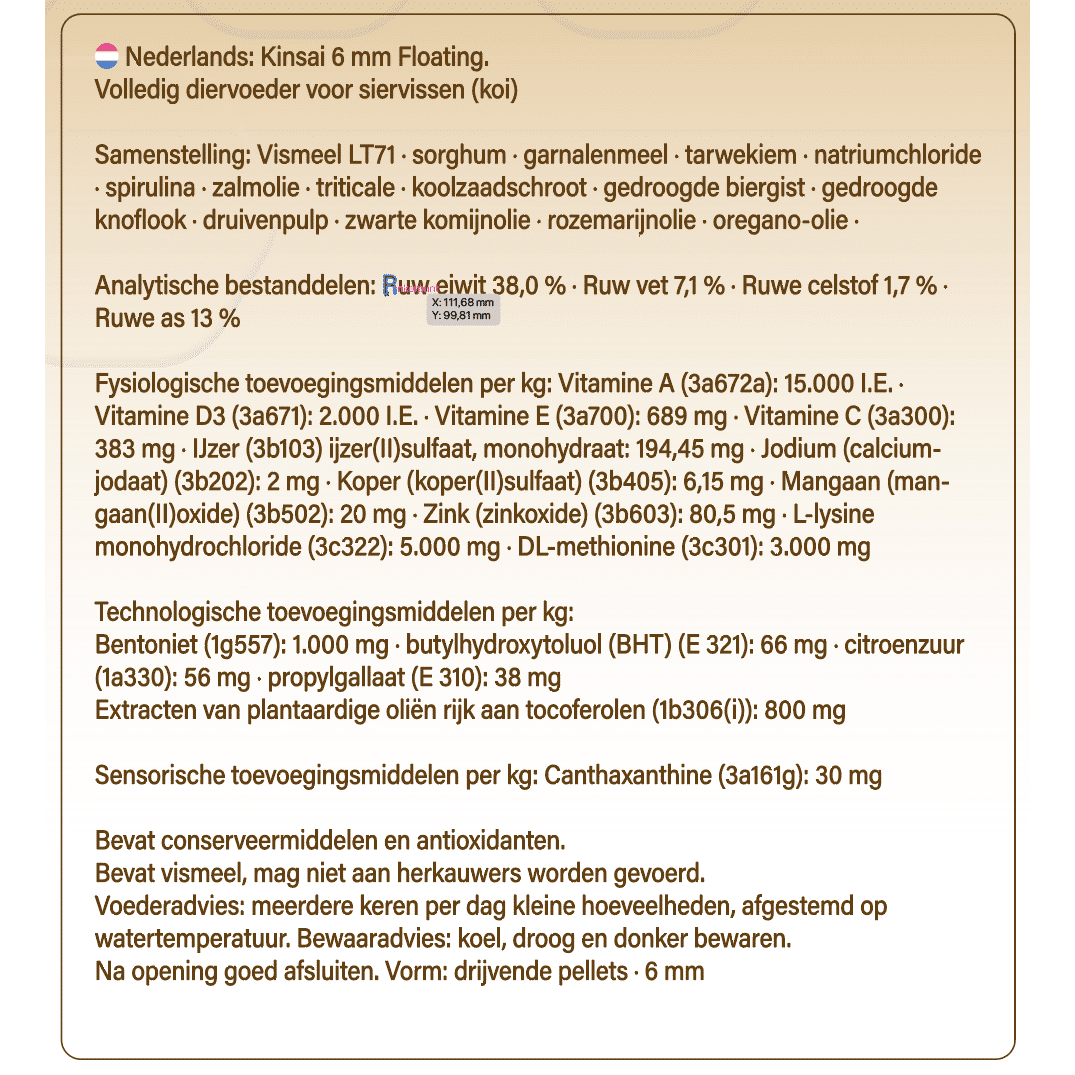
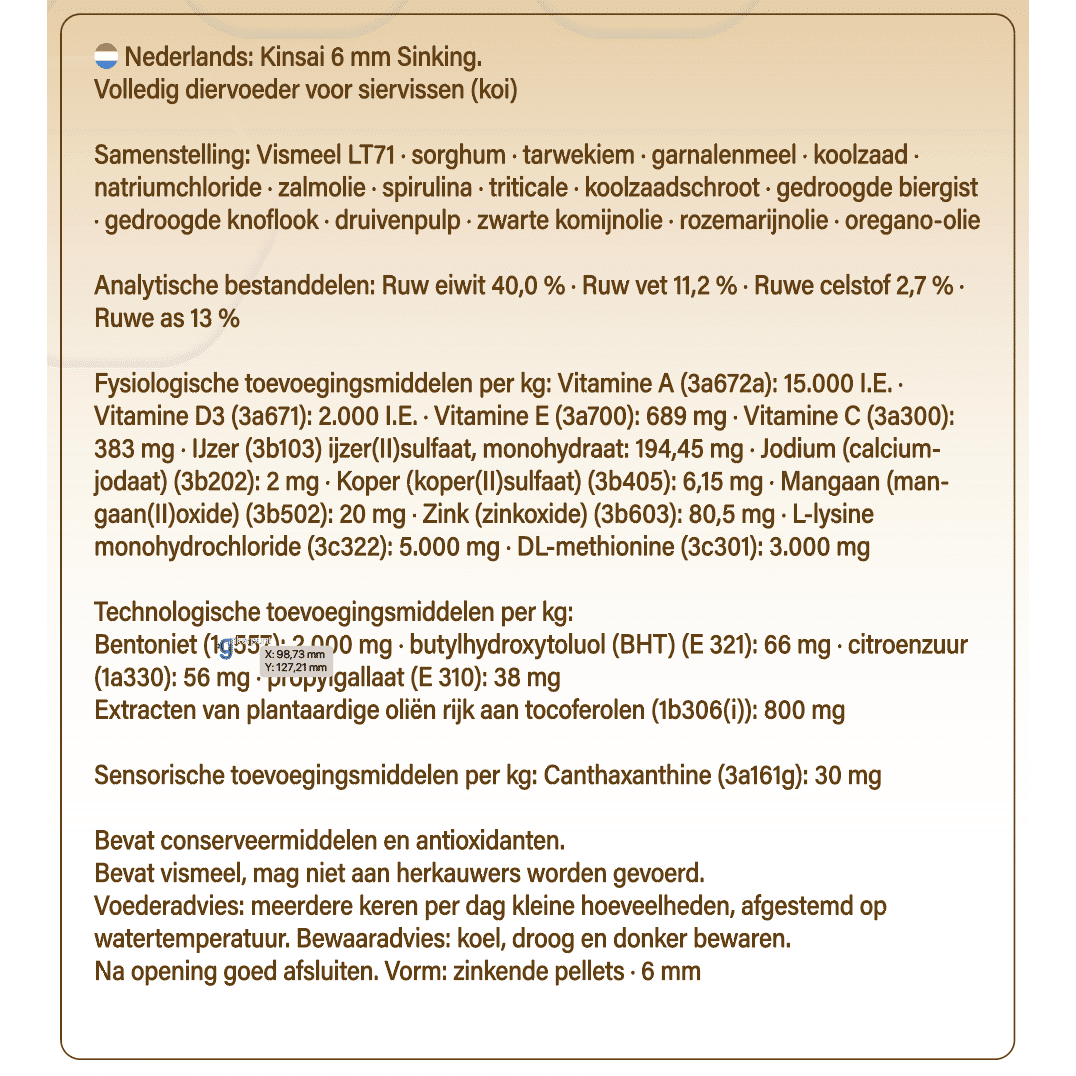
These figures and the composition below follow the label artwork published in KiGen’s own product galleries, checked on 7 September 2026. The labels name sorghum, whereas the January brochure uses millet. We use the label wording here and omit ingredient inclusion percentages that it does not declare. Check the bag supplied for the declaration and instructions applicable to that pack.
Declared composition
Kinsai floating: LT71 fishmeal; sorghum; shrimp meal; wheatgerm; sodium chloride; spirulina; salmon oil; triticale; rapeseed meal; dried brewer’s yeast; dried garlic; grape pulp; black cumin oil; rosemary oil; oregano oil.
Kinsai sinking: LT71 fishmeal; sorghum; wheatgerm; shrimp meal; rapeseed; sodium chloride; salmon oil; spirulina; triticale; rapeseed meal; dried brewer’s yeast; dried garlic; grape pulp; black cumin oil; rosemary oil; oregano oil.
The complete food contains cereal ingredients, including triticale or wheat ingredients; it should not be described as gluten-free. Ingredient names and fishmeal grades are separate from the finished food’s analytical percentages.
Vitamins, minerals and other declared additives
| Declared additive | Kinsai floating | Kinsai sinking |
|---|---|---|
| Vitamin A (3a672a) | 15,000 IU/kg | 15,000 IU/kg |
| Vitamin D3 (3a671) | 2,000 IU/kg | 2,000 IU/kg |
| Vitamin E (3a700) | 689 mg/kg | 689 mg/kg |
| Vitamin C (3a300) | 383 mg/kg | 383 mg/kg |
| Iron(II) sulphate, monohydrate (3b103) | 194.45 mg/kg | 194.45 mg/kg |
| Iodine, calcium iodate (3b202) | 2 mg/kg | 2 mg/kg |
| Copper(II) sulphate (3b405) | 6.15 mg/kg | 6.15 mg/kg |
| Manganese(II) oxide (3b502) | 20 mg/kg | 20 mg/kg |
| Zinc oxide (3b603) | 80.59 mg/kg | 80.59 mg/kg |
| L-lysine monohydrochloride (3c322) | 5,000 mg/kg | 5,000 mg/kg |
| DL-methionine (3c301) | 3,000 mg/kg | 3,000 mg/kg |
These are the label’s additive declarations, not a separate analysis of the total naturally occurring nutrients in the food.
Kinsai floating — technological additives per kg: bentonite (1g557), 1,000 mg; butylhydroxytoluene/BHT (E321), 66 mg; citric acid (1a330), 56 mg; propyl gallate (E310), 38 mg; extracts of vegetable oils rich in tocopherols (1b306(i)), 800 mg. Sensory additive: canthaxanthin (3a161g), 30 mg/kg.
Kinsai sinking — technological additives per kg: bentonite (1g557), 1,000 mg; butylhydroxytoluene/BHT (E321), 66 mg; citric acid (1a330), 56 mg; propyl gallate (E310), 38 mg; extracts of vegetable oils rich in tocopherols (1b306(i)), 800 mg. Sensory additive: canthaxanthin (3a161g), 30 mg/kg.
Contains preservatives and antioxidants. Contains fishmeal and must not be fed to ruminants. This is complete feed for ornamental fish (koi).
Read the manufacturer’s label: Kinsai floating label · Kinsai sinking label. Label images are also available in the product gallery.
Feeding Kinsai through the season
Water temperature, appetite and the pond’s filtration capacity determine the useful feeding level. The main season is broadly spring to autumn, but a calendar alone cannot tell you how much the fish can digest. KiGen’s guide remains conservative below 18°C and allows more food only as conditions improve.
| Water temperature | Total food per day (% of fish body weight) |
|---|---|
| Below 8°C | Do not feed |
| 8–10°C | 0.05–0.10% |
| 10–12°C | 0.10–0.15% |
| 12–14°C | 0.15–0.20% |
| 14–16°C | 0.20–0.25% |
| 16–18°C | 0.25–0.30% |
| 18–20°C | 0.30–0.45% |
| 20–22°C | 0.45–0.65% |
| 22–24°C | 0.65–0.90% |
| 24–26°C | 0.90–1.20% |
| 26–28°C | 0.70–0.90% |
| Above 28°C | Less than 0.70% |
The guide expresses the whole day’s ration as a percentage of fish body weight. For example, a 10 kg collection at 0.5% receives 50 g in total per day. Divide that total among small feeding sessions, rather than offering the full daily amount at every visit to the pond.
Only feed what the koi clear comfortably within a few minutes. Higher quantities require established filtration, good oxygen availability and stable water quality. Reduce feeding if ammonia or nitrite rises, the fish lose interest or leftovers remain. Even digestible protein produces a load on the filter when fed in excess.
KiGen advises no feeding below 8°C and smaller rations above 28°C. Follow the current bag instructions and use the temperature table as a guide rather than an obligation to reach its upper figures. Changes in appetite are a reason to reassess the ration, not to add more food to encourage growth.
Kinsai within a complete feeding routine
Kinsai is a sensible choice when koi can handle a 6 mm pellet and the aim is balanced development with colour support. Miori offers a more accessible everyday alternative. Manju is the lower-protein maintenance option when growth is less of a priority. For the same premium direction with RG-92 algae extract included, compare RG-92 Special.
Young fish that still need a smaller pellet are better matched to the 3 mm Tosai foods. The correct pellet size and a ration that suits the fish are more useful than moving to a richer food before the collection is ready.
Bag sizes and freshness
A 1.2 kg bag is useful when trying a pellet format or feeding a modest collection. The 5 kg and 10 kg sizes suit regular use where consumption justifies the larger pack. Floating and sinking foods have separate selectable options, so check both choices before ordering.
Introduce Kinsai progressively while observing appetite and waste. Store it cool and dry, away from direct sunlight, close the bag after use and keep moisture out with a dry scoop. Use the pack’s best-before and storage guidance when deciding how much to buy.
Choosing between the KiGen foods
Use our KiGen koi food comparison guide to compare all six foods by pellet size, protein level, feeding purpose and floating or sinking format.
- KiGen Tosai — 3 mm floating food for the growth and development of young koi.
- KiGen Tosai RG-92 — the 3 mm young-koi option with added RG-92 algae extract.
- KiGen Miori — an accessible 6 mm floating food for balanced everyday feeding.
- KiGen Manju — a 6 mm floating maintenance diet for condition and cooler active periods.
- KiGen RG-92 Special — the 6 mm premium option with RG-92, in floating and sinking pellets.
Explore our complete koi food range to compare other diets and pellet sizes.



Reviews
There are no reviews yet.