






The Differences Between DIY Fibreglassing and Hiring a Professional
Choosing the right approach for your pond
Should you fibreglass the pond yourself or bring in an installer? Start with the work involved, not just the price of a materials kit. The condition of the structure, the fittings, access and your experience all affect whether it is a sensible DIY project.
A good result depends on preparation, suitable materials and careful application in the right conditions. Paying someone does not remove those requirements, and doing the work yourself does not automatically mean a poor result.
This guide compares DIY pond fibreglassing with professional installation, including the questions we recommend asking before either route.
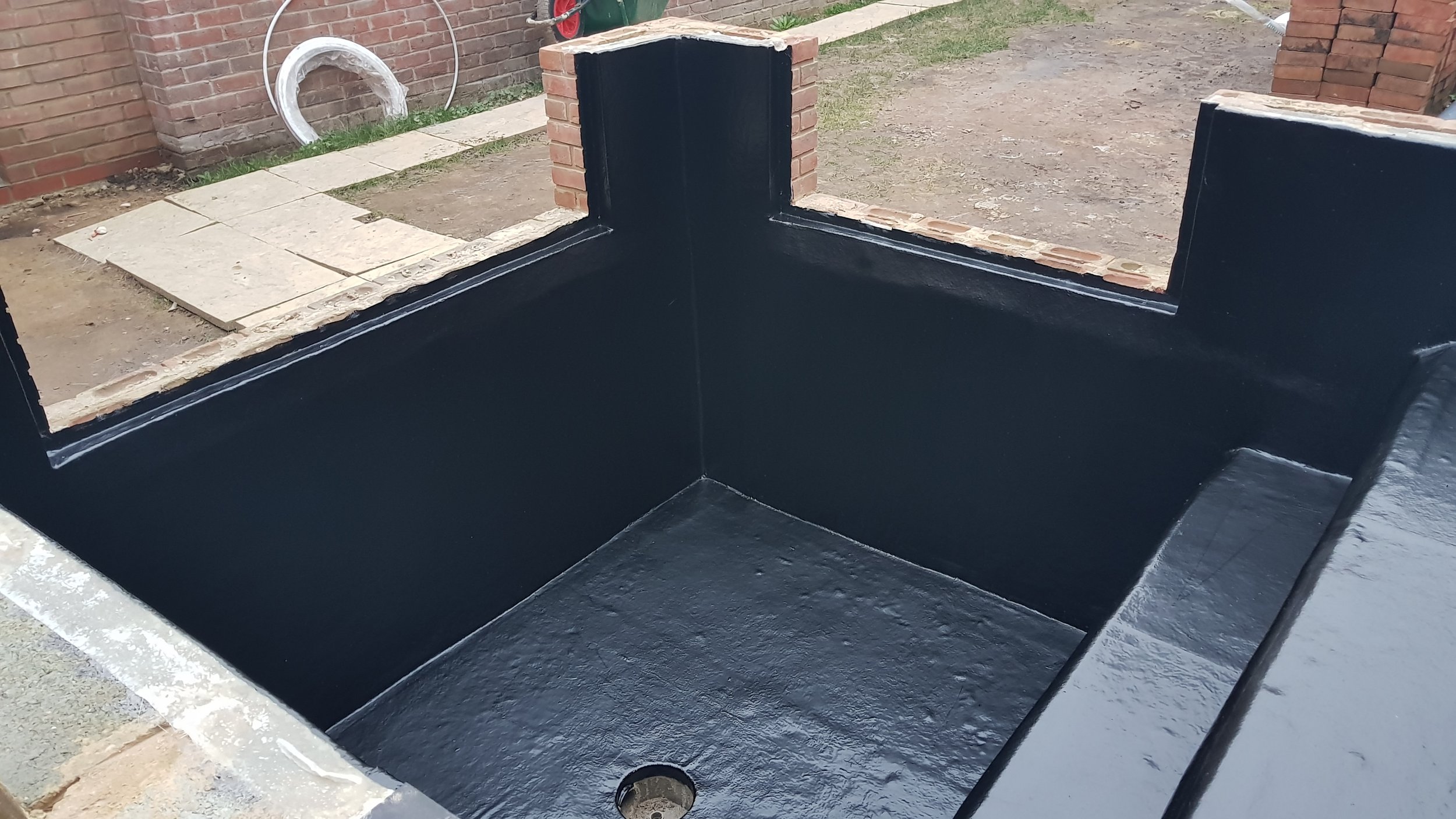
Hiring a Professional
Pros of Hiring a Professional
Expertise and Precision
An experienced installer brings familiarity with the materials and the details that need attention, particularly corners, bottom drains, pipe returns and windows. The value is in identifying what the job needs before resin is mixed.
- Preparation: checking whether the surface and supporting structure are suitable, and identifying work needed first.
- Application: working the resin through the reinforcement and removing trapped air within the chosen system’s working times.
- Details: agreeing how fittings and changes in level will be finished.
Ask to see relevant completed work. Experience is useful evidence when choosing an installer, but it is not a promise that defects can never occur.
Time Saving and Efficiency
Bringing in an installer can reduce the time you spend learning and carrying out the application. A planned installation also makes it easier to coordinate preparation and other trades.
- Agree the scope: establish who prepares the pond and who supplies the materials.
- Allow for conditions: rain, damp surfaces or unsuitable temperatures can still delay work.
- Plan the return to use: application time and the time before filling or returning fish are different things.
Allow the full curing and commissioning period specified for the materials, even if the application itself is quick.
Warranties and Long Term Protection
Check the actual written terms rather than assuming every professional installation has the same guarantee.
- Ask what is covered: workmanship, materials, or both.
- Check the duration, exclusions and any maintenance requirements.
- Establish who to contact if there is a problem and how an inspection or repair would be arranged.
A guarantee should be assessed alongside the specification and quality of the work. It is not evidence that the pond will never leak or need maintenance.
DIY Fibreglassing
Pros of DIY Fibreglassing
Cost Savings
Doing the application yourself can save an installer’s labour charge. Whether it saves money overall depends on what you already have and how much preparation is needed.
- Include tools, compatible materials, protective equipment and weather protection in the budget.
- Allow for delivery, consumables, waste and any temporary fish accommodation.
- Compare the same scope of work: a materials-only kit is not equivalent to a completed installation.
Choose the system for the pond and its intended use. Mixing unrelated products or reducing the specified build-up to cut costs can create problems.
Full Control Over the Project
DIY gives you control over planning and the work you carry out. It can suit someone who enjoys learning a process and taking responsibility for the details.
- Decide the pond layout and fittings before lining begins.
- Plan your work around suitable conditions and the manufacturer’s instructions.
- Make sure you can complete each application stage within its working and recoating requirements.
You can choose when to start, but once materials are mixed you cannot necessarily stop and resume whenever convenient.
Learning and Personal Satisfaction
Building your own pond can be very satisfying. Understanding its construction can also help you look after it and recognise changes later.
- Read the technical and safety information before buying materials.
- Get advice on unfamiliar details rather than using the live pond as a trial.
- Be realistic about the assistance, working space and time you need.
Enthusiasm helps, but knowing when to ask for specialist help is part of a well managed DIY project.
Cons of Hiring a Professional
Higher Upfront Cost
A professional quotation includes labour and may cover preparation, materials, access arrangements and other work. Check those inclusions before comparing prices.
- Separate lining work from any structural repairs or rebuilding.
- Confirm whether drains, windows and pipe connections are included.
- Ask who is responsible for cleaning, filling and commissioning the pond.
A higher price alone does not demonstrate better materials or a longer life. Look for a clear specification and a scope that matches your project.
Less Direct Control
You will need to coordinate access and timing with the installer, rather than deciding each day’s work entirely yourself.
- Agree responsibilities and any preparation you plan to do before the booking.
- Discuss changes to the design before they affect the lining work.
You should still understand what is being installed and why. Ask questions if a proposed detail or change is unclear.
Finding the Right Installer
Choosing someone takes time. Relevant pond experience is more useful than a broad claim to handle every type of fibreglass work.
- Look at completed pond projects and genuine customer feedback.
- Ask which materials are proposed and whether they suit the intended use.
- Check availability, preparation requirements and written terms before committing.
A clear discussion at the start helps avoid misunderstandings about what the quote includes and when the pond will be ready.
Cons of DIY Fibreglassing
Risk of Mistakes and Lower Quality
The difficulty is coordinating the preparation, materials and timing. Mistakes can be hidden beneath a finish that initially looks tidy.
- Incorrect mixing or unsuitable conditions can affect curing.
- Poor wetting out, trapped air or uneven application can leave defects.
- Unresolved damp or movement in the structure can undermine the lining.
Follow the selected system’s instructions and safety information. If the pond structure or a connection is uncertain, resolve it before applying the lining.
Time Consuming Process
Budget time for preparation and learning as well as application. The pond may need longer out of use than the materials kit makes you expect.
- Inspect and prepare the substrate before scheduling application.
- Allow for weather and the specified curing conditions.
- Arrange suitable temporary fish accommodation, filtration and ongoing care if the pond is stocked.
Do not make the date for returning fish depend on an optimistic finishing date. The completed system and water conditions must be ready first.
Unexpected Costs and Material Waste
A lower materials price can be offset by waste, missing equipment or work that has to be redone.
- Calculate quantities using the supplier’s guidance for the specified system.
- Include preparation, consumables and appropriate protective equipment.
- Keep a contingency for defects discovered when an old lining is removed.
Ask for advice before buying replacements if something goes wrong. Applying another layer over an unresolved problem may add cost without fixing it.
DIY fibreglassing vs hiring a professional: which is right for you
The useful question is whether you can deliver the required preparation, application and commissioning for this particular pond. Its size is only one part of that decision.
DIY may suit someone with relevant practical skills, time to follow the system carefully and a straightforward, sound structure. It becomes less attractive where the substrate is uncertain, there are difficult fittings or there is little room for delay.
A professional assessment is particularly useful for structural concerns, existing leaks, windows and complex connections. Ask the installer to explain the proposed approach and the work needed first, rather than relying on a general promise of a perfect finish.
You may also be able to carry out agreed preparation yourself and use a specialist for the lining. Agree that division beforehand so the preparation meets the installer’s requirements and responsibilities are clear.
Our pond preparation guide and installation guide explain the stages to discuss.
If you would like us to assess your project, send photographs, approximate dimensions, construction details and information about existing fish using the contact section. That gives us a useful starting point for advice.
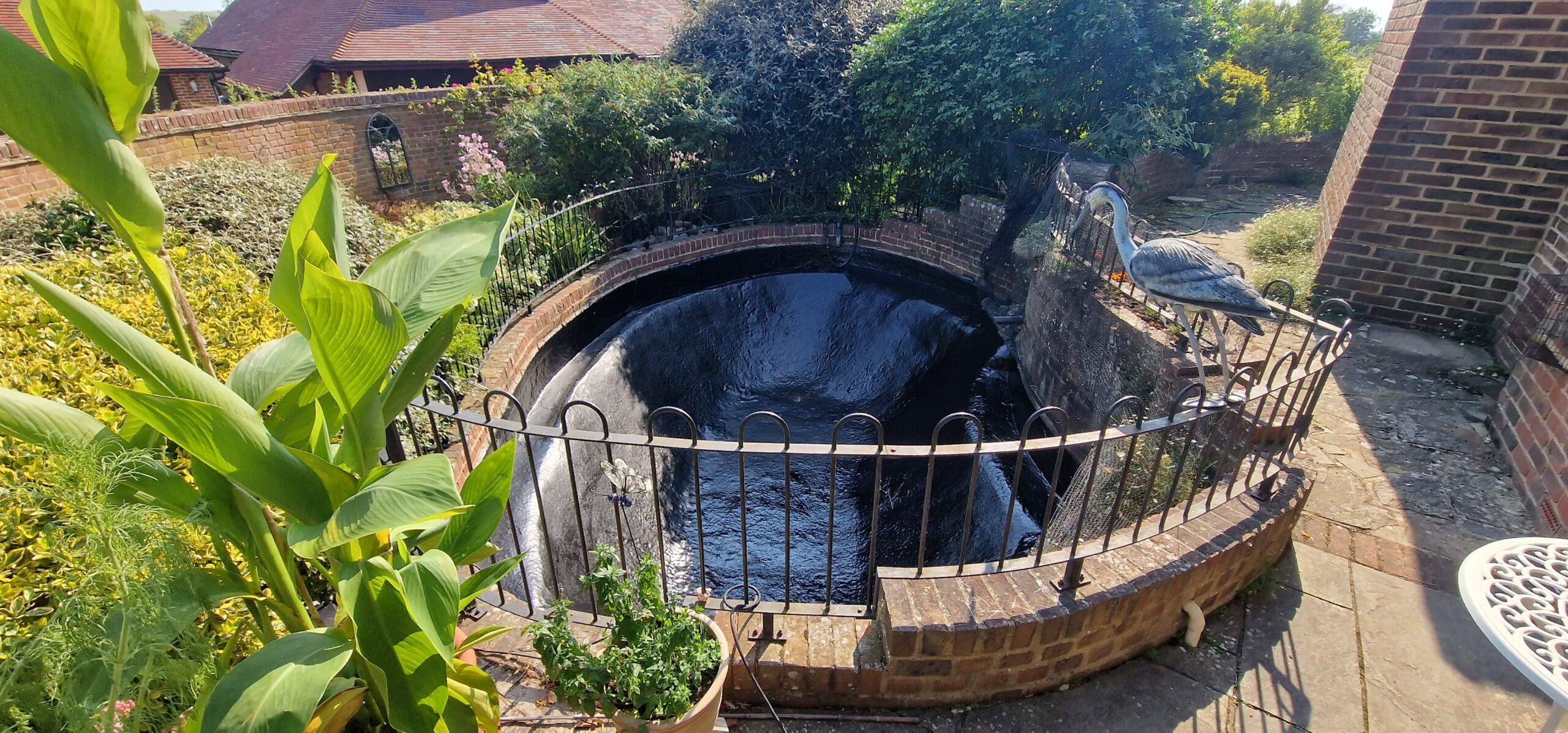
Pond fibreglassing advice and guides
If you are looking for more detailed information about pond fibreglassing, we have created a range of in depth guides covering installation, preparation, lifespan, and long term performance.
Use these guides to understand the decisions involved and prepare useful questions for your installer or materials supplier.
You can explore the full guides below:
What is pond fibreglassing?
Converting a liner pond to a fibreglass pond
Fibreglass vs liner
How to prepare your pond for fibreglass installation
The lifespan of a fibreglass pond and how to extend it
How fibreglass is installed
The difference between DIY fibreglassing and hiring a professional
Insulating and fibreglassing koi ponds
Areas we cover
We provide professional pond and swimming pool fibreglassing services across the South East, covering a wide range of residential and commercial projects.
Our core service areas include Kent, London, Essex, Surrey, and Sussex. We also regularly carry out fibreglassing work in Hertfordshire, Suffolk, Cambridgeshire, Norfolk, Buckinghamshire, Bedfordshire, Berkshire, and Oxfordshire, with many of these areas supported by dedicated service pages.
Each project is assessed individually, taking into account access, structure, intended use, and long term performance. This allows us to plan the installation properly and ensure the finished pond performs as expected.
We are able to travel further for larger or more specialised projects, particularly where full pond builds or fibreglass conversions are involved. If you are based outside these areas, feel free to get in touch as we may still be able to help.
Contact Us
Please get in touch to discuss your pond needs and we will get back to you as soon as possible.
matt@thatpondguy.co.uk
07368 372129
Frequently asked questions about DIY vs professional fibreglassing
Is it better to fibreglass a pond yourself or hire a professional
Choose according to the pond’s requirements and your ability to carry out each stage.
An experienced installer can help with preparation, fittings and application. DIY can also work when the structure, materials and workmanship are suitable; neither route guarantees a trouble-free result.
Can I fibreglass a pond myself
Yes, provided you can meet the requirements of the chosen system.
Assess the structure, working conditions, tools and safety arrangements first. If preparation or a fitting detail is unclear, get advice before committing materials to the pond.
How difficult is DIY fibreglass pond installation
It is a technical job with several stages that must work together.
Preparing the surface, working the resin into the reinforcement and managing curing conditions all need care. A small pond is not automatically an easy project if access or connections are difficult.
What are the risks of DIY fibreglassing
Risks include poor curing, trapped air, unsuitable preparation and leaks around details.
Resins and reinforcement also require appropriate handling. Read the product instructions and safety data, and plan fish accommodation and protection of the surrounding area before work starts.
Why do people choose professional fibreglass installation
The main benefit is relevant experience and help planning the details.
An installer can assess readiness and discuss the specification and connections. Check previous pond work and the agreed scope instead of assuming the word professional guarantees the result.
Is professional fibreglassing worth the cost
It can be worthwhile where the work exceeds your experience or available time.
Compare the full scope, including preparation and fittings. A clear specification and relevant workmanship matter more than assuming the highest quote will have the fewest future problems.
How much cheaper is DIY fibreglassing
There is no fixed saving that applies to every pond.
You may save labour charges, but tools, protective equipment, preparation, waste and fish accommodation still cost money. Compare a complete DIY budget with a quotation covering the same work.
Does DIY fibreglassing last as long as professional work
Lifespan depends on the finished system and its support, rather than the label DIY or professional.
Good preparation, compatible materials, correct application and subsequent care matter in either case. We would not promise a number of extra years simply because an installer was paid.
What tools are needed for DIY fibreglassing
The equipment depends on the materials and application method being used.
Common items include suitable rollers, brushes and measuring or mixing equipment, alongside the protective equipment specified in the safety information. Obtain the system supplier’s full requirements rather than treating a short online list as sufficient.
How long does DIY fibreglassing take compared to a professional
An experienced installer may complete the application more efficiently, but there is no universal time difference.
Both routes still require preparation and the specified curing and commissioning periods. Allow for weather, access and any faults discovered before the lining starts.
Can mistakes in fibreglassing be fixed
Some defects can be repaired after their cause has been identified.
A local surface defect is different from widespread poor adhesion or movement beneath the lining. Seek advice on compatible repair materials and address the underlying problem first.
Do professionals use better materials than DIY kits
Not necessarily. Materials should be judged by their suitability and specification.
A DIY kit and a professional installation may use comparable products, or very different systems. Ask what is included, whether it is intended for the pond’s use and how it must be applied.
Is fibreglassing messy or hazardous
Yes. Materials need careful handling and appropriate precautions.
Follow the product safety data for ventilation, protective equipment, storage and disposal. Keep fish and other animals away from the work area and do not assume that a garden setting removes exposure risks.
What is the most difficult part of fibreglassing a pond
Preparation and detailed connections often need the most thought.
An apparently smooth surface may still have moisture or structural problems. Drains, returns and windows need an agreed detail, as well as careful application around them.
Can weather affect DIY fibreglassing
Yes. Conditions affect application and curing for professional work as well as DIY.
Follow the chosen products’ temperature and moisture limits and plan suitable weather protection. A fixed timetable should not take priority over whether the substrate and conditions are ready.
When is DIY fibreglassing a good option
It may suit someone with relevant skills, adequate time and a sound, manageable project.
The budget should include the whole job, not just resin and matting. Be prepared to seek help where the structure or a technical detail is outside your experience.
When should I hire a professional instead
Seek a specialist assessment where the structure, leaks or fittings are uncertain.
Complex shapes, windows, access limitations or a tight fish-care timetable can also make professional help useful. Discuss the specific challenges before choosing the scope of work.
Does professional fibreglassing come with a guarantee
Check the written terms for the particular quotation.
Ask what is covered, for how long, what is excluded and who handles a problem. Do not assume that every installer or material system offers identical protection.
Will a professional finish look better than DIY
Experience can help produce a tidy, consistent finish.
Look at comparable completed projects and discuss the appearance you expect. A good-looking surface alone does not prove the preparation or connections underneath are sound.
What is the biggest mistake people make with DIY fibreglassing
Rushing preparation or starting without understanding the chosen system can be costly.
We cannot rank one mistake as universally the most common. Check substrate readiness, fitting details, working conditions and instructions before mixing materials.
