






Fibreglass vs Pond Liner
Fibreglass vs. Liner: Choosing the Best Option for Your Pond
Choosing a pond lining starts with the structure you are building and how you want to use it. This guide compares fibreglass applied on site, also called glass reinforced plastic or GRP, with flexible sheet liners such as EPDM rubber and PVC. A preformed fibreglass pond is a separate product with a shape made in advance.
There is no single best lining for every pond. Compare the exact material, supporting structure, installation requirements and access for future maintenance before choosing.
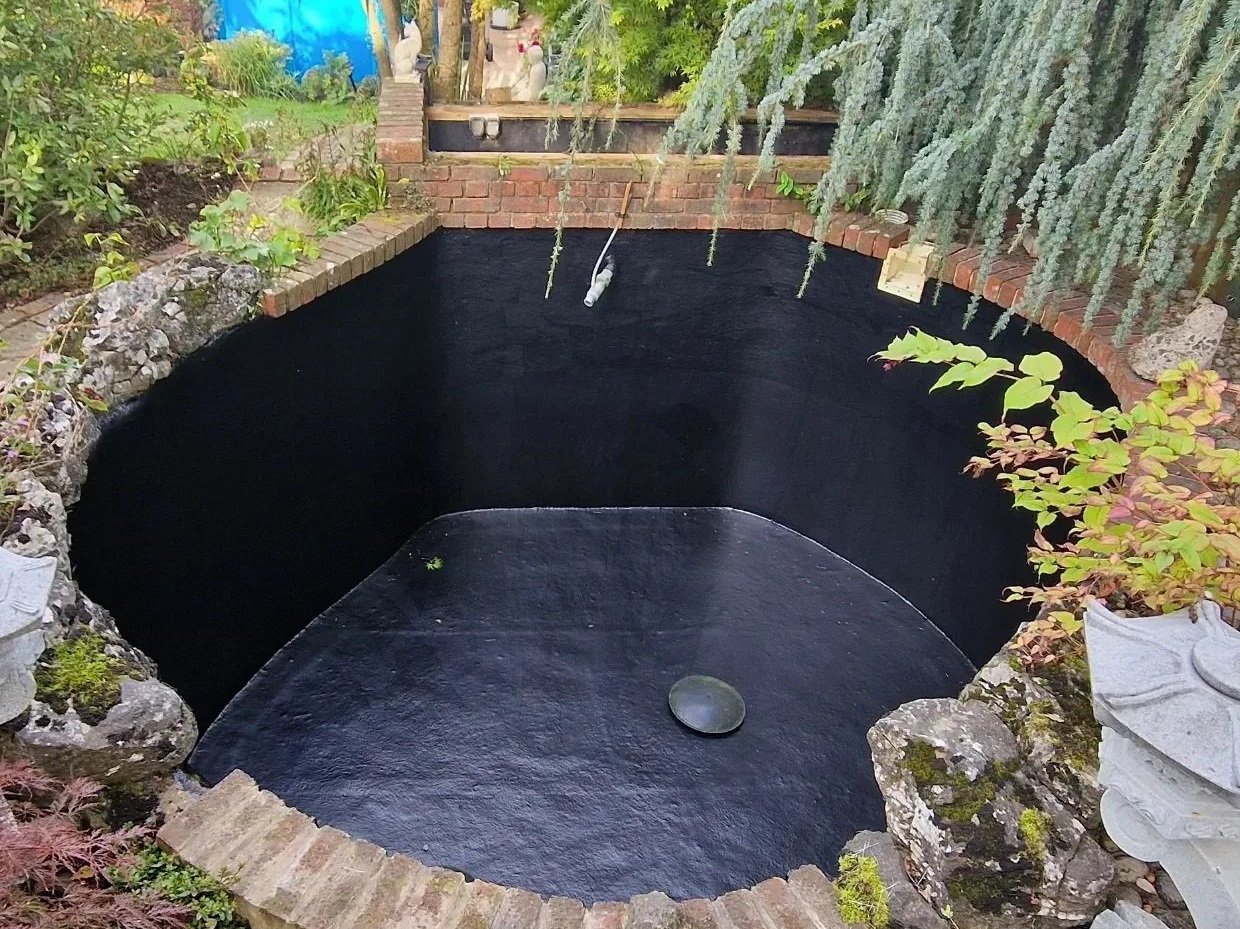
Strength and durability
One of the biggest differences between fibreglass and pond liners is how they perform over time.
An applied GRP lining forms a rigid laminate over a prepared structure. The supporting base and walls, surface preparation and application conditions are part of the system; the lining should not be treated as a substitute for a sound pond structure.
Flexible liners are not all the same. EPDM rubber and PVC have different properties, and performance depends on the specified product, protection and installation. Compare the material specification and warranty terms rather than assuming that every flexible liner will behave alike.
Our pond fibreglassing service can assess whether the existing structure is suitable for an applied GRP lining.
Resistance to damage
Damage resistance is another key factor when comparing fibreglass and liners.
Sharp objects can damage a flexible liner. Careful preparation and suitable protective underlay help reduce this risk. Gordon Low recommends underlay beneath its liners to protect against stones and roots and reduce localised stretching.
A GRP lining also needs careful preparation and detailing. Inspect the supporting structure and the areas around drains, returns and other fittings before deciding on the lining system.
Pond size alone does not decide the material: Gordon Low supplies EPDM for ponds and lakes as well as smaller water features.
UV and weather resistance
Outdoor ponds are constantly exposed to changing weather conditions, so the ability of the lining to withstand these conditions is essential.
For GRP, follow the requirements of the chosen resin and finish. The East Coast Fibreglass construction guide calls for a dry prepared surface and suitable weather conditions during application and curing.
Do not assume that rubber pond liners become brittle in sunlight. Gordon Low describes its SealEco EPDM as resistant to ageing from UV exposure and temperature extremes. This is a product specific property, not a claim about every liner material.
Check the weathering information for the exact liner or GRP system being proposed, together with its installation and maintenance requirements.
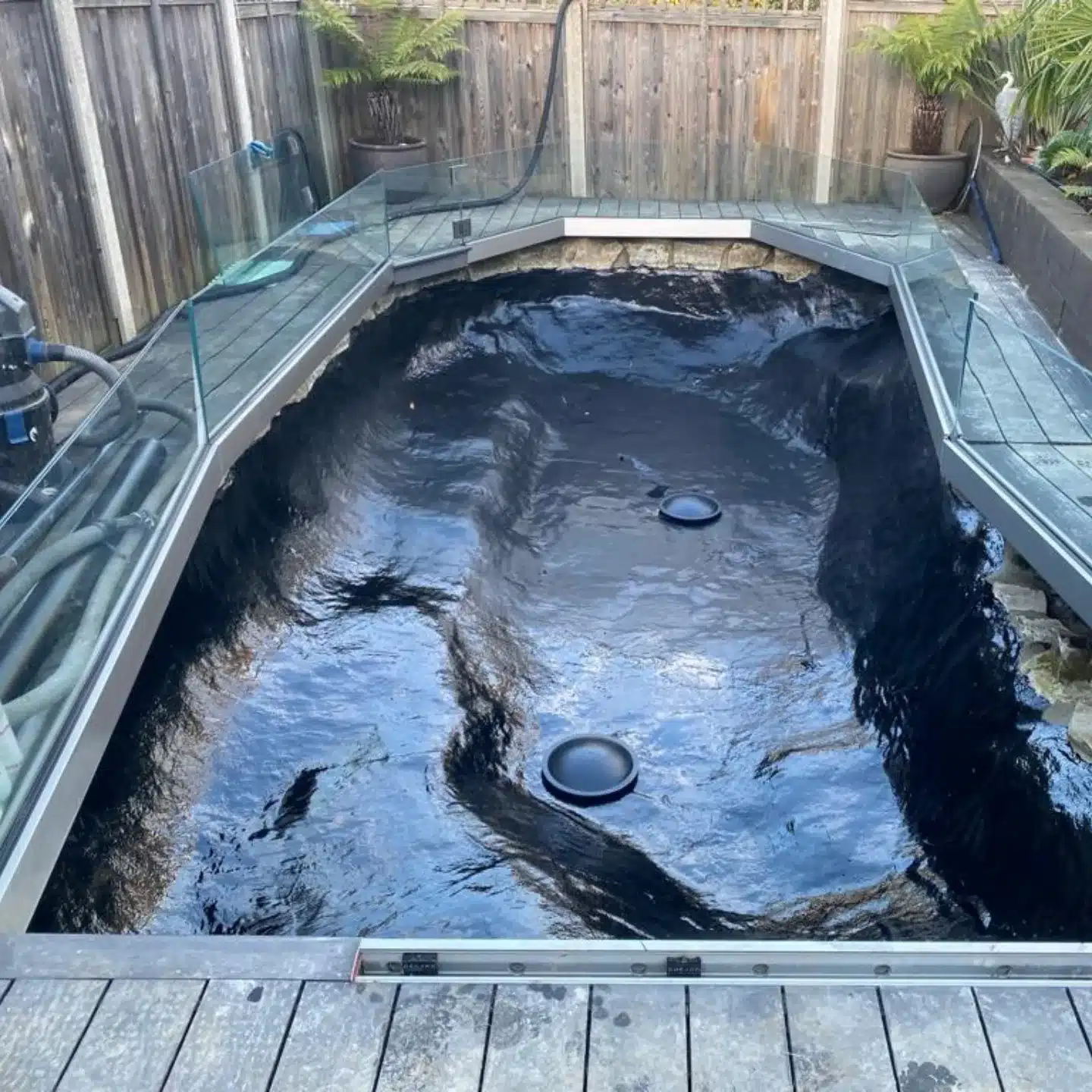
Appearance and finish
The visual difference between fibreglass and liners is often immediately noticeable.
Fibreglass creates a smooth, seamless surface with clean lines and a consistent finish throughout the pond. This makes it ideal for formal pond designs and koi ponds where appearance is important.
A flat sheet liner usually needs folds to fit the pond shape. However, made to measure box welded liners are a different option: Gordon Low fabricates them to the pond dimensions so they fit without those installation folds.
Fibreglass also allows for greater control over the final appearance, with different colour finishes available to suit the design of the pond.
Maintenance and cleaning
Consider how you will reach the walls, floor and fittings for inspection and cleaning.
A smooth GRP finish offers a continuous surface to inspect and clean. It does not remove the need for routine pond care.
Where a sheet liner has folds, include them in the cleaning plan. A fitted box liner can reduce folds; compare the actual finished shape rather than treating all flexible liners as identical.
Ask how the proposed layout will allow debris removal and maintenance without damaging the lining.
Cost and long term value
Cost is often a deciding factor when choosing between fibreglass and liners.
Compare complete quotations for the same pond. Include preparation, supporting construction, the lining, fittings, access and the work needed to protect existing fish and equipment.
For a GRP proposal, check what surface preparation, weather protection and curing requirements are included. For a flexible liner, check the material, underlay and any fabrication or fitting work.
Neither material name establishes the cheaper lifetime option. Compare the scope, warranty exclusions and practical repair arrangements before making that decision.
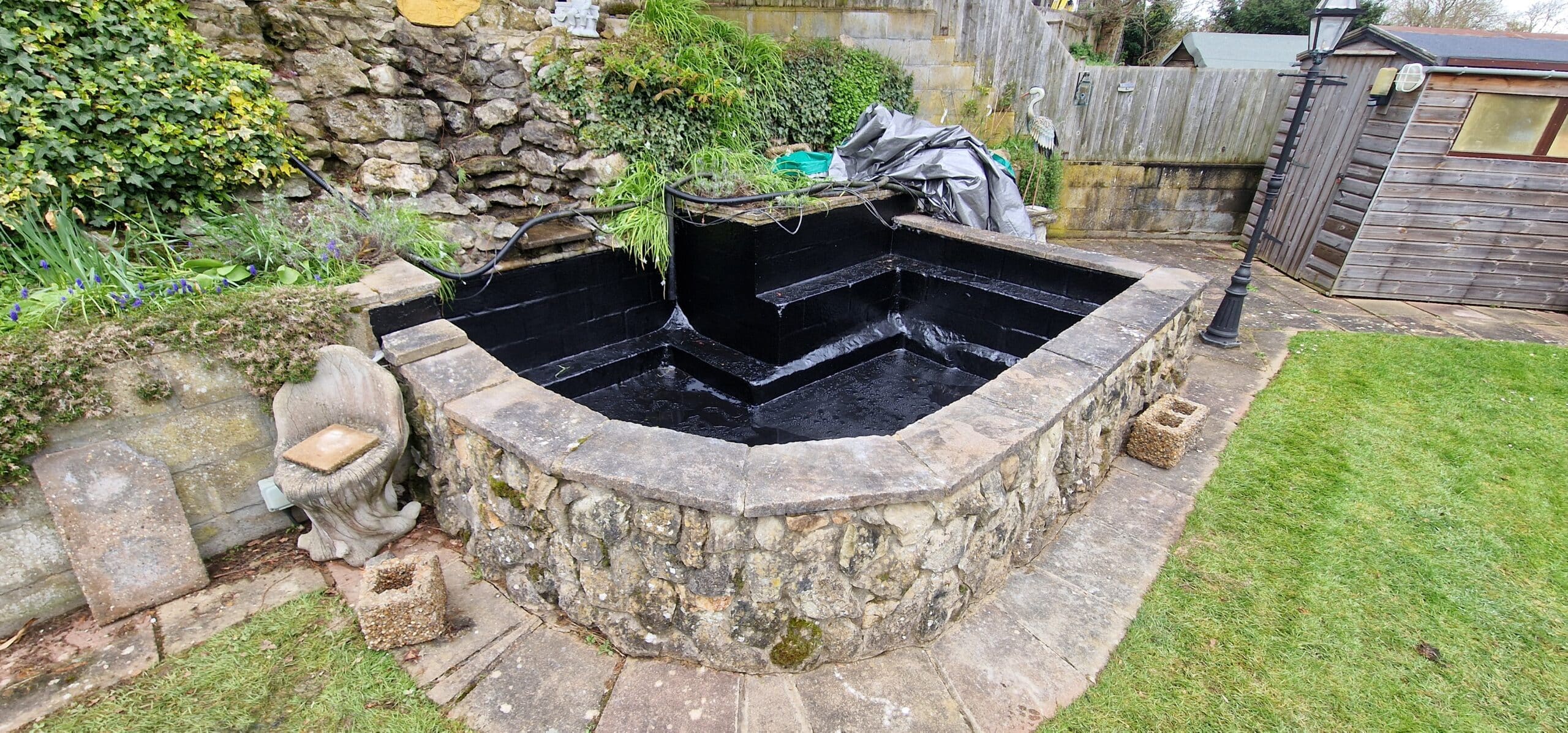
Pond fibreglassing advice and guides
If you are looking for more detailed information about pond fibreglassing, we have created a range of in depth guides covering installation, preparation, lifespan, and long term performance.
These guides are based on real projects and practical experience, helping you understand what to expect and how to get the best results from your pond.
You can explore the full guides below:
What is pond fibreglassing?
Converting a liner pond to a fibreglass pond
Fibreglass vs liner
How to prepare your pond for fibreglass installation
The lifespan of a fibreglass pond and how to extend it
How fibreglass is installed
The difference between DIY fibreglassing and hiring a professional
Insulating and fibreglassing koi ponds
Areas we cover
We provide professional pond and swimming pool fibreglassing services across the South East, covering a wide range of residential and commercial projects.
Our core service areas include Kent, London, Essex, Surrey, and Sussex. We also regularly carry out fibreglassing work in Hertfordshire, Suffolk, Cambridgeshire, Norfolk, Buckinghamshire, Bedfordshire, Berkshire, and Oxfordshire, with many of these areas supported by dedicated service pages.
Each project is assessed individually, taking into account access, structure, intended use, and long term performance. This allows us to plan the installation properly and ensure the finished pond performs as expected.
We are able to travel further for larger or more specialised projects, particularly where full pond builds or fibreglass conversions are involved. If you are based outside these areas, feel free to get in touch as we may still be able to help.
Which option is right for your pond
The best choice depends on the type of pond you are building and your long term goals.
Consider a flexible liner when its specification and installation method suit the pond shape and supporting ground or structure. Sheet EPDM and fitted box liners offer different ways to deal with shape and folds.
Consider applied GRP where a suitably prepared rigid structure and the required working conditions are available, and you want a continuous finish around the pond details.
Final thoughts
Both applied GRP and flexible liners can be appropriate choices. The useful comparison is between complete, correctly specified installations.
Bring photographs, approximate dimensions and details of any leaks, cracks or planned changes to an assessment. These help identify what must be addressed before lining work starts.
The contact form below lets you include your postcode, pond dimensions and photographs so we can discuss the next step for your project.
Contact Us
Please get in touch to discuss your pond needs and we will get back to you as soon as possible.
matt@thatpondguy.co.uk
07368 372129
Frequently asked questions about fibreglass vs pond liners
Is fibreglass better than a pond liner
Not in every situation. Choose between applied GRP and a specified flexible liner by considering the structure, pond details, installation conditions and maintenance access.
GRP offers a continuous finish over a prepared structure. Flexible liners include different materials and fitted options, so they should not be judged as one uniform alternative.
What is the main difference between fibreglass and pond liners
The main difference is that fibreglass forms a solid shell, while a pond liner is a flexible membrane.
Applied GRP is installed over a prepared structure. A flexible liner is fitted to the pond, with protection and detailing appropriate to the material. A preformed pond is a separate shaped unit.
Which is cheaper, fibreglass or a pond liner
The answer depends on the complete project scope and the exact products and installation being quoted.
Compare construction, preparation, fittings and protection as well as the lining price. Do not assume a lifetime saving without comparable evidence.
Do pond liners leak more than fibreglass ponds
Neither option is a guarantee against leaks. Ask how fittings, edges and any existing damage will be dealt with in the proposed installation.
Have an existing leak assessed before choosing a repair or replacement. Damage, pond details and the condition of the supporting structure need to be considered for the proposed system.
Does fibreglass last longer than rubber pond liners
Compare the exact products and how they will be installed and maintained, rather than assuming that GRP always lasts longer than rubber.
For example, Gordon Low describes SealEco EPDM as resistant to ageing from UV and temperature extremes. Check the specification and warranty for each proposed system.
Which is better for a koi pond, fibreglass or liner
Choose the lining as part of the complete koi pond design, including its structure, fittings and access for maintenance.
A GRP finish can suit a prepared formal pond, while a correctly specified liner remains an option. Water quality needs to be considered as part of the wider pond design.
Are pond liners harder to maintain than fibreglass
Maintenance depends on the finished shape, access and installation, rather than the material name alone.
Consider access to any sheet liner folds and fittings. A fitted box liner can reduce folds, while a continuous GRP surface also needs routine inspection and cleaning.
Can you replace a pond liner with fibreglass
Yes, a pond liner can be replaced with fibreglass as part of an upgrade.
The existing pond must first be assessed for a suitable supporting structure and preparation. Replacing the lining may involve building work; it is not simply a coating applied over the old liner.
Does fibreglass look better than a pond liner
Appearance is a design preference. GRP can provide a continuous finish, and fitted liners offer another way to achieve a tidy pond interior.
Compare examples of the actual systems and shapes being proposed. Flat sheet liner folds are not a feature of every liner installation.
When should I choose a pond liner instead of fibreglass
Consider a liner when the chosen material and fitting method suit your pond and the complete project budget.
A liner is not only a temporary or small pond option. Discuss the shape, protective layers and fittings, and compare it with the structural and installation requirements of GRP.
