






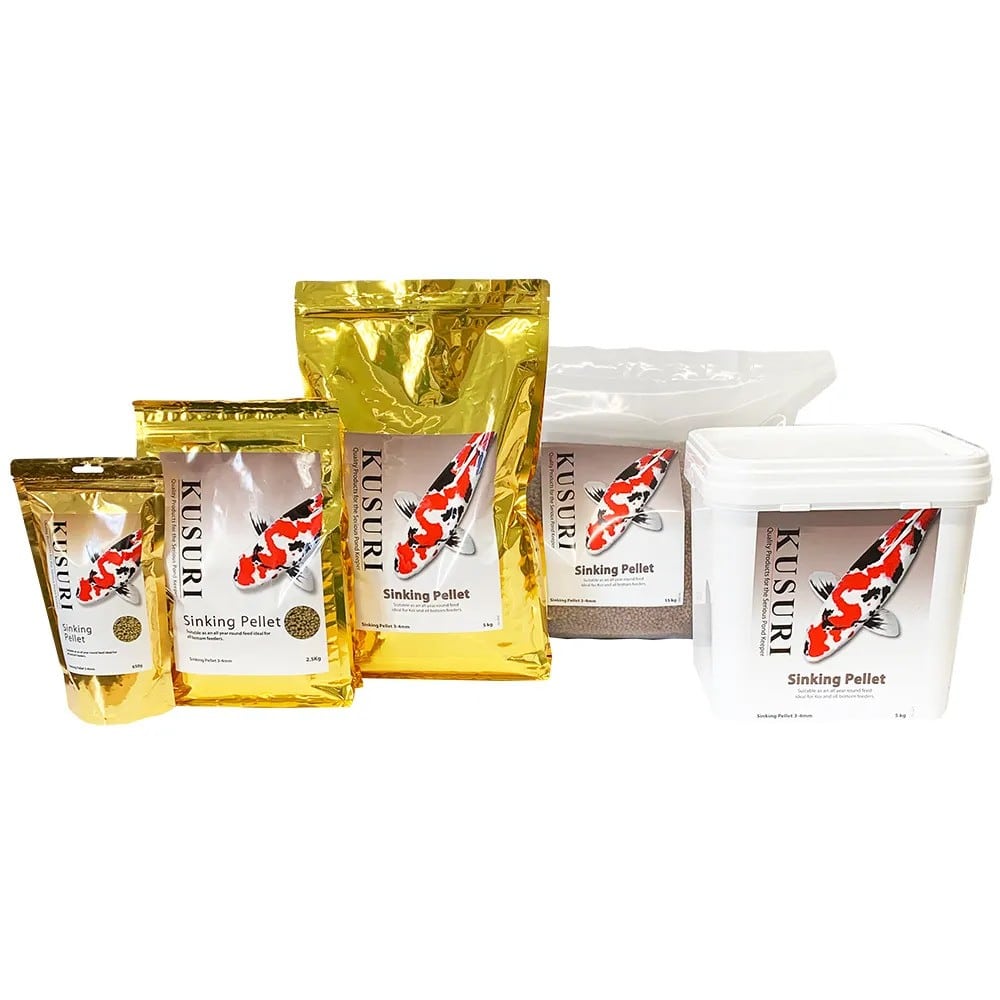
Kusuri Sinking Pellet
| Bag Size | 5kg, 15kg |
|---|---|
| Brand | |
| Pellet Size | Medium Pellet |
| Food Type | Health / Probiotic, Staple / Complete |
| Feeding Season | All Season / Year Round |
| Pellet Behaviour | Sinking |
Kusuri Sinking Pellet is a complete pond fish or koi food for regular feeding, depending on season, water temperature and fish activity. Feed little and often where possible, remove uneaten food, and keep water quality checks part of the feeding routine.
Price range: £49.99 through £122.99 (inc VAT)
Kusuri Sinking Pellet
Sinking pellets for bottom feeding koi and pond fish
Kusuri Sinking Pellet is a sinking food for koi or pond fish that feed more confidently below the surface within the Kusuri koi food range. The key points to compare are the food type, season, pellet behaviour, feeding guidance and nutritional information, because those details matter more than bag size alone.
Use it according to water temperature, fish activity and how strongly the filter is currently performing. The sinking pellet format is useful for fish that feed below the surface, but it should be fed carefully because uneaten sinking food is harder to see and remove. Available options include 15kg Medium Pellet, 5kg Medium Pellet pack sizes with pellet details shown in the product selector, so it can be matched to pond size, fish size and how quickly you are likely to use the food while it is still fresh.
Real pond feeding notes
Kusuri Sinking Pellet is best chosen as part of a complete feeding routine rather than as an isolated bag of food. Consider the fish size, season, pellet size, water temperature, stocking level and filter maturity before deciding how much to feed.
A good koi food should be easy to feed, accepted confidently and cleared quickly without leaving waste behind. If food is still visible after a few minutes, reduce the next feed. If the fish are active and tests remain stable, feeding can be built up gradually during warmer months.
- Match pellet size to the fish in the pond.
- Feed small amounts and remove uneaten food where possible.
- Adjust feeding when water temperature changes.
- Use regular water testing to support safe feeding.
The best result comes from matching the food to the pond rather than using the same feed at the same rate all year. Temperature, fish behaviour, stocking level and filter maturity should all influence how much is fed.
When sinking food is the better choice
The nutritional section below summarises the key formula notes and analytical values, helping you compare protein, oil and fat, fibre, ash, vitamins and specialist ingredients across the koi food range.
When comparing koi foods, the main questions are whether you need growth, colour, wheatgerm, health support, sinking behaviour or a dependable everyday diet. The best choice may also change through the year, so this food should be compared with similar products in the same brand range and with alternative foods designed for different water temperatures.
Because sinking foods are harder to monitor than floating pellets, start with smaller amounts and watch carefully to make sure the food is being eaten. This is particularly important in deeper ponds, mixed fish ponds or ponds with bottom drains where uneaten food can be pulled away before fish have finished feeding.
Bag size and pellet size also matter. Large bags can be better value on ponds with a high feeding rate, but smaller bags are often the better choice where food would otherwise sit open for too long; similarly, smaller pellets suit young koi and mixed fish, while larger pellets are usually better for bigger koi that feed confidently.
Whatever food you choose, feeding should be adjusted to the pond rather than the calendar alone. Regular checks of ammonia, nitrite, nitrate, KH and pH are especially important when increasing feed, changing food, adding new fish or feeding heavily during warm weather.
Keep food fresh by buying a size you can use sensibly, then store it sealed, cool and dry. Large bags are economical for busy ponds, but smaller packs can be better where only a small amount is fed each week.
Kusuri Sinking Pellet should be chosen around the pond in front of you: fish size, water temperature, filtration, stocking level and how confidently the fish feed. Pellet size matters because food that is too large can be wasted, while food that is too small may encourage frantic feeding and more debris.
Buying and feeding advice
Key Benefits
- Sinking pellets help fish feed below the surface
- Feed according to water temperature and fish activity
- Store sealed, cool and dry to protect freshness
Nutritional Information
- Composition / formula notes: Wheatfeed, Guar Meal, Soya Bean Meal, Fish Meal, Dehulled Horse Beans, Wheat, Maize Gluten, Fish Oil
- Crude Protein: 33.0%
- Crude Fibre: 4.2%
- Crude Ash: 6.0%
- Phosphorus: 0.8%
- Calcium: 0.6%
- Sodium: 0.2%
- Vitamin A: 6,000 IU
- Vitamin D3: 2,250 IU
Feeding and Storage Guide
- Feed according to water temperature, fish activity and biological filter maturity.
- Offer small amounts that are cleared quickly, rather than leaving uneaten food in the pond.
- Take extra care with sinking food because uneaten pellets are harder to see and remove.
- Reduce feeding if ammonia, nitrite or water clarity deteriorate after feeding.
- Store sealed in a cool, dry place away from damp, pests and direct sunlight.
Useful Koi Food Links
Kusuri Multiseason With Koso P | Kusuri Premium With Koso P | Kusuri Wheatgerm With Kōso X | Kusuri Growth Koi Food | Burtons Growth Sinking Food | Browse Kusuri koi food | Browse all koi food | Water testing products for feeding checks
Related koi food options
- Compare with Kusuri Staple Koi Food if you want another same brand option.
- Compare with Aqua Source Balance Plus 50/50 Sinking & Floating Koi Food if you want another sinking alternative.
- Browse more Sinking Koi Food to compare similar foods, bag sizes and feeding seasons.


Reviews
There are no reviews yet.