





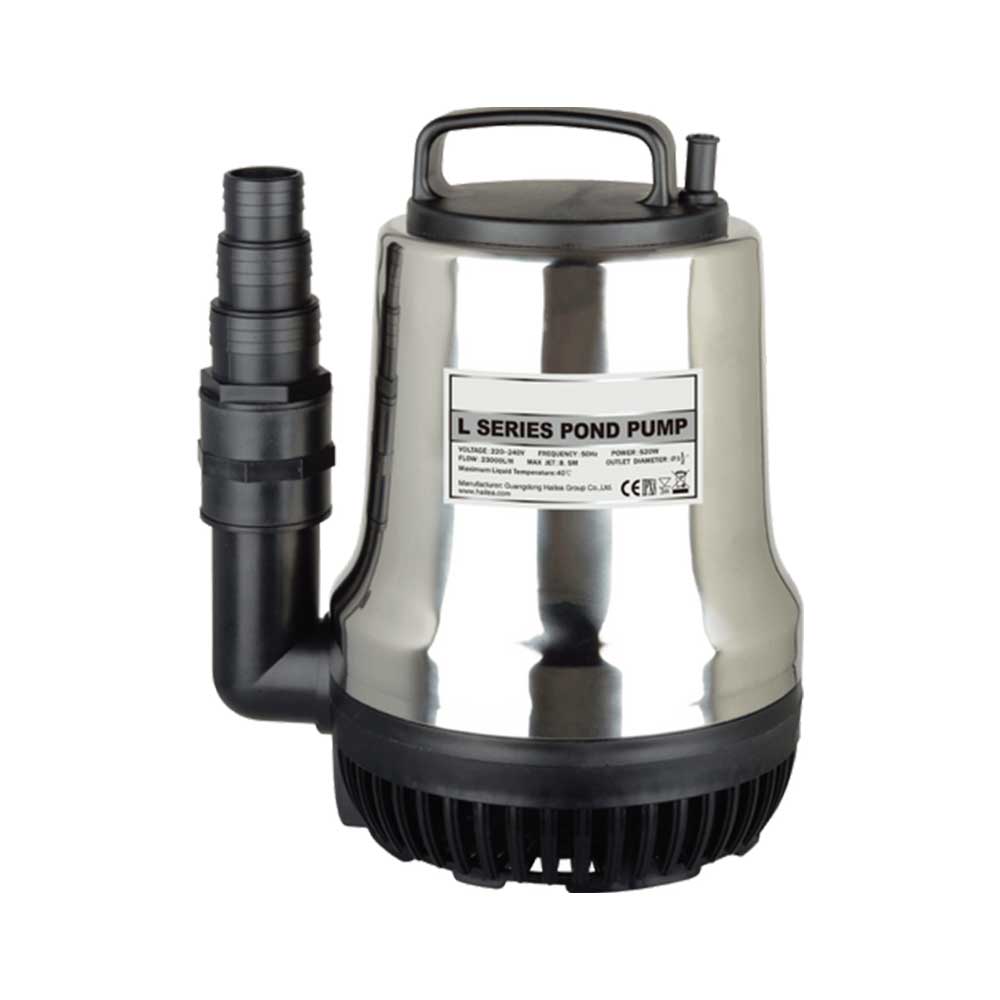
Charles Austen L20 Pond Pump
| Brand | |
|---|---|
| Water Flow | 20000 L/hour |
| Max Head | 6.7 m |
| Power | 400 W |
| Pump Type | High pressure filter pump |
Charles Austen L20 Pond Pump: high-head submersible pond and aquaculture pump for medium to large ponds, filter systems and substantial water features. Maximum output 20000 L/hour. Maximum head 6.7 m. Rated power 400 W. Supplied by Charles Austen.
£120.96 (inc VAT)
Charles Austen L20 Pond Pump
Charles Austen L20 Pond Pump is a high-head submersible pond and aquaculture pump intended for medium to large ponds, filter systems and substantial water features. Its published maximum output is 20000 L/hour with a maximum head of 6.7 m, using 400 W. This page identifies the exact model, duty figures and selection limits so it can be compared accurately with the other products in the range.
Charles Austen is both the product brand and supplier. The figures below come from the current 2026 supplier catalogue, supported by manufacturer guidance where a current technical page is available. Maximum figures are not the same as guaranteed installed performance: pipework, depth, pressure, media loading and maintenance all affect the result.
Who is the L20 best suited to?
This model is best considered for medium to large ponds, filter systems and substantial water features. It sits 4 of 6 when the range is ordered by nominal output/capacity. That makes it easier to judge whether it is a compact entry model, a mid-range choice or one of the higher-output options before comparing price alone.
Key product features
- Professionally designed impeller for efficient high-volume circulation
- Powered components are epoxy sealed for electrical isolation
- Ceramic bearing construction with temperature-switch protection
- Suitable for freshwater, seawater and other non-acidic/non-alkaline liquids within the manufacturer’s limits
- Exact SKU and manufacturer part number: L20.
- Supplied through Charles Austen and linked to compatible models for easier range comparison.
Technical specification
| Model / MPN | L20 |
|---|---|
| Product type | high-head submersible pond and aquaculture pump |
| Supplier | Charles Austen |
| Brand | Charles Austen |
| Series | L Series |
| Maximum water flow | 20000 L/hour |
| Maximum head | 6.7 m |
| Power | 400 W |
| Energy at 24-hour operation | 9.60 kWh per day (calculated from rated wattage) |
| Installation format | Fully submerged installation with an unrestricted inlet and correctly sized discharge pipe |
| Range position | 4 of 6 when the range is ordered by nominal output/capacity |
| Catalogue specification | 20000 L/hour 6.7m 400W |
Technical figures are nominal supplier ratings. The calculated 24-hour energy figure, where shown, is rated wattage × 24 hours and does not include tariffs or intermittent thermostat operation.
Understanding the published specification
Maximum flow and maximum head describe opposite ends of a pump curve. Maximum flow is measured with minimal restriction, while maximum head is the point at which flow approaches zero. A real pond, aquarium or hydroponic installation operates between those two figures, so 20000 L/hour and 6.7 m maximum head should be considered together.
The catalogue specification for this exact model is 20000 L/hour 6.7m 400W. Where the page includes a calculated daily-energy figure, it is provided only to make continuous-running products easier to compare; it is not an electricity-cost estimate and does not replace the rated power shown above.
How to size this model correctly
L Series pumps combine high flow with substantial maximum head. Calculate vertical lift, friction and fittings, then select the model that delivers the required flow at that operating point rather than at zero head.
For critical livestock, treatment or commercial systems, allow spare capacity and consider redundancy. If the required duty is close to the model’s maximum, moving to the next size normally provides a more useful operating margin than running a smaller unit continuously at its limit.
Installation and commissioning
Installation format: Fully submerged installation with an unrestricted inlet and correctly sized discharge pipe. Keep access available for cleaning and servicing, use appropriately sized hoses or airline, and avoid unnecessary bends or restrictions. Aquatic electrical equipment should be protected by a suitable RCD and installed in accordance with the supplied instructions.
Prime and submerge the pump as required by its instructions, open valves fully and confirm the inlet remains covered. On first use, check the actual return flow, water level and noise. A flow meter is the most reliable way to confirm delivery; judging a waterfall by appearance alone can be misleading.
Commission the complete system by checking actual flow, pressure, water level or temperature at the point of use rather than assuming the headline maximum will be achieved. Recheck after filters, diffusers or pipework have had time to accumulate normal fouling.
Compatible system components
Calculate static lift from the operating water level to the discharge point, then add losses from hose length, small-bore pipe, bends, valves, UV clarifiers and filter media. Oversized pipework normally preserves more flow and uses the pump more efficiently. The return route must also accept the intended flow without overflowing a filter or creating an unsafe water level.
Compatibility should be confirmed from the complete installation: connection size, hose or airline bore, voltage, control method, permitted flow and future servicing access can all affect whether two individually suitable products work correctly together.
Maintenance and service life
Keep the strainer and impeller clear, prevent dry running and inspect for reduced flow or unusual noise. Isolate the pump before handling and remove deposits that can impair cooling or bearing life.
Record the installation date and normal operating performance. A visible reduction in output, increasing noise, rising temperature or repeated tripping should be investigated rather than compensated for by restricting or altering other parts of the system.
Performance checks and fault finding
Reduced flow is commonly caused by a blocked strainer, debris around the impeller, a pinched hose, air trapped in the line or increasing filter resistance. Isolate the electricity before handling the pump. If cleaning restores free movement but performance remains poor, inspect the impeller and shaft for wear before increasing pump size.
Compare any suspected fault with the clean, newly commissioned condition. Changes across every outlet or return normally point to the main unit or a shared restriction; a problem affecting one branch is more likely to be local pipework, airline, a valve, diffuser or connected accessory.
Compare similar pond pumps
The table below links to five nearby models so the buyer and search crawler can move through the range without returning to a search page.
| Model | Key published duty | Product type |
|---|---|---|
| L18 | 18000 L/hour · 6.5 m · 325 W | Pond Pump |
| L23 | 23000 L/hour · 8.5 m · 520 W | Pond Pump |
| L25 | 25000 L/hour · 9.5 m · 620 W | Pond Pump |
| L15 | 15000 L/hour · 5.4 m · 265 W | Pond Pump |
| L12 | 12000 L/hour · 5.0 m · 160 W | Pond Pump |
Complete the system and explore the range
The supplier and customer-facing brand for this listing is Charles Austen. The links below connect this model to its dedicated range, relevant system components and the wider Charles Austen catalogue.
- Browse the Charles Austen L Series
- Browse all Charles Austen products
- Pond filters and filtration
- Pond pipework and fittings
- Compare pond pumps
Technical information sources
Core model figures were checked against the current 2026 Charles Austen supplier catalogue. Family features, installation points and application guidance were cross-checked against current manufacturer technical material where available.





Reviews
There are no reviews yet.