





Oase Vitronic Pond UV Clarifiers
Standalone UVC units for green-water control, from 11 W to 55 W
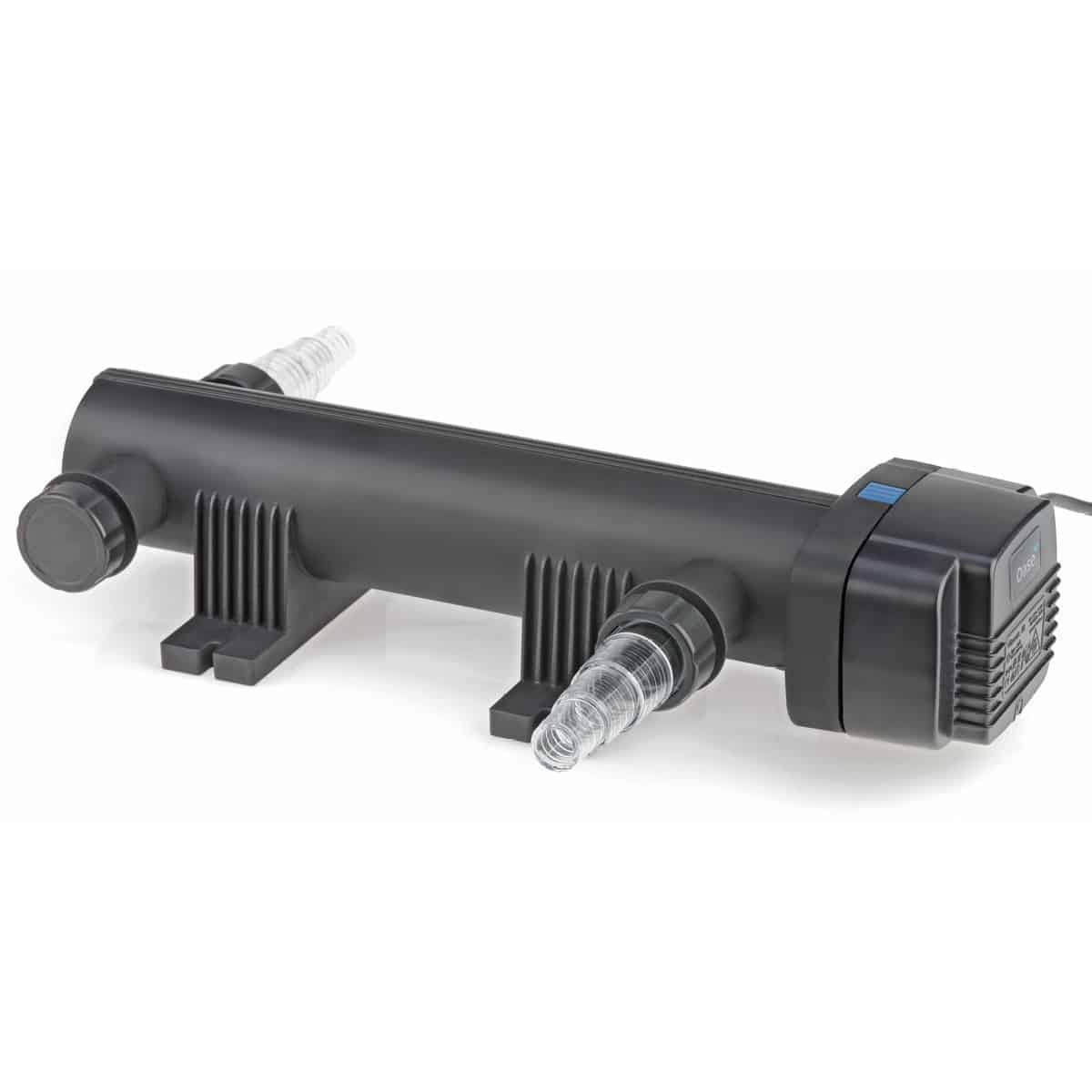
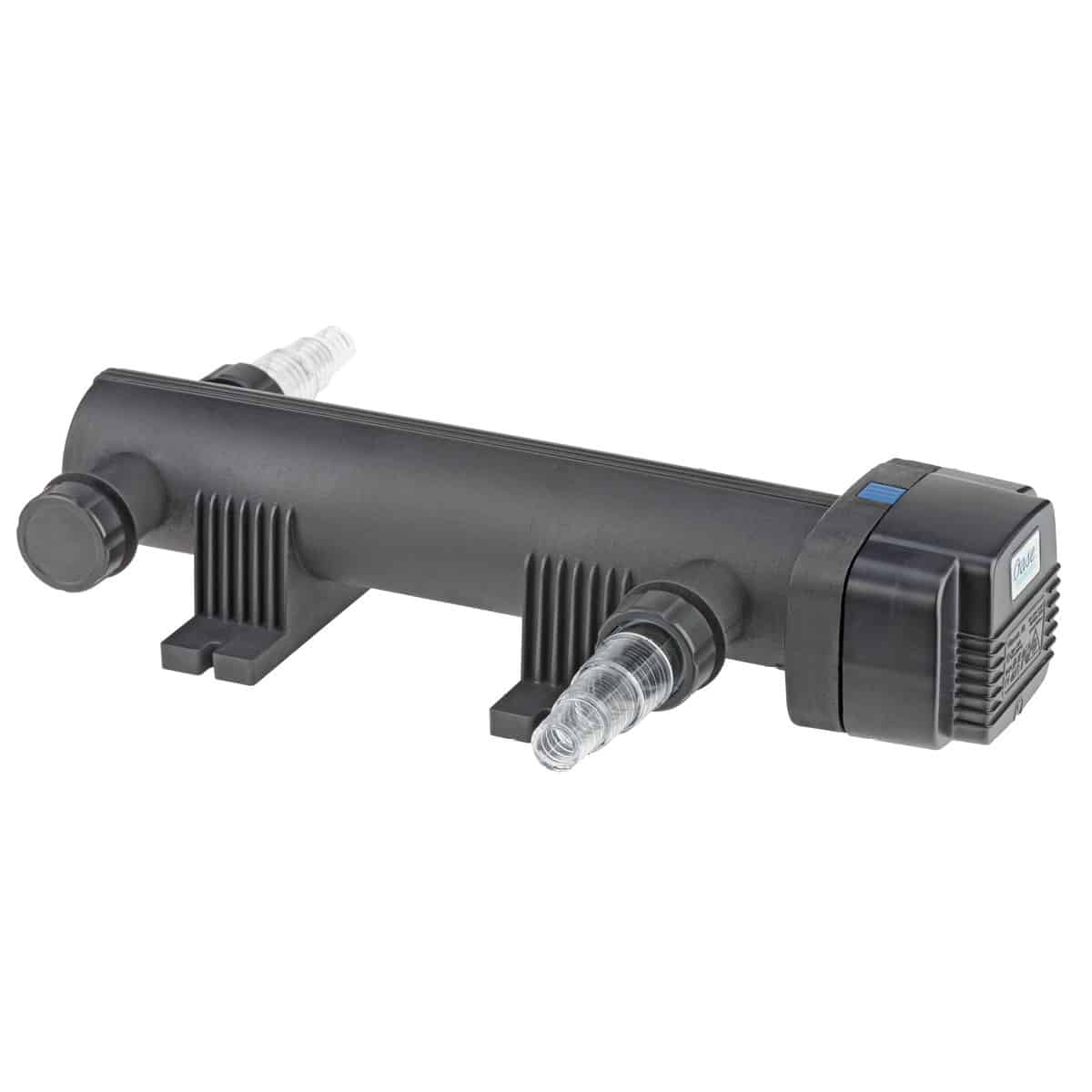
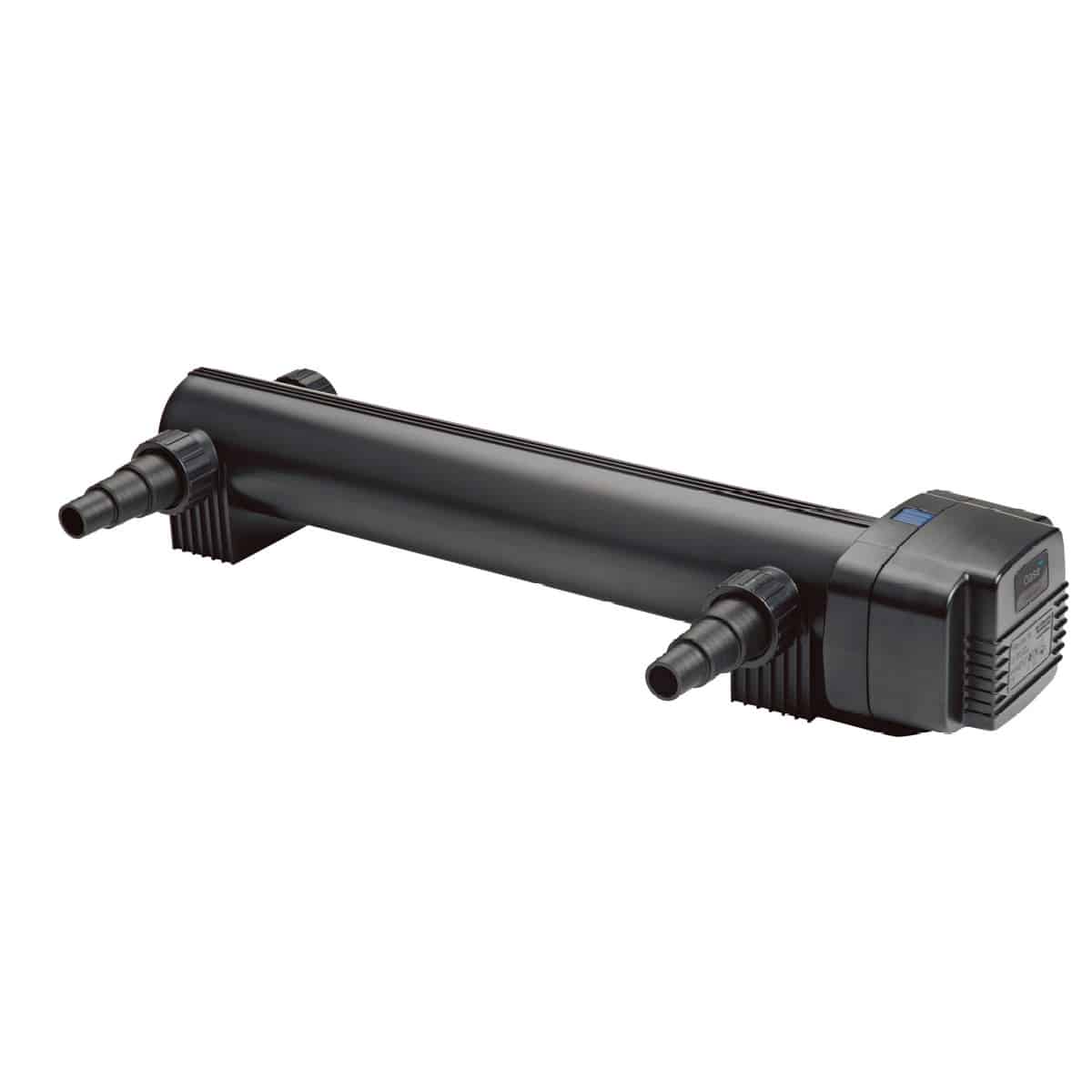
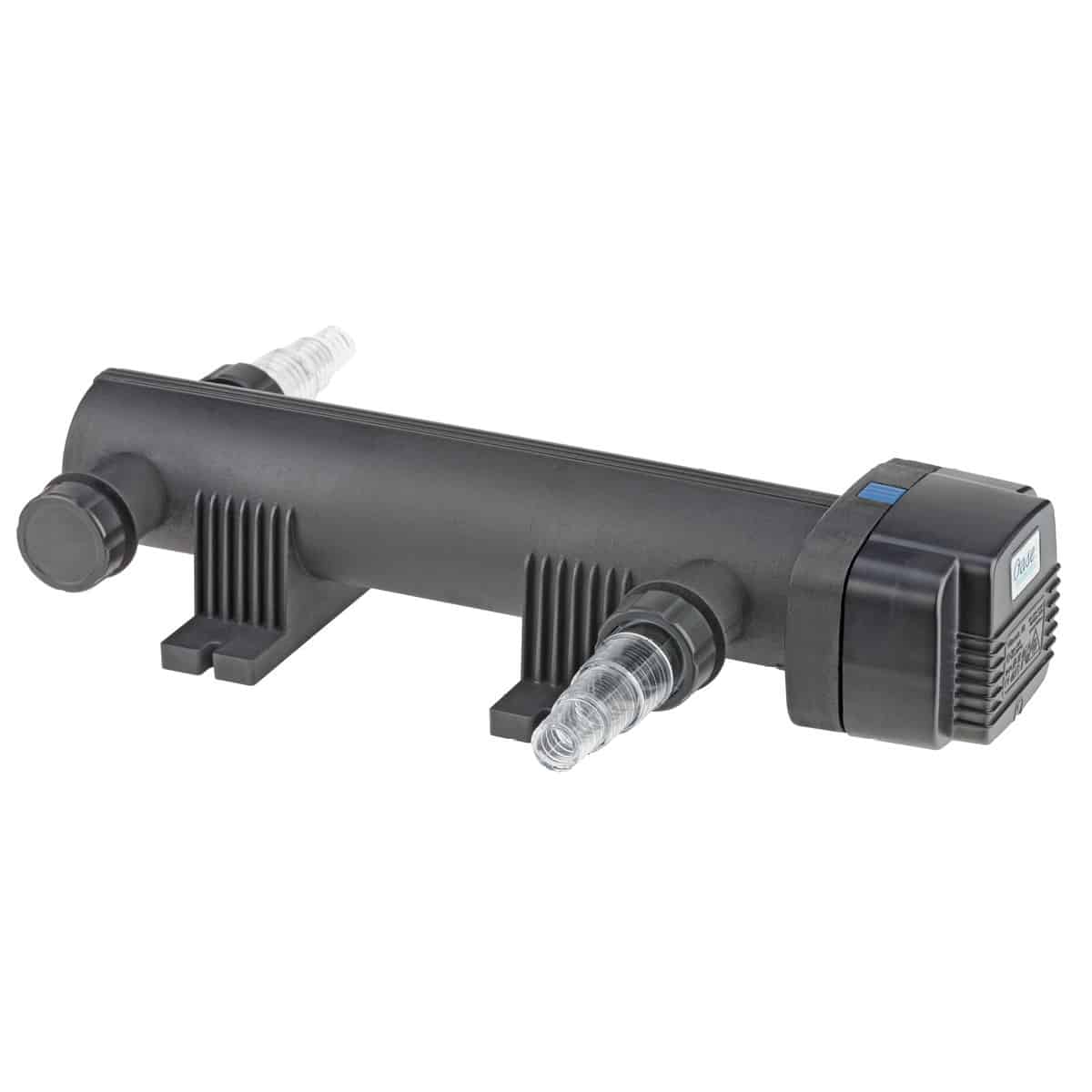
Oase Vitronic UV clarifiers are installed in the pond’s pumped water circuit to expose passing water to ultraviolet light. The UVC damages free-floating algae cells so they clump together and can be captured by the mechanical filter. That is why a correctly sized UV can turn opaque green water clear without adding an algaecide.
The range here includes the Vitronic 11 W, 18 W, 24 W, 36 W and 55 W. The right model depends on pond volume, fish load, sunlight and the real flow through the unit. Oase publishes lower pond-volume ratings for stocked and koi ponds because those systems place a greater demand on filtration.
Our practical view: Do not size a Vitronic from wattage alone. Check the correct Oase rating for an ornamental, stocked or koi pond and keep the installed flow within the model limit. Water moving too quickly receives less exposure, while a dirty quartz sleeve or ageing lamp can make a correctly sized unit perform poorly.
What Vitronic does—and what it does not do
- Targets the suspended single-cell algae responsible for green pond water.
- Reduces the level of bacteria and germs passing through the chamber.
- Works with many Oase filters and suitable filters from other manufacturers.
- Offers quick-release access to simplify lamp and quartz-sleeve servicing.
- Provides a visual function check on the 18 W, 24 W, 36 W and 55 W models; the 11 W does not have the same inspection window.
A UV clarifier does not physically remove waste, replace biological filtration or cure string algae growing on surfaces. It works best as one part of a correctly matched pump, pond filter and maintenance routine.
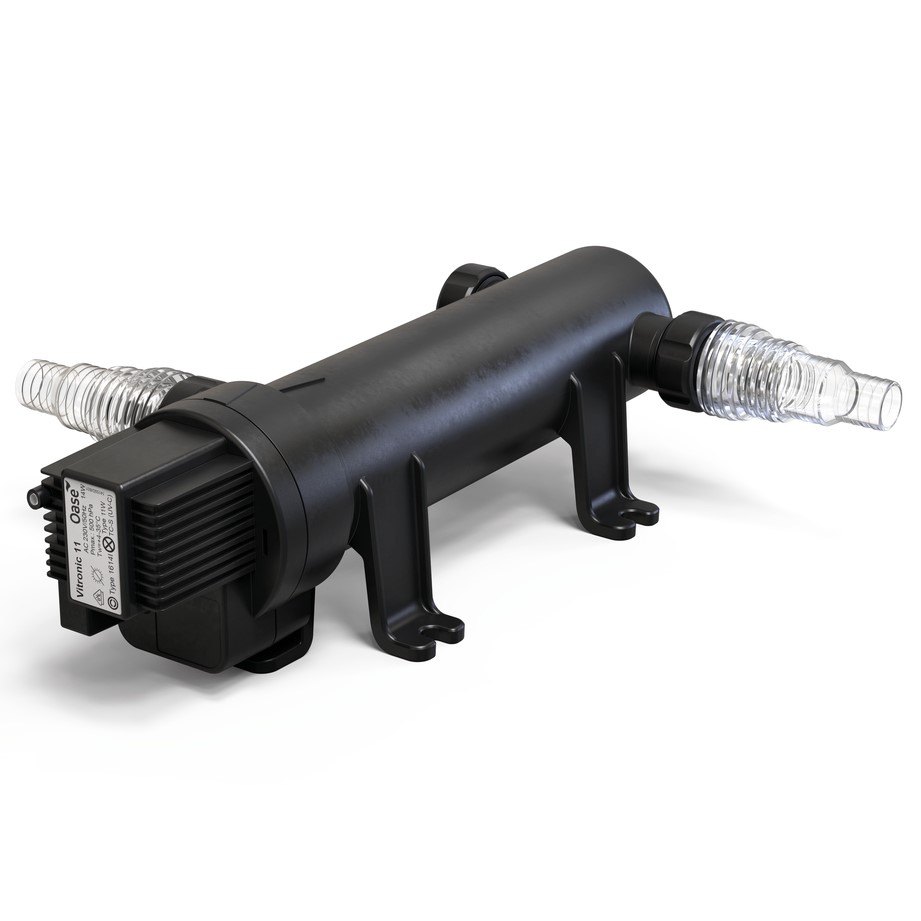
Choosing and Installing an Oase Vitronic UVC
The most useful sizing figure is the manufacturer’s rating for your type of pond—not the largest headline volume. A lightly planted ornamental pond, a pond with goldfish and a heavily stocked koi pond of the same volume can need very different UVC capacity. Strong sunlight, shallow water and high nutrient levels also encourage green water.
Oase Vitronic models in this category
- Oase Vitronic 11 W – the compact entry model for smaller ponds; check its lower flow and pond-volume limits carefully.
- Oase Vitronic 18 W – a step up for small to medium systems and compatible direct-mount Oase filter arrangements.
- Oase Vitronic 24 W – useful where the 18 W rating is marginal or the pond carries more fish.
- Oase Vitronic 36 W – a stronger mid-range option for larger garden ponds and compatible Oase filter installations.
- Oase Vitronic 55 W – the highest-output Vitronic here, with bypass technology and larger capacity for demanding ponds.
Open the individual product page for the current Oase pond-volume ratings, maximum permitted flow, connections and dimensions. Those limits change between wattages and should be checked before the pump and hose are selected.
Flow rate is part of the sizing calculation
UVC effectiveness depends on exposure. If a pump drives more water through the clarifier than the stated maximum, dwell time falls and green-water control can suffer. At the other extreme, the complete pond still needs adequate turnover through the filter. Match all three components—the pump, Vitronic and filter—rather than sizing each in isolation.
Where does a Vitronic fit in the system?
Vitronic is normally installed in the pumped line so treated algae travels into the mechanical filter and can be removed. Oase provides direct-mount options for certain Vitronic 18–36 W and BioSmart or BioTec arrangements; other systems use hose connections. Follow the flow direction and exact filter instructions, support the unit securely and leave enough space to remove the electrical head and quartz sleeve.
Lamp and quartz-sleeve maintenance
A UVC lamp can still glow after its useful ultraviolet output has weakened, so the viewing window only confirms that it is lit. Replace the lamp at the interval in the Oase instructions—many continuously operated pond UVC lamps are renewed seasonally—and use the correct genuine-equivalent wattage and fitting. Isolate the power before opening the unit.
The quartz sleeve separates the lamp from the water. Limescale, biofilm and dirt on that sleeve block UV transmission. Clean it carefully when performance falls and during routine servicing, inspect the seals, and replace a chipped or cracked sleeve before restarting.
What results should you expect?
A correctly installed Vitronic can address the green tint surprisingly quickly, but the dead algae still has to be trapped and removed. The filter may need more frequent cleaning while the bloom collapses. If water remains green, check the lamp age, quartz sleeve, flow, pond volume, fish load and nutrient source before simply buying a larger wattage.
Why buy Oase Vitronic from That Pond Guy?
We are a small independent pond business, and we look at the whole circuit. If you tell us the pond volume, fish stock, pump, filter and approximate sunlight, we can help you compare the sensible Vitronic sizes and the connections needed to fit one without creating an unnecessary restriction.
Frequently Asked Questions About Oase Vitronic UV Clarifiers
What problem is an Oase Vitronic designed to solve?
Its main pond use is controlling suspended algae that make water look green. The UV also reduces bacteria and germs passing through the chamber, but it is sold as a clarifier rather than a medical treatment system.
Will a Vitronic remove blanket weed or string algae?
No. Blanket weed is attached to surfaces and does not normally pass through the unit. Treat the underlying nutrient and light conditions and use an appropriate blanket-weed approach separately.
Does the UV physically remove algae from the pond?
No. It changes the suspended cells so they can clump and be captured. The mechanical filter performs the removal, which is why filter cleaning often increases while green water clears.
Which Vitronic wattage do I need?
Use Oase’s rating for your pond type and the maximum permitted flow for the exact model. Choose the fish-stock or koi rating where appropriate, then allow for sunlight, water depth and unusually high nutrient loads.
Why are koi-pond ratings lower?
Koi ponds usually carry more fish, feed and waste per litre, so the filtration and UVC workload is higher. Oase therefore publishes a more conservative pond-volume rating than it does for an unstocked ornamental pond.
Can I oversize a UVC clarifier?
A modest step up can provide useful margin on a sunny or stocked pond, but the unit must still suit the flow and installation. Correct filtration and nutrient control matter more than buying the largest wattage without checking the circuit.
What happens if water flows through too quickly?
Exposure time drops, so algae control may be weaker even though the lamp is operating. Keep the pump’s delivered flow within the Vitronic’s published limit after allowing for head loss.
Can Vitronic be used with a non-Oase filter?
Yes. Oase states that the range can work with most commercially available pond filters, provided the connections, flow, operating pressure and installation layout are suitable.
Can a Vitronic mount directly to an Oase filter?
Certain 18 W, 24 W and 36 W arrangements can connect directly to compatible Oase BioSmart and BioTec filter housings. Confirm the exact filter model and fittings before ordering.
Should the UVC be before or after the pond filter?
Follow the filter manufacturer’s specified circuit. In many pump-fed systems the UVC treats water before the mechanical filter so the clumped algae can be captured. Direct-mount Oase arrangements determine the position for you.
How quickly will green pond water clear?
It varies with bloom severity, pond size, flow and filter efficiency. Improvement may appear within days on a correctly matched system, but clearing the dead algae and correcting excess nutrients can take longer.
How can I tell whether the lamp is working?
The 18–55 W Vitronic models provide a visual function check; the 11 W does not have the same window. Never look directly at an exposed operating UVC lamp. A visible glow also does not prove that an old lamp still produces useful UV output.
How often should the UVC lamp be replaced?
Use the service interval in the model instructions and consider actual running hours. A lamp’s effective UV output falls with age before it stops glowing, so replacement is preventative maintenance rather than waiting for complete failure.
How often should the quartz sleeve be cleaned?
Inspect it during routine filter maintenance and whenever clarification performance falls. Hard water can leave limescale, while pond water can leave biofilm. Clean gently so the quartz is not scratched or cracked.
Does a Vitronic kill beneficial filter bacteria?
Established beneficial bacteria live mainly on filter media and pond surfaces, not suspended in the water passing through the UV. The clarifier does not replace or sterilise the biological filter.
Can I use Vitronic to treat fish disease or parasites?
Do not rely on it as a treatment. It can only affect organisms that pass through the chamber at the correct exposure, and treatment requirements vary greatly. Diagnose fish-health problems properly and use expert veterinary or aquatic advice where needed.
Should the Vitronic run continuously?
During the green-water season it is normally run whenever the circulation pump is running. Follow Oase’s instructions and do not energise the lamp without water flowing through the correctly assembled unit.
Can it be left outside in winter?
Protect the unit from frost and follow the winterisation instructions. Water trapped in a frozen chamber can damage the housing or quartz sleeve. Isolate, drain and store or protect it as the installation requires.
What guarantee does Oase provide?
Oase lists a two-year guarantee for the current Vitronic range, subject to its terms. Lamps are consumable parts, and damage from incorrect installation, frost or poor maintenance may not be covered.
Why is the pond still green with the UVC switched on?
Common causes are an old lamp, dirty quartz sleeve, excessive flow, undersizing for fish stock, poor mechanical filtration or a continuing nutrient problem. Check those points systematically before replacing the complete unit.
