





Automatic Pond Water Top-Up Systems
A dependable automatic pond top-up is one of those pieces of equipment that quietly makes the whole pond easier to live with. It replaces the water lost through evaporation, splashing, filter cleaning and normal maintenance, keeping the operating level within a controlled range without somebody having to watch a hose.
We supply several different types because there is no single best system for every pond. A simple mechanical float-valve chamber can be ideal where there is space beside the pond and an emergency overflow can be routed safely. An electronic controller is often a better fit for a formal koi pond, gravity-fed filter or water feature where the level needs to be monitored at a precise point.
Our practical view: choose the top-up around the complete installation—not merely the price of the controller. The water-level location, incoming supply, dechlorination, backflow protection, overflow route and access for testing all matter. A well-planned system is unobtrusive and easy to inspect; a badly positioned sensor or float valve can refill at the wrong time or conceal a leak.
Why a Stable Pond Level Matters
Water loss is normal. Warm, dry or windy weather increases evaporation; waterfalls and fountains lose water through splash; drum filters discharge water during cleaning; and conventional filters lose water during backwashing. The effect is more than cosmetic when equipment depends on a narrow operating level.
- Gravity-fed filters: a falling pond level reduces the water available to the filter and can alter drawdown in the clean chamber.
- Pond skimmers: fixed and in-wall skimmers work best within their intended water-level range.
- Pumps: a low chamber can allow a pump to draw air, lose performance or run dry.
- Drum filters: repeated cleaning cycles remove water, so reliable replacement water helps the system return to its normal level.
- Water features: nozzle patterns and spillways can change when the reservoir level falls.
An automatic top-up helps maintain that operating level. It does not replace normal water testing, scheduled water changes or equipment checks.
Mechanical Float Valve or Electronic Level Control?
Mechanical float-valve systems
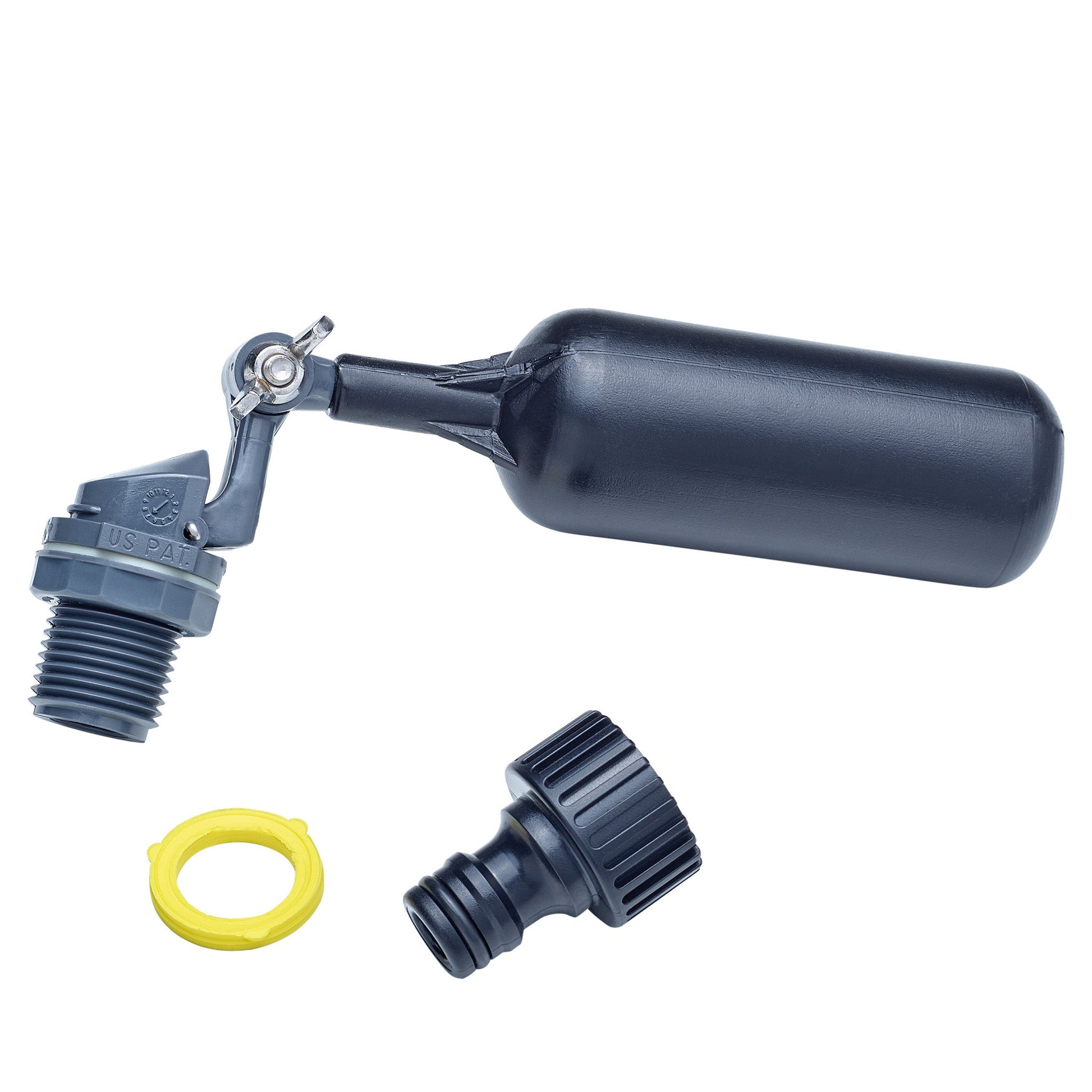
A float falls as the water level drops and opens an inlet valve, then rises and closes it. The method is simple, does not need an electronic sensor at the water and is easy to understand at a glance. A dedicated top-up box keeps the float away from fish and moving surface water while providing a tidy point for adjustment and inspection.
Electronic top-up systems
An electronic sensor or pair of sensors monitors the water level and instructs a solenoid valve to open and close. These systems can be installed where a mechanical float would be awkward, and their switching differential or hysteresis helps prevent ripples from repeatedly operating the valve. Model specifications differ, so compare the sensor type, valve connection, cable lengths, operating pressure and required electrical location before ordering.
Five Checks Before You Choose
- Where is the true operating level? Choose a calm point that represents the whole running system, away from waterfalls, vigorous aeration and short-term turbulence.
- How will tap water be made fish-safe? Where chlorinated mains water feeds a fish pond, install an appropriately sized pond dechlorinator or use another suitable treatment method. Keep within the purifier’s rated flow and cartridge capacity.
- What happens if the inlet fails open? Provide a visible, adequately sized overflow to a safe discharge point. Do not allow it to flood a filter house, undermine the pond or run unnoticed.
- Is the mains-water connection compliant? Backflow protection and water fittings must suit the installation and current regulations. Ask a suitably qualified plumber or your water company where the correct arrangement is unclear.
- Can you test and service it? Keep the sensor, float, valve, purifier and isolation point accessible. Commission the shut-off deliberately and include it in routine pond checks.
Original price was: £479.99.£448.99Current price is: £448.99. (inc VAT)
6% Off
Original price was: £244.99.£214.99Current price is: £214.99. (inc VAT)
12% Off

Compare Our Automatic Pond Top-Up Options
The products above all maintain water level, but they do so in different ways. Use this comparison as a starting point and check the current product page and installation instructions before final specification.
| System | Control method | Best suited to | Important planning point |
|---|---|---|---|
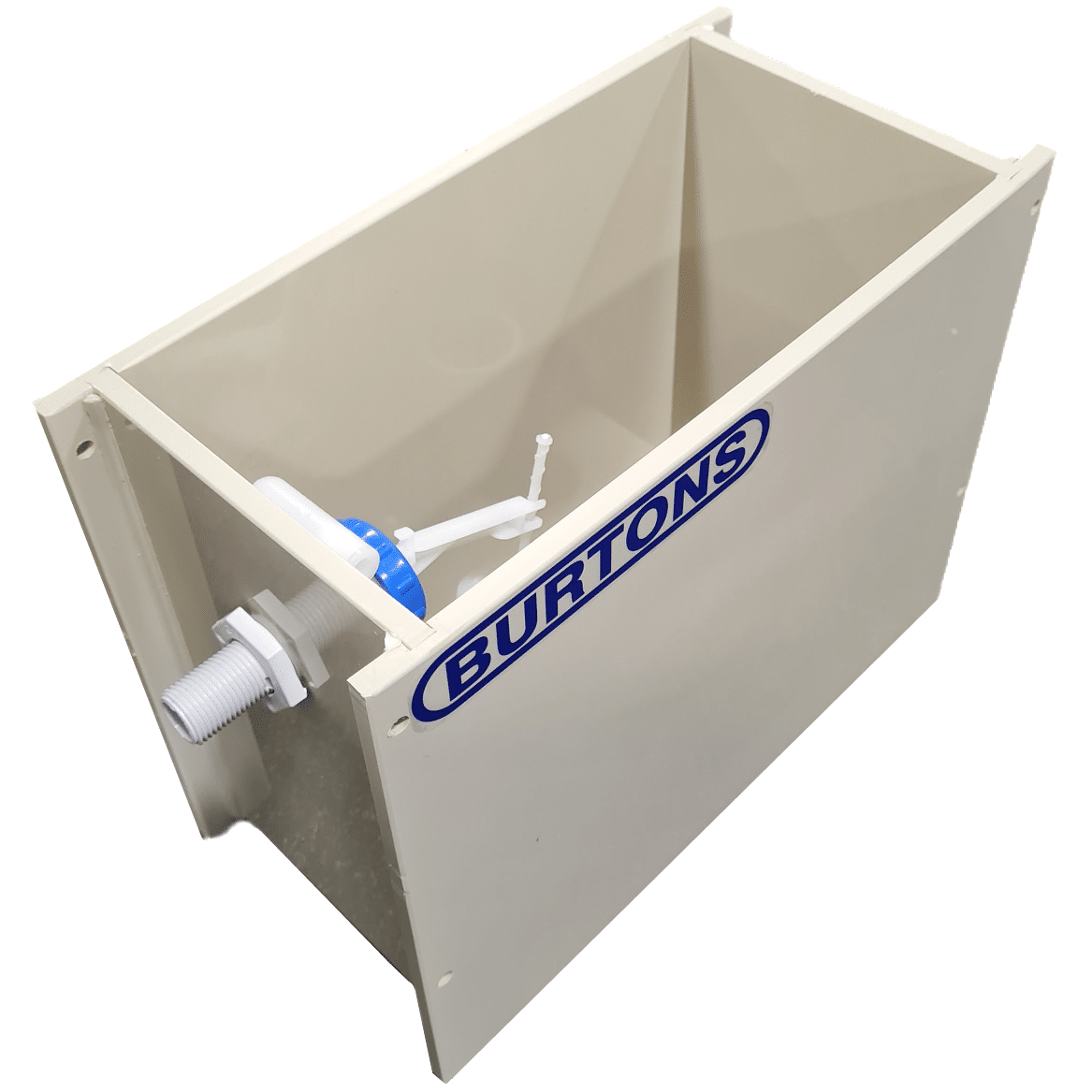
| Burtons Pond Top-Up Box | Protected mechanical top-up chamber | Ponds needing a simple, accessible level-control point and dedicated overflow | Allow space for the box, support the 50mm connections and confirm the current supplied valve arrangement |
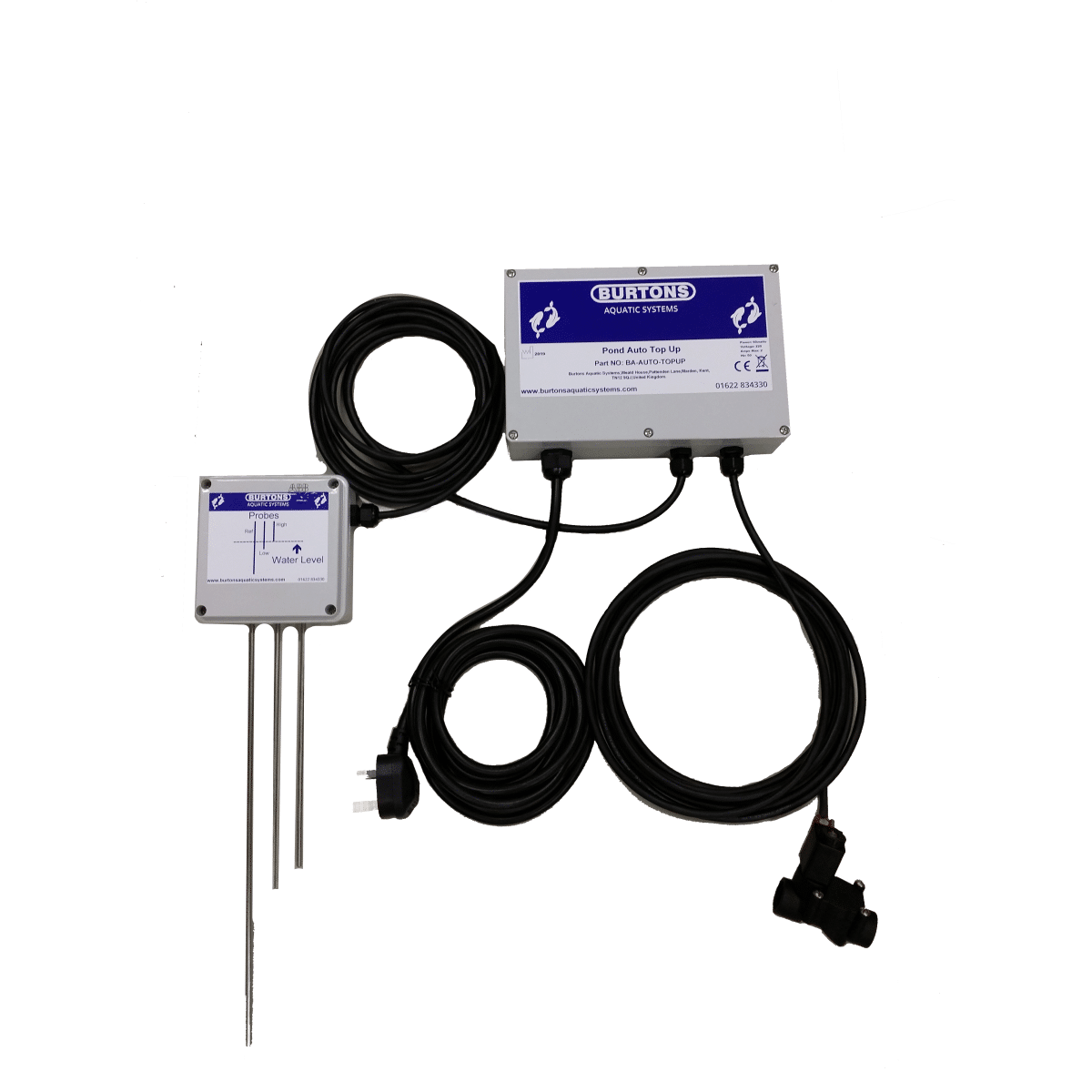
| Burtons Automatic Pond Water Top-Up System | Separate high and low sensors operating a solenoid valve | Koi ponds, filter chambers and installations where an adjustable operating band is useful | Position both sensors in calm water and keep the controller and electrical connections protected |
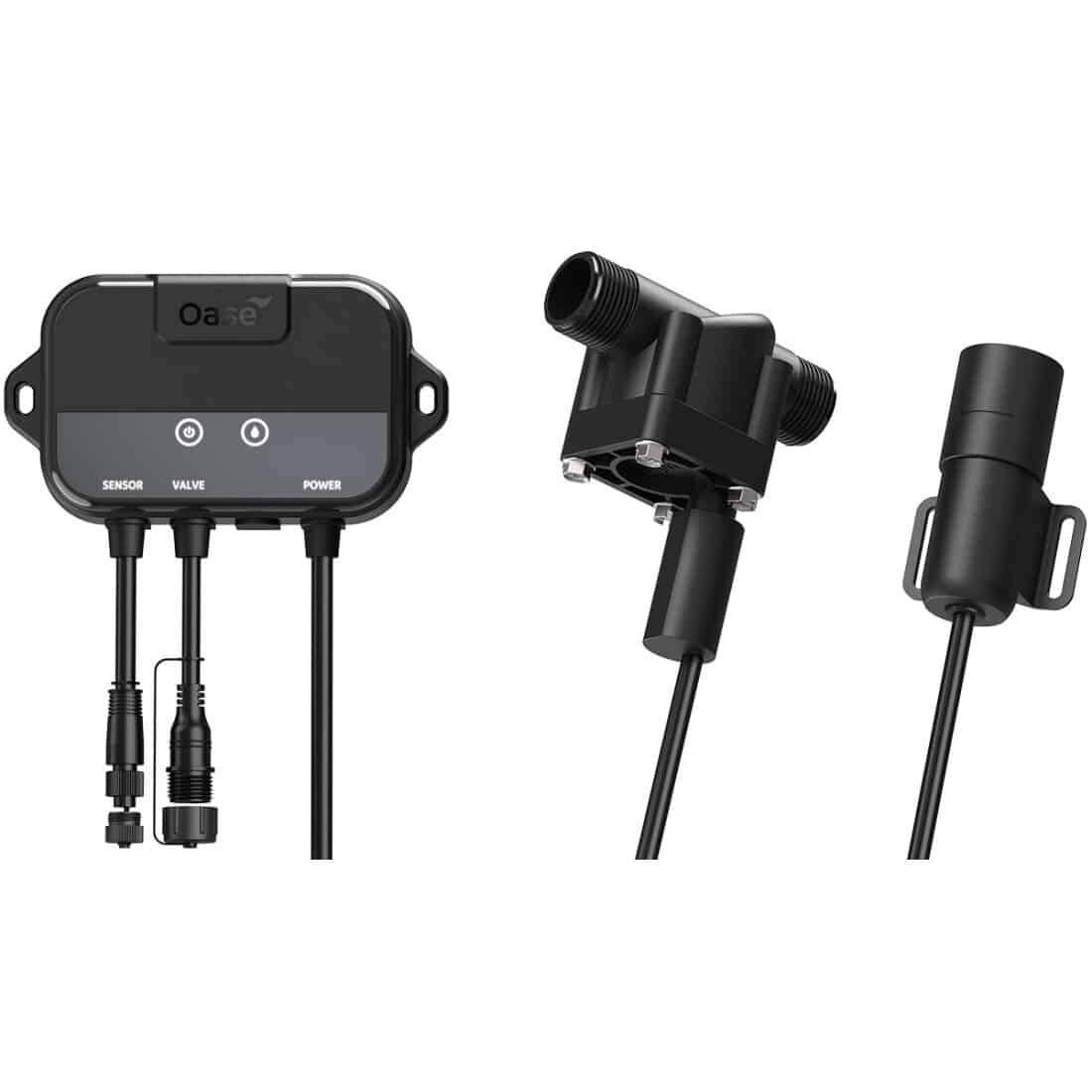
| Oase LevelControl | Conductive level detection with controller and 1-inch solenoid valve | Ponds, reservoirs, gravity-fed systems and water features requiring an electronic complete set | Oase lists a 20mm switching differential, 10 bar maximum operating pressure and 3m sensor and valve cables for the current 98040 model |
| PRO Line Automatic TopUp System | Water-level sensor, controller and automatic valve arrangement | General koi ponds, garden ponds and water features | Confirm the supplied connectors, available cable route and calm sensor location against the current kit |
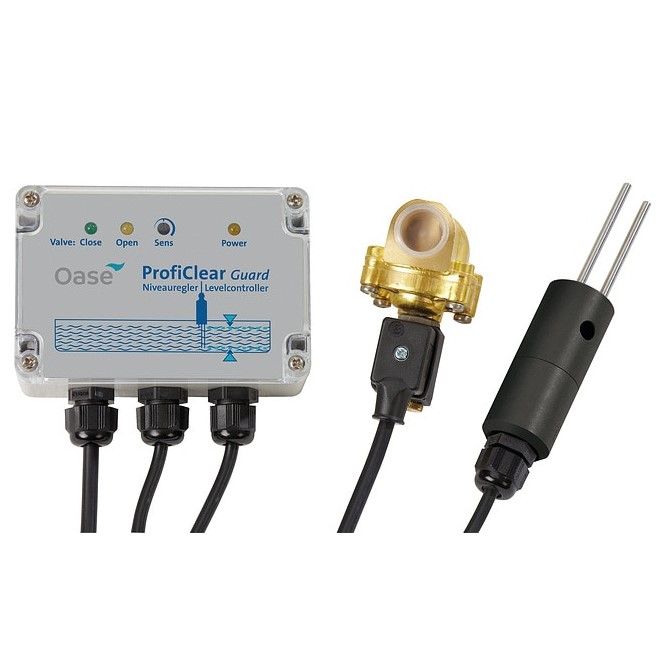
| Oase ProfiClear Guard | Conductive sensing, controller and G 1/2 solenoid valve | Professional ponds and compatible filter installations needing a long sensor cable | The 230V brass valve must be installed in a splash-protected position; follow Oase’s installation instructions |
How to Position the Level Sensor or Float
Set the pond and filtration system running normally before choosing the final water level. Pump start-up can change the level in a gravity-fed filter chamber, while switching off a waterfall or return can send water back towards the pond. The top-up must respond to the normal running level rather than a temporary commissioning condition.
Avoid mounting a sensor immediately beside an air diffuser, turbulent inlet or moving waterfall. Waves can cause nuisance switching, and debris or blanket weed can obstruct a mechanical float. In a gravity-fed system, the clean side of the filter is often a useful monitoring location, but the filter manufacturer’s instructions take priority.
After installation, lower the water level deliberately and watch the complete cycle. Confirm that the inlet opens at the intended point, treated water reaches the pond, the valve shuts firmly and the emergency overflow remains clear. Repeat this test periodically rather than assuming a quiet system is still operating correctly.
Dechlorination, Flow Rate and Cartridge Capacity
A level controller regulates quantity; it does not treat the incoming supply. Chlorine and chloramine used in mains water can harm fish and biological filter bacteria, so an automatic feed to a fish pond needs an appropriate treatment plan. An inline purifier is convenient because every refill passes through it automatically, but it must be used within the manufacturer’s maximum flow rate and total treatment capacity.
Fast flow can reduce contact time through a carbon purifier. Exhausted cartridges may also pass water while no longer providing the expected treatment. Record the installation date or metered volume, test the outlet water where appropriate and replace cartridges according to the product instructions and local water conditions. Browse our dechlorinator units when planning the incoming water line.
Do not confuse a continuous trickle-in water-change system with an evaporation top-up. Evaporation removes water but leaves most dissolved substances behind; replacing that volume restores level but is not the same as removing old pond water. Deliberate water changes still need their own controlled inlet, overflow or drain plan.
Leak Detection and Unexpected Water Use
An automatic system can mask a leak because the pond may look full while the water meter continues turning. Establish a normal refill pattern after commissioning. A sudden increase deserves investigation, particularly after pipework changes, filter maintenance, frost or landscaping work.
- Isolate the top-up and mark the water level.
- Compare the loss with pumps running and switched off, where safe to do so.
- Inspect filter drains, automatic-cleaning valves, unions, flexible connectors and waterfall edges.
- Check whether the level falls to a repeatable point and then stops.
- Restore top-up protection promptly if equipment could otherwise run dry.
For a valuable koi pond or system with an automatic drum filter, a water meter or timed flow monitor on the top-up line can provide an early warning of abnormal usage.
Installation Details That Prevent Future Problems
Include an accessible isolation valve
Being able to isolate the incoming water makes testing, purifier changes and winter maintenance much easier. Label the valve so somebody unfamiliar with the pond can shut the supply off quickly.
Support pipework and protect electrical equipment
Do not leave the weight of pipework hanging from a plastic box or solenoid valve. Support fittings, follow the specified flow direction and keep electrical components within their stated protection requirements. Outdoor pond equipment should be supplied through suitable protection and installed in accordance with the manufacturer’s instructions.
Route the overflow where a fault will be noticed
An overflow hidden directly into a drain can allow a failed inlet or pond leak to waste water for weeks. A safe but visible discharge point makes abnormal flow easier to spot. Ensure the route has sufficient capacity and cannot freeze or become blocked by debris.
Plan for winter
Exposed small-bore supply lines, valves and purifier housings can be vulnerable to freezing. Insulate or drain components where the manufacturer permits, keep isolation accessible and never apply heat in a way that could damage plastic fittings or electrical equipment.
Automatic Pond Top-Up Questions Answered
What does an automatic pond top-up system do?
It detects a drop below the chosen operating level and opens an inlet valve. When the target level is restored, the valve closes. Depending on the model, detection is provided by a mechanical float, conductive probe or separate high and low sensors.
Will it stop my pond overflowing?
Normal shut-off should prevent overfilling, but no valve should be treated as the only protection. A correctly routed emergency overflow is the safest backup if a valve sticks, a sensor becomes obstructed or a control fault occurs.
Can I connect one directly to a garden tap?
The physical connection is only part of the job. The arrangement must comply with applicable water fittings and backflow requirements, and incoming water for a fish pond normally needs suitable dechlorination. Ask a qualified installer or water company if the required protection is uncertain.
Do I need a dechlorinator?
If chlorinated or chloraminated mains water is entering a stocked pond, it needs to be made safe using an appropriate method. An inline dechlorinator is convenient for automatic systems because treatment does not depend on somebody remembering to dose the pond.
Where should the sensor be installed?
Use a calm, accessible location that reflects the system’s normal running level. Avoid splashing, aeration and positions where plants, blanket weed or debris can interfere with the sensor.
Can it go in a drum-filter clean chamber?
Often yes, particularly on a gravity-fed installation, but follow the drum manufacturer’s guidance. The selected point must represent the intended system level and remain accessible for cleaning and testing.
Will an automatic top-up fix a leaking pond?
No. It may conceal the symptom by continually replacing lost water. Monitor consumption and investigate an unexplained increase before it becomes costly or causes ground movement and equipment damage.
How much water should my pond lose through evaporation?
There is no dependable universal figure. Surface area, air temperature, wind, humidity, waterfalls and splashing all affect loss. Learn the normal pattern for your own pond and investigate a marked change.
Can the system replace water lost during drum-filter cleaning?
Yes, this is a common use. Automatic drum cleaning sends dirty water to waste, and a top-up restores the operating level. Size the water treatment and incoming supply for the actual cleaning frequency and volume.
Is a mechanical float valve reliable?
A good float valve can be extremely dependable when kept clean, correctly supported and protected from fish and debris. It still needs an isolation point, routine testing and a safe overflow.
Are electronic sensors better than float valves?
They offer flexible positioning and controlled switching, but require power and correct installation. A float valve is mechanically simpler. The best choice depends on access, water movement, available space and how critical the operating level is.
What is switching differential or hysteresis?
It is the difference between the level at which filling starts and the level at which it stops. A sensible differential prevents waves or tiny surface movements from rapidly switching a valve on and off.
Can a top-up protect a pump from dry running?
Maintaining water level reduces the risk, but it is not a substitute for a correctly installed pump, clean intake and any dry-run protection provided by the manufacturer.
Does topping up count as a water change?
No. Topping up replaces water lost mainly through evaporation, while a water change deliberately removes old pond water and replaces it. Evaporation leaves most dissolved material behind.
Should the incoming flow be fast?
Not necessarily. Flow must stay within the top-up valve and purifier specifications. A slower, controlled feed is often easier to treat and monitor than an unrestricted supply.
How often should I test the shut-off?
Test it at commissioning, after maintenance and periodically through the season. Also inspect it after frost, long periods without use or any event that could move or foul the sensor.
What maintenance does a top-up need?
Clean the float or sensor, operate the isolation valve, check fittings for leaks, confirm the solenoid closes fully, clear the overflow and maintain the dechlorinator cartridges. Follow the individual product manual for electrical and valve checks.
Can it be used on a wildlife pond?
It can, although many wildlife ponds tolerate natural seasonal changes. Avoid sudden untreated mains-water additions and make sure the system cannot trap animals or keep a naturally fluctuating pond at an unsuitable level.
Can it be used on a swimming pond or water feature?
Suitable systems can maintain reservoirs and swimming ponds, but water-treatment, electrical and backflow requirements may differ. Specify the equipment for the actual application rather than assuming a koi-pond installation is identical.
Which system should I buy?
Choose the Burtons box when a straightforward mechanical chamber and dedicated overflow suit the build. Consider the electronic Burtons, PRO Line or Oase systems when sensor positioning, a defined operating band or a solenoid-controlled supply is preferable. If you send us the pond, filter and proposed sensor location, we can help narrow the options before you order.
