






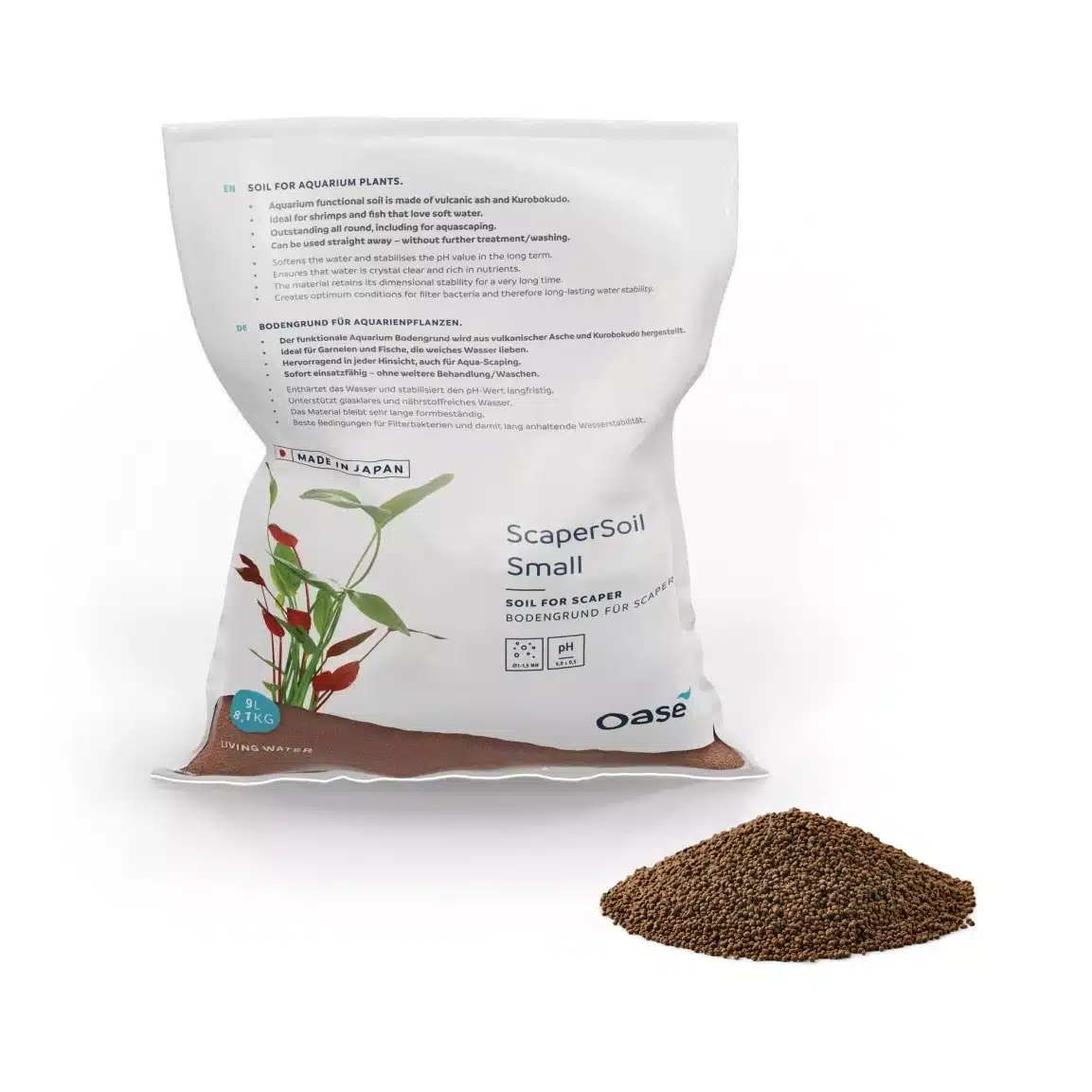
Oase ScaperLine Soil Small 9L Brown
| Brand | |
|---|---|
| Article | 93002 |
| Type | Active aquascaping soil |
| Grade | Small |
| Grain | 1–1.5 mm |
| Colour | Brown |
| Bag volume | 9 litres |
| Net weight | 8.1 kg |
| Use | Planted freshwater aquariums |
| Preparation | Use dry; do not pre-rinse |
Active brown aquascaping soil in the small grade: 1–1.5 mm, one 9 litre bag. Supports planted freshwater layouts; use dry without pre-rinsing. Exact Oase article 93002.
£33.26 (inc VAT)
Oase ScaperLine Soil Small 9L Brown is an active substrate for a planted freshwater aquascape. This is article 93002: one 9 litre bag of brown soil in the small grade. Its 1–1.5 mm granules support plant roots while giving the layout a consistent, natural-looking base. It is prepared for dry placement and shaping in the aquarium, without a pre-rinse.
Choosing this grade and colour
Small is the finer ScaperLine grade. It is useful for detailed planting in compact aquascapes and can be used to cover a coarser soil layer for a finer visible finish. The smaller grain should not be confused with a smaller bag of the standard soil: the grain specification is different even when the bag volume and colour match.
Brown gives the base of the layout an earthy appearance that works with natural rock and wood. Keep the substrate colour in mind when planning open areas, planting density and any separate decorative foreground: those choices affect how much of the soil remains visible.
How active soil affects the aquarium
Unlike inert decorative gravel, an active soil can influence the water around it. Oase describes ScaperLine as helping soften the water and favouring a slightly acidic pH, while absorbing and releasing nutrients from the water. That nutrient-buffering function supports planted layouts; it is not a promise of a fixed pH or a complete fertiliser programme for every plant.
Plan around the needs of the animals as well as the plants. Test pH and hardness during setup and after significant changes, and allow the aquarium to establish before adding livestock. This soil is intended for planted freshwater use; choose a substrate appropriate to the required chemistry when setting up a system that needs stable alkaline or marine conditions.
| Article | 93002 |
|---|---|
| Type | Active aquascaping soil |
| Grade | Small |
| Grain | 1–1.5 mm |
| Colour | Brown |
| Bag volume | 9 litres |
| Net weight | 8.1 kg |
| Use | Planted freshwater aquariums |
| Preparation | Use dry; do not pre-rinse |
How much soil do you need?
The 9 litre bag suits a larger substrate requirement or a deeper planted layout. As a planning example, a 60×30 cm footprint at 5 cm average depth needs 9 litres before accounting for slopes, hardscape displacement and settling. A raised rear bank changes the average depth, so calculate the whole layout rather than buying only by aquarium water capacity.
For a rectangular area, length×width×average depth in centimetres divided by 1,000 gives the approximate substrate volume in litres. Use the internal footprint, and make a separate allowance for the finished slopes and any areas using a different substrate.
Preparing and caring for the substrate
Put the soil into the empty aquarium dry and shape it before filling; Oase states that it does not need washing out. Work gently with the granules and avoid unnecessarily grinding or crushing them. Add water carefully so that the layout is not disturbed, then plant and manage the aquarium in line with your chosen setup.
During later maintenance, remove loose waste without aggressively stirring the planted bed. Judge water care and fertilisation from the aquarium’s tests and plant response rather than assuming that an active substrate removes the need for routine maintenance. The bag supplies soil only: aquarium, plants, hardscape, fertilisers and tools are separate items.



Reviews
There are no reviews yet.